Paper (HS Code 4802582080)
CN → US| HS编码 | 关税税率 | 原产国 | 目的国 | 文档 |
|---|---|---|---|---|
| 4810225080 | 35.0% | CN | US | 官方文档 |
| 4823908680 | 35.0% | CN | US | 官方文档 |
| 4823906700 | 35.0% | CN | US | 官方文档 |
| 4802582040 | 35.0% | CN | US | 官方文档 |
| 4810227040 | 35.0% | CN | US | 官方文档 |
| 4802582020 | 35.0% | CN | US | 官方文档 |
商品图片


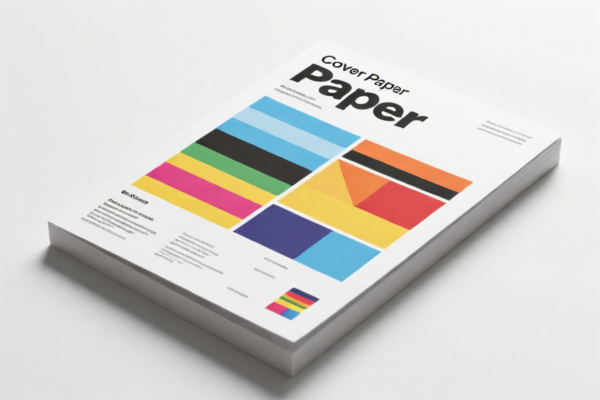
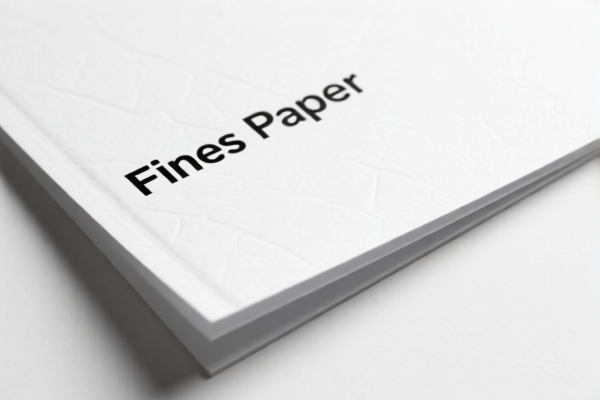
AI分析
📄 Paper (Uncoated Woodfree Paper, Weight > 105g/m²)
🌐 HS Code Reference & Customs Clearance Guide | 2026 Latest Tariff Structure | Professional Strategy
📌 1. Product Definition & Classification: What Exactly is "Paper"?
In international trade, Paper (HS Code 4802.58.20.80) refers specifically to Uncoated Woodfree Paper. This is a highly regulated category often used for printing, office documents, and commercial publishing. Unlike cardboard or coated papers, this category demands precise specifications regarding fiber content and weight.
⚠️ Key Classification Criteria:
- Material: Must be primarily wood pulp (woodfree).
- Processing: Uncoated (no clay, polymer, or chemical surface treatment).
- Weight: Typically > 105 g/m² (for this specific 8-digit code variation, though general 4802.58 covers a range).
- Origin: The data provided explicitly flags this as China-origin goods subject to severe trade restrictions.
📦 2. HS Code Classification Details (Based on Provided Data)
The provided dataset indicates that the specific HS Code 4802.58.20.80 (and similar paper variants like 4810.22.50.80, 4823.90.86.80, etc.) falls under a unified high-risk tariff profile.
| HS Code | Product Description | Material Match | Risk Level |
|---|---|---|---|
4802.58.20.80 |
Uncoated woodfree paper, >105g/m², other | ✅ Direct Match (Paper/Pulp) | 🔴 High |
4810.22.50.80 |
Paper with surface coating or impregnation | ✅ Consistent (Paper Base) | 🔴 High |
4823.90.86.80 |
Other paper/paperboard cuts/patterns | ✅ Consistent (Paper Base) | 🔴 High |
4823.90.67.00 |
Paper/paperboard, cut, patterned, perforated | ✅ Consistent (Paper Base) | 🔴 High |
4810.22.70.40 |
Mechanical fiber paper (>10% mechanical fiber) | ✅ Consistent (Paper Base) | 🔴 High |
4802.58.20.20 |
Uncoated woodfree paper, < 105g/m² | ✅ Consistent (Paper Base) | 🔴 High |
🔍 Critical Insight:
- All listed codes share the same material logic: they are derived from Paper/Pulp.
- The data suggests a "Catch-all" approach for paper products originating from China, regardless of minor processing differences (coated vs. uncoated, cut vs. roll), as they all attract the same punitive tax structure.
💰 3. 2026 Latest Tariff Rate Breakdown (Including Surcharges)
✅ Applicable Country: United States (US)
✅ Origin: China (CN)
✅ Effective Date: Immediate (Current Trade War Policies)
🎯 Uniform Tariff Profile for Paper Products (e.g., 4802.58.20.80)
| Item | Rate | Explanation |
|---|---|---|
| Base Tariff | 0.0% | The standard Most-Favored-Nation (MFN) rate for many paper products is zero. |
| Section 301 Surcharge | +25.0% | "Add-on Tariff": Imposed under US Trade Law Section 301 against Chinese goods. |
| Section 122 Tariff | +10.0% | Specific Clause Tariff: Often referred to as the "122 Provision" tariff, applied to specific strategic categories including paper. |
| Total Effective Rate | 35.0% | Sum of all applicable duties. |
| Calculation Basis | CIF Value | Calculated on Cost, Insurance, and Freight value. |
| De Minimis Exemption | ❌ Denied | These goods are explicitly excluded from the $800 de minimis rule. Must be formally entered. |
📌 Detailed Legal Pathway:
The tax detail"基础关税: 0.0%, 加征关税: 25.0%,122条款关税10%"translates to:
1. Base Duty (0%): Standard HS code duty.
2. Section 301 Duty (25%): Broad trade war tariff.
3. Section 122 Duty (10%): Additional national security/strategic tariff.
Total = 35%. This is a flat, non-negotiable rate for these Chinese-origin paper products.
🛠️ 4. Customs Clearance Practical Advice (Pitfall Avoidance)
✅ 1. Documentation Checklist (Mandatory)
| Document | Requirement | Why It Matters |
|---|---|---|
| Commercial Invoice | Must state "Paper" clearly, specify HS Code (e.g., 4802.58.20.80). | Prevents misclassification audits. |
| Packing List | Detail net/gross weight, number of packages. | Critical for duty calculation (35% of CIF). |
| Certificate of Origin | Crucial: Must prove China Origin. | If origin is not Chinese, these surcharges might not apply (check FTAs). |
| Product Specification | Describe pulp type (woodfree vs. mechanical), weight (gsm), coating status. | Ensures correct sub-heading within 4802/4810. |
| Bill of Lading | Standard shipping document. | Proof of importation. |
✅ 2. Declaration Strategy
🔥 Key Rule: "Describe Accurately, Declare China Origin, Expect 35%."
| Scenario | Correct Action | Wrong Action |
|---|---|---|
| Shipping from China | Declare origin as China. Apply 35% total tax. | Try to hide origin → Fraud. High risk of seizure. |
| Mixed Containers | Separate paper goods from other goods on invoice. | Bunching paper with exempt goods → Audit Risk. |
| Transshipment | If shipped via Vietnam/Malaysia but Chinese origin, still pay 35%. | Claiming non-origin without proof → Penalties. |
✅ 3. Special Considerations for Paper
- Weight Verification: Customs may weigh the cargo. Discrepancies between declared and actual weight can lead to delays and re-calculated duties.
- Coating Status: If the paper is actually coated (e.g., art paper), it might fall under
4810.22. However, based on the data, both 4802 and 4810 codes incur the same 35% rate. Do not attempt to reclassify to avoid tax; the cost is identical. - Cut vs. Roll: Whether you ship rolls (
4802) or cut sheets (4823), the 35% total tax rate remains constant in this dataset.
🌍 5. Global Market Comparison (2026 Context)
| Country/Region | Recommended HS Code | Tariff (China Origin) | Notes |
|---|---|---|---|
| 🇺🇸 United States | 4802.58.20.80 |
35% (0% Base + 25% Sec 301 + 10% Sec 122) | Highest Cost. Avoid if possible. |
| 🇨🇳 China | 4802.58.20.00 |
0-5% (Domestic) | N/A for Export. |
| 🇪🇺 European Union | 4802.58.00 |
0-2.5% | No Section 301/122 equivalents. Much cheaper. |
| 🇦🇺 Australia | 4802.58.00 |
5% | No punitive surcharges. |
| 🇯🇵 Japan | 4802.58.00 |
0-3% | No punitive surcharges. |
📌 Conclusion:
The US market is the most expensive for Chinese paper imports due to the 35% cumulative tariff.
- If your customer is in the US, factor in the 35% cost increase.
- If you have alternative markets (EU, Asia, etc.), consider diverting shipments to avoid US duties.
📌 6. Common Errors & Pitfalls (Lessons Learned)
❌ Error 1: Attempting to use the $800 De Minimis (Section 321) for paper shipments.
👉 Consequence: Rejected. Paper is specifically excluded from de minimis exemptions under current trade enforcement. Must file formal entry.
❌ Error 2: Misdeclaring "Paper" as "Cardboard" (HS 4805) or "Printing Paper" (HS 4801) incorrectly.
👉 Consequence: Audit Trigger. Even if the base duty differs, the 301/122 surcharges apply broadly to Chinese paper products. Misclassification delays cargo and attracts scrutiny.
❌ Error 3: Ignoring the "122 Clause" in tariff calculations.
👉 Consequence: Underpayment. Assuming only 25% tax leads to a 10% shortfall + penalties + interest upon customs review.
✅ Correct Practice:
"Uncoated Woodfree Paper, 120gsm, China Origin, HS 4802.58.20.80. Expect 35% Total Duty (0% Base + 25% Sec 301 + 10% Sec 122). Formal Entry Required."
🎯 7. Conclusion: Cost Efficiency & Compliance
🎯 Remember:
🔹 "Paper from China to US = 35% Tax."
🔹 "0% Base + 25% Sec 301 + 10% Sec 122 = No Exceptions."
🔹 "Do not rely on De Minimis. Formal Entry is Mandatory."
📌 Pro Tip:
If your paper is not of Chinese origin (e.g., sourced from Canada, Brazil, or Indonesia), you may qualify for lower or zero additional duties. Ensure your Certificate of Origin clearly reflects a non-China source if applicable.
📣 Immediate Action:
📞 Consult a Customs Broker: Confirm the exact subheading based on GSM and coating.
📉 Cost Analysis: Add 35% to your landed cost for US-bound paper.
🌍 Diversify: Explore non-US markets to mitigate tariff risk.
✨ Professional Clearance, From Accurate Classification Onwards!
💼 Your Every Dollar of Duty Is Worth Calculating Precisely!
用户评价
关于 HS 编码归类
协调制度(HS)是由世界海关组织(WCO)制定的国际贸易商品分类标准。全球 200 多个国家采用 HS 系统作为海关关税、贸易统计和进出口监管的基础。
每个 HS 编码遵循以下层级结构:
- 章(2 位)——商品大类(例如:第 84 章:机器和机械设备)
- 品目(4 位)——章内的更具体分类
- 子目(6 位)——国际通用细分,所有 WCO 成员国统一使用
- 本国细分(8-10 位)——各国自行扩展的细分编码,如美国 HTSUS 10 位编码
正确的 HS 编码归类对于顺利通关、准确缴纳关税和遵守贸易法规至关重要。错误归类可能导致海关延误、多缴关税或罚款。
从CN进口到US时,适用的关税税率可能包括:
- 最惠国(MFN)税率——适用于 WTO 成员国的标准关税税率
- 普通税率——适用于无贸易协定国家
- 贸易救济关税——附加关税,如 301 条款(反倾销)、232 条款(国家安全)或反补贴税
本页内容仅供参考。如需正式归类,请咨询当地海关或持牌报关代理。