Paper (≤150 g/m²)
CN → US| HS编码 | 关税税率 | 原产国 | 目的国 | 文档 |
|---|---|---|---|---|
| 4823908680 | 35.0% | CN | US | 官方文档 |
| 4805919000 | 35.0% | CN | US | 官方文档 |
| 4805917000 | 35.0% | CN | US | 官方文档 |
| 4802574085 | 35.0% | CN | US | 官方文档 |
| 4823906700 | 35.0% | CN | US | 官方文档 |
| 4802554000 | 35.0% | CN | US | 官方文档 |
商品图片
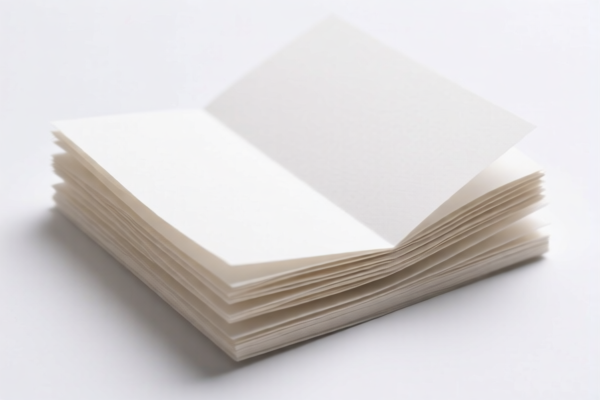
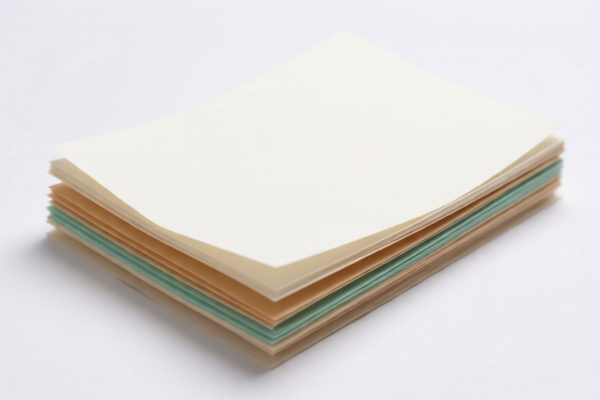
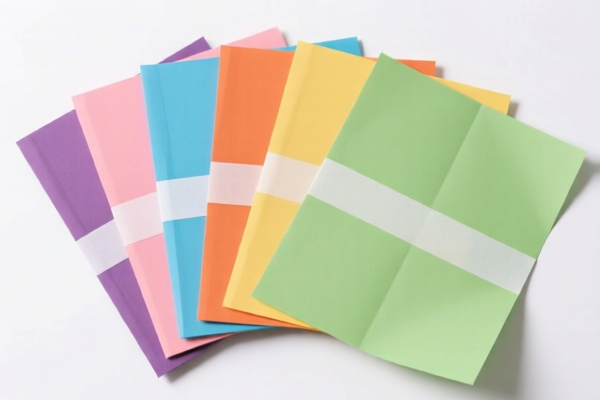
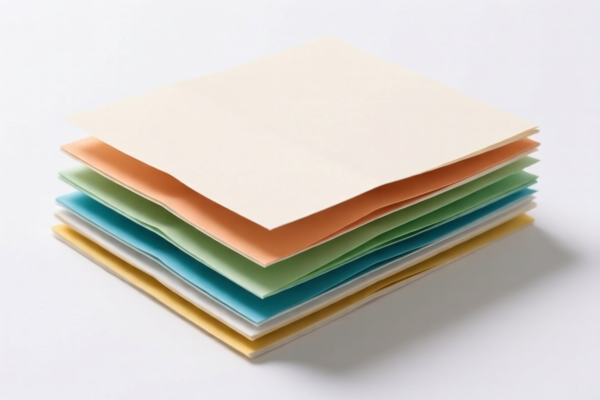
AI分析
📄 Paper Products (Uncoated, ≤150 g/m²)
🌐 HS Code Reference & Customs Clearance Guide | 2026 Latest Tariff Analysis | Professional Clearance Strategy
📌 I. Product Definition & Classification: What is "Paper (≤150 g/m²)"?
Paper, specifically those with a grammage (weight) of 150 g/m² or less, falls under Chapter 48 of the Harmonized System (HS). The classification primarily depends on whether the paper is coated (glossy/white) or uncoated (matte/plain), and its specific end-use (writing, printing, technical, etc.).
In international trade, these products are generally categorized into two main branches: 1. Uncoated Paper (Chapter 48.02): Plain paper used for writing, printing, graphic design, or technical purposes. This includes standard office paper, newsprint, and certain technical papers. 2. Other Paper & Paperboard (Chapter 48.23): Paper products that do not fit the specific specifications of Heading 48.01–48.05, such as cut shapes, layered products, or specialized industrial paper items.
⚠️ Key Distinction Point:
- If the paper is uncoated, has a weight ≤150 g/m², and is for writing/printing/technical use → It typically falls under Heading 48.02.
- If the paper is coated or falls into "other" miscellaneous paper categories not covered by 48.02–48.05 → It may fall under Heading 48.23.
📦 II. HS Code Classification Details (2026 Latest Tariff Authority Comparison)
Based on the provided data, here are the specific HS Codes and their rationales for classifying Paper (≤150 g/m²). All listed items carry a Total Tax of 35.0% due to US-China trade policies.
| HS Code | Product Description & Rationale | Applicable Scenario | Tax Rate Breakdown |
|---|---|---|---|
| 4805.91.90.00 | Other Uncoated Paper (30–150 g/m²) Material conforms to paper; weight and format fit the "other uncoated paper" category within the 30–150 g/m² range. |
Generic uncoated paper, industrial backing, specialized lightweight paper not for writing/printing. | Base: 0% Section 301: 25% 122 Clause: 10% Total: 35% |
| 4805.91.70.00 | Uncoated Paper (30–150 g/m²) - Specific Subcategory Name explicitly includes material and weight limit, matching the classification description for uncoated paper. |
Similar to above, but potentially a more specific sub-type within the 30-150g/m² uncoated category. | Base: 0% Section 301: 25% 122 Clause: 10% Total: 35% |
| 4802.57.40.85 | Uncoated Paper & Board (Other) Material is paper; format is uncoated; weight meets requirements; explicitly falls under the "Other" category. |
Technical uncoated paper, filter paper, or other uncoated papers not specifically for writing/printing graphics. | Base: 0% Section 301: 25% 122 Clause: 10% Total: 35% |
| 4802.55.40.00 | Uncoated Paper for Writing/Printing (40–150 g/m²) Material is paper; use matches writing/graphics; weight (40–150 g/m²) fits the bucket; fits the "catch-all" subcategory. |
Standard office paper, copy paper, high-quality uncoated printing paper. | Base: 0% Section 301: 25% 122 Clause: 10% Total: 35% |
| 4823.90.86.80 | Other Paper Articles (Other) Material is paper; format is "other"; fully matches the material and "other" category requirements. |
Paper products cut into shapes, layered, or processed beyond simple sheets, not fitting 48.02/48.05 specific sheets. | Base: 0% Section 301: 25% 122 Clause: 10% Total: 35% |
| 4823.90.67.00 | Other Paper & Paperboard (Other) Material is paper/paperboard; fits "other" category; weight attributes do not conflict with coated paper logic. |
Various other paper/paperboard items that don't fit the strict definitions of Heading 48.02 or 48.05 sheets. | Base: 0% Section 301: 25% 122 Clause: 10% Total: 35% |
🔍 Key Reminder:
- All the above HS Codes are subject to the 35% total tariff when importing from China to the US. - The 10% "122 Clause" tariff is a critical addition effective from late 2025/2026, targeting specific Chinese goods. - Ensure your product description clearly states Grammage (g/m²), Coating Status (Coated/Uncoated), and Use to avoid misclassification.
💰 III. 2026 Latest Tariff Rate Details (Including Surcharges)
✅ Applicable Country: United States (US)
✅ Origin: China (CN)
✅ Effective Time: From November 10, 2025 (including subsequent imports)
🎯 1. General Tariff Structure for Paper (HS 4802, 4805, 4823)
For all the HS Codes listed above, the tax structure is identical:
| Item | Content |
|---|---|
| Base Duty Rate | 0% (Ad Valorem) Standard MFN rate for most paper products is low or zero. |
| USITC Surcharge (Section 301) | +25% From USITC Footnote 9903.88.01 (or similar Section 301 listings). |
| IEEPA Surcharge (122 Clause) | +10% Targeting Chinese products, effective late 2025. |
| Total Effective Rate | 35.0% |
| Tax Calculation | CIF Value × 35% |
| De Minimis Exemption | ❌ Not Eligible Section 301 and IEEPA taxes generally do not qualify for the $800 de minimis exemption. |
| Legal Basis Path | IEEPA:9903.01.25 (10%) → Section 301: 25% → USITC: [Specific HS Code] |
📌 Explanation:
- The 0% base rate might make the product seem "cheap," but the 25% Section 301 tariff has been in place for years. - The additional 10% under the 122 Clause is the new variable that increases the total cost to 35%. - Total 35% is a significant cost driver. Importers must factor this into their FOB/CIF pricing strategies.
🛠️ IV. Customs Clearance Practical Advice (Battle-Tested Pitfall Guide)
✅ 1. Required Documentation Checklist (None Can Be Omitted)
| Document | Required | Notes |
|---|---|---|
| ✅ Commercial Invoice | ✔️ | Must clearly state: "Paper," Weight (g/m²), Coating status, Quantity. |
| ✅ Packing List | ✔️ | Detail roll length, sheet size, and total weight. |
| ✅ Product Specification Sheet | ✔️ | Crucial for proving Grammage (≤150 g/m²) and Uncoated Status. |
| ✅ Certificate of Origin (CO) | ✔️ | To confirm China origin (which triggers the 35% tax). |
| ✅ Bill of Lading (B/L) | ✔️ | Match description with Invoice. |
✅ 2. Declaration Tips (Key Mantra)
🔥 "Weight Clear, Coating Clear, Use Clear, No Surprises!"
| Scenario | Correct Declaration | Wrong Practice |
|---|---|---|
| Standard Copy Paper | 4802.55.40.00 (Uncoated, 40-150g/m²) |
Declare as "Packaging Material" → Risk of misclassification |
| Technical Uncoated Paper | 4802.57.40.85 |
Declare as "Textiles" → Wrong Chapter |
| Cut Paper Shapes | 4823.90.86.80 |
Declare as "Raw Paper" → Wrong Category |
| Coated Paper | Check Heading 48.03/48.04 (Not in this list) | Declaring as Uncoated → Customs Penalty |
✅ 3. Special Situation Handling
| Situation | Handling Advice |
|---|---|
| Mixed Shipment (Paper + Packaging) | Declare separately. Paper goes to HS 48xx; Packaging to its respective HS. Do not bundle to hide value. |
| Paper Rolls vs. Sheets | Ensure the HS Code matches the physical form. Some codes specify "rolls," others "sheets." |
| Pre-Certification (Advance Ruling) | Highly recommended for large volumes. Get a formal binding ruling from US CBP to lock in the HS Code and avoid post-audit fines. |
🌍 V. Global Market Comparison (2026 Latest)
| Country/Region | Recommended HS Code (Example) | Tariff Rate (China Origin) | Certification | Notes |
|---|---|---|---|---|
| 🇺🇸 United States | 4802.55.40.00 / 4805.91.90.00 |
35% | None typically for plain paper | High tax burden due to 301+122 clauses. |
| 🇨🇳 China | 4802.55.40.00 |
5-8% | CCC (if applicable) | Domestic production benefits from lower duties. |
| 🇪🇺 European Union | 4802.55.00 |
6.5% | REACH (if chemicals involved) | No Section 301 equivalent, but standard tariffs apply. |
| 🇬🇧 United Kingdom | 4802.55.00 |
6.5% | UKCA | Post-Brexit tariffs generally similar to EU. |
| 🇯🇵 Japan | 4802.55.00 |
4-6% | JIS | Free Trade Agreement (RCEP/JEPA) may offer reductions. |
📌 Conclusion:
- The United States is the most expensive market for Chinese paper products due to the 35% combined tariff. - Consider supply chain diversification (e.g., Vietnam, Malaysia, or Mexico) if the 35% tax erodes margins, as goods from non-China origins may avoid these specific surcharges.
📌 VI. Common Errors & Pitfalls (Blood Lessons)
❌ Error 1: Declaring "Paper" without specifying Grammage (g/m²).
👉 Consequence: Customs may default to a higher-duty code or detain the shipment for verification.
❌ Error 2: Confusing Uncoated with Coated paper.
👉 Consequence: Misclassification. Coated paper often has different HS codes (e.g., 48.03) and potentially different duty rates.
❌ Error 3: Ignoring the 122 Clause 10%.
👉 Consequence: Underestimating total landed cost. Budgeting only for 25% (Section 301) leads to cash flow issues.
❌ Error 4: Using generic terms like "Stationery" instead of "Paper."
👉 Consequence: May be classified under Chapter 96 (Stationery) with different rules, leading to compliance risks.
✅ Correct Approach:
"Uncoated Paper, 80 g/m², 500 Sheets, for Office Printing, Model XYZ, Origin China"
🎯 VII. Conclusion: Precise Classification Saves Money!
🎯 Remember the Mantra:
🔹 "Weight ≤150g, Uncoated & Plain, Watch for the 35% Rain."
🔹 "HS Code is King, Tax is Queen, Misclassification is the Enemy."
📌 Pro Tip:
If your paper is originally manufactured in Vietnam, Malaysia, or Mexico, it may avoid the 35% US China-specific tariffs.
👉 Action:
📞 Contact a professional customs broker + Provide Product Specs + Apply for HS Code Advance Ruling.
🚀 Ensure your paper clears US customs smoothly, keeping your costs predictable and your profits intact.
✨ Professional Clearance Starts with Precise Classification!
💼 Every cent of cost deserves precise calculation!
用户评价
关于 HS 编码归类
协调制度(HS)是由世界海关组织(WCO)制定的国际贸易商品分类标准。全球 200 多个国家采用 HS 系统作为海关关税、贸易统计和进出口监管的基础。
每个 HS 编码遵循以下层级结构:
- 章(2 位)——商品大类(例如:第 84 章:机器和机械设备)
- 品目(4 位)——章内的更具体分类
- 子目(6 位)——国际通用细分,所有 WCO 成员国统一使用
- 本国细分(8-10 位)——各国自行扩展的细分编码,如美国 HTSUS 10 位编码
正确的 HS 编码归类对于顺利通关、准确缴纳关税和遵守贸易法规至关重要。错误归类可能导致海关延误、多缴关税或罚款。
从CN进口到US时,适用的关税税率可能包括:
- 最惠国(MFN)税率——适用于 WTO 成员国的标准关税税率
- 普通税率——适用于无贸易协定国家
- 贸易救济关税——附加关税,如 301 条款(反倾销)、232 条款(国家安全)或反补贴税
本页内容仅供参考。如需正式归类,请咨询当地海关或持牌报关代理。