Paper (≤150 g/m²)
CN → US| HS Code | Tariff Rate | Origin | Destination | Doc |
|---|---|---|---|---|
| 4823908680 | 35.0% | CN | US | Official Doc |
| 4805919000 | 35.0% | CN | US | Official Doc |
| 4805917000 | 35.0% | CN | US | Official Doc |
| 4802574085 | 35.0% | CN | US | Official Doc |
| 4823906700 | 35.0% | CN | US | Official Doc |
| 4802554000 | 35.0% | CN | US | Official Doc |
Product Images
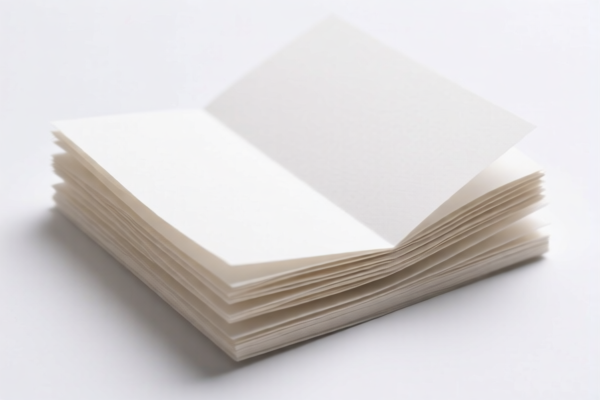
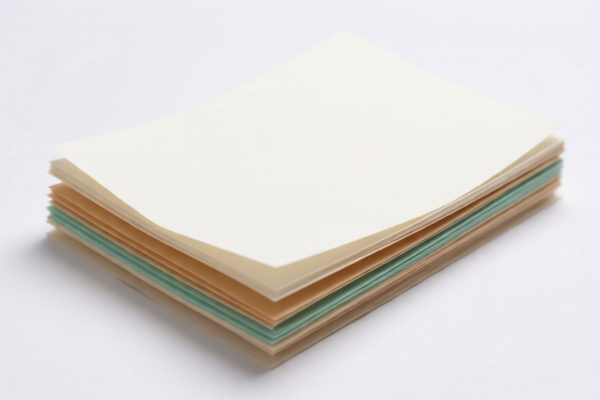
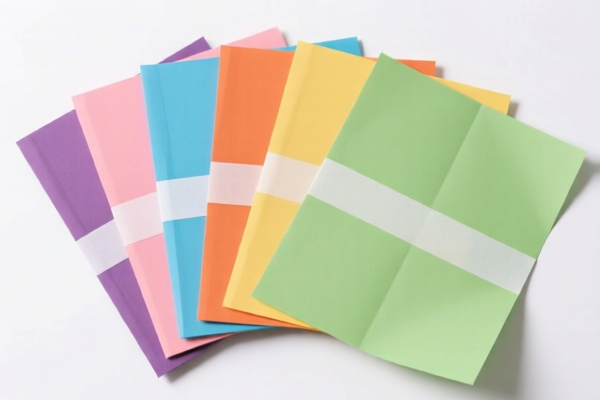
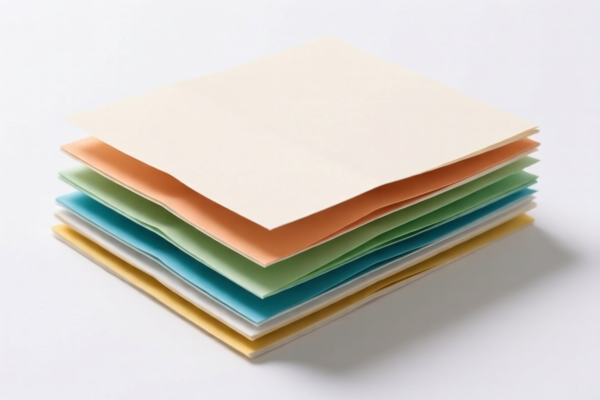
AI Analysis
📄 Paper Products (Uncoated, ≤150 g/m²)
🌐 HS Code Reference & Customs Clearance Guide | 2026 Latest Tariff Analysis | Professional Clearance Strategy
📌 I. Product Definition & Classification: What is "Paper (≤150 g/m²)"?
Paper, specifically those with a grammage (weight) of 150 g/m² or less, falls under Chapter 48 of the Harmonized System (HS). The classification primarily depends on whether the paper is coated (glossy/white) or uncoated (matte/plain), and its specific end-use (writing, printing, technical, etc.).
In international trade, these products are generally categorized into two main branches: 1. Uncoated Paper (Chapter 48.02): Plain paper used for writing, printing, graphic design, or technical purposes. This includes standard office paper, newsprint, and certain technical papers. 2. Other Paper & Paperboard (Chapter 48.23): Paper products that do not fit the specific specifications of Heading 48.01–48.05, such as cut shapes, layered products, or specialized industrial paper items.
⚠️ Key Distinction Point:
- If the paper is uncoated, has a weight ≤150 g/m², and is for writing/printing/technical use → It typically falls under Heading 48.02.
- If the paper is coated or falls into "other" miscellaneous paper categories not covered by 48.02–48.05 → It may fall under Heading 48.23.
📦 II. HS Code Classification Details (2026 Latest Tariff Authority Comparison)
Based on the provided data, here are the specific HS Codes and their rationales for classifying Paper (≤150 g/m²). All listed items carry a Total Tax of 35.0% due to US-China trade policies.
| HS Code | Product Description & Rationale | Applicable Scenario | Tax Rate Breakdown |
|---|---|---|---|
| 4805.91.90.00 | Other Uncoated Paper (30–150 g/m²) Material conforms to paper; weight and format fit the "other uncoated paper" category within the 30–150 g/m² range. |
Generic uncoated paper, industrial backing, specialized lightweight paper not for writing/printing. | Base: 0% Section 301: 25% 122 Clause: 10% Total: 35% |
| 4805.91.70.00 | Uncoated Paper (30–150 g/m²) - Specific Subcategory Name explicitly includes material and weight limit, matching the classification description for uncoated paper. |
Similar to above, but potentially a more specific sub-type within the 30-150g/m² uncoated category. | Base: 0% Section 301: 25% 122 Clause: 10% Total: 35% |
| 4802.57.40.85 | Uncoated Paper & Board (Other) Material is paper; format is uncoated; weight meets requirements; explicitly falls under the "Other" category. |
Technical uncoated paper, filter paper, or other uncoated papers not specifically for writing/printing graphics. | Base: 0% Section 301: 25% 122 Clause: 10% Total: 35% |
| 4802.55.40.00 | Uncoated Paper for Writing/Printing (40–150 g/m²) Material is paper; use matches writing/graphics; weight (40–150 g/m²) fits the bucket; fits the "catch-all" subcategory. |
Standard office paper, copy paper, high-quality uncoated printing paper. | Base: 0% Section 301: 25% 122 Clause: 10% Total: 35% |
| 4823.90.86.80 | Other Paper Articles (Other) Material is paper; format is "other"; fully matches the material and "other" category requirements. |
Paper products cut into shapes, layered, or processed beyond simple sheets, not fitting 48.02/48.05 specific sheets. | Base: 0% Section 301: 25% 122 Clause: 10% Total: 35% |
| 4823.90.67.00 | Other Paper & Paperboard (Other) Material is paper/paperboard; fits "other" category; weight attributes do not conflict with coated paper logic. |
Various other paper/paperboard items that don't fit the strict definitions of Heading 48.02 or 48.05 sheets. | Base: 0% Section 301: 25% 122 Clause: 10% Total: 35% |
🔍 Key Reminder:
- All the above HS Codes are subject to the 35% total tariff when importing from China to the US. - The 10% "122 Clause" tariff is a critical addition effective from late 2025/2026, targeting specific Chinese goods. - Ensure your product description clearly states Grammage (g/m²), Coating Status (Coated/Uncoated), and Use to avoid misclassification.
💰 III. 2026 Latest Tariff Rate Details (Including Surcharges)
✅ Applicable Country: United States (US)
✅ Origin: China (CN)
✅ Effective Time: From November 10, 2025 (including subsequent imports)
🎯 1. General Tariff Structure for Paper (HS 4802, 4805, 4823)
For all the HS Codes listed above, the tax structure is identical:
| Item | Content |
|---|---|
| Base Duty Rate | 0% (Ad Valorem) Standard MFN rate for most paper products is low or zero. |
| USITC Surcharge (Section 301) | +25% From USITC Footnote 9903.88.01 (or similar Section 301 listings). |
| IEEPA Surcharge (122 Clause) | +10% Targeting Chinese products, effective late 2025. |
| Total Effective Rate | 35.0% |
| Tax Calculation | CIF Value × 35% |
| De Minimis Exemption | ❌ Not Eligible Section 301 and IEEPA taxes generally do not qualify for the $800 de minimis exemption. |
| Legal Basis Path | IEEPA:9903.01.25 (10%) → Section 301: 25% → USITC: [Specific HS Code] |
📌 Explanation:
- The 0% base rate might make the product seem "cheap," but the 25% Section 301 tariff has been in place for years. - The additional 10% under the 122 Clause is the new variable that increases the total cost to 35%. - Total 35% is a significant cost driver. Importers must factor this into their FOB/CIF pricing strategies.
🛠️ IV. Customs Clearance Practical Advice (Battle-Tested Pitfall Guide)
✅ 1. Required Documentation Checklist (None Can Be Omitted)
| Document | Required | Notes |
|---|---|---|
| ✅ Commercial Invoice | ✔️ | Must clearly state: "Paper," Weight (g/m²), Coating status, Quantity. |
| ✅ Packing List | ✔️ | Detail roll length, sheet size, and total weight. |
| ✅ Product Specification Sheet | ✔️ | Crucial for proving Grammage (≤150 g/m²) and Uncoated Status. |
| ✅ Certificate of Origin (CO) | ✔️ | To confirm China origin (which triggers the 35% tax). |
| ✅ Bill of Lading (B/L) | ✔️ | Match description with Invoice. |
✅ 2. Declaration Tips (Key Mantra)
🔥 "Weight Clear, Coating Clear, Use Clear, No Surprises!"
| Scenario | Correct Declaration | Wrong Practice |
|---|---|---|
| Standard Copy Paper | 4802.55.40.00 (Uncoated, 40-150g/m²) |
Declare as "Packaging Material" → Risk of misclassification |
| Technical Uncoated Paper | 4802.57.40.85 |
Declare as "Textiles" → Wrong Chapter |
| Cut Paper Shapes | 4823.90.86.80 |
Declare as "Raw Paper" → Wrong Category |
| Coated Paper | Check Heading 48.03/48.04 (Not in this list) | Declaring as Uncoated → Customs Penalty |
✅ 3. Special Situation Handling
| Situation | Handling Advice |
|---|---|
| Mixed Shipment (Paper + Packaging) | Declare separately. Paper goes to HS 48xx; Packaging to its respective HS. Do not bundle to hide value. |
| Paper Rolls vs. Sheets | Ensure the HS Code matches the physical form. Some codes specify "rolls," others "sheets." |
| Pre-Certification (Advance Ruling) | Highly recommended for large volumes. Get a formal binding ruling from US CBP to lock in the HS Code and avoid post-audit fines. |
🌍 V. Global Market Comparison (2026 Latest)
| Country/Region | Recommended HS Code (Example) | Tariff Rate (China Origin) | Certification | Notes |
|---|---|---|---|---|
| 🇺🇸 United States | 4802.55.40.00 / 4805.91.90.00 |
35% | None typically for plain paper | High tax burden due to 301+122 clauses. |
| 🇨🇳 China | 4802.55.40.00 |
5-8% | CCC (if applicable) | Domestic production benefits from lower duties. |
| 🇪🇺 European Union | 4802.55.00 |
6.5% | REACH (if chemicals involved) | No Section 301 equivalent, but standard tariffs apply. |
| 🇬🇧 United Kingdom | 4802.55.00 |
6.5% | UKCA | Post-Brexit tariffs generally similar to EU. |
| 🇯🇵 Japan | 4802.55.00 |
4-6% | JIS | Free Trade Agreement (RCEP/JEPA) may offer reductions. |
📌 Conclusion:
- The United States is the most expensive market for Chinese paper products due to the 35% combined tariff. - Consider supply chain diversification (e.g., Vietnam, Malaysia, or Mexico) if the 35% tax erodes margins, as goods from non-China origins may avoid these specific surcharges.
📌 VI. Common Errors & Pitfalls (Blood Lessons)
❌ Error 1: Declaring "Paper" without specifying Grammage (g/m²).
👉 Consequence: Customs may default to a higher-duty code or detain the shipment for verification.
❌ Error 2: Confusing Uncoated with Coated paper.
👉 Consequence: Misclassification. Coated paper often has different HS codes (e.g., 48.03) and potentially different duty rates.
❌ Error 3: Ignoring the 122 Clause 10%.
👉 Consequence: Underestimating total landed cost. Budgeting only for 25% (Section 301) leads to cash flow issues.
❌ Error 4: Using generic terms like "Stationery" instead of "Paper."
👉 Consequence: May be classified under Chapter 96 (Stationery) with different rules, leading to compliance risks.
✅ Correct Approach:
"Uncoated Paper, 80 g/m², 500 Sheets, for Office Printing, Model XYZ, Origin China"
🎯 VII. Conclusion: Precise Classification Saves Money!
🎯 Remember the Mantra:
🔹 "Weight ≤150g, Uncoated & Plain, Watch for the 35% Rain."
🔹 "HS Code is King, Tax is Queen, Misclassification is the Enemy."
📌 Pro Tip:
If your paper is originally manufactured in Vietnam, Malaysia, or Mexico, it may avoid the 35% US China-specific tariffs.
👉 Action:
📞 Contact a professional customs broker + Provide Product Specs + Apply for HS Code Advance Ruling.
🚀 Ensure your paper clears US customs smoothly, keeping your costs predictable and your profits intact.
✨ Professional Clearance Starts with Precise Classification!
💼 Every cent of cost deserves precise calculation!
Customer Reviews
About HS Code Classification
The Harmonized System (HS) is an internationally standardized nomenclature developed by the World Customs Organization (WCO) to classify traded products. Over 200 countries use the HS system as the basis for customs tariffs, trade statistics, and import/export regulations.
Each HS code follows a hierarchical structure:
- Chapter (2 digits) — Broad category of goods (e.g., Chapter 84: Machinery and Mechanical Appliances)
- Heading (4 digits) — More specific grouping within the chapter
- Subheading (6 digits) — Internationally standardized breakdown, used by all WCO member countries
- National subdivisions (8-10 digits) — Country-specific extensions for further classification, such as US HTSUS 10-digit codes
Correct HS code classification is essential for smooth customs clearance, accurate duty payment, and compliance with trade regulations. Misclassification can lead to customs delays, overpayment of duties, or penalties.
When importing from CN to US, the applicable tariff rates may include:
- Most-Favored-Nation (MFN) rate — The standard duty rate applied to WTO members
- General rate — Applied to countries without trade agreements
- Trade remedy duties — Additional tariffs such as Section 301 (anti-dumping), Section 232 (national security), or countervailing duties
The information provided on this page is for reference purposes only. For official classification, please consult with your local customs authority or a licensed customs broker.