Paper Antistatic Agent Starch based
CN → US| HS编码 | 关税税率 | 原产国 | 目的国 | 文档 |
|---|---|---|---|---|
| 4811512020 | 35.0% | CN | US | 官方文档 |
| 4811512040 | 35.0% | CN | US | 官方文档 |
| 4823908680 | 35.0% | CN | US | 官方文档 |
商品图片
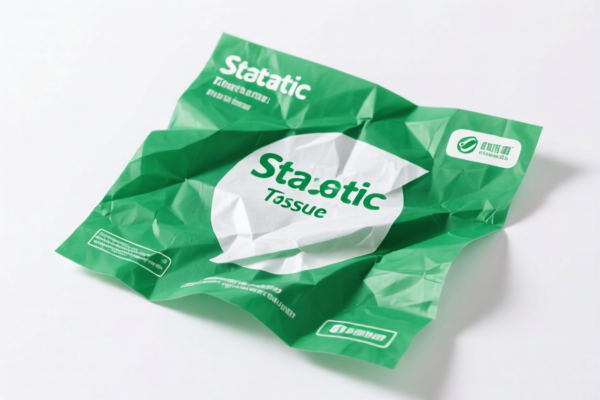
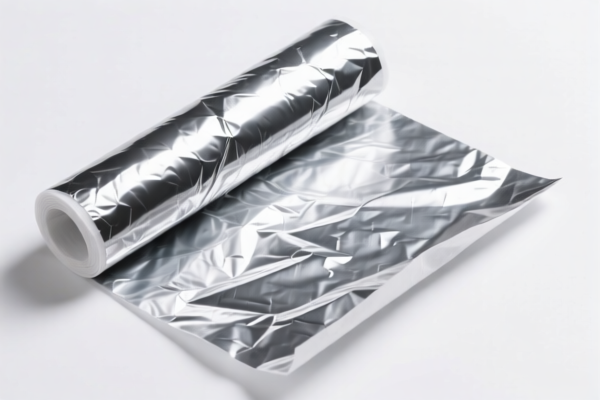
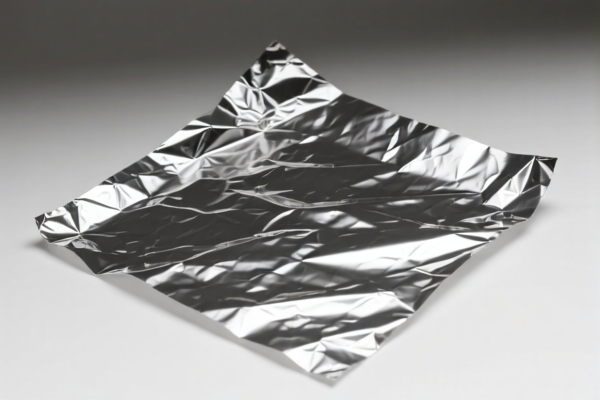
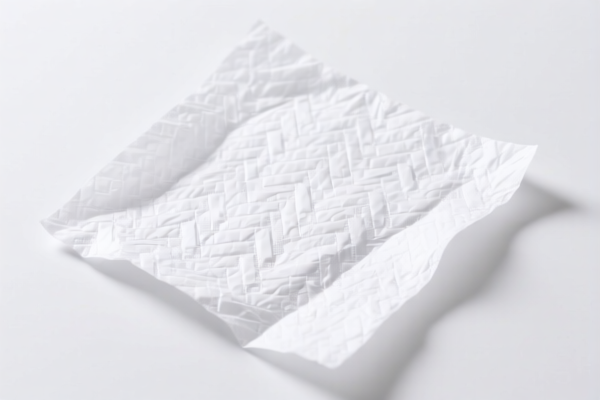
AI分析
📜 Paper Antistatic Agent (Starch-Based)
Also known as: Base Paper / Static-Sensitive Paper Substrate
🌐 HS Code Reference & Customs Clearance Guide | 2026 Latest Tariff Analysis | Professional Level Entry Strategy
📌 1. Product Definition & Classification: Do You Really Know "Paper Antistatic Agent (Starch-Based)"?
The product described as "Paper Antistatic Agent Starch Based" is essentially a paper substrate (base paper) used in the manufacturing of antistatic packaging or industrial paper products. The key characteristics are: * Material: Paper (cellulose-based). * Form: Sheets or rolls (flat/planar format). * Function/Property: "Antistatic" is a physical property, often achieved through surface coating or internal additives, but the core material remains paper. "Starch-based" indicates the sizing or additive used, which does not change the fundamental classification as a paper product. * Key Distinction: It is not a chemical product (like a spray or liquid antistatic agent) but a paper product that possesses antistatic properties.
⚠️ Critical Classification Point:
- If it is uncoated or simply coated base paper → Falls under 4811 (Paper coated, impregnated, covered, surface-colored, etc.).
- If it is cut sheets for specific end-use (like boxes or bags) → May fall under 4823 (Other articles of paper).
- Do NOT classify it as a chemical product (Chapter 38) because the primary identity is paper.
📦 2. HS Code Classification Details (2026 Latest Tariff Authority Comparison)
Based on the provided data, here are the three most relevant HS Codes with detailed matching logic:
| HS Code | Product Description | Matching Logic & Summary | Total Tax Rate |
|---|---|---|---|
| 4811.51.20.20 | Paper folded cartons / Base Paper for folding cartons | Match Basis: The product is identified as "base paper" (基纸), which fits the material attribute of paper products and the sheet/roll format. No material conflict with folding carton base paper. | 35.0% |
| 4811.51.20.40 | Coated/Covered Base Paper for Packaging | Match Basis: "Base paper" is a raw paper form. The "antistatic" attribute is a physical characteristic. This does not conflict with the processing features of coated/covered base paper for packaging. It is considered packaging base paper. | 35.0% |
| 4823.90.86.80 | Other paper articles (General) | Match Basis: Material is "paper" (base paper), fitting the category of "articles of paper, paperboard, cellulose wadding." It is classified as "other paper articles" with no material conflict. | 35.0% |
🔍 Key Insight:
- All three codes result in the same total tax rate of 35.0%.
- The difference lies in the specific use and processing state: - 4811.51.20.20/40: For base paper used in folding cartons or packaging, often implying a specific coating or treatment stage. - 4823.90.86.80: A broader category for other paper products, possibly if the paper is cut into specific non-carton shapes or for general industrial use.
💰 3. 2026 Latest Tariff Rate Breakdown (Including Surtaxes & Policy Additions)
✅ Applicable Country: United States (US)
✅ Origin: China (CN)
✅ Effective Date: From November 10, 2025 (including subsequent imports)
🎯 1. 4811.51.20.20 – Base Paper for Folding Cartons
| Item | Content |
|---|---|
| Basic Tariff | 0.0% (ad valorem) |
| Section 301 Surtax | +25.0% (USITC Footnote 9903.88.01) |
| IEEPA Surtax (122) | +10.0% (Targeting Chinese/HK products, effective Nov 10, 2025) |
| Total Tariff Rate | 35.0% |
| Tax Calculation | CIF Value × 35% |
| De Minimis Exemption | ❌ Not Eligible (deny_de_minimis) |
| Legal Basis Path | IEEPA:9903.01.25 → IEEPA:9903.01.24 → USITC:4811.51.20.20 → FOOTNOTE:9903.88.01 |
📌 Explanation:
- The 25% surtax is under the US Trade Act Section 301.
- The 10% IEEPA surtax is an additional charge under the International Emergency Economic Powers Act for Chinese goods.
- Total 35% is a high tariff, requiring advance planning.
🎯 2. 4811.51.20.40 – Coated Base Paper for Packaging
| Item | Content |
|---|---|
| Basic Tariff | 0.0% |
| Section 301 Surtax | +25.0% |
| IEEPA Surtax (122) | +10.0% |
| Total Tariff Rate | 35.0% |
| Tax Calculation | CIF × 35% |
| De Minimis Exemption | ❌ Not Eligible |
| Legal Basis Path | IEEPA:9903.01.25 → IEEPA:9903.01.24 → USITC:4811.51.20.40 → FOOTNOTE:9903.88.01 |
📌 Note:
- Identical tariff structure to 4811.51.20.20.
- Even if the paper has antistatic coatings or starch-based additives, as long as it is classified as base paper for packaging, this rate applies.
🎯 3. 4823.90.86.80 – Other Paper Articles
| Item | Content |
|---|---|
| Basic Tariff | 0.0% |
| Section 301 Surtax | +25.0% |
| IEEPA Surtax (122) | +10.0% |
| Total Tariff Rate | 35.0% |
| Tax Calculation | CIF × 35% |
| De Minimis Exemption | ❌ Not Eligible |
| Legal Basis Path | IEEPA:9903.01.25 → IEEPA:9903.01.24 → USITC:4823.90.86.80 → FOOTNOTE:9903.88.01 |
📌 Note:
- If the paper is not used for folding cartons or specific packaging base forms, it may fall under "other paper articles."
- The tariff rate remains 35% due to the same surtax rules.
🛠️ 4. Customs Clearance Practical Advice (Battle-Tested Pitfall Guide)
✅ 1. Required Documentation Checklist (None Can Be Omitted)
| Document | Mandatory | Explanation |
|---|---|---|
| ✅ Product Specification Sheet | ✔️ | Must detail material (paper type), coating/additives (starch/antistatic agents), dimensions, and roll/sheet format. |
| ✅ Product Photos (Including Labels) | ✔️ | Clear images of the product, showing any markings like "Antistatic" or "Base Paper." |
| ✅ Commercial Invoice | ✔️ | Must explicitly state "Paper Base for Antistatic Packaging" or similar accurate description. Avoid vague terms like "Chemical Product." |
| ✅ Packing List | ✔️ | Specify weight, dimensions, and number of rolls/sheets. |
| ✅ Certificate of Origin (CO) | ✔️ | If non-Chinese origin, may qualify for preferential rates (but unlikely for paper from China). |
| ✅ Third-Party Test Report | ✔️ | If claiming antistatic properties, provide test reports to justify classification as a paper product, not a chemical. |
✅ 2. Declaration Tips (Key Mantra)
🔥 "Paper is Paper, Not Chemical; Coating is Key, Base Material Prevails!"
| Situation | Correct Declaration | Wrong Approach |
|---|---|---|
| Base Paper with Antistatic Coating | 4811.51.20.20/40 |
Misdeclare as "Chemical Coating" → Higher scrutiny & potential misclassification |
| Cut Paper Sheets for Boxes | 4811.51.20.20 |
Misdeclare as "Cardboard" (different HS) → Delay |
| Roll Paper for Industrial Use | 4823.90.86.80 |
Misdeclare as "Raw Paper" (uncut) → Wrong code |
| Starch-Based Additive Paper | 4811 or 4823 |
Misdeclare as "Adhesive Paper" (Chapter 35) → 35% tax but wrong code |
✅ 3. Special Cases Handling
| Situation | Handling Advice |
|---|---|
| OEM Custom Antistatic Paper | Provide customer order + design specs to prove it's a specific paper product, not a generic chemical. |
| Paper with Starch Sizing | Clearly state "Starch-Based Sizing" in specs. It doesn't change paper classification but explains the "starch" mention. |
| Antistatic Property Claims | If disputed, provide test reports showing the antistatic level is a property of the paper, not a separate chemical product. |
| Mixed Shipments (Paper + Chemicals) | Declare separately. Paper under HS 4811/4823, Chemicals under HS 3824/3811. Do not mix. |
🌍 5. Global Customs Clearance Comparison (2026 Latest)
| Country/Region | Recommended HS Code | Tariff | Certification Required | Notes |
|---|---|---|---|---|
| 🇺🇸 USA | 4811.51.20.20 / 4823.90.86.80 |
35% (China Origin) | None specific, but accurate description required | 35% total due to Section 301 + IEEPA |
| 🇨🇳 China | 4811.51.20.20 |
5-8% | None | Lower tariffs for domestic use |
| 🇪🇺 EU | 4811.51 |
6.5% | CE (if applicable for end-product) | No Section 301 surtax |
| 🇦🇺 Australia | 4811.51 |
5% | None | Moderate tariff |
| 🇯🇵 Japan | 4811.51 |
3.2% | None | Lower tariff |
📌 Conclusion:
- USA has the highest effective tariff (35%) for Chinese paper products due to additional surtaxes.
- EU, Australia, and Japan have significantly lower tariffs, making them more competitive markets for paper products.
- Strategy: For US imports, ensure accurate classification to avoid penalties. Consider supply chain diversification if tariffs impact profitability.
📌 6. Common Errors & Pitfall Guide (Lessons from Experience)
❌ Error 1: Declaring "Antistatic Paper" as a "Chemical Product" (Chapter 38)
👉 Consequence: Customs may reject it as misclassified, leading to delays, fines, and potential back-tariffs.
👉 Correct: Classify under Chapter 48 (Paper).
❌ Error 2: Omitting "Base Paper" or "Coating" in Description
👉 Consequence: Customs may suspect hidden chemicals or misdeclare as generic cardboard.
👉 Correct: Use precise terms like "Antistatic-Coated Base Paper."
❌ Error 3: Claiming "Starch-Based" as a separate chemical additive
👉 Consequence: If starch is part of the paper manufacturing process, it remains paper. Separating it incorrectly may trigger additional reviews.
👉 Correct: State "Starch-Sized Paper" within the paper description.
❌ Error 4: Not Providing Test Reports for Antistatic Claims
👉 Consequence: Customs may doubt the product's nature, leading to additional inspections.
👉 Correct: Include test reports proving antistatic properties as a paper characteristic.
✅ Correct Declaration Example:
"Antistatic-Coated Base Paper, Starch-Sized, for Packaging, Rolls/Sheets, HS 4811.51.20.20"
🎯 7. Conclusion: Professional Declaration, Time-Saving, Cost-Effective!
🎯 Key Mantra:
🔹 "Paper is Paper, Not Chemical; Base Material Prevails!"
🔹 "HS Code Determines Tax; 35% Total Rate for US China Paper!"
🔹 "Accurate Description Saves Time and Money!"
📌 Pro Tip:
If your paper is originating from Vietnam, Mexico, Thailand, or Malaysia, you may qualify for IEEPA Exemptions, reducing tariffs to 0%-5%.
Recommend pre-advance ruling to avoid clearance risks.
📣 Immediate Action:
📞 Contact a professional customs broker + Provide product specs + Apply for HS Code Advance Ruling
🚀 Let your paper products clear customs smoothly, export efficiently, and maximize profits!
✨ Professional Clearance Starts with Accurate Classification!
💼 Every cent of your cost deserves precise calculation!
用户评价
关于 HS 编码归类
协调制度(HS)是由世界海关组织(WCO)制定的国际贸易商品分类标准。全球 200 多个国家采用 HS 系统作为海关关税、贸易统计和进出口监管的基础。
每个 HS 编码遵循以下层级结构:
- 章(2 位)——商品大类(例如:第 84 章:机器和机械设备)
- 品目(4 位)——章内的更具体分类
- 子目(6 位)——国际通用细分,所有 WCO 成员国统一使用
- 本国细分(8-10 位)——各国自行扩展的细分编码,如美国 HTSUS 10 位编码
正确的 HS 编码归类对于顺利通关、准确缴纳关税和遵守贸易法规至关重要。错误归类可能导致海关延误、多缴关税或罚款。
从CN进口到US时,适用的关税税率可能包括:
- 最惠国(MFN)税率——适用于 WTO 成员国的标准关税税率
- 普通税率——适用于无贸易协定国家
- 贸易救济关税——附加关税,如 301 条款(反倾销)、232 条款(国家安全)或反补贴税
本页内容仅供参考。如需正式归类,请咨询当地海关或持牌报关代理。