Paper Antistatic Agent Starch based
CN → US| HS Code | Tariff Rate | Origin | Destination | Doc |
|---|---|---|---|---|
| 4811512020 | 35.0% | CN | US | Official Doc |
| 4811512040 | 35.0% | CN | US | Official Doc |
| 4823908680 | 35.0% | CN | US | Official Doc |
Product Images
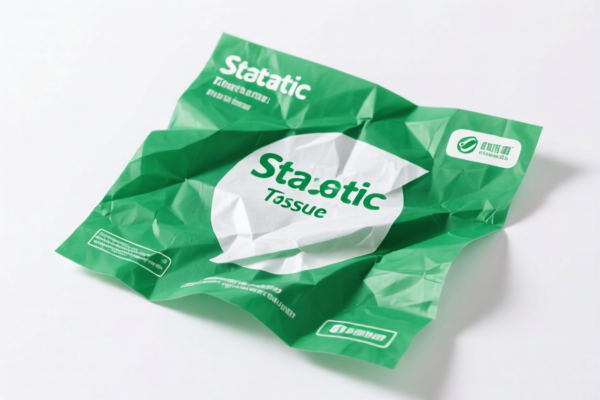
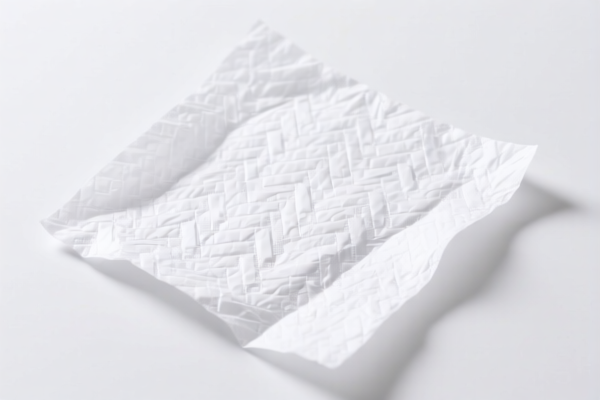
AI Analysis
📜 Paper Antistatic Agent (Starch-Based)
Also known as: Base Paper / Static-Sensitive Paper Substrate
🌐 HS Code Reference & Customs Clearance Guide | 2026 Latest Tariff Analysis | Professional Level Entry Strategy
📌 1. Product Definition & Classification: Do You Really Know "Paper Antistatic Agent (Starch-Based)"?
The product described as "Paper Antistatic Agent Starch Based" is essentially a paper substrate (base paper) used in the manufacturing of antistatic packaging or industrial paper products. The key characteristics are: * Material: Paper (cellulose-based). * Form: Sheets or rolls (flat/planar format). * Function/Property: "Antistatic" is a physical property, often achieved through surface coating or internal additives, but the core material remains paper. "Starch-based" indicates the sizing or additive used, which does not change the fundamental classification as a paper product. * Key Distinction: It is not a chemical product (like a spray or liquid antistatic agent) but a paper product that possesses antistatic properties.
⚠️ Critical Classification Point:
- If it is uncoated or simply coated base paper → Falls under 4811 (Paper coated, impregnated, covered, surface-colored, etc.).
- If it is cut sheets for specific end-use (like boxes or bags) → May fall under 4823 (Other articles of paper).
- Do NOT classify it as a chemical product (Chapter 38) because the primary identity is paper.
📦 2. HS Code Classification Details (2026 Latest Tariff Authority Comparison)
Based on the provided data, here are the three most relevant HS Codes with detailed matching logic:
| HS Code | Product Description | Matching Logic & Summary | Total Tax Rate |
|---|---|---|---|
| 4811.51.20.20 | Paper folded cartons / Base Paper for folding cartons | Match Basis: The product is identified as "base paper" (基纸), which fits the material attribute of paper products and the sheet/roll format. No material conflict with folding carton base paper. | 35.0% |
| 4811.51.20.40 | Coated/Covered Base Paper for Packaging | Match Basis: "Base paper" is a raw paper form. The "antistatic" attribute is a physical characteristic. This does not conflict with the processing features of coated/covered base paper for packaging. It is considered packaging base paper. | 35.0% |
| 4823.90.86.80 | Other paper articles (General) | Match Basis: Material is "paper" (base paper), fitting the category of "articles of paper, paperboard, cellulose wadding." It is classified as "other paper articles" with no material conflict. | 35.0% |
🔍 Key Insight:
- All three codes result in the same total tax rate of 35.0%.
- The difference lies in the specific use and processing state: - 4811.51.20.20/40: For base paper used in folding cartons or packaging, often implying a specific coating or treatment stage. - 4823.90.86.80: A broader category for other paper products, possibly if the paper is cut into specific non-carton shapes or for general industrial use.
💰 3. 2026 Latest Tariff Rate Breakdown (Including Surtaxes & Policy Additions)
✅ Applicable Country: United States (US)
✅ Origin: China (CN)
✅ Effective Date: From November 10, 2025 (including subsequent imports)
🎯 1. 4811.51.20.20 – Base Paper for Folding Cartons
| Item | Content |
|---|---|
| Basic Tariff | 0.0% (ad valorem) |
| Section 301 Surtax | +25.0% (USITC Footnote 9903.88.01) |
| IEEPA Surtax (122) | +10.0% (Targeting Chinese/HK products, effective Nov 10, 2025) |
| Total Tariff Rate | 35.0% |
| Tax Calculation | CIF Value × 35% |
| De Minimis Exemption | ❌ Not Eligible (deny_de_minimis) |
| Legal Basis Path | IEEPA:9903.01.25 → IEEPA:9903.01.24 → USITC:4811.51.20.20 → FOOTNOTE:9903.88.01 |
📌 Explanation:
- The 25% surtax is under the US Trade Act Section 301.
- The 10% IEEPA surtax is an additional charge under the International Emergency Economic Powers Act for Chinese goods.
- Total 35% is a high tariff, requiring advance planning.
🎯 2. 4811.51.20.40 – Coated Base Paper for Packaging
| Item | Content |
|---|---|
| Basic Tariff | 0.0% |
| Section 301 Surtax | +25.0% |
| IEEPA Surtax (122) | +10.0% |
| Total Tariff Rate | 35.0% |
| Tax Calculation | CIF × 35% |
| De Minimis Exemption | ❌ Not Eligible |
| Legal Basis Path | IEEPA:9903.01.25 → IEEPA:9903.01.24 → USITC:4811.51.20.40 → FOOTNOTE:9903.88.01 |
📌 Note:
- Identical tariff structure to 4811.51.20.20.
- Even if the paper has antistatic coatings or starch-based additives, as long as it is classified as base paper for packaging, this rate applies.
🎯 3. 4823.90.86.80 – Other Paper Articles
| Item | Content |
|---|---|
| Basic Tariff | 0.0% |
| Section 301 Surtax | +25.0% |
| IEEPA Surtax (122) | +10.0% |
| Total Tariff Rate | 35.0% |
| Tax Calculation | CIF × 35% |
| De Minimis Exemption | ❌ Not Eligible |
| Legal Basis Path | IEEPA:9903.01.25 → IEEPA:9903.01.24 → USITC:4823.90.86.80 → FOOTNOTE:9903.88.01 |
📌 Note:
- If the paper is not used for folding cartons or specific packaging base forms, it may fall under "other paper articles."
- The tariff rate remains 35% due to the same surtax rules.
🛠️ 4. Customs Clearance Practical Advice (Battle-Tested Pitfall Guide)
✅ 1. Required Documentation Checklist (None Can Be Omitted)
| Document | Mandatory | Explanation |
|---|---|---|
| ✅ Product Specification Sheet | ✔️ | Must detail material (paper type), coating/additives (starch/antistatic agents), dimensions, and roll/sheet format. |
| ✅ Product Photos (Including Labels) | ✔️ | Clear images of the product, showing any markings like "Antistatic" or "Base Paper." |
| ✅ Commercial Invoice | ✔️ | Must explicitly state "Paper Base for Antistatic Packaging" or similar accurate description. Avoid vague terms like "Chemical Product." |
| ✅ Packing List | ✔️ | Specify weight, dimensions, and number of rolls/sheets. |
| ✅ Certificate of Origin (CO) | ✔️ | If non-Chinese origin, may qualify for preferential rates (but unlikely for paper from China). |
| ✅ Third-Party Test Report | ✔️ | If claiming antistatic properties, provide test reports to justify classification as a paper product, not a chemical. |
✅ 2. Declaration Tips (Key Mantra)
🔥 "Paper is Paper, Not Chemical; Coating is Key, Base Material Prevails!"
| Situation | Correct Declaration | Wrong Approach |
|---|---|---|
| Base Paper with Antistatic Coating | 4811.51.20.20/40 |
Misdeclare as "Chemical Coating" → Higher scrutiny & potential misclassification |
| Cut Paper Sheets for Boxes | 4811.51.20.20 |
Misdeclare as "Cardboard" (different HS) → Delay |
| Roll Paper for Industrial Use | 4823.90.86.80 |
Misdeclare as "Raw Paper" (uncut) → Wrong code |
| Starch-Based Additive Paper | 4811 or 4823 |
Misdeclare as "Adhesive Paper" (Chapter 35) → 35% tax but wrong code |
✅ 3. Special Cases Handling
| Situation | Handling Advice |
|---|---|
| OEM Custom Antistatic Paper | Provide customer order + design specs to prove it's a specific paper product, not a generic chemical. |
| Paper with Starch Sizing | Clearly state "Starch-Based Sizing" in specs. It doesn't change paper classification but explains the "starch" mention. |
| Antistatic Property Claims | If disputed, provide test reports showing the antistatic level is a property of the paper, not a separate chemical product. |
| Mixed Shipments (Paper + Chemicals) | Declare separately. Paper under HS 4811/4823, Chemicals under HS 3824/3811. Do not mix. |
🌍 5. Global Customs Clearance Comparison (2026 Latest)
| Country/Region | Recommended HS Code | Tariff | Certification Required | Notes |
|---|---|---|---|---|
| 🇺🇸 USA | 4811.51.20.20 / 4823.90.86.80 |
35% (China Origin) | None specific, but accurate description required | 35% total due to Section 301 + IEEPA |
| 🇨🇳 China | 4811.51.20.20 |
5-8% | None | Lower tariffs for domestic use |
| 🇪🇺 EU | 4811.51 |
6.5% | CE (if applicable for end-product) | No Section 301 surtax |
| 🇦🇺 Australia | 4811.51 |
5% | None | Moderate tariff |
| 🇯🇵 Japan | 4811.51 |
3.2% | None | Lower tariff |
📌 Conclusion:
- USA has the highest effective tariff (35%) for Chinese paper products due to additional surtaxes.
- EU, Australia, and Japan have significantly lower tariffs, making them more competitive markets for paper products.
- Strategy: For US imports, ensure accurate classification to avoid penalties. Consider supply chain diversification if tariffs impact profitability.
📌 6. Common Errors & Pitfall Guide (Lessons from Experience)
❌ Error 1: Declaring "Antistatic Paper" as a "Chemical Product" (Chapter 38)
👉 Consequence: Customs may reject it as misclassified, leading to delays, fines, and potential back-tariffs.
👉 Correct: Classify under Chapter 48 (Paper).
❌ Error 2: Omitting "Base Paper" or "Coating" in Description
👉 Consequence: Customs may suspect hidden chemicals or misdeclare as generic cardboard.
👉 Correct: Use precise terms like "Antistatic-Coated Base Paper."
❌ Error 3: Claiming "Starch-Based" as a separate chemical additive
👉 Consequence: If starch is part of the paper manufacturing process, it remains paper. Separating it incorrectly may trigger additional reviews.
👉 Correct: State "Starch-Sized Paper" within the paper description.
❌ Error 4: Not Providing Test Reports for Antistatic Claims
👉 Consequence: Customs may doubt the product's nature, leading to additional inspections.
👉 Correct: Include test reports proving antistatic properties as a paper characteristic.
✅ Correct Declaration Example:
"Antistatic-Coated Base Paper, Starch-Sized, for Packaging, Rolls/Sheets, HS 4811.51.20.20"
🎯 7. Conclusion: Professional Declaration, Time-Saving, Cost-Effective!
🎯 Key Mantra:
🔹 "Paper is Paper, Not Chemical; Base Material Prevails!"
🔹 "HS Code Determines Tax; 35% Total Rate for US China Paper!"
🔹 "Accurate Description Saves Time and Money!"
📌 Pro Tip:
If your paper is originating from Vietnam, Mexico, Thailand, or Malaysia, you may qualify for IEEPA Exemptions, reducing tariffs to 0%-5%.
Recommend pre-advance ruling to avoid clearance risks.
📣 Immediate Action:
📞 Contact a professional customs broker + Provide product specs + Apply for HS Code Advance Ruling
🚀 Let your paper products clear customs smoothly, export efficiently, and maximize profits!
✨ Professional Clearance Starts with Accurate Classification!
💼 Every cent of your cost deserves precise calculation!
Customer Reviews
About HS Code Classification
The Harmonized System (HS) is an internationally standardized nomenclature developed by the World Customs Organization (WCO) to classify traded products. Over 200 countries use the HS system as the basis for customs tariffs, trade statistics, and import/export regulations.
Each HS code follows a hierarchical structure:
- Chapter (2 digits) — Broad category of goods (e.g., Chapter 84: Machinery and Mechanical Appliances)
- Heading (4 digits) — More specific grouping within the chapter
- Subheading (6 digits) — Internationally standardized breakdown, used by all WCO member countries
- National subdivisions (8-10 digits) — Country-specific extensions for further classification, such as US HTSUS 10-digit codes
Correct HS code classification is essential for smooth customs clearance, accurate duty payment, and compliance with trade regulations. Misclassification can lead to customs delays, overpayment of duties, or penalties.
When importing from CN to US, the applicable tariff rates may include:
- Most-Favored-Nation (MFN) rate — The standard duty rate applied to WTO members
- General rate — Applied to countries without trade agreements
- Trade remedy duties — Additional tariffs such as Section 301 (anti-dumping), Section 232 (national security), or countervailing duties
The information provided on this page is for reference purposes only. For official classification, please consult with your local customs authority or a licensed customs broker.