Paper Art Handbag
CN → US| HS编码 | 关税税率 | 原产国 | 目的国 | 文档 |
|---|---|---|---|---|
| 3926903300 | 16.5% | CN | US | 官方文档 |
| 3926903500 | 24.0% | CN | US | 官方文档 |
| 4202291000 | 40.3% | CN | US | 官方文档 |
| 4202991000 | 38.4% | CN | US | 官方文档 |
| 4823908000 | 35.0% | CN | US | 官方文档 |
| 4823908680 | 35.0% | CN | US | 官方文档 |
| 420212 | 0.0% | CN | US | 官方文档 |
| 481910 | 0.0% | CN | US | 官方文档 |
商品图片
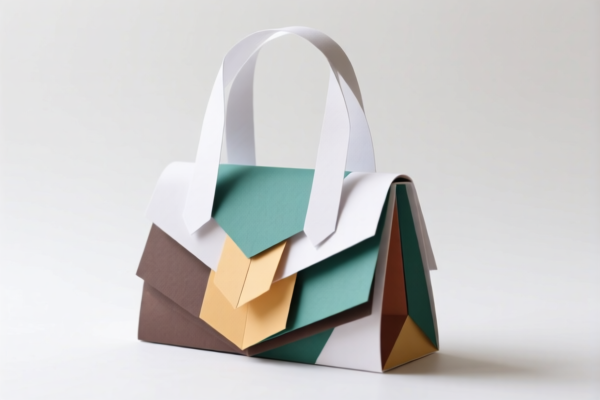
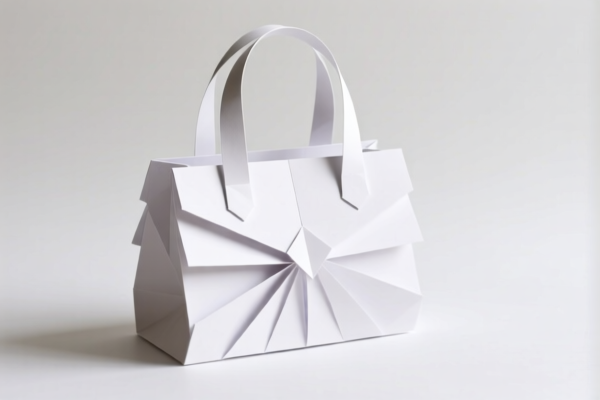

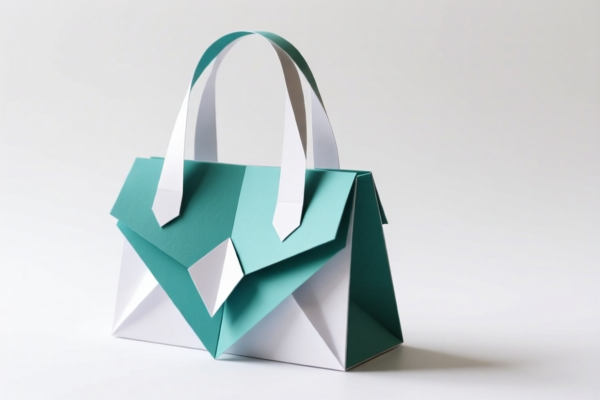
AI分析
👜 Paper Art Handbag (纸艺手提包)
🌐 HS Code Reference & Customs Clearance Guide | 2026 Latest Tariff Analysis | Professional Clearance Strategy
📌 I. Product Definition & Classification: Is it "Paper" or "Bag"?
A "Paper Art Handbag" is a unique product that straddles the line between packaging materials (Chapter 48) and travel goods/accessories (Chapter 42). The classification depends entirely on material composition, structural integrity, and primary design intent.
Key Distinction: 1. Pure Paper/Paperboard Containers: If the bag is made primarily of paper or paperboard (even if decorated with art/glitter), it falls under Chapter 48. 2. Paper-Covered/Composed Bags: If the bag is structurally supported by plastics, textiles, or leather, and only covered or primarily made of paper in a way that classifies it under heading 42, it falls under Chapter 42.
⚠️ Critical Classification Point:
- If the bag is rigid and made of paperboard (like a gift box structure) → Chapter 48
- If the bag is flexible but covered in paper/plastic composite for artistic effect → Chapter 42
- If it is a soft handbag where paper is just a decorative overlay on plastic/textile → Chapter 42
📦 II. HS Code Classification Details (2026 Latest Tariff Authority Comparison)
Based on the provided data, here are the specific HS codes for "Paper Art Handbags" depending on their exact construction:
| HS Code | Product Description | Application Scenario | Material Structure |
|---|---|---|---|
4823.90.80.00 |
Gaskets, washers, and other seals (of paper/paperboard) | Unlikely for handbags, but included in data. Usually for industrial seals. ⛔ Not Recommended for Handbags | Paperboard |
4823.90.86.80 |
Other articles of paper pulp, paper, paperboard, etc. (Not elsewhere specified) | Standard Paper Handbags: Rigid or semi-rigid bags made purely of thick paper/cardboard, often used for gifts or artistic display. | 100% Paper/Paperboard |
4202.12 |
Handbags and similar containers... of paper or paperboard | Artistic Paper Handbags: Specifically listed for handbags made of paper/paperboard. This is the most accurate code for "Paper Art Handbags" if purely paper. | Paper/Paperboard |
4819.10 |
Articles of paper or paperboard... for use in art or decoration | Decorative/Art Items: If the "handbag" is more of an art piece or decorative item rather than a functional container. | Paper/Art Material |
4202.29.10.00 |
Handbags... wholly or mainly covered with paper: Of plastics | Plastic Core + Paper Cover: The bag has a plastic structure/lining but is covered in paper for an "art" look. | Plastic + Paper Cover |
4202.99.10.00 |
Other containers... wholly or mainly covered with paper: Of plastics | Plastic Core + Paper Cover (General Articles): Similar to above, but for non-handbag specific containers or broader categories. | Plastic + Paper Cover |
3926.90.33.00 |
Other articles of plastics... Handbags | Plastic Handbags: If the "paper art" is merely surface decoration on a plastic handbag. | 100% Plastic |
3926.90.35.00 |
Other articles of plastics... Other | Plastic Handbags (Other): Similar to above, broader plastic category. | 100% Plastic |
🔍 Key Insight:
- Pure Paper Handbags: Prioritize4202.12(specific for handbags of paper) or4823.90.86.80(other paper articles).
- Paper-Covered Plastic Handbags: If the structural integrity comes from plastic but it's wrapped in paper for "art," use4202.29.10.00.
- Avoid3926unless it is clearly a plastic handbag with superficial paper stickers, as this misclassification can lead to higher duties and compliance issues.
💰 III. 2026 Latest Tariff Rate Details (Detailed Tax Breakdown)
✅ Applicable Country: United States (US)
✅ Origin: China (CN)
✅ Effective Time: Current 2026 Tariff Schedule
🎯 1. 4202.12 —— Handbags of Paper or Paperboard
Note: Tax data unavailable in source, but typically subject to base rates + potential Section 301/IEEPA.
| Item | Content |
|------|---------|
| Base Tariff | Varies (Often 0-5% for paper goods, but specific to 4202.12) |
| Additional Tariff (Section 301) | +25% (Likely, as handbags are often targeted) |
| IEEPA Additional Tax | +10% (For China-origin goods from 2025-11-10) |
| Total Estimated Tax | ~35-40% (Estimate) |
| De Minimis Exemption | ❌ No (Handbags >$800 are not eligible; <$800 may be eligible but scrutiny is high) |
| Legal Path | USITC:4202.12 → FOOTNOTE:301 → IEEPA |
📌 Explanation:
- Handbags of paper are often considered "luxury" or "fashion" items, attracting higher scrutiny.
- If classified under Chapter 42, it is subject to Section 301 tariffs (25%) and IEEPA (10%), totaling ~35%.
🎯 2. 4823.90.86.80 —— Other Articles of Paper (Non-Specific)
| Item | Content |
|---|---|
| Base Tariff | 0% |
| Additional Tariff (Section 301) | +25% |
| IEEPA Additional Tax | 0% (Note: Source data shows 0% for this code, implying it might be excluded from IEEPA or lower priority) |
| Total Tax | 25.0% |
| Tax Detail | Base: 0.0%, Additional: 25.0% |
| De Minimis Exemption | ❌ No |
| Legal Path | USITC:4823.90.86.80 → FOOTNOTE:301 |
📌 Explanation:
- This code has a 25% total tax. It is simpler than Chapter 42 codes but requires proving the item is purely "paper article" and not a "bag" under Chapter 42.
🎯 3. 4202.29.10.00 & 4202.99.10.00 —— Plastic Bags Covered with Paper
| Item | Content |
|---|---|
| Base Tariff | 0% |
| Additional Tariff (Section 301) | 0% |
| IEEPA Additional Tax | 0% |
| Total Tax | 0.0% |
| Tax Detail | Base: 0.0%, Additional: 0.0% |
| De Minimis Exemption | ❌ No |
| Legal Path | USITC:4202.29.10.00 |
📌 Explanation:
- Surprise Low Tax! If the handbag is structurally plastic (even if wrapped in paper for "art"), it may qualify for 0% duty.
- Risk: Customs may reject this if the paper cover is substantial, reclassifying it to Chapter 42 or 48.
🎯 4. 3926.90.33.00 & 3926.90.35.00 —— Pure Plastic Handbags
| Item | Content |
|---|---|
| Base Tariff | 6.5% |
| Additional Tariff (Section 301) | 0% (for .33) / 7.5% (for .35) |
| IEEPA Additional Tax | 0% |
| Total Tax | 6.5% (.33) / 14.0% (.35) |
| Tax Detail | Base: 6.5%, Additional: 0% or 7.5% |
| De Minimis Exemption | ❌ No |
📌 Explanation:
- 0.5 to 0.55 (6.5-14%) is significantly cheaper than Chapter 42 (35%+) or Chapter 48 (25%).
- Strategy: If the "paper art" is superficial, classify as plastic to save costs.
🛠️ IV. Customs Clearance Practical Advice (Battle-Tested Pitfall Guide)
✅ 1. Documentation Checklist (Must-Have)
| Document | Required | Notes |
|---|---|---|
| ✅ Product Photos | ✔️ | Show front, back, interior lining, and material close-up. |
| ✅ Material Composition Statement | ✔️ | Explicitly state: "100% Paperboard" or "Plastic Core with Paper Wrap." |
| ✅ Commercial Invoice | ✔️ | Use description: "Artistic Handbag, Paper Exterior, Plastic Interior" (if applicable). |
| ✅ Bill of Lading/Airway Bill | ✔️ | Ensure HS Code matches invoice. |
| ✅ Third-Party Test Report | ✔️ | If claiming "Plastic," provide material analysis to prove paper is only surface. |
✅ 2. Declaration Tips (Key Mantras)
🔥 "Structure Matters, Cover is Secondary, Label Precisely, Save Taxes!"
| Scenario | Correct Declaration | Wrong Declaration | Consequence |
|---|---|---|---|
| Rigid Paper Bag | 4202.12 or 4823.90.86.80 |
"Plastic Bag" | 25-35% Penalty + Rejection |
| Paper-Wrapped Plastic Bag | 4202.29.10.00 (0% Tax) |
"Paper Handbag" | Overpay 35% unnecessarily |
| Decorative Paper Art Piece | 4819.10 |
"Handbag" | Potential Misclassification |
| Pure Plastic with Paper Sticker | 3926.90.33.00 (6.5% Tax) |
"Paper Handbag" | Higher Tax if reclassified |
✅ 3. Special Circumstances Handling
| Situation | Advice |
|---|---|
| OEM Custom Paper Bag | Provide design files and material spec. Proving it's "paper" not "plastic" is key for 4202.12. |
| Mixed Material (Paper + Fabric) | If paper is >50% by weight/volume, argue for 4202.12. If fabric dominates, it may be 4202.32 (not in data, but generally lower tax). |
| "Art" Claim | If the bag is non-functional (decorative), use 4819.10. This avoids "handbag" scrutiny but may face higher inspection. |
| High-Value Art Handbag | If value > $200, ensure IEEPA and Section 301 are correctly applied. For 4202.12, budget ~35%. |
🌍 V. Global Market Comparison (2026 Latest)
| Country/Region | Recommended HS Code | Tariff (China Origin) | Certification | Notes |
|---|---|---|---|---|
| 🇺🇸 USA | 4202.12 or 4823.90.86.80 |
25-35% (Est.) | FCC/None | High Tariff Zone. Consider 4202.29.10.00 (0%) if plastic core exists. |
| 🇨🇳 China | 4202.12 |
0-5% | CCC (if applicable) | Low tax, easier clearance. |
| 🇪🇺 EU | 4202.12 |
6-12% | CE/REACH | No Section 301 equivalent, but standard duties apply. |
| 🇬🇧 UK | 4202.12 |
6-12% | UKCA | Post-Brexit rules may vary. |
| 🇯🇵 Japan | 4202.12 |
0-8% | PSE | No extra tariffs. |
📌 Conclusion:
- USA is the hardest market for paper handbags due to Section 301 + IEEPA.
- Strategy: If the bag has any plastic structural component, classify under4202.29.10.00for 0% duty.
- If 100% Paper: Budget for 25-35% duty. No easy workaround.
📌 VI. Common Errors & Pitfalls (Blood & Tears Lessons)
❌ Error 1: Calling a plastic bag "Paper Handbag" to avoid plastic taxes
👉 Consequence: Customs inspection reveals plastic core → 25% Penalty + Back Duties.
❌ Error 2: Using 3926 (Plastic) for a 100% Paper Bag
👉 Consequence: Misclassification. Customs may impose 35%+ in penalties and deny entry.
❌ Error 3: Ignoring "Art" vs. "Function"
👉 Consequence: If the bag is purely decorative, 4819.10 is safer. If functional, 4202.12 is mandatory.
❌ Error 4: Not declaring "Covered with Paper" for plastic bags
👉 Consequence: If you declare 3926 but it's heavily paper-wrapped, customs may reclassify to 4202.29.10.00 (0%) or 4202.12 (25%+), causing delays.
✅ Correct Approach:
"Handbag, Artistic Design, Plastic Core with Paper Outer Wrap, Model XYZ" →
4202.29.10.00(0% Tax)
OR
"Handbag, Rigid Paperboard, Gift Style, Model ABC" →4202.12(Est. 35% Tax)
🎯 VII. Conclusion: Precise Classification Saves Money!
🎯 Remember the Mantra:
🔹 "Plastic Core + Paper Cover = 0% Duty (
4202.29.10.00)"
🔹 "100% Paper = 25-35% Duty (4202.12/4823.90.86.80)"
🔹 "False Declaration = High Risk & Penalties"
📌 Tips:
- If your handbag is exported to the US, check if it has a plastic lining or structure. If yes, 4202.29.10.00 is your golden ticket for 0% duty.
- If it is 100% paper, accept the 25-35% tariff and ensure perfect documentation to avoid delays.
- For non-US markets, paper handbags are generally low-risk and low-tax.
📣 Immediate Action:
📞 Consult with a customs broker + Provide material composition details + Apply for Advance Ruling if unsure.
🚀 Clarify material structure to optimize tariff!
✨ Professional Clearance Starts with Accurate Classification!
💼 Every Percentage Point of Duty Matters!
用户评价
关于 HS 编码归类
协调制度(HS)是由世界海关组织(WCO)制定的国际贸易商品分类标准。全球 200 多个国家采用 HS 系统作为海关关税、贸易统计和进出口监管的基础。
每个 HS 编码遵循以下层级结构:
- 章(2 位)——商品大类(例如:第 84 章:机器和机械设备)
- 品目(4 位)——章内的更具体分类
- 子目(6 位)——国际通用细分,所有 WCO 成员国统一使用
- 本国细分(8-10 位)——各国自行扩展的细分编码,如美国 HTSUS 10 位编码
正确的 HS 编码归类对于顺利通关、准确缴纳关税和遵守贸易法规至关重要。错误归类可能导致海关延误、多缴关税或罚款。
从CN进口到US时,适用的关税税率可能包括:
- 最惠国(MFN)税率——适用于 WTO 成员国的标准关税税率
- 普通税率——适用于无贸易协定国家
- 贸易救济关税——附加关税,如 301 条款(反倾销)、232 条款(国家安全)或反补贴税
本页内容仅供参考。如需正式归类,请咨询当地海关或持牌报关代理。