Paper Frying Tray
CN → US| HS编码 | 关税税率 | 原产国 | 目的国 | 文档 |
|---|---|---|---|---|
| 4819100020 | 35.0% | CN | US | 官方文档 |
| 4819200020 | 35.0% | CN | US | 官方文档 |
| 4823610020 | 35.0% | CN | US | 官方文档 |
| 4823690040 | 35.0% | CN | US | 官方文档 |
商品图片
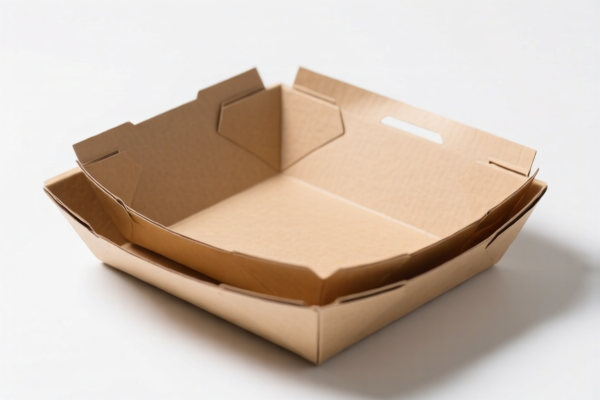
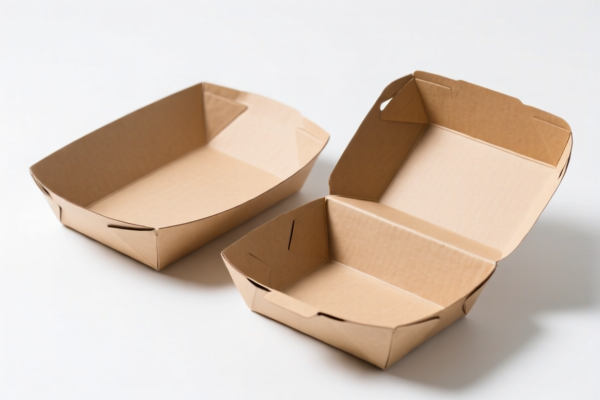
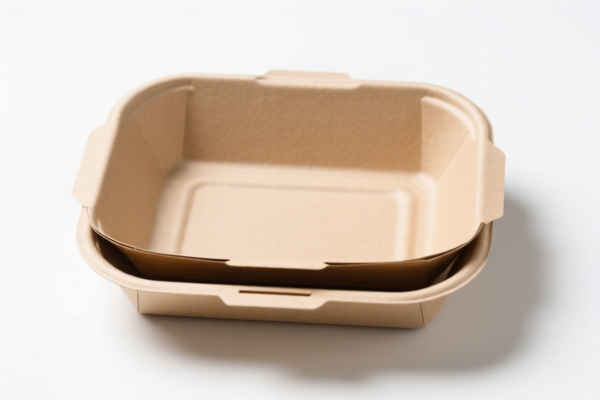
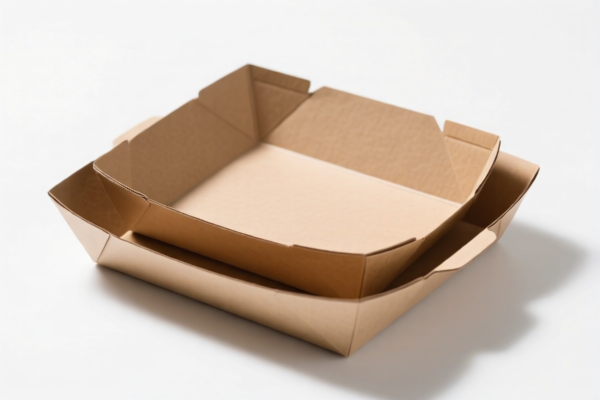
AI分析
🍳 Paper Frying Tray (Baking Paper / Greaseproof Paper Tray)
🌐 HS Code Reference & Customs Clearance Guide | 2026 Latest Tariff Analysis | Professional Strategy
📌 I. Product Definition & Classification: What Exactly is a "Paper Frying Tray"?
A "Paper Frying Tray" is a single-use, disposable food-contact container made from paper-based materials, typically treated with silicone or other heat-resistant coatings to prevent grease leakage and withstand high oven temperatures. In international trade, the classification hinges entirely on whether the paper is coated/treated and its form factor.
Key Distinctions:
Plain Paper Board/Cardboard Trays: Uncoated or simply waxed paper trays used for dry foods or non-greasy items.
Silicone-Coated Paper Frying Liners/Trays: The most common type for "frying" or baking. These are coated with food-grade silicone to be greaseproof and heat-resistant (up to 220°C+).
Molded Pulp Trays*: Trays formed from recycled paper pulp without heavy chemical coatings (less common for direct "frying" but possible for baking).
⚠️ Critical Classification Point:
- If the product is silicone-coated paper (greaseproof/heat-resistant) → Classified under Chapter 48 (Paper) or Chapter 49 depending on processing.
- If it is a molded pulp container (no coating) → Classified under 4823 (Cut paper/pulp) or 4819 (Cartons).
- Most common "Paper Frying Trays" for home/restaurant use are silicone-coated, falling under 4823.90.
📦 II. HS Code Classification Details (2026 Official Tariff Schedule)
| HS Code | Product Description | Application Scenario | Coating Type |
|---|---|---|---|
4823.90.60.00 |
Silicone-coated paper & paperboard, cut to size or shape | Most Common: Silicone-coated baking/frying liners, sheets, or pre-formed trays for oven use | ✅ Silicone-coated |
4823.90.80.00 |
Other paper, paperboard, cellulose wadding, or boards, cut to size or shape | Uncoated or waxed paper trays; molded pulp containers not specified elsewhere | ❌ No/Minimal |
4819.10.00.00 |
Fiberboard boxes, crates, cases | If the frying tray is part of a larger box or sold as a boxed set (less likely for single-use liners) | N/A |
3926.90.97.00 |
Other articles of plastic | Misclassification Alert: If the "paper" is actually plastic-coated or entirely plastic-based | N/A |
🔍 Key Reminder:
- Silicone coating is key: Most "paper frying trays" are silicone-impregnated paper. This pushes them into 4823.90.
- Avoid 3926 (Plastics): Even if it looks plastic-like, if the base is paper, it stays in Chapter 48. Customs will check the composition.
- Food Contact Safety: Must comply with FDA (US), EU 10/2011, or local food safety standards.
💰 III. 2026 Latest Tariff Rate Breakdown (Including Surcharges)
✅ Applicable Country: United States (US)
✅ Country of Origin: China (CN)
✅ Effective Date: November 10, 2025 onwards (for imports after this date)
🎯 1. 4823.90.60.00 —— Silicone-Coated Paper Trays (Most Common)
| Item | Content |
|---|---|
| Base Tariff | 0% (ad valorem) |
| USITC Additional Tariff | +25% (from USITC Footnote 9903.88.01) |
| IEEPA Additional Tariff | +10% (targeting China/HK products, effective Nov 10, 2025) |
| Total Tariff Rate | 35% |
| Tax Calculation | CIF Value × 35% |
| De Minimis Eligibility | ❌ Denied (deny_de_minimis) |
| Legal Reference Path | IEEPA:9903.01.25 → IEEPA:9903.01.24 → USITC:4823.90.60.00 → FOOTNOTE:9903.88.01 |
📌 Explanation:
- The 25% USITC tariff is part of the Section 301 list, applying to many paper products from China.
- The 10% IEEPA tariff is a new surcharge on Chinese goods starting late 2025.
- Total 35% is a significant cost increase. Compare this to pre-2025 rates (0–2.5%).
- No de minimis exemption: Shipments under $800 do NOT qualify for tax-free entry.
🎯 2. 4823.90.80.00 —— Other Paper Trays (Uncoated/Molded Pulp)
| Item | Content |
|---|---|
| Base Tariff | 0% |
| USITC Additional Tariff | +25% |
| IEEPA Additional Tariff | +10% |
| Total Tariff Rate | 35% |
| Tax Calculation | CIF Value × 35% |
| De Minimis Eligibility | ❌ Denied |
| Legal Reference Path | IEEPA:9901.25 → IEEPA:9903.01.24 → USITC:4823.90.80.00 → FOOTNOTE:9903.88.01 |
📌 Note:
- Same tariff structure as silicone-coated.
- If the product is recycled molded pulp (eco-friendly branding), it still falls under 4823.90 and is not exempt from 301 tariffs.
🛠️ IV. Customs Clearance Practical Advice (Pitfall Avoidance Guide)
✅ 1. Required Documentation Checklist
| Document | Mandatory | Description |
|---|---|---|
| ✅ Product Specification Sheet | ✔️ | Must state: Material (e.g., "Silicone-coated Kraft Paper"), Heat Resistance Temp, Food Contact Compliance |
| ✅ FDA Compliance Certificate | ✔️ | Essential for food-contact items. Must reference FDA 21 CFR 176.170 (silicone) or 176.180 (paper) |
| ✅ Test Report | ✔️ | From accredited lab (e.g., SGS, Intertek) proving heavy metal limits, migration tests, and silicone stability |
| ✅ Commercial Invoice | ✔️ | Must describe as "Silicone-Coated Paper Frying Trays" – NOT "Plastic Trays" or "Food Packaging" |
| ✅ Packing List | ✔️ | Net weight, gross weight, dimensions |
| ✅ Country of Origin Certificate | ✔️ | If claiming exemption (e.g., from Vietnam), must provide Form A or CO |
✅ 2. Declaration Tips (Key Mnemonic)
🔥 "Paper is Paper, Coating Defines Code, FDA is King, 35% Tax Hits Hard!"
| Scenario | Correct Declaration | Wrong Practice |
|---|---|---|
| Silicone-coated frying tray | 4823.90.60.00 |
Misdeclare as 3926.90.97.00 (Plastic) → Audit risk |
| Uncoated cardboard tray | 4823.90.80.00 |
Misdeclare as 4819 (Box) → Wrong duty |
| Plastic-lined paper tray | 3926.90.97.00 |
Misdeclare as Paper → Classification error |
| Sold as "Baking Paper Rolls" | 4823.90.60.00 |
Declared as "Office Paper" → Delay |
✅ 3. Special Circumstances Handling
| Situation | Handling Advice |
|---|---|
| OEM Private Label | Ensure label shows material composition and food-safe warning |
| Eco-Friendly/Biodegradable | Provide compostability certificate (e.g., BPI, OK Compost) but does not change HS Code |
| Shipment < $800 (De Minimis) | Still taxable at 35%. Do not rely on $800 exemption for Chinese goods |
| Vietnamese Origin | Can claim IEEPA exemption (tariff drops to 0–2.5%). Must prove substantial transformation in Vietnam |
🌍 V. Global Market Comparison (2026 Latest)
| Country/Region | Recommended HS Code | Tariff Rate (China Origin) | Certification Required | Notes |
|---|---|---|---|---|
| 🇺🇸 USA | 4823.90.60.00 |
35% (25% + 10%) | FDA 21 CFR Compliance | High tariff; consider Vietnam/Mexico sourcing |
| 🇨🇳 China | 4823.90.60.00 |
0–2.5% | GB 4806 (Food Contact) | Low import tax; high domestic competition |
| 🇪🇺 EU | 4823.90.60.00 |
0–2.5% | EU 10/2011, FDA equivalent | No Section 301-style tariffs |
| 🇬🇧 UK | 4823.90.60.00 |
0–5% | UKCA Marking (if needed) | Post-Brexit rules apply |
| 🇦🇺 Australia | 4823.90.60.00 |
5% | FSANZ Standards | No major surcharges |
📌 Conclusion:
- USA is the hardest market due to 35% total tariff.
- EU/UK/AU are friendly with 0–5% tariffs.
- Sourcing from Vietnam/Thailand/Mexico can eliminate IEEPA 10% and potentially USITC 25% (if substantial transformation occurs), reducing tax to near 0–5%.
📌 VI. Common Mistakes & Pitfalls (Blood & Tears Lessons)
❌ Mistake 1: Declaring as "Plastic Tray" (HS 3926)
👉 Consequence: If found to be paper-based, customs will reclassify, impose back-taxes, and fine. Plus, plastic may have higher environmental fees.
❌ Mistake 2: Ignoring FDA Compliance
👉 Consequence: Goods seized at US border for lacking food-contact safety proof. Delay: 2–4 weeks.
❌ Mistake 3: Claiming De Minimis for Chinese Shipments < $800
👉 Consequence: Tax still applies. CBP audits these heavily. Surprise bill for 35% duty.
❌ Mistake 4: Using "Paper Plate" (HS 4823.90.80) for Silicone-Coated Liners
👉 Consequence: Wrong sub-code. May trigger questions about coating type. Stick to 4823.90.60 for coated paper.
✅ Correct Practice:
"Silicone-Coated Paper Baking Frying Trays, Food-Grade, Heat Resistant to 220°C, FDA Compliant, Made in China"
🎯 VII. Conclusion: Smart Sourcing to Save Costs!
🎯 Key Takeaways:
🔹 "35% Tax on China Origin" is a hard reality for US imports since Nov 2025.
🔹 "Vietnam Origin = Big Savings": If you source from Vietnam, ensure substantial transformation (e.g., coating/printing done in Vietnam) to qualify for IEEPA exemption.
🔹 "FDA is Non-Negotiable": No certificate = No entry into US market.
📌 Pro Tip:
If your volume is high, apply for a Section 301 Exclusion if applicable, or restructure your supply chain to source coated paper from Southeast Asia.
Cost-Benefit Analysis:
- China Origin: 35% Tariff
- Vietnam Origin: ~0–5% Tariff
- Savings: ~30% on CIF value!
📣 Immediate Action:
📞 Contact your customs broker + Verify FDA compliance + Evaluate Vietnam sourcing options
🚀 Optimize your supply chain, avoid the 35% trap, and boost your profit margin!
✨ Professional Customs Clearance Starts with Accurate Classification!
💼 Every percentage point saved is pure profit!
用户评价
关于 HS 编码归类
协调制度(HS)是由世界海关组织(WCO)制定的国际贸易商品分类标准。全球 200 多个国家采用 HS 系统作为海关关税、贸易统计和进出口监管的基础。
每个 HS 编码遵循以下层级结构:
- 章(2 位)——商品大类(例如:第 84 章:机器和机械设备)
- 品目(4 位)——章内的更具体分类
- 子目(6 位)——国际通用细分,所有 WCO 成员国统一使用
- 本国细分(8-10 位)——各国自行扩展的细分编码,如美国 HTSUS 10 位编码
正确的 HS 编码归类对于顺利通关、准确缴纳关税和遵守贸易法规至关重要。错误归类可能导致海关延误、多缴关税或罚款。
从CN进口到US时,适用的关税税率可能包括:
- 最惠国(MFN)税率——适用于 WTO 成员国的标准关税税率
- 普通税率——适用于无贸易协定国家
- 贸易救济关税——附加关税,如 301 条款(反倾销)、232 条款(国家安全)或反补贴税
本页内容仅供参考。如需正式归类,请咨询当地海关或持牌报关代理。