Paper Frying Tray
CN → US| HS Code | Tariff Rate | Origin | Destination | Doc |
|---|---|---|---|---|
| 4819100020 | 35.0% | CN | US | Official Doc |
| 4819200020 | 35.0% | CN | US | Official Doc |
| 4823610020 | 35.0% | CN | US | Official Doc |
| 4823690040 | 35.0% | CN | US | Official Doc |
Product Images
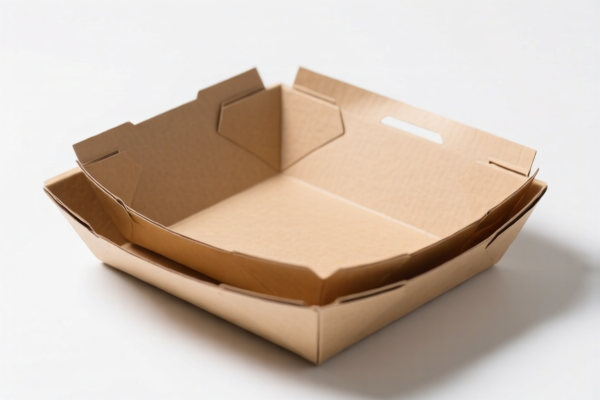
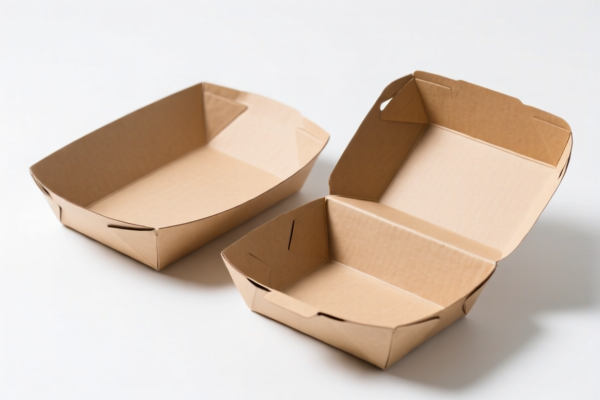
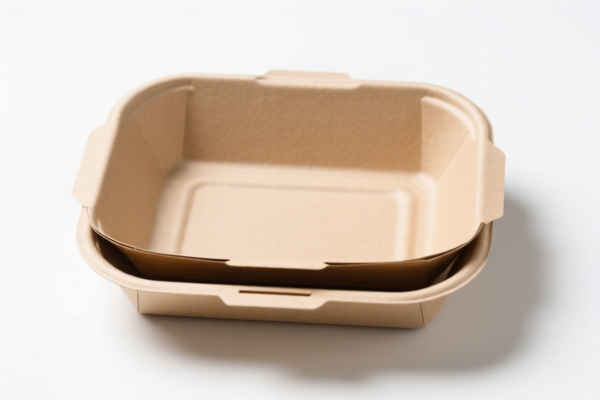
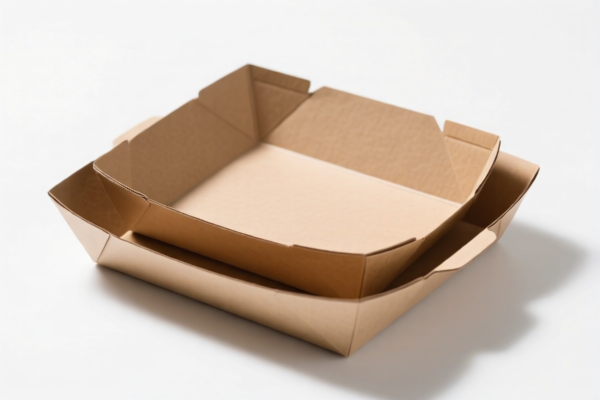
AI Analysis
🍳 Paper Frying Tray (Baking Paper / Greaseproof Paper Tray)
🌐 HS Code Reference & Customs Clearance Guide | 2026 Latest Tariff Analysis | Professional Strategy
📌 I. Product Definition & Classification: What Exactly is a "Paper Frying Tray"?
A "Paper Frying Tray" is a single-use, disposable food-contact container made from paper-based materials, typically treated with silicone or other heat-resistant coatings to prevent grease leakage and withstand high oven temperatures. In international trade, the classification hinges entirely on whether the paper is coated/treated and its form factor.
Key Distinctions:
Plain Paper Board/Cardboard Trays: Uncoated or simply waxed paper trays used for dry foods or non-greasy items.
Silicone-Coated Paper Frying Liners/Trays: The most common type for "frying" or baking. These are coated with food-grade silicone to be greaseproof and heat-resistant (up to 220°C+).
Molded Pulp Trays*: Trays formed from recycled paper pulp without heavy chemical coatings (less common for direct "frying" but possible for baking).
⚠️ Critical Classification Point:
- If the product is silicone-coated paper (greaseproof/heat-resistant) → Classified under Chapter 48 (Paper) or Chapter 49 depending on processing.
- If it is a molded pulp container (no coating) → Classified under 4823 (Cut paper/pulp) or 4819 (Cartons).
- Most common "Paper Frying Trays" for home/restaurant use are silicone-coated, falling under 4823.90.
📦 II. HS Code Classification Details (2026 Official Tariff Schedule)
| HS Code | Product Description | Application Scenario | Coating Type |
|---|---|---|---|
4823.90.60.00 |
Silicone-coated paper & paperboard, cut to size or shape | Most Common: Silicone-coated baking/frying liners, sheets, or pre-formed trays for oven use | ✅ Silicone-coated |
4823.90.80.00 |
Other paper, paperboard, cellulose wadding, or boards, cut to size or shape | Uncoated or waxed paper trays; molded pulp containers not specified elsewhere | ❌ No/Minimal |
4819.10.00.00 |
Fiberboard boxes, crates, cases | If the frying tray is part of a larger box or sold as a boxed set (less likely for single-use liners) | N/A |
3926.90.97.00 |
Other articles of plastic | Misclassification Alert: If the "paper" is actually plastic-coated or entirely plastic-based | N/A |
🔍 Key Reminder:
- Silicone coating is key: Most "paper frying trays" are silicone-impregnated paper. This pushes them into 4823.90.
- Avoid 3926 (Plastics): Even if it looks plastic-like, if the base is paper, it stays in Chapter 48. Customs will check the composition.
- Food Contact Safety: Must comply with FDA (US), EU 10/2011, or local food safety standards.
💰 III. 2026 Latest Tariff Rate Breakdown (Including Surcharges)
✅ Applicable Country: United States (US)
✅ Country of Origin: China (CN)
✅ Effective Date: November 10, 2025 onwards (for imports after this date)
🎯 1. 4823.90.60.00 —— Silicone-Coated Paper Trays (Most Common)
| Item | Content |
|---|---|
| Base Tariff | 0% (ad valorem) |
| USITC Additional Tariff | +25% (from USITC Footnote 9903.88.01) |
| IEEPA Additional Tariff | +10% (targeting China/HK products, effective Nov 10, 2025) |
| Total Tariff Rate | 35% |
| Tax Calculation | CIF Value × 35% |
| De Minimis Eligibility | ❌ Denied (deny_de_minimis) |
| Legal Reference Path | IEEPA:9903.01.25 → IEEPA:9903.01.24 → USITC:4823.90.60.00 → FOOTNOTE:9903.88.01 |
📌 Explanation:
- The 25% USITC tariff is part of the Section 301 list, applying to many paper products from China.
- The 10% IEEPA tariff is a new surcharge on Chinese goods starting late 2025.
- Total 35% is a significant cost increase. Compare this to pre-2025 rates (0–2.5%).
- No de minimis exemption: Shipments under $800 do NOT qualify for tax-free entry.
🎯 2. 4823.90.80.00 —— Other Paper Trays (Uncoated/Molded Pulp)
| Item | Content |
|---|---|
| Base Tariff | 0% |
| USITC Additional Tariff | +25% |
| IEEPA Additional Tariff | +10% |
| Total Tariff Rate | 35% |
| Tax Calculation | CIF Value × 35% |
| De Minimis Eligibility | ❌ Denied |
| Legal Reference Path | IEEPA:9901.25 → IEEPA:9903.01.24 → USITC:4823.90.80.00 → FOOTNOTE:9903.88.01 |
📌 Note:
- Same tariff structure as silicone-coated.
- If the product is recycled molded pulp (eco-friendly branding), it still falls under 4823.90 and is not exempt from 301 tariffs.
🛠️ IV. Customs Clearance Practical Advice (Pitfall Avoidance Guide)
✅ 1. Required Documentation Checklist
| Document | Mandatory | Description |
|---|---|---|
| ✅ Product Specification Sheet | ✔️ | Must state: Material (e.g., "Silicone-coated Kraft Paper"), Heat Resistance Temp, Food Contact Compliance |
| ✅ FDA Compliance Certificate | ✔️ | Essential for food-contact items. Must reference FDA 21 CFR 176.170 (silicone) or 176.180 (paper) |
| ✅ Test Report | ✔️ | From accredited lab (e.g., SGS, Intertek) proving heavy metal limits, migration tests, and silicone stability |
| ✅ Commercial Invoice | ✔️ | Must describe as "Silicone-Coated Paper Frying Trays" – NOT "Plastic Trays" or "Food Packaging" |
| ✅ Packing List | ✔️ | Net weight, gross weight, dimensions |
| ✅ Country of Origin Certificate | ✔️ | If claiming exemption (e.g., from Vietnam), must provide Form A or CO |
✅ 2. Declaration Tips (Key Mnemonic)
🔥 "Paper is Paper, Coating Defines Code, FDA is King, 35% Tax Hits Hard!"
| Scenario | Correct Declaration | Wrong Practice |
|---|---|---|
| Silicone-coated frying tray | 4823.90.60.00 |
Misdeclare as 3926.90.97.00 (Plastic) → Audit risk |
| Uncoated cardboard tray | 4823.90.80.00 |
Misdeclare as 4819 (Box) → Wrong duty |
| Plastic-lined paper tray | 3926.90.97.00 |
Misdeclare as Paper → Classification error |
| Sold as "Baking Paper Rolls" | 4823.90.60.00 |
Declared as "Office Paper" → Delay |
✅ 3. Special Circumstances Handling
| Situation | Handling Advice |
|---|---|
| OEM Private Label | Ensure label shows material composition and food-safe warning |
| Eco-Friendly/Biodegradable | Provide compostability certificate (e.g., BPI, OK Compost) but does not change HS Code |
| Shipment < $800 (De Minimis) | Still taxable at 35%. Do not rely on $800 exemption for Chinese goods |
| Vietnamese Origin | Can claim IEEPA exemption (tariff drops to 0–2.5%). Must prove substantial transformation in Vietnam |
🌍 V. Global Market Comparison (2026 Latest)
| Country/Region | Recommended HS Code | Tariff Rate (China Origin) | Certification Required | Notes |
|---|---|---|---|---|
| 🇺🇸 USA | 4823.90.60.00 |
35% (25% + 10%) | FDA 21 CFR Compliance | High tariff; consider Vietnam/Mexico sourcing |
| 🇨🇳 China | 4823.90.60.00 |
0–2.5% | GB 4806 (Food Contact) | Low import tax; high domestic competition |
| 🇪🇺 EU | 4823.90.60.00 |
0–2.5% | EU 10/2011, FDA equivalent | No Section 301-style tariffs |
| 🇬🇧 UK | 4823.90.60.00 |
0–5% | UKCA Marking (if needed) | Post-Brexit rules apply |
| 🇦🇺 Australia | 4823.90.60.00 |
5% | FSANZ Standards | No major surcharges |
📌 Conclusion:
- USA is the hardest market due to 35% total tariff.
- EU/UK/AU are friendly with 0–5% tariffs.
- Sourcing from Vietnam/Thailand/Mexico can eliminate IEEPA 10% and potentially USITC 25% (if substantial transformation occurs), reducing tax to near 0–5%.
📌 VI. Common Mistakes & Pitfalls (Blood & Tears Lessons)
❌ Mistake 1: Declaring as "Plastic Tray" (HS 3926)
👉 Consequence: If found to be paper-based, customs will reclassify, impose back-taxes, and fine. Plus, plastic may have higher environmental fees.
❌ Mistake 2: Ignoring FDA Compliance
👉 Consequence: Goods seized at US border for lacking food-contact safety proof. Delay: 2–4 weeks.
❌ Mistake 3: Claiming De Minimis for Chinese Shipments < $800
👉 Consequence: Tax still applies. CBP audits these heavily. Surprise bill for 35% duty.
❌ Mistake 4: Using "Paper Plate" (HS 4823.90.80) for Silicone-Coated Liners
👉 Consequence: Wrong sub-code. May trigger questions about coating type. Stick to 4823.90.60 for coated paper.
✅ Correct Practice:
"Silicone-Coated Paper Baking Frying Trays, Food-Grade, Heat Resistant to 220°C, FDA Compliant, Made in China"
🎯 VII. Conclusion: Smart Sourcing to Save Costs!
🎯 Key Takeaways:
🔹 "35% Tax on China Origin" is a hard reality for US imports since Nov 2025.
🔹 "Vietnam Origin = Big Savings": If you source from Vietnam, ensure substantial transformation (e.g., coating/printing done in Vietnam) to qualify for IEEPA exemption.
🔹 "FDA is Non-Negotiable": No certificate = No entry into US market.
📌 Pro Tip:
If your volume is high, apply for a Section 301 Exclusion if applicable, or restructure your supply chain to source coated paper from Southeast Asia.
Cost-Benefit Analysis:
- China Origin: 35% Tariff
- Vietnam Origin: ~0–5% Tariff
- Savings: ~30% on CIF value!
📣 Immediate Action:
📞 Contact your customs broker + Verify FDA compliance + Evaluate Vietnam sourcing options
🚀 Optimize your supply chain, avoid the 35% trap, and boost your profit margin!
✨ Professional Customs Clearance Starts with Accurate Classification!
💼 Every percentage point saved is pure profit!
Customer Reviews
About HS Code Classification
The Harmonized System (HS) is an internationally standardized nomenclature developed by the World Customs Organization (WCO) to classify traded products. Over 200 countries use the HS system as the basis for customs tariffs, trade statistics, and import/export regulations.
Each HS code follows a hierarchical structure:
- Chapter (2 digits) — Broad category of goods (e.g., Chapter 84: Machinery and Mechanical Appliances)
- Heading (4 digits) — More specific grouping within the chapter
- Subheading (6 digits) — Internationally standardized breakdown, used by all WCO member countries
- National subdivisions (8-10 digits) — Country-specific extensions for further classification, such as US HTSUS 10-digit codes
Correct HS code classification is essential for smooth customs clearance, accurate duty payment, and compliance with trade regulations. Misclassification can lead to customs delays, overpayment of duties, or penalties.
When importing from CN to US, the applicable tariff rates may include:
- Most-Favored-Nation (MFN) rate — The standard duty rate applied to WTO members
- General rate — Applied to countries without trade agreements
- Trade remedy duties — Additional tariffs such as Section 301 (anti-dumping), Section 232 (national security), or countervailing duties
The information provided on this page is for reference purposes only. For official classification, please consult with your local customs authority or a licensed customs broker.