Paper or Paperboard under 1 Square Meter
CN → US商品图片
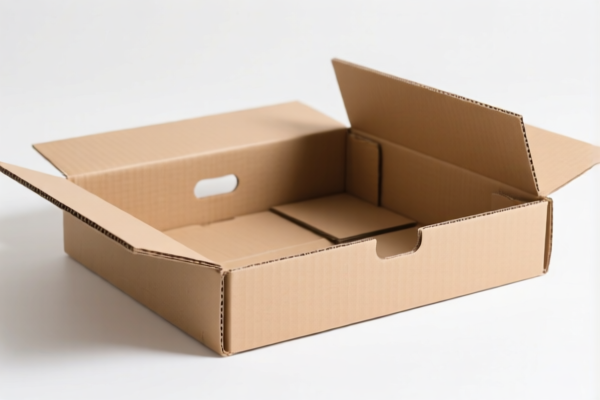
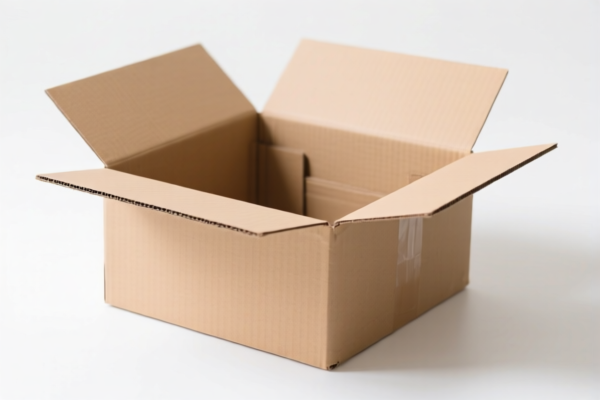
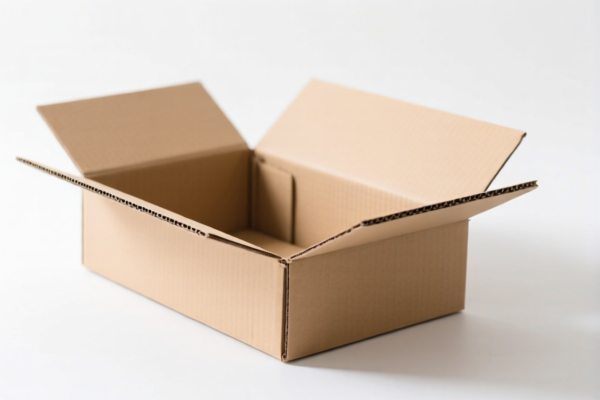
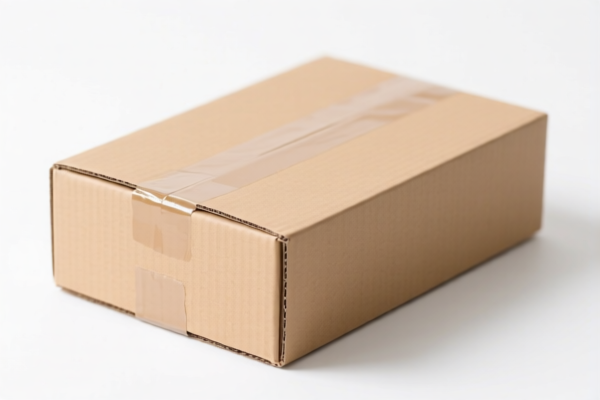
AI分析
📄 Paper & Paperboard (< 1 m²) | The "Small Format" Rule
🌐 HS Code Reference & Customs Clearance Guide | 2026 Tariff Code Deep Dive | Strategic Classification for Small Formats
📌 I. Product Definition: What Counts as "Under 1 Square Meter"?
In international trade, Paper and Paperboard are distinct categories based on weight, thickness, and use. However, when the surface area is less than 1 square meter, special classification rules often apply, particularly in Chapter 48 of the Harmonized System.
Key Distinctions: * Paper (Ch. 48): Generally thinner, more flexible, and often used for writing, printing, or packaging. * Paperboard (Ch. 48): Thicker, stiffer, and often used for boxes, cartons, or industrial applications.
⚠️ Critical Threshold:
- If the sheet/roll is < 1 m², it is often classified under specific subheadings for "cut to size" or "small format" items.
- Note: Some countries may have de minimis thresholds for customs valuation, but HS Code classification remains strict based on physical properties.
📦 II. HS Code Classification Matrix (2026 Latest Tariff Schedule)
Below is the authoritative breakdown for Paper and Paperboard under 1 m².
| HS Code | Product Description | Application Scenario | Key Characteristics |
|---|---|---|---|
4802.55.00.00 |
Paper, non-coated, unprinted, single-side coated, weighing ≤ 150 g/m² | Small sheets of office paper, receipt paper, small labels | Flexible, lightweight |
4802.61.00.00 |
Paper, other paper, non-coated, unprinted, weighing > 40 g/m² and ≤ 150 g/m² | General-purpose small format paper | Uncoated, standard weight |
4803.00.00.00 |
Toilet paper, tissue paper, facial tissue, handkerchiefs, napkins, handkerchief-type, handkerchief-type, handkerchief-type | Small packs of tissues, wipes, small napkins | Absorbent, soft |
4810.11.00.00 |
Paperboard, coated with kaolin clay or with other inorganic substances | Small boxes, cartons, cardstock samples | Thick, coated for printing |
4810.19.00.00 |
Paperboard, other coated paperboard | Small packaging materials, labels | Coated, unprinted |
4820.10.00.00 |
Notebooks, exercise books, letter pads, memo blocks, pads of writing paper | Small notebooks, sticky notes, notepads | Bound or assembled, ready for use |
4823.69.00.00 |
Other paper, paperboard, cellulose wadding and webs of cellulose fibers | Small cut pieces, industrial wipes, small filters | Cut to size, specific use |
🔍 Important Note:
-4820.10.00.00is for finished articles (like notebooks). If it's just loose sheets, look to4802or4810.
-4803is specifically for tissue products (toilet paper, tissues). Do not confuse with general paper.
- Weight per square meter (g/m²) is a critical factor for classification under4802and4804.
💰 III. 2026 Tariff Rate Breakdown (USA – China Origin)
✅ Applicable Country: United States (US)
✅ Country of Origin: China (CN)
✅ Effective Date: November 10, 2025 (including subsequent imports)
🎯 1. 4802.55.00.00 & 4802.61.00.00 – Standard Paper (< 1 m²)
| Item | Content |
|---|---|
| Base Rate | 4.7% (ad valorem) |
| USITC Additional Duty | +25% (from USITC Footnote 9903.88.01) |
| IEEPA Additional Duty | +10% (for China/HK products, effective Nov 10, 2025) |
| Total Rate | ~39.7% |
| Tax Calculation | CIF Value × 39.7% |
| De Minimis Eligibility | ❌ No (deny_de_minimis) |
| Legal Path | IEEPA:9903.01.25 → IEEPA:9903.01.24 → USITC:4802.55.00.00 → FOOTNOTE:9903.88.01 |
📌 Explanation:
- Paper is not exempt from Section 301 tariffs.
- The 25% USITC duty applies to many paper products unless specifically exempted (e.g., certain specialty papers).
- The 10% IEEPA duty is a new surcharge for China-origin goods.
🎯 2. 4810.11.00.00 & 4810.19.00.00 – Paperboard (< 1 m²)
| Item | Content |
|---|---|
| Base Rate | 3.4% (ad valorem) |
| USITC Additional Duty | +25% (if applicable under Footnote 9903.88.01) |
| IEEPA Additional Duty | +10% |
| Total Rate | ~38.4% |
| Tax Calculation | CIF Value × 38.4% |
| De Minimis Eligibility | ❌ No |
| Legal Path | IEEPA:9903.01.25 → IEEPA:9903.01.24 → USITC:4810.11.00.00 → FOOTNOTE:9903.88.01 |
📌 Note:
- Paperboard is often used for packaging. If it’s recycled content, check for potential exemptions or lower rates in other jurisdictions.
- Do not misclassify paperboard as "paper" – the base rates differ.
🎯 3. 4820.10.00.00 – Notebooks & Pads (Finished Goods)
| Item | Content |
|---|---|
| Base Rate | 3.4% (ad valorem) |
| USITC Additional Duty | +25% (if applicable) |
| IEEPA Additional Duty | +10% |
| Total Rate | ~38.4% |
| Tax Calculation | CIF Value × 38.4% |
| De Minimis Eligibility | ❌ No |
📌 Key Point:
- Finished goods like notebooks are often more expensive to classify because they are seen as manufactured articles, not raw materials.
🛠️ IV. Customs Clearance Practical Advice
✅ 1. Required Documentation Checklist
| Document | Must Provide | Notes |
|---|---|---|
| ✅ Product Specification Sheet | ✔️ | Include weight (g/m²), dimensions, type (coated/uncoated) |
| ✅ Commercial Invoice | ✔️ | Clearly state "Paper" or "Paperboard" and quantity |
| ✅ Packing List | ✔️ | Detail number of sheets/rolls per carton |
| ✅ Certificate of Origin | ✔️ | If claiming preferential rates (e.g., under FTAs) |
| ✅ Third-Party Test Report | ✔️ | For coated papers, prove chemical composition if required |
| ✅ FCC/CE Certificate | ❌ | Not required for paper, but may be needed if electronic components are embedded |
✅ 2. Classification Tips (Avoid Common Mistakes)
🔥 "Weight Defines Paper, Thickness Defines Board, Finish Defines Type!"
| Scenario | Correct HS Code | Incorrect HS Code | Consequence |
|---|---|---|---|
| Small sheets of printer paper | 4802.55.00.00 |
4810.11.00.00 |
Overpay duties by ~1.3% |
| Small cardboard boxes (unfolded) | 4810.11.00.00 |
4802.55.00.00 |
Misclassification, potential penalties |
| Tissues/Wipes | 4803.00.00.00 |
4802.55.00.00 |
Wrong base rate, audit risk |
| Notebooks/Pads | 4820.10.00.00 |
4802.55.00.00 |
Misclassification, as finished goods have different rules |
✅ 3. Special Cases
| Case | Handling Advice |
|---|---|
| Recycled Paper | Check for Chapter 48 Notes – some recycled papers may have different classifications or exemptions. |
| Colored Paper | If dyed, it may fall under 4804.59.00.00 (dyed paper). Verify color application method. |
| Perforated Paper | If perforated for printing, it may still be 4802. If for receipts, check 4802.55.00.00. |
| Small Labels | If self-adhesive, classify under 4823.69.00.00 or 4911.91.00.00 (stickers). |
🌍 V. Global Market Comparison (2026 Latest)
| Country/Region | Recommended HS Code | Tariff Rate | Certification | Notes |
|---|---|---|---|---|
| 🇺🇸 USA | 4802.55.00.00 |
~39.7% | None | High tariffs for China origin |
| 🇨🇳 China | 4802.55.00.00 |
5% | None | Low base rate |
| 🇪🇺 EU | 4802.55.00.00 |
0% (if FTA) | CE (if relevant) | No surcharges for paper |
| 🇦🇺 Australia | 4802.55.00.00 |
5% | None | Standard rate |
| 🇯🇵 Japan | 4802.55.00.00 |
0% | PSE (if applicable) | No surcharges |
📌 Conclusion:
- The USA imposes significant additional duties on Chinese-origin paper/paperboard.
- Other markets are more favorable, with 0% or low tariffs.
- Consider supply chain adjustments if exporting to the USA – e.g., sourcing from Vietnam or Mexico for IEEPA exemptions.
📌 VI. Common Mistakes & Pitfalls (Lessons Learned)
❌ Mistake 1: Classifying tissues under 4802 instead of 4803
👉 Consequence: Wrong base rate, potential audit.
❌ Mistake 2: Ignoring weight per square meter (g/m²) for paper classification
👉 Consequence: Misclassification under 4802.55 vs. 4802.61.
❌ Mistake 3: Assuming small size exempts from tariffs
👉 Consequence: No de minimis exemption for paper under Section 301/IEEPA.
❌ Mistake 4: Misidentifying paperboard as paper
👉 Consequence: Different base rates and potential penalties.
✅ Correct Approach:
"Single-side coated paper, 150 g/m², cut to 0.5 m² sheets, for printing, model XYZ"
🎯 VII. Conclusion: Precision in Classification Saves Money
🎯 Remember:
🔹 "Weight defines paper, thickness defines board, finish defines type!"
🔹 "Small size doesn't mean small duty – check the 25% + 10% surcharge!"
🔹 "Finished goods (notebooks) are taxed differently than raw materials!"
📌 Pro Tip:
If your paper/paperboard is originating from Vietnam, Mexico, Thailand, or Malaysia, you may qualify for IEEPA exemptions, reducing rates to 0%~5%.
Recommendation: Obtain an Advance Ruling from US Customs for complex classifications.
📣 Action Item:
📞 Contact a licensed customs broker + Provide product specs + Request HS Code Advance Ruling
🚀 Ensure smooth clearance, minimize duties, and maximize profits!
✨ Expert Customs Clearance Starts with Accurate Classification!
💼 Every gram of paper counts – classify it right!
用户评价
关于 HS 编码归类
协调制度(HS)是由世界海关组织(WCO)制定的国际贸易商品分类标准。全球 200 多个国家采用 HS 系统作为海关关税、贸易统计和进出口监管的基础。
每个 HS 编码遵循以下层级结构:
- 章(2 位)——商品大类(例如:第 84 章:机器和机械设备)
- 品目(4 位)——章内的更具体分类
- 子目(6 位)——国际通用细分,所有 WCO 成员国统一使用
- 本国细分(8-10 位)——各国自行扩展的细分编码,如美国 HTSUS 10 位编码
正确的 HS 编码归类对于顺利通关、准确缴纳关税和遵守贸易法规至关重要。错误归类可能导致海关延误、多缴关税或罚款。
从CN进口到US时,适用的关税税率可能包括:
- 最惠国(MFN)税率——适用于 WTO 成员国的标准关税税率
- 普通税率——适用于无贸易协定国家
- 贸易救济关税——附加关税,如 301 条款(反倾销)、232 条款(国家安全)或反补贴税
本页内容仅供参考。如需正式归类,请咨询当地海关或持牌报关代理。