Paper or Paperboard under 1 Square Meter
CN → USProduct Images
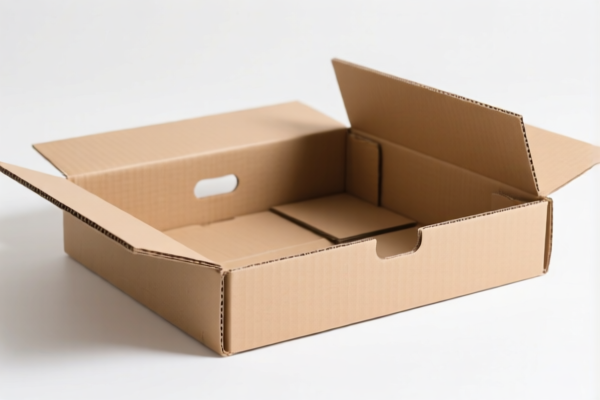
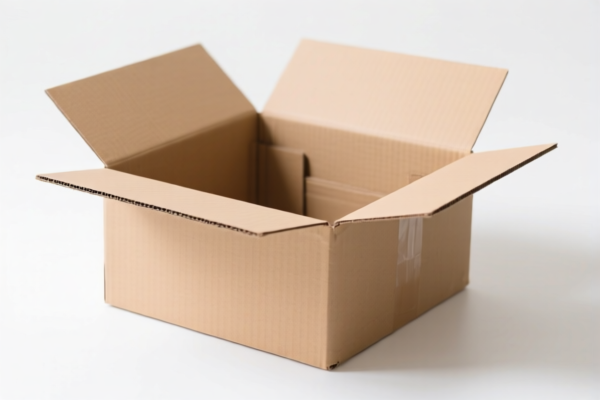
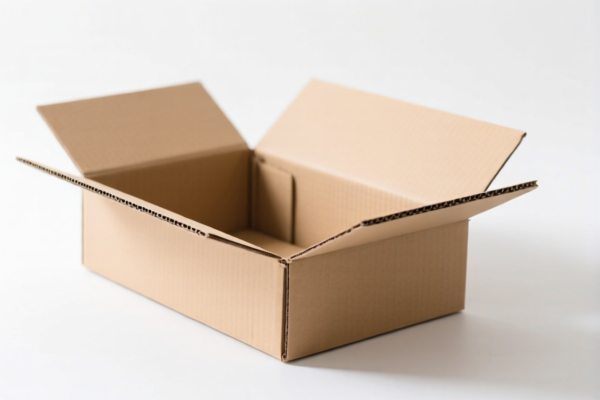
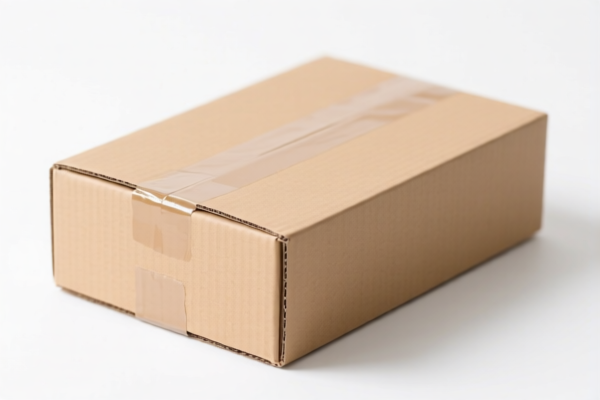
AI Analysis
📄 Paper & Paperboard (< 1 m²) | The "Small Format" Rule
🌐 HS Code Reference & Customs Clearance Guide | 2026 Tariff Code Deep Dive | Strategic Classification for Small Formats
📌 I. Product Definition: What Counts as "Under 1 Square Meter"?
In international trade, Paper and Paperboard are distinct categories based on weight, thickness, and use. However, when the surface area is less than 1 square meter, special classification rules often apply, particularly in Chapter 48 of the Harmonized System.
Key Distinctions: * Paper (Ch. 48): Generally thinner, more flexible, and often used for writing, printing, or packaging. * Paperboard (Ch. 48): Thicker, stiffer, and often used for boxes, cartons, or industrial applications.
⚠️ Critical Threshold:
- If the sheet/roll is < 1 m², it is often classified under specific subheadings for "cut to size" or "small format" items.
- Note: Some countries may have de minimis thresholds for customs valuation, but HS Code classification remains strict based on physical properties.
📦 II. HS Code Classification Matrix (2026 Latest Tariff Schedule)
Below is the authoritative breakdown for Paper and Paperboard under 1 m².
| HS Code | Product Description | Application Scenario | Key Characteristics |
|---|---|---|---|
4802.55.00.00 |
Paper, non-coated, unprinted, single-side coated, weighing ≤ 150 g/m² | Small sheets of office paper, receipt paper, small labels | Flexible, lightweight |
4802.61.00.00 |
Paper, other paper, non-coated, unprinted, weighing > 40 g/m² and ≤ 150 g/m² | General-purpose small format paper | Uncoated, standard weight |
4803.00.00.00 |
Toilet paper, tissue paper, facial tissue, handkerchiefs, napkins, handkerchief-type, handkerchief-type, handkerchief-type | Small packs of tissues, wipes, small napkins | Absorbent, soft |
4810.11.00.00 |
Paperboard, coated with kaolin clay or with other inorganic substances | Small boxes, cartons, cardstock samples | Thick, coated for printing |
4810.19.00.00 |
Paperboard, other coated paperboard | Small packaging materials, labels | Coated, unprinted |
4820.10.00.00 |
Notebooks, exercise books, letter pads, memo blocks, pads of writing paper | Small notebooks, sticky notes, notepads | Bound or assembled, ready for use |
4823.69.00.00 |
Other paper, paperboard, cellulose wadding and webs of cellulose fibers | Small cut pieces, industrial wipes, small filters | Cut to size, specific use |
🔍 Important Note:
-4820.10.00.00is for finished articles (like notebooks). If it's just loose sheets, look to4802or4810.
-4803is specifically for tissue products (toilet paper, tissues). Do not confuse with general paper.
- Weight per square meter (g/m²) is a critical factor for classification under4802and4804.
💰 III. 2026 Tariff Rate Breakdown (USA – China Origin)
✅ Applicable Country: United States (US)
✅ Country of Origin: China (CN)
✅ Effective Date: November 10, 2025 (including subsequent imports)
🎯 1. 4802.55.00.00 & 4802.61.00.00 – Standard Paper (< 1 m²)
| Item | Content |
|---|---|
| Base Rate | 4.7% (ad valorem) |
| USITC Additional Duty | +25% (from USITC Footnote 9903.88.01) |
| IEEPA Additional Duty | +10% (for China/HK products, effective Nov 10, 2025) |
| Total Rate | ~39.7% |
| Tax Calculation | CIF Value × 39.7% |
| De Minimis Eligibility | ❌ No (deny_de_minimis) |
| Legal Path | IEEPA:9903.01.25 → IEEPA:9903.01.24 → USITC:4802.55.00.00 → FOOTNOTE:9903.88.01 |
📌 Explanation:
- Paper is not exempt from Section 301 tariffs.
- The 25% USITC duty applies to many paper products unless specifically exempted (e.g., certain specialty papers).
- The 10% IEEPA duty is a new surcharge for China-origin goods.
🎯 2. 4810.11.00.00 & 4810.19.00.00 – Paperboard (< 1 m²)
| Item | Content |
|---|---|
| Base Rate | 3.4% (ad valorem) |
| USITC Additional Duty | +25% (if applicable under Footnote 9903.88.01) |
| IEEPA Additional Duty | +10% |
| Total Rate | ~38.4% |
| Tax Calculation | CIF Value × 38.4% |
| De Minimis Eligibility | ❌ No |
| Legal Path | IEEPA:9903.01.25 → IEEPA:9903.01.24 → USITC:4810.11.00.00 → FOOTNOTE:9903.88.01 |
📌 Note:
- Paperboard is often used for packaging. If it’s recycled content, check for potential exemptions or lower rates in other jurisdictions.
- Do not misclassify paperboard as "paper" – the base rates differ.
🎯 3. 4820.10.00.00 – Notebooks & Pads (Finished Goods)
| Item | Content |
|---|---|
| Base Rate | 3.4% (ad valorem) |
| USITC Additional Duty | +25% (if applicable) |
| IEEPA Additional Duty | +10% |
| Total Rate | ~38.4% |
| Tax Calculation | CIF Value × 38.4% |
| De Minimis Eligibility | ❌ No |
📌 Key Point:
- Finished goods like notebooks are often more expensive to classify because they are seen as manufactured articles, not raw materials.
🛠️ IV. Customs Clearance Practical Advice
✅ 1. Required Documentation Checklist
| Document | Must Provide | Notes |
|---|---|---|
| ✅ Product Specification Sheet | ✔️ | Include weight (g/m²), dimensions, type (coated/uncoated) |
| ✅ Commercial Invoice | ✔️ | Clearly state "Paper" or "Paperboard" and quantity |
| ✅ Packing List | ✔️ | Detail number of sheets/rolls per carton |
| ✅ Certificate of Origin | ✔️ | If claiming preferential rates (e.g., under FTAs) |
| ✅ Third-Party Test Report | ✔️ | For coated papers, prove chemical composition if required |
| ✅ FCC/CE Certificate | ❌ | Not required for paper, but may be needed if electronic components are embedded |
✅ 2. Classification Tips (Avoid Common Mistakes)
🔥 "Weight Defines Paper, Thickness Defines Board, Finish Defines Type!"
| Scenario | Correct HS Code | Incorrect HS Code | Consequence |
|---|---|---|---|
| Small sheets of printer paper | 4802.55.00.00 |
4810.11.00.00 |
Overpay duties by ~1.3% |
| Small cardboard boxes (unfolded) | 4810.11.00.00 |
4802.55.00.00 |
Misclassification, potential penalties |
| Tissues/Wipes | 4803.00.00.00 |
4802.55.00.00 |
Wrong base rate, audit risk |
| Notebooks/Pads | 4820.10.00.00 |
4802.55.00.00 |
Misclassification, as finished goods have different rules |
✅ 3. Special Cases
| Case | Handling Advice |
|---|---|
| Recycled Paper | Check for Chapter 48 Notes – some recycled papers may have different classifications or exemptions. |
| Colored Paper | If dyed, it may fall under 4804.59.00.00 (dyed paper). Verify color application method. |
| Perforated Paper | If perforated for printing, it may still be 4802. If for receipts, check 4802.55.00.00. |
| Small Labels | If self-adhesive, classify under 4823.69.00.00 or 4911.91.00.00 (stickers). |
🌍 V. Global Market Comparison (2026 Latest)
| Country/Region | Recommended HS Code | Tariff Rate | Certification | Notes |
|---|---|---|---|---|
| 🇺🇸 USA | 4802.55.00.00 |
~39.7% | None | High tariffs for China origin |
| 🇨🇳 China | 4802.55.00.00 |
5% | None | Low base rate |
| 🇪🇺 EU | 4802.55.00.00 |
0% (if FTA) | CE (if relevant) | No surcharges for paper |
| 🇦🇺 Australia | 4802.55.00.00 |
5% | None | Standard rate |
| 🇯🇵 Japan | 4802.55.00.00 |
0% | PSE (if applicable) | No surcharges |
📌 Conclusion:
- The USA imposes significant additional duties on Chinese-origin paper/paperboard.
- Other markets are more favorable, with 0% or low tariffs.
- Consider supply chain adjustments if exporting to the USA – e.g., sourcing from Vietnam or Mexico for IEEPA exemptions.
📌 VI. Common Mistakes & Pitfalls (Lessons Learned)
❌ Mistake 1: Classifying tissues under 4802 instead of 4803
👉 Consequence: Wrong base rate, potential audit.
❌ Mistake 2: Ignoring weight per square meter (g/m²) for paper classification
👉 Consequence: Misclassification under 4802.55 vs. 4802.61.
❌ Mistake 3: Assuming small size exempts from tariffs
👉 Consequence: No de minimis exemption for paper under Section 301/IEEPA.
❌ Mistake 4: Misidentifying paperboard as paper
👉 Consequence: Different base rates and potential penalties.
✅ Correct Approach:
"Single-side coated paper, 150 g/m², cut to 0.5 m² sheets, for printing, model XYZ"
🎯 VII. Conclusion: Precision in Classification Saves Money
🎯 Remember:
🔹 "Weight defines paper, thickness defines board, finish defines type!"
🔹 "Small size doesn't mean small duty – check the 25% + 10% surcharge!"
🔹 "Finished goods (notebooks) are taxed differently than raw materials!"
📌 Pro Tip:
If your paper/paperboard is originating from Vietnam, Mexico, Thailand, or Malaysia, you may qualify for IEEPA exemptions, reducing rates to 0%~5%.
Recommendation: Obtain an Advance Ruling from US Customs for complex classifications.
📣 Action Item:
📞 Contact a licensed customs broker + Provide product specs + Request HS Code Advance Ruling
🚀 Ensure smooth clearance, minimize duties, and maximize profits!
✨ Expert Customs Clearance Starts with Accurate Classification!
💼 Every gram of paper counts – classify it right!
Customer Reviews
About HS Code Classification
The Harmonized System (HS) is an internationally standardized nomenclature developed by the World Customs Organization (WCO) to classify traded products. Over 200 countries use the HS system as the basis for customs tariffs, trade statistics, and import/export regulations.
Each HS code follows a hierarchical structure:
- Chapter (2 digits) — Broad category of goods (e.g., Chapter 84: Machinery and Mechanical Appliances)
- Heading (4 digits) — More specific grouping within the chapter
- Subheading (6 digits) — Internationally standardized breakdown, used by all WCO member countries
- National subdivisions (8-10 digits) — Country-specific extensions for further classification, such as US HTSUS 10-digit codes
Correct HS code classification is essential for smooth customs clearance, accurate duty payment, and compliance with trade regulations. Misclassification can lead to customs delays, overpayment of duties, or penalties.
When importing from CN to US, the applicable tariff rates may include:
- Most-Favored-Nation (MFN) rate — The standard duty rate applied to WTO members
- General rate — Applied to countries without trade agreements
- Trade remedy duties — Additional tariffs such as Section 301 (anti-dumping), Section 232 (national security), or countervailing duties
The information provided on this page is for reference purposes only. For official classification, please consult with your local customs authority or a licensed customs broker.