Partially Assembled Plant Fiber Mat
CN → US| HS编码 | 关税税率 | 原产国 | 目的国 | 文档 |
|---|---|---|---|---|
| 5601210010 | 38.6% | CN | US | 官方文档 |
| 5601210090 | 38.6% | CN | US | 官方文档 |
| 4823908000 | 35.0% | CN | US | 官方文档 |
| 4823908620 | 35.0% | CN | US | 官方文档 |
商品图片
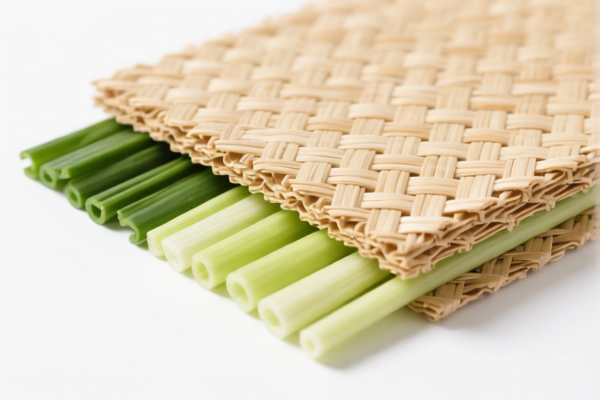
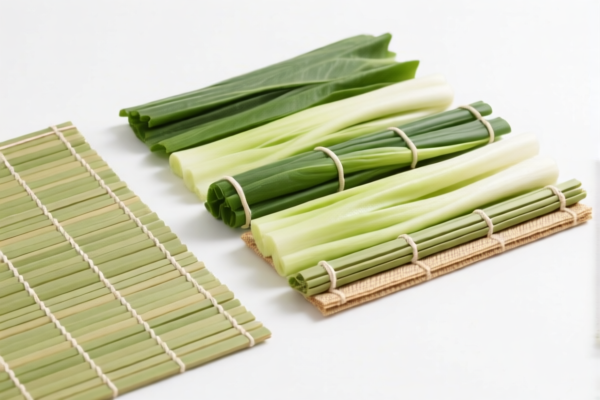
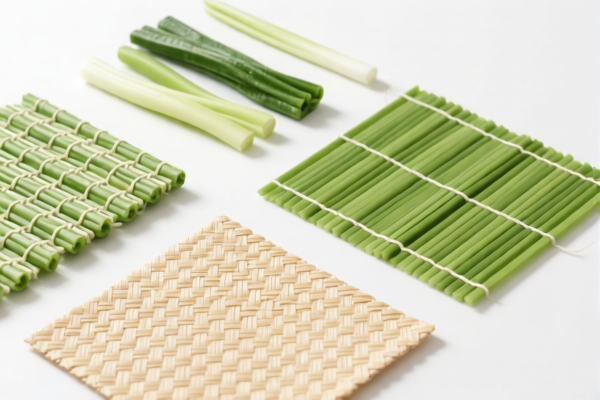
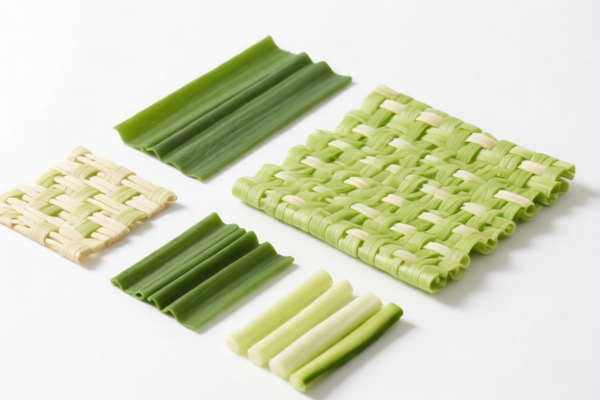
AI分析
🌿 Partially Assembled Plant Fiber Mat (植物纤维垫)
🌐 HS Code Reference & Customs Clearance Guide | 2026 Latest Tariff Analysis | Professional通关 Strategy
📌 I. Product Definition & Classification: What Exactly is a "Partially Assembled Plant Fiber Mat"?
A Partially Assembled Plant Fiber Mat typically refers to intermediate goods made from natural plant fibers (such as sisal, jute, coir, or bamboo) that are in a state of preparation but not yet finished into final consumer products. In international trade, these items are often misclassified due to ambiguity between their material composition (plant-based vs. cotton-like) and their form (fibrous pads vs. paper/pressboard).
⚠️ Critical Distinction:
- If the product retains the structural integrity of cotton-like fiber products (non-woven, batts, mats) → It falls under Chapter 56.
- If the product is compressed into a rigid, paper-like sheet or disc (resembling cellulose paper products) → It falls under Chapter 48.
📦 II. HS Code Classification Details (2026 Latest Tariff Authority)
Based on the provided data, the classification depends on whether customs views the item as a fiber pad or a cellulose/paper product.
| HS Code | Product Description | Key Characteristics | Material Logic |
|---|---|---|---|
5601.21.00.10 |
Plant Fiber Pad classified as Cotton Pad | Shape: Fiber product form. Summary: Classified as cotton-made pad. | ⚠️ Misclassification Risk: Though made of plant fiber, if the structure mimics cotton batts/pads, it may be grouped here. |
5601.21.00.90 |
Plant Fiber Pad matching Cotton Pad material/form | Summary: Meets material and form requirements of cotton-made pads. | Similar to above; used for other fiber pads not specifically listed under .10. |
4823.90.80.00 |
Cellulose Fiber Category Gaskets/Pads | Summary: Belongs to cellulose fiber范畴 (category) of gaskets/pads. | Correct if the fiber is processed into a dense, paper-like sheet. |
4823.90.86.20 |
Paper Product Material Characteristic | Summary: Fits paper product material features; logic consistent with shoe covers/mats. | Correct if the item is flat, rigid, or semi-rigid like paper/cardboard. |
🔍 Key Insight:
- Chapters 56 vs. 48: The main battle is whether the mat is seen as a "Fiber Product" (Ch. 56) or a "Paper/Cellulose Product" (Ch. 48). - Why the discrepancy?
-5601items are often treated as "Cotton-like" regardless of actual fiber if they are non-woven mats.
-4823items are treated as "Pressboard/Paper" if densely compressed.
💰 III. 2026 Latest Tariff Rate Breakdown (Including Surtaxes & Policy Add-ons)
✅ Applicable Country: United States (US)
✅ Origin: China (CN)
✅ Effective Date: Post-2025 policies (Section 301 + IEEPA)
🎯 1. 5601.21.00.10 & 5601.21.00.90 — Plant Fiber Pad (Cotton-Like Classification)
| Item | Detail |
|---|---|
| Base Tariff | 3.6% |
| Section 301 Surtax | +25.0% (From USITC Footnote 9903.88.01 logic) |
| IEEPA Add-on Tax | +10% (For China/HK products, effective Nov 10, 2025) |
| Total Tax Rate | 38.6% |
| Tax Calculation | CIF Value × 38.6% |
| De Minimis Exemption | ❌ Not Eligible (deny_de_minimis) |
| Legal Path | Base: 3.6% + Surtax: 25% + IEEPA: 10% |
📌 Explanation:
- Even though it’s a "plant fiber," if classified under5601, it incurs the 38.6% rate.
- The "Cotton Pad" classification triggers higher scrutiny because cotton products often face stricter quotas or surtaxes.
🎯 2. 4823.90.80.00 & 4823.90.86.20 — Cellulose/Paper Fiber Pad
| Item | Detail |
|---|---|
| Base Tariff | 0.0% |
| Section 301 Surtax | +25.0% |
| IEEPA Add-on Tax | +10% |
| Total Tax Rate | 35.0% |
| Tax Calculation | CIF Value × 35.0% |
| De Minimis Exemption | ❌ Not Eligible (deny_de_minimis) |
| Legal Path | Base: 0.0% + Surtax: 25% + IEEPA: 10% |
📌 Explanation:
- Savings Opportunity: Classifying under Chapter 48 reduces the base tariff from 3.6% to 0.0%, resulting in a 3.6% total tax savings.
- Logic: Paper/pressboard products (4823) often have lower base rates than textile/fiber products (5601).
🛠️ IV. Customs Clearance Practical Advice (Avoiding Pitfalls)
✅ 1. Documentation Checklist (Essential)
| Document | Required | Notes |
|---|---|---|
| ✅ Product Specifications | ✔️ | Must specify: Fiber type (sisal, jute, bamboo), processing method (woven, non-woven, compressed). |
| ✅ Photos (Front/Back/Edge) | ✔️ | Show texture: Is it fibrous/hairy (Ch. 56) or smooth/rigid (Ch. 48)? |
| ✅ Commercial Invoice | ✔️ | Clearly state "Plant Fiber Mat" or "Cellulose Pad." Avoid vague terms like "Matting." |
| ✅ Packing List | ✔️ | Confirm no other accessories that might change classification. |
| ✅ Material Declaration | ✔️ | Explicitly state: "100% Plant Fiber, Processed as [Fiber Batt/Paper Sheet]." |
✅ 2. Classification Strategy (Key Takeaway)
🔥 "Material Form Defines Code: Fibrous = 5601, Paper-like = 4823"
| Scenario | Recommended HS Code | Why? |
|---|---|---|
| Loose, fluffy, non-woven mats | 5601.21.00.10/90 |
Mimics cotton batts; higher base tax (3.6%). |
| Dense, flat, rigid sheets/discs | 4823.90.80.00/86.20 |
Resembles pressboard/paper; lower base tax (0.0%). |
| Mixed content (e.g., with rubber backing) | ⚠️ Review Needed | May shift to Chapter 40 or 39; not covered in this data. |
📌 Recommendation:
- If your product is flat and stiff, argue for4823.90.80.00to save 3.6% on the total duty.
- If your product is soft and fibrous, you likely must use5601.21.00.10.
- Do NOT arbitrarily choose4823for fibrous products; customs may reclassify and impose penalties.
✅ 3. Special Cases & Warnings
| Case | Handling Advice |
|---|---|
| "Plant Fiber" vs. "Cotton" | Customs may confuse them. Provide fiber analysis reports to prove it’s NOT cotton if claiming 5601. |
| "Partially Assembled" | Ensure the description reflects the current state. Do not call it "Finished Mat" if it’s raw. |
| IEEPA 10% Surcharge | Applies to ALL Chinese-origin goods under these codes since Nov 10, 2025. No exemption unless origin changes. |
| Section 301 25% | Mandatory for all China-origin goods under these HTS codes. |
🌍 V. Global Market Comparison (2026)
| Market | Recommended HS Code | Total Tax Rate (CN Origin) | Notes |
|---|---|---|---|
| 🇺🇸 USA | 4823.90.80.00 |
35.0% | Best rate if paper-like. 5601 is 38.6%. |
| 🇺🇸 USA | 5601.21.00.10 |
38.6% | Higher base tax. |
| 🇪🇺 EU | 5601.21 or 4823 |
Varies (Look up TARIC) | EU may not apply 25%/10% surtaxes. |
| 🇨🇳 China | 5601.21 or 4823 |
Varies (Most FTR) | Export duty may apply; check MOFCOM. |
📌 Conclusion:
- USA is the critical market for this surtax burden.
- Optimization Tip: If your product allows, design/process it to resemble paper/pressboard (4823) to lock in the 0% base rate.
📌 VI. Common Mistakes & Pitfalls (Blood-Teaching Lessons)
❌ Mistake 1: Calling it "Cotton Mat" when it’s Plant Fiber
👉 Consequence: Misleading declaration; potential fines for false origin/material.
✅ Fix: Use "Plant Fiber Mat" or "Natural Fiber Pad."
❌ Mistake 2: Choosing 4823 for a Soft, Fibrous Product
👉 Consequence: Customs reclassification → Penalty + Back Taxes.
✅ Fix: Match code to physical form (Rigid → 4823; Soft → 5601).
❌ Mistake 3: Ignoring the IEEPA 10% Surcharge
👉 Consequence: Underestimating landed cost by 10%.
✅ Fix: Always add 10% to your CIF calculation for China-origin goods.
🎯 VII. Conclusion: Smart Classification Saves Money!
🎯 Remember:
🔹 "Fibrous = 5601 (38.6%) | Paper-like = 4823 (35.0%)"
🔹 "3.6% Difference Adds Up on Large Volumes!"
📌 Pro Tip:
If your plant fiber mat is compressed and smooth, provide a sample to your customs broker to argue for
4823.90.80.00.
Apply for an Advance Ruling if shipping high volume to ensure certainty.
📣 Immediate Action:
📞 Contact your freight forwarder + Provide product photos + Confirm fiber type.
🚀 Optimize your HS Code to save 3.6% on every shipment!
✨ Professional Customs Clearance Starts with Precise Classification!
💼 Every cent of duty cost counts!
用户评价
关于 HS 编码归类
协调制度(HS)是由世界海关组织(WCO)制定的国际贸易商品分类标准。全球 200 多个国家采用 HS 系统作为海关关税、贸易统计和进出口监管的基础。
每个 HS 编码遵循以下层级结构:
- 章(2 位)——商品大类(例如:第 84 章:机器和机械设备)
- 品目(4 位)——章内的更具体分类
- 子目(6 位)——国际通用细分,所有 WCO 成员国统一使用
- 本国细分(8-10 位)——各国自行扩展的细分编码,如美国 HTSUS 10 位编码
正确的 HS 编码归类对于顺利通关、准确缴纳关税和遵守贸易法规至关重要。错误归类可能导致海关延误、多缴关税或罚款。
从CN进口到US时,适用的关税税率可能包括:
- 最惠国(MFN)税率——适用于 WTO 成员国的标准关税税率
- 普通税率——适用于无贸易协定国家
- 贸易救济关税——附加关税,如 301 条款(反倾销)、232 条款(国家安全)或反补贴税
本页内容仅供参考。如需正式归类,请咨询当地海关或持牌报关代理。