Partially Assembled Plant Fiber Mat
CN → US| HS Code | Tariff Rate | Origin | Destination | Doc |
|---|---|---|---|---|
| 5601210010 | 38.6% | CN | US | Official Doc |
| 5601210090 | 38.6% | CN | US | Official Doc |
| 4823908000 | 35.0% | CN | US | Official Doc |
| 4823908620 | 35.0% | CN | US | Official Doc |
Product Images
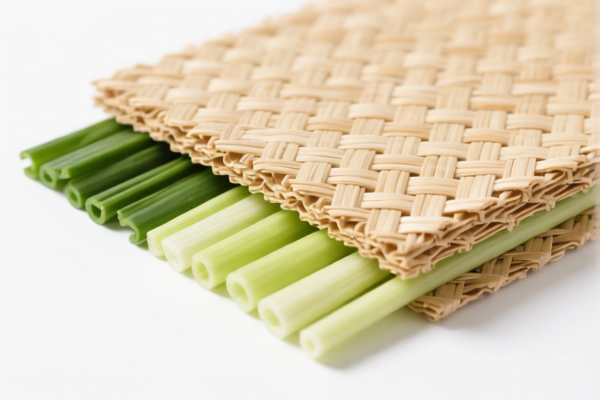
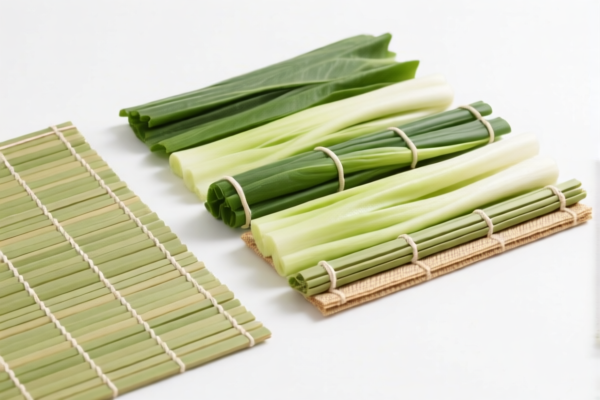
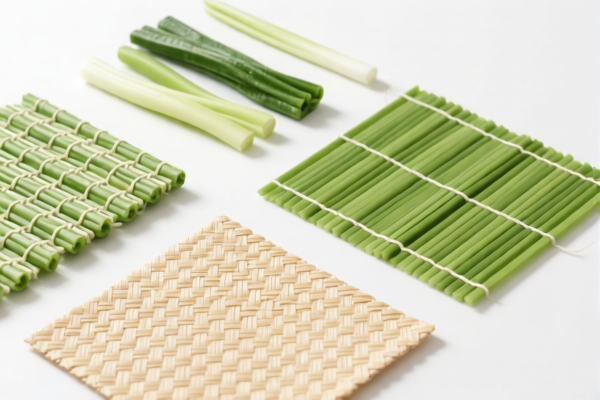
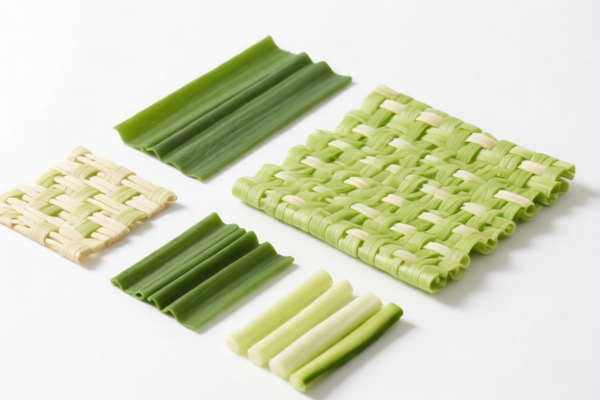
AI Analysis
🌿 Partially Assembled Plant Fiber Mat (植物纤维垫)
🌐 HS Code Reference & Customs Clearance Guide | 2026 Latest Tariff Analysis | Professional通关 Strategy
📌 I. Product Definition & Classification: What Exactly is a "Partially Assembled Plant Fiber Mat"?
A Partially Assembled Plant Fiber Mat typically refers to intermediate goods made from natural plant fibers (such as sisal, jute, coir, or bamboo) that are in a state of preparation but not yet finished into final consumer products. In international trade, these items are often misclassified due to ambiguity between their material composition (plant-based vs. cotton-like) and their form (fibrous pads vs. paper/pressboard).
⚠️ Critical Distinction:
- If the product retains the structural integrity of cotton-like fiber products (non-woven, batts, mats) → It falls under Chapter 56.
- If the product is compressed into a rigid, paper-like sheet or disc (resembling cellulose paper products) → It falls under Chapter 48.
📦 II. HS Code Classification Details (2026 Latest Tariff Authority)
Based on the provided data, the classification depends on whether customs views the item as a fiber pad or a cellulose/paper product.
| HS Code | Product Description | Key Characteristics | Material Logic |
|---|---|---|---|
5601.21.00.10 |
Plant Fiber Pad classified as Cotton Pad | Shape: Fiber product form. Summary: Classified as cotton-made pad. | ⚠️ Misclassification Risk: Though made of plant fiber, if the structure mimics cotton batts/pads, it may be grouped here. |
5601.21.00.90 |
Plant Fiber Pad matching Cotton Pad material/form | Summary: Meets material and form requirements of cotton-made pads. | Similar to above; used for other fiber pads not specifically listed under .10. |
4823.90.80.00 |
Cellulose Fiber Category Gaskets/Pads | Summary: Belongs to cellulose fiber范畴 (category) of gaskets/pads. | Correct if the fiber is processed into a dense, paper-like sheet. |
4823.90.86.20 |
Paper Product Material Characteristic | Summary: Fits paper product material features; logic consistent with shoe covers/mats. | Correct if the item is flat, rigid, or semi-rigid like paper/cardboard. |
🔍 Key Insight:
- Chapters 56 vs. 48: The main battle is whether the mat is seen as a "Fiber Product" (Ch. 56) or a "Paper/Cellulose Product" (Ch. 48). - Why the discrepancy?
-5601items are often treated as "Cotton-like" regardless of actual fiber if they are non-woven mats.
-4823items are treated as "Pressboard/Paper" if densely compressed.
💰 III. 2026 Latest Tariff Rate Breakdown (Including Surtaxes & Policy Add-ons)
✅ Applicable Country: United States (US)
✅ Origin: China (CN)
✅ Effective Date: Post-2025 policies (Section 301 + IEEPA)
🎯 1. 5601.21.00.10 & 5601.21.00.90 — Plant Fiber Pad (Cotton-Like Classification)
| Item | Detail |
|---|---|
| Base Tariff | 3.6% |
| Section 301 Surtax | +25.0% (From USITC Footnote 9903.88.01 logic) |
| IEEPA Add-on Tax | +10% (For China/HK products, effective Nov 10, 2025) |
| Total Tax Rate | 38.6% |
| Tax Calculation | CIF Value × 38.6% |
| De Minimis Exemption | ❌ Not Eligible (deny_de_minimis) |
| Legal Path | Base: 3.6% + Surtax: 25% + IEEPA: 10% |
📌 Explanation:
- Even though it’s a "plant fiber," if classified under5601, it incurs the 38.6% rate.
- The "Cotton Pad" classification triggers higher scrutiny because cotton products often face stricter quotas or surtaxes.
🎯 2. 4823.90.80.00 & 4823.90.86.20 — Cellulose/Paper Fiber Pad
| Item | Detail |
|---|---|
| Base Tariff | 0.0% |
| Section 301 Surtax | +25.0% |
| IEEPA Add-on Tax | +10% |
| Total Tax Rate | 35.0% |
| Tax Calculation | CIF Value × 35.0% |
| De Minimis Exemption | ❌ Not Eligible (deny_de_minimis) |
| Legal Path | Base: 0.0% + Surtax: 25% + IEEPA: 10% |
📌 Explanation:
- Savings Opportunity: Classifying under Chapter 48 reduces the base tariff from 3.6% to 0.0%, resulting in a 3.6% total tax savings.
- Logic: Paper/pressboard products (4823) often have lower base rates than textile/fiber products (5601).
🛠️ IV. Customs Clearance Practical Advice (Avoiding Pitfalls)
✅ 1. Documentation Checklist (Essential)
| Document | Required | Notes |
|---|---|---|
| ✅ Product Specifications | ✔️ | Must specify: Fiber type (sisal, jute, bamboo), processing method (woven, non-woven, compressed). |
| ✅ Photos (Front/Back/Edge) | ✔️ | Show texture: Is it fibrous/hairy (Ch. 56) or smooth/rigid (Ch. 48)? |
| ✅ Commercial Invoice | ✔️ | Clearly state "Plant Fiber Mat" or "Cellulose Pad." Avoid vague terms like "Matting." |
| ✅ Packing List | ✔️ | Confirm no other accessories that might change classification. |
| ✅ Material Declaration | ✔️ | Explicitly state: "100% Plant Fiber, Processed as [Fiber Batt/Paper Sheet]." |
✅ 2. Classification Strategy (Key Takeaway)
🔥 "Material Form Defines Code: Fibrous = 5601, Paper-like = 4823"
| Scenario | Recommended HS Code | Why? |
|---|---|---|
| Loose, fluffy, non-woven mats | 5601.21.00.10/90 |
Mimics cotton batts; higher base tax (3.6%). |
| Dense, flat, rigid sheets/discs | 4823.90.80.00/86.20 |
Resembles pressboard/paper; lower base tax (0.0%). |
| Mixed content (e.g., with rubber backing) | ⚠️ Review Needed | May shift to Chapter 40 or 39; not covered in this data. |
📌 Recommendation:
- If your product is flat and stiff, argue for4823.90.80.00to save 3.6% on the total duty.
- If your product is soft and fibrous, you likely must use5601.21.00.10.
- Do NOT arbitrarily choose4823for fibrous products; customs may reclassify and impose penalties.
✅ 3. Special Cases & Warnings
| Case | Handling Advice |
|---|---|
| "Plant Fiber" vs. "Cotton" | Customs may confuse them. Provide fiber analysis reports to prove it’s NOT cotton if claiming 5601. |
| "Partially Assembled" | Ensure the description reflects the current state. Do not call it "Finished Mat" if it’s raw. |
| IEEPA 10% Surcharge | Applies to ALL Chinese-origin goods under these codes since Nov 10, 2025. No exemption unless origin changes. |
| Section 301 25% | Mandatory for all China-origin goods under these HTS codes. |
🌍 V. Global Market Comparison (2026)
| Market | Recommended HS Code | Total Tax Rate (CN Origin) | Notes |
|---|---|---|---|
| 🇺🇸 USA | 4823.90.80.00 |
35.0% | Best rate if paper-like. 5601 is 38.6%. |
| 🇺🇸 USA | 5601.21.00.10 |
38.6% | Higher base tax. |
| 🇪🇺 EU | 5601.21 or 4823 |
Varies (Look up TARIC) | EU may not apply 25%/10% surtaxes. |
| 🇨🇳 China | 5601.21 or 4823 |
Varies (Most FTR) | Export duty may apply; check MOFCOM. |
📌 Conclusion:
- USA is the critical market for this surtax burden.
- Optimization Tip: If your product allows, design/process it to resemble paper/pressboard (4823) to lock in the 0% base rate.
📌 VI. Common Mistakes & Pitfalls (Blood-Teaching Lessons)
❌ Mistake 1: Calling it "Cotton Mat" when it’s Plant Fiber
👉 Consequence: Misleading declaration; potential fines for false origin/material.
✅ Fix: Use "Plant Fiber Mat" or "Natural Fiber Pad."
❌ Mistake 2: Choosing 4823 for a Soft, Fibrous Product
👉 Consequence: Customs reclassification → Penalty + Back Taxes.
✅ Fix: Match code to physical form (Rigid → 4823; Soft → 5601).
❌ Mistake 3: Ignoring the IEEPA 10% Surcharge
👉 Consequence: Underestimating landed cost by 10%.
✅ Fix: Always add 10% to your CIF calculation for China-origin goods.
🎯 VII. Conclusion: Smart Classification Saves Money!
🎯 Remember:
🔹 "Fibrous = 5601 (38.6%) | Paper-like = 4823 (35.0%)"
🔹 "3.6% Difference Adds Up on Large Volumes!"
📌 Pro Tip:
If your plant fiber mat is compressed and smooth, provide a sample to your customs broker to argue for
4823.90.80.00.
Apply for an Advance Ruling if shipping high volume to ensure certainty.
📣 Immediate Action:
📞 Contact your freight forwarder + Provide product photos + Confirm fiber type.
🚀 Optimize your HS Code to save 3.6% on every shipment!
✨ Professional Customs Clearance Starts with Precise Classification!
💼 Every cent of duty cost counts!
Customer Reviews
About HS Code Classification
The Harmonized System (HS) is an internationally standardized nomenclature developed by the World Customs Organization (WCO) to classify traded products. Over 200 countries use the HS system as the basis for customs tariffs, trade statistics, and import/export regulations.
Each HS code follows a hierarchical structure:
- Chapter (2 digits) — Broad category of goods (e.g., Chapter 84: Machinery and Mechanical Appliances)
- Heading (4 digits) — More specific grouping within the chapter
- Subheading (6 digits) — Internationally standardized breakdown, used by all WCO member countries
- National subdivisions (8-10 digits) — Country-specific extensions for further classification, such as US HTSUS 10-digit codes
Correct HS code classification is essential for smooth customs clearance, accurate duty payment, and compliance with trade regulations. Misclassification can lead to customs delays, overpayment of duties, or penalties.
When importing from CN to US, the applicable tariff rates may include:
- Most-Favored-Nation (MFN) rate — The standard duty rate applied to WTO members
- General rate — Applied to countries without trade agreements
- Trade remedy duties — Additional tariffs such as Section 301 (anti-dumping), Section 232 (national security), or countervailing duties
The information provided on this page is for reference purposes only. For official classification, please consult with your local customs authority or a licensed customs broker.