Passenger Bus (10+ Seats)
CN → US| HS编码 | 关税税率 | 原产国 | 目的国 | 文档 |
|---|---|---|---|---|
| 8702106100 | 37.0% | CN | US | 官方文档 |
| 8702103100 | 37.0% | CN | US | 官方文档 |
| 8706000540 | 39.0% | CN | US | 官方文档 |
| 8702106100 | 37.0% | CN | US | 官方文档 |
| 8702103100 | 37.0% | CN | US | 官方文档 |
商品图片
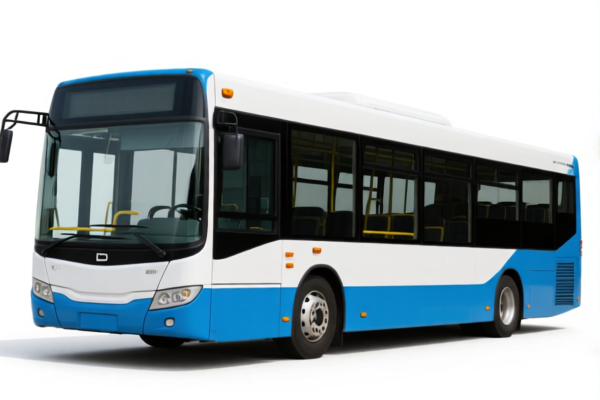
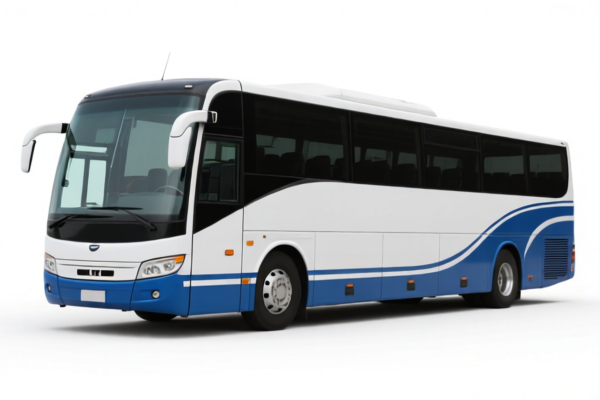
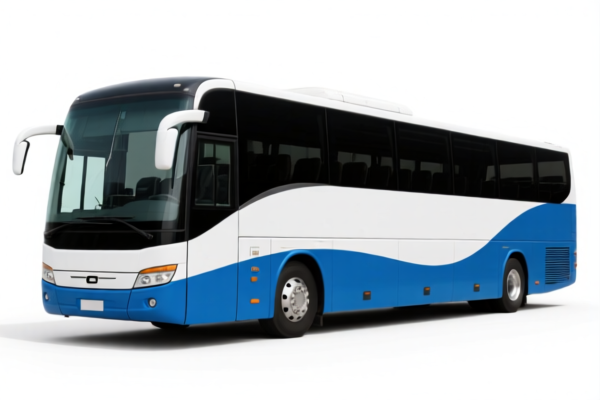
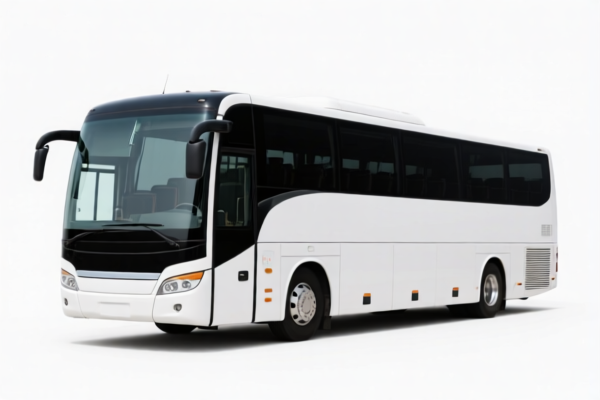
AI分析
🚌 Passenger Bus (10+ Seats) – Engine Chassis vs. Complete Vehicle
🌐 HS Code Reference & Customs Clearance Guide | 2026 Latest Tariff Analysis | Professional Transit Strategy
📌 1. Product Definition & Classification: What Exactly is a "Passenger Bus"?
In international trade, vehicles designed for transporting 10 or more persons (including the driver) are classified under Heading 8702. However, customs classification depends heavily on whether the item is a complete finished vehicle or a chassis fitted with an engine.
Key Distinction:
Complete Vehicle (Heading 8702): The vehicle has a body, seats, windows, and is ready for passenger transport.
Chassis Fitted with Engines (Heading 8706): The vehicle has an engine and chassis frame but lacks the passenger body/completion. These are often shipped as semi-knocked-down (SKD) kits or incomplete units to be finished locally.
⚠️ Critical Classification Point:
- If it is a Chassis Fitted with Engine (No Body/Seats): It falls under 8706.
- If it is a Complete Motor Vehicle for Transport of 10+ Persons: It falls under 8702.
📦 2. HS Code Classification Details (Based on Provided Data)
The following HS Codes and Tariffs are derived strictly from the provided dataset. Note that 8706 codes apply to chassis fitted with engines, while 8702 codes apply to complete vehicles.
| HS Code | Product Description | Key Characteristics | Engine Type | Passenger Capacity |
|---|---|---|---|---|
| 8702.10.31.00 | Motor vehicles for transport of 10+ persons | Complete Vehicle | Compression-Ignition (Diesel/Semi-Diesel) | 16 or more persons (incl. driver) |
| 8702.10.61.00 | Motor vehicles for transport of 10+ persons | Complete Vehicle | Compression-Ignition (Diesel/Semi-Diesel) | Other (typically 10-15 persons) |
| 8706.00.05.40 | Chassis fitted with engines | Incomplete Vehicle (Chassis Only) | For vehicles of subheadings 8701.21-24/29 or 8702/8704 | N/A (No body) |
| 8706.00.15.20 | Chassis fitted with engines | Incomplete Vehicle (Chassis Only) | For vehicles of heading 8703 (Passenger Autos) | N/A (Not applicable for buses) |
🔍 Important Note on 8706.00.15.20:
This code is for passenger automobiles (headings 8703), not buses (heading 8702). It is included in the dataset but not applicable for passenger buses. We will focus on 8702 for complete buses and 8706.00.05.40 for bus chassis.
💰 3. 2026 Latest Tariff Rate Breakdown
✅ Applicable Jurisdiction: United States (US)
✅ Country of Origin: China (CN) (Implied by "Additional Tax" context in typical trade scenarios)
✅ Effective Date: 2025-11-10 onwards
🎯 1. 8702.10.31.00 – Large Diesel Buses (16+ Seats)
| Item | Detail |
|---|---|
| Base Tariff | 2.0% |
| Additional Tariff | +25.0% (Section 301) |
| Total Tariff Rate | 27.0% |
| Tax Calculation | CIF Value × 27.0% |
| De Minimis Exemption | ❌ Not Eligible (Deny De Minimis) |
📌 Explanation:
- This code applies to complete buses with diesel engines carrying 16 or more people.
- The total duty is 27%, combining the MFN (Most Favored Nation) rate of 2% and the Section 301 additional tariff of 25%.
- High Cost Alert: This is a significant cost for large bus imports.
🎯 2. 8702.10.61.00 – Small/Medium Diesel Buses (10-15 Seats)
| Item | Detail |
|---|---|
| Base Tariff | 0.0% |
| Additional Tariff | 0.0% |
| Total Tariff Rate | 0.0% |
| Tax Calculation | CIF Value × 0.0% |
| De Minimis Exemption | ❌ Not Eligible (Deny De Minimis) |
📌 Explanation:
- This code applies to complete buses with diesel engines carrying 10 to 15 people (or other non-16+ categories).
- Zero Duty Advantage: Surprisingly, these vehicles have 0% total tariff under the provided data. This creates a strong incentive to classify correctly if possible.
- Warning: Misclassifying a 10-seater as a 16-seater (8702.10.31.00) would result in a 27% tax penalty.
🎯 3. 8706.00.05.40 – Diesel Bus Chassis (Fitted with Engine)
| Item | Detail |
|---|---|
| Base Tariff | 0.0% |
| Additional Tariff | 0.0% |
| Total Tariff Rate | 0.0% |
| Tax Calculation | CIF Value × 0.0% |
| De Minimis Exemption | ❌ Not Eligible (Deny De Minimis) |
📌 Explanation:
- This code applies to chassis fitted with engines destined for vehicles of headings 8702 or 8704.
- Zero Duty Advantage: Like the small buses, chassis imports have 0% total tariff.
- Strategic Use: Importing as a chassis (0%) and adding the body locally might be cheaper than importing a complete bus (0% for small, 27% for large). However, local assembly costs must be considered.
⚠️ Note on 8706.00.15.20 – Passenger Auto Chassis
| Item | Detail |
|---|---|
| Base Tariff | 2.5% |
| Additional Tariff | +25.0% |
| Total Tariff Rate | 27.5% |
| Applicability | ❌ Not for Buses (For Passenger Automobiles, Heading 8703) |
📌 Explanation:
- This code is for cars/SUVs (passenger automobiles), not buses. Do not use this for buses.
🛠️ 4. Customs Clearance Practical Advice
✅ 1. Documentation Checklist
| Document | Required? | Description |
|---|---|---|
| Commercial Invoice | ✔️ | Must clearly state "Bus Chassis" or "Passenger Bus" and HS Code. |
| Packing List | ✔️ | Detail weights, dimensions, and contents (e.g., "Chassis Only" vs. "Complete Bus"). |
| Bill of Lading/Air Waybill | ✔️ | Standard shipping document. |
| Certificate of Origin | ✔️ | To verify country of origin for tariff calculations. |
| Engine Specification Sheet | ✔️ | Crucial for confirming "Compression-Ignition (Diesel)" vs. Other engine types. |
| Seat Count Certification | ✔️ | Critical! Proof of passenger capacity (10-15 vs. 16+) to determine between 8702.10.61.00 and 8702.10.31.00. |
| Chassis Identification Number (VIN) | ✔️ | Required for all motor vehicles. |
✅ 2. Classification Strategy & Pitfalls
| Scenario | Correct HS Code | Error Risk |
|---|---|---|
| Complete Diesel Bus, 16+ Seats | 8702.10.31.00 (27% Tax) |
❌ Misclassifying as chassis (8706.00.05.40) could be seen as fraud if body is present. |
| Complete Diesel Bus, 10-15 Seats | 8702.10.61.00 (0% Tax) |
✅ Optimal: Ensure seat count is strictly ≤15 to enjoy 0% duty. |
| Diesel Bus Chassis (No Body) | 8706.00.05.40 (0% Tax) |
❌ Misclassifying as complete bus (8702.10.31.00) if it’s actually a chassis would lead to overpayment; misclassifying a complete bus as chassis leads to penalties. |
| Gasoline/Petrol Bus | Not in Data Set | ⚠️ Caution: The provided data only covers Diesel (Compression-Ignition) buses. Gasoline buses may have different HS codes and tariffs not listed here. |
🔥 Key Tip:
"Seat Count is King!"
- For complete buses, the difference between 15 seats and 16 seats is the difference between 0% tax and 27% tax.
- Ensure your specification sheets and vehicle certifications explicitly state the maximum passenger capacity.
🌍 5. Global Market Comparison (General Insights)
| Market | Typical Treatment for Buses | Notes |
|---|---|---|
| 🇺🇸 USA | High tariffs for large buses (27%), 0% for small/diesel chassis | As per provided data. Strict enforcement on seat count. |
| 🇨🇳 China | Low base tariffs for imported buses, plus VAT/Consumption Tax | Import duties are generally lower; VAT (13%) applies. |
| 🇪🇺 EU | Varies by engine type and size | Often lower base tariffs but complex VAT and CO2 regulations. |
| 🇦🇺 Australia | Moderate tariffs | Subject to Carbon Tax or Clean Energy Scheme adjustments. |
📌 6. Common Mistakes & How to Avoid Them
❌ Mistake 1: Declaring a 16-seat bus as a "Chassis" (8706.00.05.40) when it has a body.
👉 Consequence: Customs will reclassify as 8702.10.31.00, charge 27% duty, plus penalties.
❌ Mistake 2: Declaring a 17-seat bus as a 15-seat bus to get 0% duty.
👉 Consequence: Audit failure, back taxes, and fines. Verify seat count with manufacturer documentation.
❌ Mistake 3: Assuming all buses are 27% taxed.
👉 Reality: Small diesel buses (8702.10.61.00) and chassis (8706.00.05.40) are 0%. Optimize vehicle design to stay under 16 seats if possible.
❌ Mistake 4: Using 8706.00.15.20 for buses.
👉 Reality: This code is for passenger automobiles (cars), not buses. Using it for buses is a classification error.
🎯 7. Conclusion: Smart Tariff Planning
🎯 Remember:
🔹 16+ Seats = 27% Tax (
8702.10.31.00)
🔹 10-15 Seats = 0% Tax (8702.10.61.00)
🔹 Chassis Only = 0% Tax (8706.00.05.40)
📌 Action Item:
If you are importing buses to the US, consider:
1. Designing buses with ≤15 seats to qualify for 0% duty.
2. Importing as chassis if local assembly is cost-effective.
3. Accurate documentation of seat count and engine type (Diesel vs. Non-Diesel).
📣 Final Advice:
📞 Always consult a licensed customs broker before shipping.
📄 Request a Binding Tariff Information (BTI) or Advance Ruling from US Customs if uncertain.
🚀 Correct classification saves 27% of your cargo value!
✨ Precision in Classification, Profit in Clearance!
💼 Every seat counts – literally.
用户评价
关于 HS 编码归类
协调制度(HS)是由世界海关组织(WCO)制定的国际贸易商品分类标准。全球 200 多个国家采用 HS 系统作为海关关税、贸易统计和进出口监管的基础。
每个 HS 编码遵循以下层级结构:
- 章(2 位)——商品大类(例如:第 84 章:机器和机械设备)
- 品目(4 位)——章内的更具体分类
- 子目(6 位)——国际通用细分,所有 WCO 成员国统一使用
- 本国细分(8-10 位)——各国自行扩展的细分编码,如美国 HTSUS 10 位编码
正确的 HS 编码归类对于顺利通关、准确缴纳关税和遵守贸易法规至关重要。错误归类可能导致海关延误、多缴关税或罚款。
从CN进口到US时,适用的关税税率可能包括:
- 最惠国(MFN)税率——适用于 WTO 成员国的标准关税税率
- 普通税率——适用于无贸易协定国家
- 贸易救济关税——附加关税,如 301 条款(反倾销)、232 条款(国家安全)或反补贴税
本页内容仅供参考。如需正式归类,请咨询当地海关或持牌报关代理。