Passenger Vehicle
CN → US| HS编码 | 关税税率 | 原产国 | 目的国 | 文档 |
|---|---|---|---|---|
| 8703900100 | 112.5% | CN | US | 官方文档 |
| 8703230140 | 37.5% | CN | US | 官方文档 |
| 8703800060 | 112.5% | CN | US | 官方文档 |
商品图片
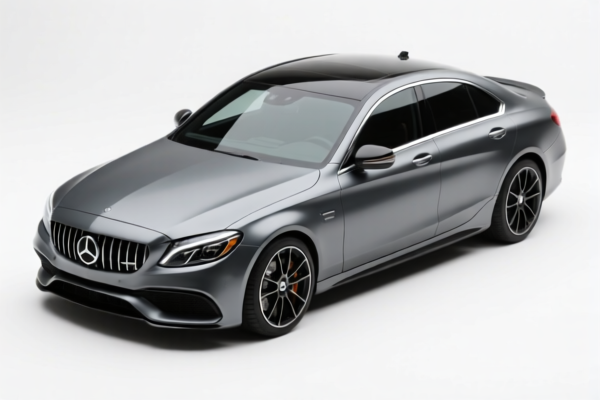
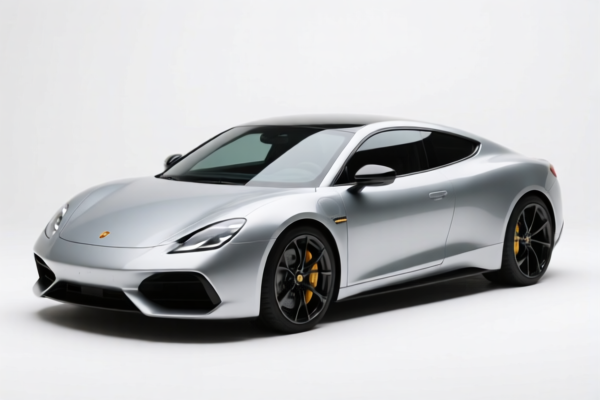
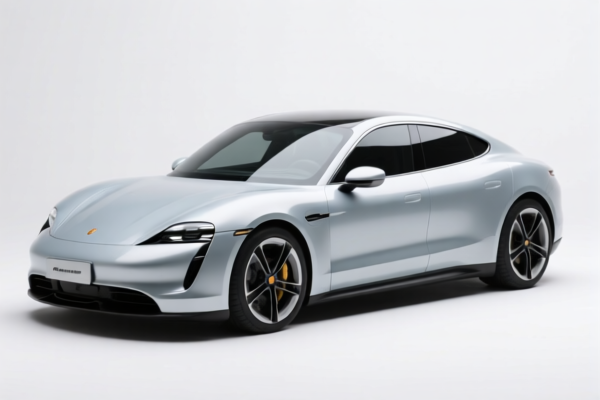
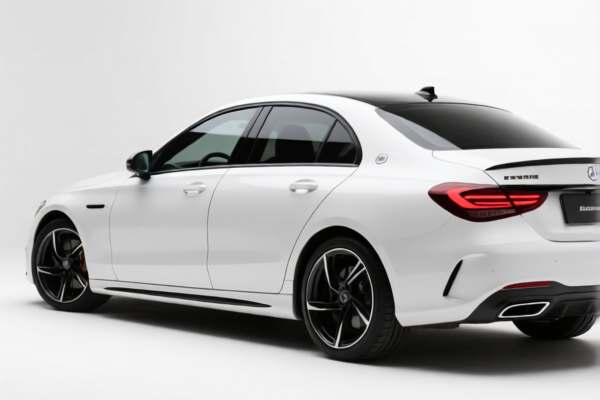
AI分析
🚗 Passenger Vehicles (Passenger Cars)
🌐 HS Code Reference & Customs Clearance Guide | 2026 Latest Tariff Analysis | Professional Clearance Strategy
📌 I. Product Definition and Classification: What Defines a "Passenger Vehicle"?
In international trade, "Passenger Vehicle" is not a single monolithic category. It is strictly defined by its primary design purpose: carrying persons (excluding those in Heading 87.02, such as buses or trucks). The classification hinges heavily on: 1. Form/Shape: Sedans, SUVs, station wagons, hatchbacks. 2. Power Source: Internal Combustion Engine (ICE) vs. Electric/Hybrid (though the provided data focuses on general usage categories). 3. Specific Attributes: Engine capacity, cylinder count, or battery range (if specified).
⚠️ Critical Distinction:
- If the vehicle is primarily for passenger transport → Heading 8703.
- If it includes specific technical details (e.g., electric-only with defined range), it may fall under sub-headings like 8703.80 or 8703.23.
- If technical details are missing, customs may apply a "catch-all" or "default" classification, which can significantly impact tax liability.
📦 II. HS Code Classification Details (Based on Provided Data)
| HS Code | Product Description | Matching Logic | Total Tax Rate |
|---|---|---|---|
8703.90.01.00 |
Passenger Vehicles (General/Catch-all) | Matches "Designed primarily for carrying persons." This is often a default classification when specific engine/powertrain details are not fully defined or fall outside standard sub-headings. | 112.5% |
8703.23.01.40 |
Passenger Vehicles (Specific Sub-category) | Matches "Used for carrying persons (excluding 87.02)" and conforms to vehicle form. Likely refers to vehicles with specific engine parameters (e.g., gasoline engines ≤1500cc or similar specific sub-classifications depending on national tariff schedules). | 37.5% |
8703.80.00.60 |
Passenger Vehicles (Electric/Hybrid/Catch-all) | Matches usage (passenger transport). Due to lack of specified drive mode/range in the generic input, it defaults to a "catch-all" category under 87.03.80. Note: This often triggers high penalties if misclassified. | 112.5% |
🔍 Key Observation:
-8703.23.01.40offers the lowest tax burden (37.5%) among the three options.
-8703.90.01.00and8703.80.00.60carry an extremely high 112.5% rate.
- The difference lies in the specificity of the vehicle's technical attributes (engine size, power source) and the resulting add-on tariffs.
💰 III. 2026 Tariff Rate Breakdown (Detailed Tax Policy)
✅ Applicable Context: Based on the "Section 301" and "Section 122" references in the data, this analysis assumes US Import from China.
🎯 1. 8703.90.01.00 —— Passenger Vehicles (General/Catch-all)
| Item | Detail |
|---|---|
| Base Duty | 2.5% |
| Section 301 Add-on Duty | 100.0% (High penalty rate) |
| Section 122 Duty | 10.0% |
| Total Effective Rate | 112.5% |
| Calculation | CIF Value × 112.5% |
| Legal Basis | HTSUS 8703.90.01.00 + USITC Footnotes for China-origin goods. |
📌 Explanation:
- This rate applies if the vehicle does not qualify for the specific sub-headings with lower add-on tariffs, or if it is deemed to fall under a "restricted" category for certain passenger vehicles from China. - 100% Section 301 Duty is exceptionally high, often designed to discourage import of specific automotive categories.
🎯 2. 8703.23.01.40 —— Passenger Vehicles (Specific/Standard)
| Item | Detail |
|---|---|
| Base Duty | 2.5% |
| Section 301 Add-on Duty | 25.0% (Standard rate) |
| Section 122 Duty | 10.0% |
| Total Effective Rate | 37.5% |
| Calculation | CIF Value × 37.5% |
| Legal Basis | HTSUS 8703.23.01.40 + USITC Footnotes for China-origin goods. |
📌 Explanation:
- This is the most favorable rate among the three.
- Likely applies to standard passenger cars (e.g., specific engine displacement ranges like ≤1.5L) that are not subject to the higher 100% penalty tier.
- Crucial: The vehicle must strictly meet the technical criteria for this sub-heading (e.g., engine type/capacity) to avoid reclassification to the 112.5% bucket.
🎯 3. 8703.80.00.60 —— Passenger Vehicles (Electric/Hybrid/Undefined Drive)
| Item | Detail |
|---|---|
| Base Duty | 2.5% |
| Section 301 Add-on Duty | 100.0% (High penalty rate) |
| Section 122 Duty | 10.0% |
| Total Effective Rate | 112.5% |
| Calculation | CIF Value × 112.5% |
| Legal Basis | HTSUS 8703.80.00.60 + USITC Footnotes for China-origin goods. |
📌 Explanation:
- This code often covers electric or hybrid passenger vehicles.
- In some tariff schedules, electric vehicles from China face 100% Section 301 duties as part of trade remedy measures.
- If the vehicle's drive mode is not clearly specified as compliant with lower-duty categories, it defaults here.
🛠️ IV. Customs Clearance Practical Advice (Actionable Strategy)
✅ 1. Documentation Checklist (Essential for Accurate Classification)
| Document | Requirement | Why It Matters |
|---|---|---|
| Product Specification Sheet | ✔️ Must include: Engine type (ICE/Hybrid/EV), Engine displacement (cc), Cylinder count, Battery capacity (if EV), Vehicle dimensions, Weight. | Critical for distinguishing between 8703.23 (37.5%) and 8703.80/8703.90 (112.5%). |
| Technical Data Sheet | ✔️ Confirm drive system (Front/Rear/All-wheel), Fuel type, Emission standards. | Determines if it fits the specific sub-heading (e.g., gasoline engines ≤1500cc). |
| Commercial Invoice | ✔️ Clearly state "Passenger Vehicle" with specific model and technical specs. | Vague descriptions lead to "catch-all" classification (112.5%). |
| Bill of Lading | ✔️ Match invoice details. | Consistency is key for CBP (Customs and Border Protection) review. |
| U.S. DOT/EPA Certifications | ✔️ For passenger vehicles, EPA (emissions) and DOT (safety) certifications are mandatory. | Without these, the vehicle cannot be cleared, regardless of HS Code. |
✅ 2. Classification Strategy (How to Save Money)
🔥 "Be Specific or Pay Penalty!"
| Scenario | Recommended HS Code | Tax Rate | Risk |
|---|---|---|---|
| Standard Gasoline Sedan/SUV (e.g., 1.5L–2.0L engine) | 8703.23.01.40 (if specs match) |
37.5% | ✅ Low risk if specs match exactly. |
| Electric Vehicle (EV) | 8703.80.00.60 (or specific EV code) |
112.5% | ⚠️ High tax. Check for any EV-specific exemptions or future rate changes. |
| Unclear/Unclassified Specs | 8703.90.01.00 |
112.5% | ❌ High risk. CBP may assign this if data is insufficient. |
Pro Tip:
- If your vehicle is a gasoline passenger car with standard engine specs, insist on8703.23.01.40by providing precise engine displacement data.
- Avoid vague terms like "Electric Car" without specifying battery/kW if it allows for a lower-duty classification.
- If the vehicle is not a standard passenger car (e.g., modified for special use), consult a customs broker immediately to avoid misclassification.
✅ 3. Special Considerations for Section 301 & 122
| Policy | Detail | Impact |
|---|---|---|
| Section 301 (Trade War) | 25% or 100% additional duty on Chinese goods. | 100% duty applies to certain passenger vehicles from China. |
| Section 122 (Presidential Proclamation) | 10% additional duty on all Chinese goods (temporary). | Always applied unless exempted. |
| Exclusions | Some HS codes may have been excluded from Section 301 in the past. | Check current exclusion lists. If excluded, rate may drop to 12.5% (2.5% base + 10% Sec 122). |
📌 Critical Check:
- Verify if your specific HS Code currently has an exclusion from Section 301.
- If excluded,8703.90.01.00could drop from 112.5% to 12.5%.
- Action: Contact a customs broker to confirm the latest USITC exclusion list for automotive parts/vehicles.
🌍 V. Global Clearance Comparison (2026 Snapshot)
| Market | Recommended HS Code | Est. Total Duty | Key Certification |
|---|---|---|---|
| 🇺🇸 USA | 8703.23.01.40 (if eligible) |
37.5% | EPA + DOT |
| 🇨🇳 China | 8703.23.01.40 |
~15-25% (varies) | CCC Certification |
| 🇪🇺 EU | 8703.23.01.40 |
~10% | CE/WVTA |
| 🇨🇦 Canada | 8703.23.01.40 |
6.1% | CMVSS |
📌 Conclusion:
- The USA has the most complex and punitive tariff structure due to Section 301/122.
- Accuracy in specification is the single most important factor in reducing duty from 112.5% to 37.5%.
📌 VI. Common Mistakes & Pitfalls
❌ Mistake 1: Listing the vehicle simply as "Car" without technical specs.
👉 Result: CBP defaults to 8703.90.01.00 → 112.5% duty.
❌ Mistake 2: Misidentifying an Electric Vehicle as a Gasoline Vehicle to avoid higher taxes.
👉 Result: Severe penalties, fraud allegations, and cargo seizure.
❌ Mistake 3: Ignoring Section 122.
👉 Result: Underpayment of the 10% surcharge, leading to audits and fines.
✅ Correct Approach:
"Passenger Vehicle, 2026 Model, Gasoline, 1.5L Engine, 4 Doors, White, EPA/DOT Certified, HS 8703.23.01.40"
🎯 VII. Conclusion: Precision Drives Profit
🎯 Key Takeaway:
🔹 "Specificity Saves Thousands!"
🔹 "37.5% vs. 112.5% – A Difference of 75% on Duty!"
🔹 "Verify Section 301 Exclusions!"
📌 Final Recommendation:
1. Provide Full Specs: Engine type, displacement, power source.
2. Check Exclusions: Confirm if your HS Code is exempt from Section 301.
3. Consult a Broker: Given the high stakes (112.5% vs. 37.5%), professional pre-arrival classification is mandatory.
✨ Smart Classification, Smarter Savings!
💼 Don't Let Unclear Specs Cost You 75% in Duties!
用户评价
关于 HS 编码归类
协调制度(HS)是由世界海关组织(WCO)制定的国际贸易商品分类标准。全球 200 多个国家采用 HS 系统作为海关关税、贸易统计和进出口监管的基础。
每个 HS 编码遵循以下层级结构:
- 章(2 位)——商品大类(例如:第 84 章:机器和机械设备)
- 品目(4 位)——章内的更具体分类
- 子目(6 位)——国际通用细分,所有 WCO 成员国统一使用
- 本国细分(8-10 位)——各国自行扩展的细分编码,如美国 HTSUS 10 位编码
正确的 HS 编码归类对于顺利通关、准确缴纳关税和遵守贸易法规至关重要。错误归类可能导致海关延误、多缴关税或罚款。
从CN进口到US时,适用的关税税率可能包括:
- 最惠国(MFN)税率——适用于 WTO 成员国的标准关税税率
- 普通税率——适用于无贸易协定国家
- 贸易救济关税——附加关税,如 301 条款(反倾销)、232 条款(国家安全)或反补贴税
本页内容仅供参考。如需正式归类,请咨询当地海关或持牌报关代理。