Passenger Vehicle
CN → US| HS Code | Tariff Rate | Origin | Destination | Doc |
|---|---|---|---|---|
| 8703900100 | 112.5% | CN | US | Official Doc |
| 8703230140 | 37.5% | CN | US | Official Doc |
| 8703800060 | 112.5% | CN | US | Official Doc |
Product Images
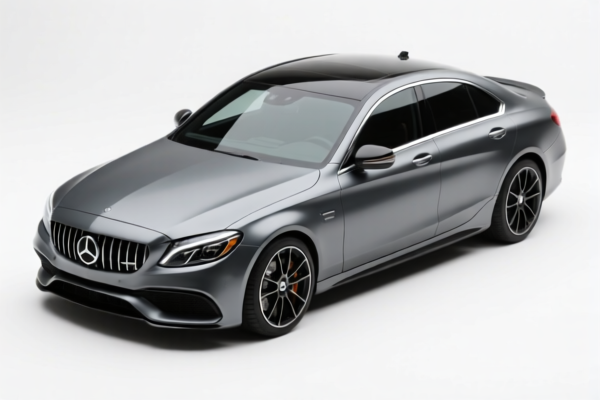
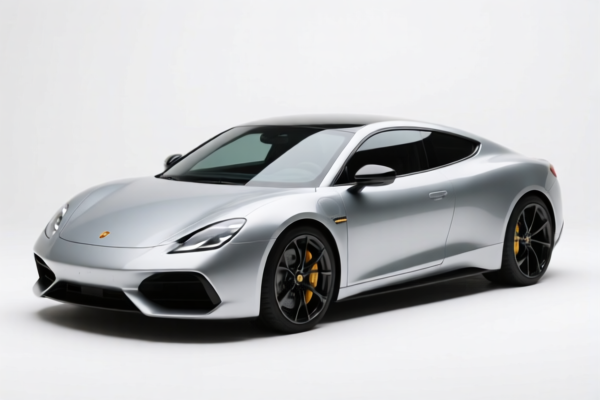
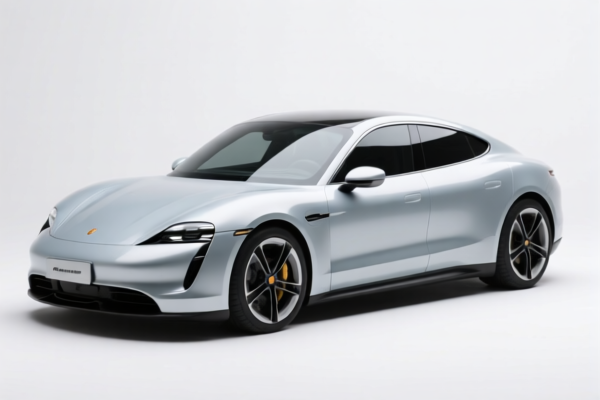
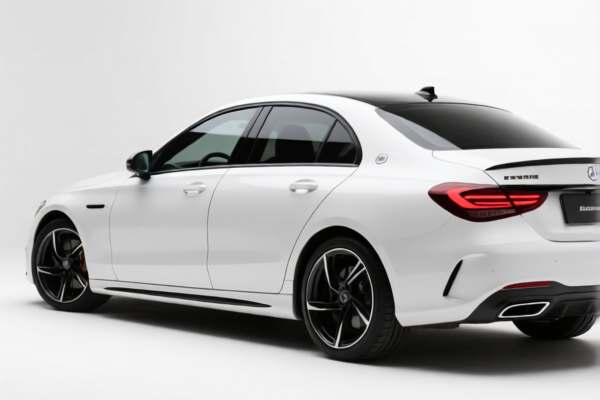
AI Analysis
🚗 Passenger Vehicles (Passenger Cars)
🌐 HS Code Reference & Customs Clearance Guide | 2026 Latest Tariff Analysis | Professional Clearance Strategy
📌 I. Product Definition and Classification: What Defines a "Passenger Vehicle"?
In international trade, "Passenger Vehicle" is not a single monolithic category. It is strictly defined by its primary design purpose: carrying persons (excluding those in Heading 87.02, such as buses or trucks). The classification hinges heavily on: 1. Form/Shape: Sedans, SUVs, station wagons, hatchbacks. 2. Power Source: Internal Combustion Engine (ICE) vs. Electric/Hybrid (though the provided data focuses on general usage categories). 3. Specific Attributes: Engine capacity, cylinder count, or battery range (if specified).
⚠️ Critical Distinction:
- If the vehicle is primarily for passenger transport → Heading 8703.
- If it includes specific technical details (e.g., electric-only with defined range), it may fall under sub-headings like 8703.80 or 8703.23.
- If technical details are missing, customs may apply a "catch-all" or "default" classification, which can significantly impact tax liability.
📦 II. HS Code Classification Details (Based on Provided Data)
| HS Code | Product Description | Matching Logic | Total Tax Rate |
|---|---|---|---|
8703.90.01.00 |
Passenger Vehicles (General/Catch-all) | Matches "Designed primarily for carrying persons." This is often a default classification when specific engine/powertrain details are not fully defined or fall outside standard sub-headings. | 112.5% |
8703.23.01.40 |
Passenger Vehicles (Specific Sub-category) | Matches "Used for carrying persons (excluding 87.02)" and conforms to vehicle form. Likely refers to vehicles with specific engine parameters (e.g., gasoline engines ≤1500cc or similar specific sub-classifications depending on national tariff schedules). | 37.5% |
8703.80.00.60 |
Passenger Vehicles (Electric/Hybrid/Catch-all) | Matches usage (passenger transport). Due to lack of specified drive mode/range in the generic input, it defaults to a "catch-all" category under 87.03.80. Note: This often triggers high penalties if misclassified. | 112.5% |
🔍 Key Observation:
-8703.23.01.40offers the lowest tax burden (37.5%) among the three options.
-8703.90.01.00and8703.80.00.60carry an extremely high 112.5% rate.
- The difference lies in the specificity of the vehicle's technical attributes (engine size, power source) and the resulting add-on tariffs.
💰 III. 2026 Tariff Rate Breakdown (Detailed Tax Policy)
✅ Applicable Context: Based on the "Section 301" and "Section 122" references in the data, this analysis assumes US Import from China.
🎯 1. 8703.90.01.00 —— Passenger Vehicles (General/Catch-all)
| Item | Detail |
|---|---|
| Base Duty | 2.5% |
| Section 301 Add-on Duty | 100.0% (High penalty rate) |
| Section 122 Duty | 10.0% |
| Total Effective Rate | 112.5% |
| Calculation | CIF Value × 112.5% |
| Legal Basis | HTSUS 8703.90.01.00 + USITC Footnotes for China-origin goods. |
📌 Explanation:
- This rate applies if the vehicle does not qualify for the specific sub-headings with lower add-on tariffs, or if it is deemed to fall under a "restricted" category for certain passenger vehicles from China. - 100% Section 301 Duty is exceptionally high, often designed to discourage import of specific automotive categories.
🎯 2. 8703.23.01.40 —— Passenger Vehicles (Specific/Standard)
| Item | Detail |
|---|---|
| Base Duty | 2.5% |
| Section 301 Add-on Duty | 25.0% (Standard rate) |
| Section 122 Duty | 10.0% |
| Total Effective Rate | 37.5% |
| Calculation | CIF Value × 37.5% |
| Legal Basis | HTSUS 8703.23.01.40 + USITC Footnotes for China-origin goods. |
📌 Explanation:
- This is the most favorable rate among the three.
- Likely applies to standard passenger cars (e.g., specific engine displacement ranges like ≤1.5L) that are not subject to the higher 100% penalty tier.
- Crucial: The vehicle must strictly meet the technical criteria for this sub-heading (e.g., engine type/capacity) to avoid reclassification to the 112.5% bucket.
🎯 3. 8703.80.00.60 —— Passenger Vehicles (Electric/Hybrid/Undefined Drive)
| Item | Detail |
|---|---|
| Base Duty | 2.5% |
| Section 301 Add-on Duty | 100.0% (High penalty rate) |
| Section 122 Duty | 10.0% |
| Total Effective Rate | 112.5% |
| Calculation | CIF Value × 112.5% |
| Legal Basis | HTSUS 8703.80.00.60 + USITC Footnotes for China-origin goods. |
📌 Explanation:
- This code often covers electric or hybrid passenger vehicles.
- In some tariff schedules, electric vehicles from China face 100% Section 301 duties as part of trade remedy measures.
- If the vehicle's drive mode is not clearly specified as compliant with lower-duty categories, it defaults here.
🛠️ IV. Customs Clearance Practical Advice (Actionable Strategy)
✅ 1. Documentation Checklist (Essential for Accurate Classification)
| Document | Requirement | Why It Matters |
|---|---|---|
| Product Specification Sheet | ✔️ Must include: Engine type (ICE/Hybrid/EV), Engine displacement (cc), Cylinder count, Battery capacity (if EV), Vehicle dimensions, Weight. | Critical for distinguishing between 8703.23 (37.5%) and 8703.80/8703.90 (112.5%). |
| Technical Data Sheet | ✔️ Confirm drive system (Front/Rear/All-wheel), Fuel type, Emission standards. | Determines if it fits the specific sub-heading (e.g., gasoline engines ≤1500cc). |
| Commercial Invoice | ✔️ Clearly state "Passenger Vehicle" with specific model and technical specs. | Vague descriptions lead to "catch-all" classification (112.5%). |
| Bill of Lading | ✔️ Match invoice details. | Consistency is key for CBP (Customs and Border Protection) review. |
| U.S. DOT/EPA Certifications | ✔️ For passenger vehicles, EPA (emissions) and DOT (safety) certifications are mandatory. | Without these, the vehicle cannot be cleared, regardless of HS Code. |
✅ 2. Classification Strategy (How to Save Money)
🔥 "Be Specific or Pay Penalty!"
| Scenario | Recommended HS Code | Tax Rate | Risk |
|---|---|---|---|
| Standard Gasoline Sedan/SUV (e.g., 1.5L–2.0L engine) | 8703.23.01.40 (if specs match) |
37.5% | ✅ Low risk if specs match exactly. |
| Electric Vehicle (EV) | 8703.80.00.60 (or specific EV code) |
112.5% | ⚠️ High tax. Check for any EV-specific exemptions or future rate changes. |
| Unclear/Unclassified Specs | 8703.90.01.00 |
112.5% | ❌ High risk. CBP may assign this if data is insufficient. |
Pro Tip:
- If your vehicle is a gasoline passenger car with standard engine specs, insist on8703.23.01.40by providing precise engine displacement data.
- Avoid vague terms like "Electric Car" without specifying battery/kW if it allows for a lower-duty classification.
- If the vehicle is not a standard passenger car (e.g., modified for special use), consult a customs broker immediately to avoid misclassification.
✅ 3. Special Considerations for Section 301 & 122
| Policy | Detail | Impact |
|---|---|---|
| Section 301 (Trade War) | 25% or 100% additional duty on Chinese goods. | 100% duty applies to certain passenger vehicles from China. |
| Section 122 (Presidential Proclamation) | 10% additional duty on all Chinese goods (temporary). | Always applied unless exempted. |
| Exclusions | Some HS codes may have been excluded from Section 301 in the past. | Check current exclusion lists. If excluded, rate may drop to 12.5% (2.5% base + 10% Sec 122). |
📌 Critical Check:
- Verify if your specific HS Code currently has an exclusion from Section 301.
- If excluded,8703.90.01.00could drop from 112.5% to 12.5%.
- Action: Contact a customs broker to confirm the latest USITC exclusion list for automotive parts/vehicles.
🌍 V. Global Clearance Comparison (2026 Snapshot)
| Market | Recommended HS Code | Est. Total Duty | Key Certification |
|---|---|---|---|
| 🇺🇸 USA | 8703.23.01.40 (if eligible) |
37.5% | EPA + DOT |
| 🇨🇳 China | 8703.23.01.40 |
~15-25% (varies) | CCC Certification |
| 🇪🇺 EU | 8703.23.01.40 |
~10% | CE/WVTA |
| 🇨🇦 Canada | 8703.23.01.40 |
6.1% | CMVSS |
📌 Conclusion:
- The USA has the most complex and punitive tariff structure due to Section 301/122.
- Accuracy in specification is the single most important factor in reducing duty from 112.5% to 37.5%.
📌 VI. Common Mistakes & Pitfalls
❌ Mistake 1: Listing the vehicle simply as "Car" without technical specs.
👉 Result: CBP defaults to 8703.90.01.00 → 112.5% duty.
❌ Mistake 2: Misidentifying an Electric Vehicle as a Gasoline Vehicle to avoid higher taxes.
👉 Result: Severe penalties, fraud allegations, and cargo seizure.
❌ Mistake 3: Ignoring Section 122.
👉 Result: Underpayment of the 10% surcharge, leading to audits and fines.
✅ Correct Approach:
"Passenger Vehicle, 2026 Model, Gasoline, 1.5L Engine, 4 Doors, White, EPA/DOT Certified, HS 8703.23.01.40"
🎯 VII. Conclusion: Precision Drives Profit
🎯 Key Takeaway:
🔹 "Specificity Saves Thousands!"
🔹 "37.5% vs. 112.5% – A Difference of 75% on Duty!"
🔹 "Verify Section 301 Exclusions!"
📌 Final Recommendation:
1. Provide Full Specs: Engine type, displacement, power source.
2. Check Exclusions: Confirm if your HS Code is exempt from Section 301.
3. Consult a Broker: Given the high stakes (112.5% vs. 37.5%), professional pre-arrival classification is mandatory.
✨ Smart Classification, Smarter Savings!
💼 Don't Let Unclear Specs Cost You 75% in Duties!
Customer Reviews
About HS Code Classification
The Harmonized System (HS) is an internationally standardized nomenclature developed by the World Customs Organization (WCO) to classify traded products. Over 200 countries use the HS system as the basis for customs tariffs, trade statistics, and import/export regulations.
Each HS code follows a hierarchical structure:
- Chapter (2 digits) — Broad category of goods (e.g., Chapter 84: Machinery and Mechanical Appliances)
- Heading (4 digits) — More specific grouping within the chapter
- Subheading (6 digits) — Internationally standardized breakdown, used by all WCO member countries
- National subdivisions (8-10 digits) — Country-specific extensions for further classification, such as US HTSUS 10-digit codes
Correct HS code classification is essential for smooth customs clearance, accurate duty payment, and compliance with trade regulations. Misclassification can lead to customs delays, overpayment of duties, or penalties.
When importing from CN to US, the applicable tariff rates may include:
- Most-Favored-Nation (MFN) rate — The standard duty rate applied to WTO members
- General rate — Applied to countries without trade agreements
- Trade remedy duties — Additional tariffs such as Section 301 (anti-dumping), Section 232 (national security), or countervailing duties
The information provided on this page is for reference purposes only. For official classification, please consult with your local customs authority or a licensed customs broker.