Paulownia Wood Boards Rough
CN → US商品图片
AI分析
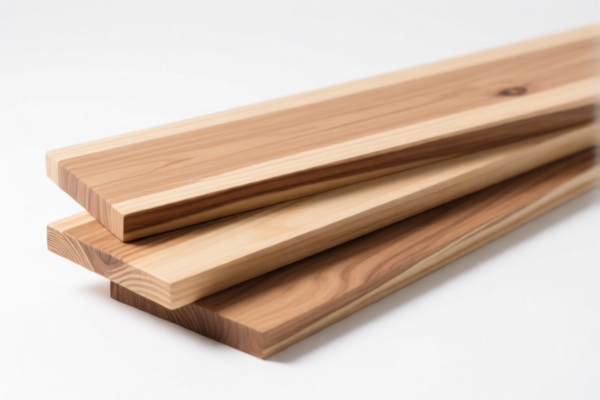
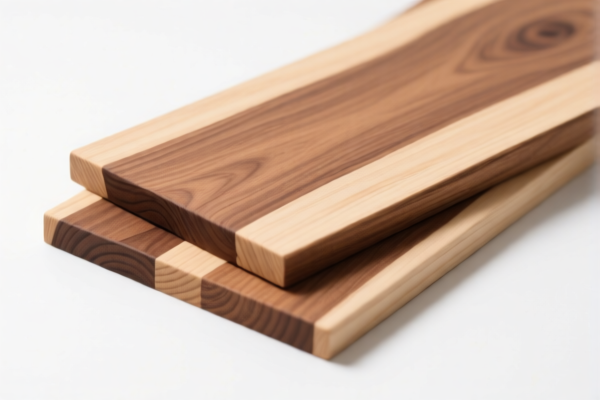
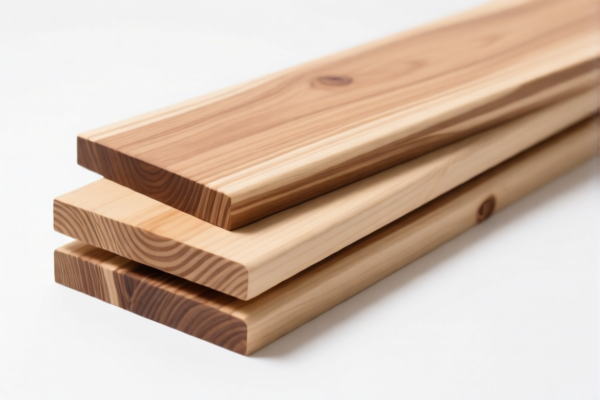
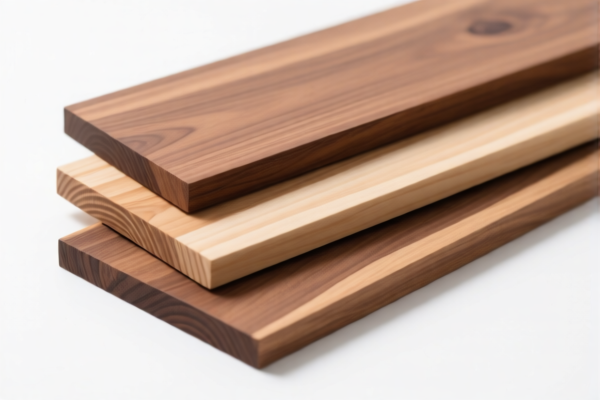
🌳 Rough Paulownia Wood Boards (Unprocessed Timber)
🌐 HS Code Reference & Customs Clearance Guide | 2026 Latest Tariff Analysis | Professional Clearance Strategy
📌 I. Product Definition & Classification: Do You Really Know “Paulownia”?
Paulownia wood, often called the “King of Timber” due to its lightweight, straight grain, and stability, is primarily used in musical instruments (guitars, pianos), high-end furniture, matchsticks, and packing crates. In international trade, Rough Paulownia Wood Boards fall under the broad category of Wood and Products of Wood.
Key Distinction:
- Rough/Unprocessed: Simply cut to size, bark may be removed, but no sanding, planing, or finishing. → Classified under Chapter 44.
- Sawn/Planed/Finished: Processed for direct use in furniture or construction. → Still generally Chapter 44, but specific subheadings vary based on thickness and treatment.
- Veneers: Sliced extremely thin. → Classified under 4408.
⚠️ Critical Identification Point:
- If the wood is raw, unplaned, and unpolished → 4407 or 4403 depending on treatment.
- If it is treated with preservatives → Different subheading under 4403.
- If it is veneer sheets (≤6mm) → 4408.
📦 II. HS Code Classification Details (2026 Latest Tariff Authority Comparison)
| HS Code | Product Description | Application Scenario | Treatment Status |
|---|---|---|---|
4403.42.00.00 |
Wood, treated with paint, stain, creosote, or other preservatives; coniferous (Paulownia is NOT coniferous, but often grouped here if misidentified; Paulownia is deciduous) | Note: Paulownia is NOT coniferous. This code is for pines/firs. Incorrect for Paulownia unless misdeclared. | ✅ Treated |
4403.49.00.00 |
Other wood, treated with paint, stain, creosote, or other preservatives; non-coniferous | Paulownia boards treated with wood preservatives | ✅ Treated |
4407.29.00.00 |
Wood sawn lengthwise, chipped or split, of non-coniferous wood, including bamboo, planed, sanded, or finger-jointed, but not further worked | Rough/Unprocessed Paulownia Boards (most common for raw timber export) | ❌ Untreated (Rough) |
4407.10.00.00 |
Wood sawn lengthwise... of bamboo | Bamboo products | ❌ N/A |
4408.39.00.00 |
Veneer sheets and sheets for plywood, etc., of other non-coniferous wood, sawn lengthwise... | Paulownia veneer (thin slices) | ❌ Sliced Thin |
4418.71.00.00 |
Wooden blocks for parquet setting | Pre-made parquet | ❌ N/A |
🔍 Key Reminder:
- Paulownia is a deciduous hardwood, not a conifer. Therefore, codes starting with 4403.4x (coniferous) are incorrect.
- For Rough Boards (not planed, not sanded, just cut), 4407.29.00.00 is the most accurate classification for non-coniferous sawn wood.
- If the wood is treated with chemicals (e.g., anti-fungal), it falls under 4403.49.00.00.
- If the wood is sliced into veneers (<6mm), it falls under 4408.39.00.00.
💰 III. 2026 Latest Tariff Rate Details (Including Additional Duties & Policy Add-ons)
✅ Applicable Country: United States (US)
✅ Origin: China (CN)
✅ Effective Date: Post-2025 (Includes subsequent imports)
🎯 1. 4407.29.00.00 —— Sawn Wood of Non-Coniferous Wood (Rough Paulownia)
| Item | Content |
|---|---|
| Base Rate | 3.4% (ad valorem) |
| Section 301 Tariff (USITC) | +25% (Footnote 9903.88.01 applies to many wood products from China) |
| IEEPA Surcharge | +10% (For China/HK products, effective Nov 10, 2025) |
| Total Rate | 38.4% |
| Tax Calculation | CIF Value × 38.4% |
| De Minimis Eligibility | ❌ Not Eligible (deny_de_minimis) |
| Legal Basis Path | IEEPA:9903.01.25 → IEEPA:9903.01.24 → USITC:4407.29.00.00 → FOOTNOTE:9903.88.01 |
📌 Explanation:
- 3.4% Base Rate: Standard Most-Favored-Nation (MFN) rate for non-coniferous sawn wood.
- 25% Section 301: Part of the US Trade Act’s punitive tariffs on Chinese goods.
- 10% IEEPA: Additional national security-related tariff.
- Total 38.4%: This is a high tariff, significantly impacting cost competitiveness.
🎯 2. 4403.49.00.00 —— Treated Wood of Non-Coniferous Wood
| Item | Content |
|---|---|
| Base Rate | 3.4% |
| Section 301 Tariff | +25% |
| IEEPA Surcharge | +10% |
| Total Rate | 38.4% |
| Tax Calculation | CIF Value × 38.4% |
| De Minimis Eligibility | ❌ Not Eligible |
| Legal Basis Path | IEEPA:9903.01.25 → IEEPA:9903.01.24 → USITC:4403.49.00.00 → FOOTNOTE:9903.88.01 |
📌 Note:
- If Paulownia is chemically treated (e.g., for pest control in export), it shifts to 4403.49.00.00.
- The tariff rate remains 38.4% due to the same punitive measures.
🎯 3. 4408.39.00.00 —— Paulownia Veneer
| Item | Content |
|---|---|
| Base Rate | 5.6% |
| Section 301 Tariff | +25% |
| IEEPA Surcharge | +10% |
| Total Rate | 40.6% |
| Tax Calculation | CIF Value × 40.6% |
| De Minimis Eligibility | ❌ Not Eligible |
| Legal Basis Path | IEEPA:9903.01.25 → IEEPA:9903.01.24 → USITC:4408.39.00.00 → FOOTNOTE:9903.88.01 |
📌 Note:
- Veneers have a higher base rate (5.6%) but are subject to the same additional tariffs.
- Total rate: 40.6%.
🛠️ IV. Customs Clearance Practical Advice (Avoid Pitfalls)
✅ 1. Preparation Checklist (Essential Documents)
| Document | Required | Notes |
|---|---|---|
| ✅ Commercial Invoice | ✔️ | Must clearly state “Rough Paulownia Wood Boards” and HS Code. |
| ✅ Packing List | ✔️ | Detail dimensions, weight, and number of boards. |
| ✅ Phytosanitary Certificate | ✔️ | Critical! Wood products require ISPM 15 compliance to prevent pest spread. |
| ✅ Fumigation Certificate | ✔️ | Proof of heat treatment or methyl bromide fumigation. |
| ✅ Wood Species Declaration | ✔️ | Explicitly state “Paulownia (Paulownia tomentosa)” to avoid misclassification. |
| ✅ Treatment Certificate | ✔️ | If treated with preservatives, provide chemical safety data. |
✅ 2. Declaration Tips (Key Mantras)
🔥 “Raw vs. Treated, Conifer vs. Deciduous, Treatments Matter!”
| Scenario | Correct Declaration | Wrong Approach |
|---|---|---|
| Untreated Rough Boards | 4407.29.00.00 + “Untreated” |
Misdeclare as “Treated” → Higher scrutiny |
| Treated Boards | 4403.49.00.00 + “Treated with Preservative” |
Misdeclare as “Rough” → Smuggling suspicion |
| Veneer Sheets | 4408.39.00.00 + “Veneer, <6mm” |
Misdeclare as “Boards” → Wrong HS Code |
| Conifer Misidentification | Do NOT use 4403.42 or 4407.10 |
Using Conifer codes for Paulownia → Penalties |
✅ 3. Special Cases
| Situation | Handling Advice |
|---|---|
| Export to US | Ensure ISPM 15 mark is visible on pallets/boxes. Failure → Rejection/Deportation. |
| Mixed Shipments | If Paulownia is mixed with other woods, declare each separately to avoid misclassification. |
| OEM Custom Sizes | Provide drawings to prove dimensions. Custom sizes do not change HS Code but aid classification. |
| Small Sample Shipments | Even small samples require phytosanitary certificates if >50kg or for commercial use. |
🌍 V. Global Market Comparison (2026 Latest)
| Country/Region | Recommended HS Code | Tariff (China Origin) | Certification Requirements | Notes |
|---|---|---|---|---|
| 🇺🇸 USA | 4407.29.00.00 |
38.4% | ISPM 15 + Fumigation | High punitive tariffs. |
| 🇨🇳 China | 4407.29.00.00 |
0% (Import) / 13% (Export VAT) | ISPM 15 | Paulownia is a local specialty; export VAT rebates may apply. |
| 🇪🇺 EU | 4407.29.00.00 |
6.4% | EUTM (Eco-Timber) + Fumigation | No Section 301, but strict timber regulations. |
| 🇬🇧 UK | 4407.29.00.00 |
6.4% | UKCA + Fumigation | Post-Brexit rules similar to EU. |
| 🇯🇵 Japan | 4407.29.00.00 |
0% | ISPM 15 | Free trade agreement benefits if applicable. |
📌 Conclusion:
- USA has the highest tariff burden (38.4%) due to trade wars.
- EU and Japan are more favorable with lower tariffs, but require strict timber legality verification.
- Paulownia is a strategic material; ensure compliance with ISPM 15 globally to avoid quarantine issues.
📌 VI. Common Mistakes & Pitfalls (Lessons Learned)
❌ Mistake 1: Declaring Paulownia as “Coniferous Wood” (e.g., 4407.10)
👉 Consequence: Customs rejects the shipment → Misclassification penalties + Delay.
❌ Mistake 2: Omitting “Untreated” or “Treated” status
👉 Consequence: Customs demands additional lab tests → Increased clearance time and costs.
❌ Mistake 3: Ignoring ISPM 15 Fumigation Mark
👉 Consequence: Shipment returned or destroyed → Total loss of goods.
❌ Mistake 4: Using “Wooden Boards” as a vague description
👉 Consequence: Customs classifies under highest duty rate → Higher taxes.
✅ Correct Practice:
“Rough Paulownia Wood Boards, Untreated, Non-Coniferous, ISPM 15 Certified, Dimensions: 2000x500x50mm, HS Code: 4407.29.00.00”
🎯 VII. Conclusion: Precise Classification Saves Costs!
🎯 Remember the Mantra:
🔹 “Paulownia is Deciduous, Not Conifer! Treat or Raw, Declare Clearly! ISPM 15 is Key, Fumigation is Free!”
🔹 “US Tariffs are High (38.4%), EU/Japan are Lower, But Compliance is Mandatory!”
📌 Pro Tip:
- If shipping to the USA, consider third-country transshipment (e.g., Vietnam, Thailand) if legally permissible, to potentially avoid Section 301 tariffs.
- Always request a Pre-Ruling from US Customs (CBP) for complex shipments to avoid surprises.
📣 Immediate Action:
📞 Contact a licensed customs broker + Provide Phytosanitary Certificate + Verify ISPM 15 compliance
🚀 Ensure your Paulownia boards clear customs smoothly, avoid penalties, and maximize profit!
✨ Professional Clearance Starts with Accurate Classification!
💼 Every Tariff Point Counts, Every Document Matters!
用户评价
关于 HS 编码归类
协调制度(HS)是由世界海关组织(WCO)制定的国际贸易商品分类标准。全球 200 多个国家采用 HS 系统作为海关关税、贸易统计和进出口监管的基础。
每个 HS 编码遵循以下层级结构:
- 章(2 位)——商品大类(例如:第 84 章:机器和机械设备)
- 品目(4 位)——章内的更具体分类
- 子目(6 位)——国际通用细分,所有 WCO 成员国统一使用
- 本国细分(8-10 位)——各国自行扩展的细分编码,如美国 HTSUS 10 位编码
正确的 HS 编码归类对于顺利通关、准确缴纳关税和遵守贸易法规至关重要。错误归类可能导致海关延误、多缴关税或罚款。
从CN进口到US时,适用的关税税率可能包括:
- 最惠国(MFN)税率——适用于 WTO 成员国的标准关税税率
- 普通税率——适用于无贸易协定国家
- 贸易救济关税——附加关税,如 301 条款(反倾销)、232 条款(国家安全)或反补贴税
本页内容仅供参考。如需正式归类,请咨询当地海关或持牌报关代理。