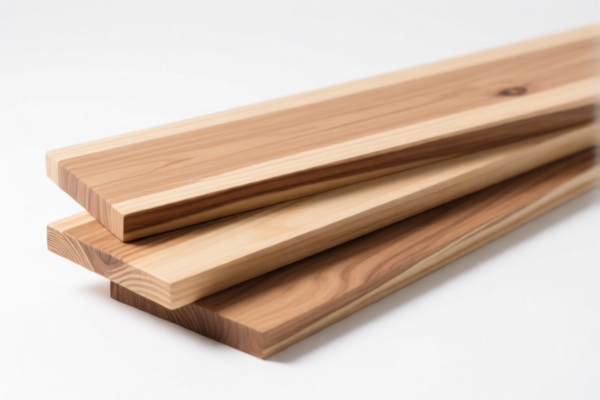
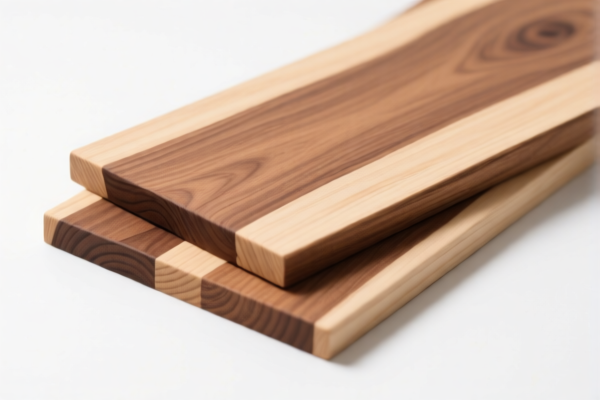
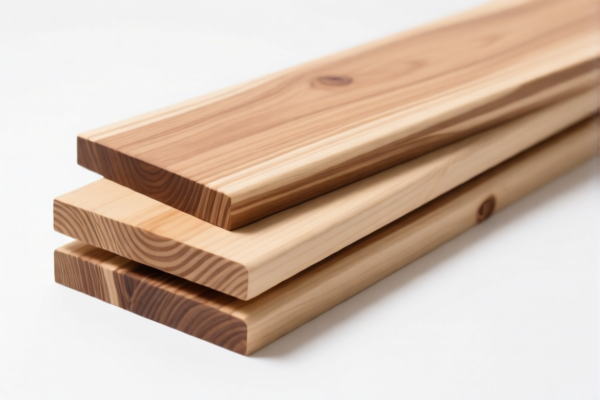
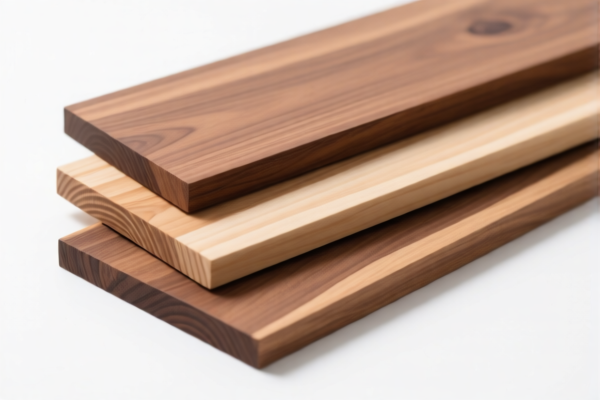
Paulownia Wood Boards Rough
CN → USProduct Images
AI Analysis
🌳 Rough Paulownia Wood Boards (Unprocessed Timber)
🌐 HS Code Reference & Customs Clearance Guide | 2026 Latest Tariff Analysis | Professional Clearance Strategy
📌 I. Product Definition & Classification: Do You Really Know “Paulownia”?
Paulownia wood, often called the “King of Timber” due to its lightweight, straight grain, and stability, is primarily used in musical instruments (guitars, pianos), high-end furniture, matchsticks, and packing crates. In international trade, Rough Paulownia Wood Boards fall under the broad category of Wood and Products of Wood.
Key Distinction:
- Rough/Unprocessed: Simply cut to size, bark may be removed, but no sanding, planing, or finishing. → Classified under Chapter 44.
- Sawn/Planed/Finished: Processed for direct use in furniture or construction. → Still generally Chapter 44, but specific subheadings vary based on thickness and treatment.
- Veneers: Sliced extremely thin. → Classified under 4408.
⚠️ Critical Identification Point:
- If the wood is raw, unplaned, and unpolished → 4407 or 4403 depending on treatment.
- If it is treated with preservatives → Different subheading under 4403.
- If it is veneer sheets (≤6mm) → 4408.
📦 II. HS Code Classification Details (2026 Latest Tariff Authority Comparison)
| HS Code | Product Description | Application Scenario | Treatment Status |
|---|---|---|---|
4403.42.00.00 |
Wood, treated with paint, stain, creosote, or other preservatives; coniferous (Paulownia is NOT coniferous, but often grouped here if misidentified; Paulownia is deciduous) | Note: Paulownia is NOT coniferous. This code is for pines/firs. Incorrect for Paulownia unless misdeclared. | ✅ Treated |
4403.49.00.00 |
Other wood, treated with paint, stain, creosote, or other preservatives; non-coniferous | Paulownia boards treated with wood preservatives | ✅ Treated |
4407.29.00.00 |
Wood sawn lengthwise, chipped or split, of non-coniferous wood, including bamboo, planed, sanded, or finger-jointed, but not further worked | Rough/Unprocessed Paulownia Boards (most common for raw timber export) | ❌ Untreated (Rough) |
4407.10.00.00 |
Wood sawn lengthwise... of bamboo | Bamboo products | ❌ N/A |
4408.39.00.00 |
Veneer sheets and sheets for plywood, etc., of other non-coniferous wood, sawn lengthwise... | Paulownia veneer (thin slices) | ❌ Sliced Thin |
4418.71.00.00 |
Wooden blocks for parquet setting | Pre-made parquet | ❌ N/A |
🔍 Key Reminder:
- Paulownia is a deciduous hardwood, not a conifer. Therefore, codes starting with 4403.4x (coniferous) are incorrect.
- For Rough Boards (not planed, not sanded, just cut), 4407.29.00.00 is the most accurate classification for non-coniferous sawn wood.
- If the wood is treated with chemicals (e.g., anti-fungal), it falls under 4403.49.00.00.
- If the wood is sliced into veneers (<6mm), it falls under 4408.39.00.00.
💰 III. 2026 Latest Tariff Rate Details (Including Additional Duties & Policy Add-ons)
✅ Applicable Country: United States (US)
✅ Origin: China (CN)
✅ Effective Date: Post-2025 (Includes subsequent imports)
🎯 1. 4407.29.00.00 —— Sawn Wood of Non-Coniferous Wood (Rough Paulownia)
| Item | Content |
|---|---|
| Base Rate | 3.4% (ad valorem) |
| Section 301 Tariff (USITC) | +25% (Footnote 9903.88.01 applies to many wood products from China) |
| IEEPA Surcharge | +10% (For China/HK products, effective Nov 10, 2025) |
| Total Rate | 38.4% |
| Tax Calculation | CIF Value × 38.4% |
| De Minimis Eligibility | ❌ Not Eligible (deny_de_minimis) |
| Legal Basis Path | IEEPA:9903.01.25 → IEEPA:9903.01.24 → USITC:4407.29.00.00 → FOOTNOTE:9903.88.01 |
📌 Explanation:
- 3.4% Base Rate: Standard Most-Favored-Nation (MFN) rate for non-coniferous sawn wood.
- 25% Section 301: Part of the US Trade Act’s punitive tariffs on Chinese goods.
- 10% IEEPA: Additional national security-related tariff.
- Total 38.4%: This is a high tariff, significantly impacting cost competitiveness.
🎯 2. 4403.49.00.00 —— Treated Wood of Non-Coniferous Wood
| Item | Content |
|---|---|
| Base Rate | 3.4% |
| Section 301 Tariff | +25% |
| IEEPA Surcharge | +10% |
| Total Rate | 38.4% |
| Tax Calculation | CIF Value × 38.4% |
| De Minimis Eligibility | ❌ Not Eligible |
| Legal Basis Path | IEEPA:9903.01.25 → IEEPA:9903.01.24 → USITC:4403.49.00.00 → FOOTNOTE:9903.88.01 |
📌 Note:
- If Paulownia is chemically treated (e.g., for pest control in export), it shifts to 4403.49.00.00.
- The tariff rate remains 38.4% due to the same punitive measures.
🎯 3. 4408.39.00.00 —— Paulownia Veneer
| Item | Content |
|---|---|
| Base Rate | 5.6% |
| Section 301 Tariff | +25% |
| IEEPA Surcharge | +10% |
| Total Rate | 40.6% |
| Tax Calculation | CIF Value × 40.6% |
| De Minimis Eligibility | ❌ Not Eligible |
| Legal Basis Path | IEEPA:9903.01.25 → IEEPA:9903.01.24 → USITC:4408.39.00.00 → FOOTNOTE:9903.88.01 |
📌 Note:
- Veneers have a higher base rate (5.6%) but are subject to the same additional tariffs.
- Total rate: 40.6%.
🛠️ IV. Customs Clearance Practical Advice (Avoid Pitfalls)
✅ 1. Preparation Checklist (Essential Documents)
| Document | Required | Notes |
|---|---|---|
| ✅ Commercial Invoice | ✔️ | Must clearly state “Rough Paulownia Wood Boards” and HS Code. |
| ✅ Packing List | ✔️ | Detail dimensions, weight, and number of boards. |
| ✅ Phytosanitary Certificate | ✔️ | Critical! Wood products require ISPM 15 compliance to prevent pest spread. |
| ✅ Fumigation Certificate | ✔️ | Proof of heat treatment or methyl bromide fumigation. |
| ✅ Wood Species Declaration | ✔️ | Explicitly state “Paulownia (Paulownia tomentosa)” to avoid misclassification. |
| ✅ Treatment Certificate | ✔️ | If treated with preservatives, provide chemical safety data. |
✅ 2. Declaration Tips (Key Mantras)
🔥 “Raw vs. Treated, Conifer vs. Deciduous, Treatments Matter!”
| Scenario | Correct Declaration | Wrong Approach |
|---|---|---|
| Untreated Rough Boards | 4407.29.00.00 + “Untreated” |
Misdeclare as “Treated” → Higher scrutiny |
| Treated Boards | 4403.49.00.00 + “Treated with Preservative” |
Misdeclare as “Rough” → Smuggling suspicion |
| Veneer Sheets | 4408.39.00.00 + “Veneer, <6mm” |
Misdeclare as “Boards” → Wrong HS Code |
| Conifer Misidentification | Do NOT use 4403.42 or 4407.10 |
Using Conifer codes for Paulownia → Penalties |
✅ 3. Special Cases
| Situation | Handling Advice |
|---|---|
| Export to US | Ensure ISPM 15 mark is visible on pallets/boxes. Failure → Rejection/Deportation. |
| Mixed Shipments | If Paulownia is mixed with other woods, declare each separately to avoid misclassification. |
| OEM Custom Sizes | Provide drawings to prove dimensions. Custom sizes do not change HS Code but aid classification. |
| Small Sample Shipments | Even small samples require phytosanitary certificates if >50kg or for commercial use. |
🌍 V. Global Market Comparison (2026 Latest)
| Country/Region | Recommended HS Code | Tariff (China Origin) | Certification Requirements | Notes |
|---|---|---|---|---|
| 🇺🇸 USA | 4407.29.00.00 |
38.4% | ISPM 15 + Fumigation | High punitive tariffs. |
| 🇨🇳 China | 4407.29.00.00 |
0% (Import) / 13% (Export VAT) | ISPM 15 | Paulownia is a local specialty; export VAT rebates may apply. |
| 🇪🇺 EU | 4407.29.00.00 |
6.4% | EUTM (Eco-Timber) + Fumigation | No Section 301, but strict timber regulations. |
| 🇬🇧 UK | 4407.29.00.00 |
6.4% | UKCA + Fumigation | Post-Brexit rules similar to EU. |
| 🇯🇵 Japan | 4407.29.00.00 |
0% | ISPM 15 | Free trade agreement benefits if applicable. |
📌 Conclusion:
- USA has the highest tariff burden (38.4%) due to trade wars.
- EU and Japan are more favorable with lower tariffs, but require strict timber legality verification.
- Paulownia is a strategic material; ensure compliance with ISPM 15 globally to avoid quarantine issues.
📌 VI. Common Mistakes & Pitfalls (Lessons Learned)
❌ Mistake 1: Declaring Paulownia as “Coniferous Wood” (e.g., 4407.10)
👉 Consequence: Customs rejects the shipment → Misclassification penalties + Delay.
❌ Mistake 2: Omitting “Untreated” or “Treated” status
👉 Consequence: Customs demands additional lab tests → Increased clearance time and costs.
❌ Mistake 3: Ignoring ISPM 15 Fumigation Mark
👉 Consequence: Shipment returned or destroyed → Total loss of goods.
❌ Mistake 4: Using “Wooden Boards” as a vague description
👉 Consequence: Customs classifies under highest duty rate → Higher taxes.
✅ Correct Practice:
“Rough Paulownia Wood Boards, Untreated, Non-Coniferous, ISPM 15 Certified, Dimensions: 2000x500x50mm, HS Code: 4407.29.00.00”
🎯 VII. Conclusion: Precise Classification Saves Costs!
🎯 Remember the Mantra:
🔹 “Paulownia is Deciduous, Not Conifer! Treat or Raw, Declare Clearly! ISPM 15 is Key, Fumigation is Free!”
🔹 “US Tariffs are High (38.4%), EU/Japan are Lower, But Compliance is Mandatory!”
📌 Pro Tip:
- If shipping to the USA, consider third-country transshipment (e.g., Vietnam, Thailand) if legally permissible, to potentially avoid Section 301 tariffs.
- Always request a Pre-Ruling from US Customs (CBP) for complex shipments to avoid surprises.
📣 Immediate Action:
📞 Contact a licensed customs broker + Provide Phytosanitary Certificate + Verify ISPM 15 compliance
🚀 Ensure your Paulownia boards clear customs smoothly, avoid penalties, and maximize profit!
✨ Professional Clearance Starts with Accurate Classification!
💼 Every Tariff Point Counts, Every Document Matters!
Customer Reviews
About HS Code Classification
The Harmonized System (HS) is an internationally standardized nomenclature developed by the World Customs Organization (WCO) to classify traded products. Over 200 countries use the HS system as the basis for customs tariffs, trade statistics, and import/export regulations.
Each HS code follows a hierarchical structure:
- Chapter (2 digits) — Broad category of goods (e.g., Chapter 84: Machinery and Mechanical Appliances)
- Heading (4 digits) — More specific grouping within the chapter
- Subheading (6 digits) — Internationally standardized breakdown, used by all WCO member countries
- National subdivisions (8-10 digits) — Country-specific extensions for further classification, such as US HTSUS 10-digit codes
Correct HS code classification is essential for smooth customs clearance, accurate duty payment, and compliance with trade regulations. Misclassification can lead to customs delays, overpayment of duties, or penalties.
When importing from CN to US, the applicable tariff rates may include:
- Most-Favored-Nation (MFN) rate — The standard duty rate applied to WTO members
- General rate — Applied to countries without trade agreements
- Trade remedy duties — Additional tariffs such as Section 301 (anti-dumping), Section 232 (national security), or countervailing duties
The information provided on this page is for reference purposes only. For official classification, please consult with your local customs authority or a licensed customs broker.