Paulownia Wood Rough Boards
CN → US| HS编码 | 关税税率 | 原产国 | 目的国 | 文档 |
|---|---|---|---|---|
| 4407990295 | 35.0% | CN | US | 官方文档 |
商品图片
AI分析
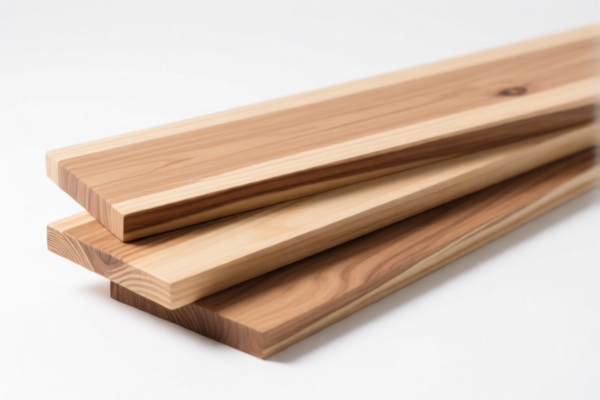
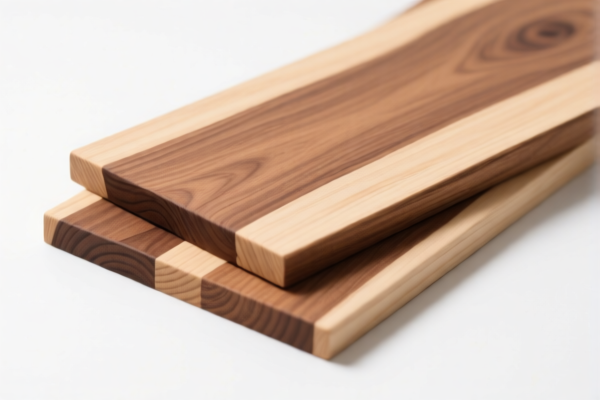
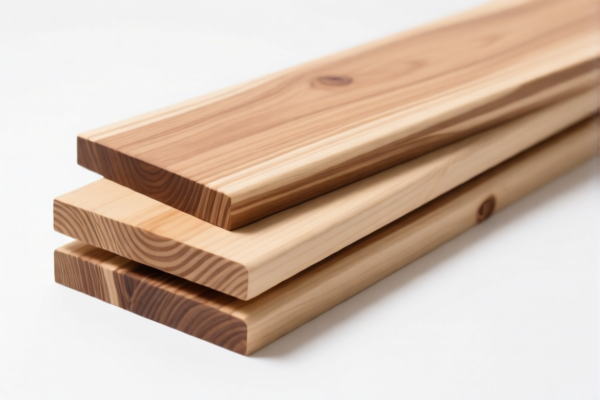
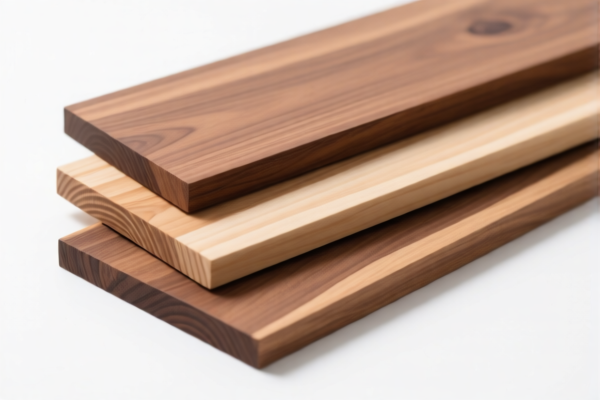
🌲 Paulownia Wood Rough Boards (Unprocessed Timber)
🌐 HS Code Reference & Customs Clearance Guide | 2026 Latest Tariff Analysis | Professional Level Clearance Strategy
📌 1. Product Definition & Classification: Do You Really Understand "Paulownia Rough Boards"?
Paulownia (often called "King of Woods" in timber trade) is a fast-growing, lightweight, and rot-resistant hardwood. In international trade, "Rough Boards" specifically refers to wood that has been sawn or chipped lengthwise but has not been further processed (such as planing, sanding, or edge-joining) beyond the basic sawing stage.
Key Distinction: * Rough Sawn (Unplaned): Raw logs cut into planks. Surface is rough. Thickness > 6mm. * Dimension Lumber (Planed/Sanded): Processed, smooth surfaces, ready for furniture.
⚠️ Critical Classification Point:
- If the wood is non-coniferous (Paulownia is a broadleaf/hardwood) AND thickness > 6mm AND not planed/sanded → It falls under Heading 44.07.
- Specifically, Paulownia is classified under "Other non-coniferous" wood.
📦 2. HS Code Classification Details (2026 Latest Tariff Authority Match)
Based on the provided <DATA>, here is the exact classification for Paulownia Wood Rough Boards:
| HS Code | Product Description | Applicable Scenario | Coniferous? | Processed? |
|---|---|---|---|---|
4407.99.02.95 |
Wood sawn or chipped lengthwise, sliced or peeled, whether or not planed, sanded or end-jointed, of a thickness exceeding 6 mm: Other: Other Other nonconiferous | Paulownia rough planks, raw lumber, unprocessed timber sheets | ❌ No (Hardwood) | ❌ No (Rough/Unplaned) |
🔍 Explanation of HS Code Breakdown: - 4407: Wood sawn or chipped lengthwise... thickness > 6 mm. - 99: Other non-coniferous wood (includes Paulownia, Oak, Walnut, etc.). - 02.95: Specific sub-category for "Other" non-coniferous woods not elsewhere specified (like Pine/Spruce would be different).
💰 3. 2026 Latest Tariff Rate Details (Including Additional Duties & Policy Surcharges)
✅ Applicable Country: United States (US)
✅ Country of Origin: China (CN) (Assumed based on typical Paulownia export origin and provided tax context)
✅ Effective Date: Current 2026 Tariff Structure
🎯 HS Code: 4407.99.02.95 —— Paulownia Wood Rough Boards (Non-Coniferous)
| Item | Content |
|---|---|
| Base Tariff (MFN) | 0.0% |
| Section 301 Additional Tariff | +25.0% |
| Total Tariff Rate | 25.0% |
| Tax Calculation | CIF Value × 25.0% |
| De Minimis Eligibility | ❌ Not Eligible (Wood products are generally excluded from de minimis exemptions for Section 301 goods) |
| Legal Basis Path | HTSUS:4407.99.02.95 → USITC Footnote 9903.88.01 (Section 301 List 3/4 exclusions do not typically apply to standard rough lumber unless specific exemptions are granted) |
📌 Interpretation:
- Base Rate: Wood products often have low or zero base MFN rates to encourage raw material import, but this varies by specific subheading. Here, it is 0%.
- Additional Tariff: The 25% is a Section 301 additional tariff imposed on specific Chinese goods. Rough wood boards from China are subject to this.
- No IEEPA Surcharges: Unlike electronics or high-tech components, raw lumber does not typically incur the extra IEEPA 10% surcharge mentioned in other categories (like displays). The total is capped at 25%.
- High Cost Alert: 25% is a significant cost adder. Profit margins for Paulownia, which is a volume-heavy, low-value-per-unit commodity, can be severely impacted.
🛠️ 4. Practical Customs Clearance Advice (Real-World Pitfall Avoidance)
✅ 1. Documentation Checklist (Essential)
| Document | Required | Notes |
|---|---|---|
| ✅ Commercial Invoice | ✔️ | Must clearly state "Paulownia Wood Rough Boards", specify dimensions, thickness, and volume (CBM). |
| ✅ Packing List | ✔️ | Detail number of bundles, total pieces, gross/net weight. |
| ✅ Phytosanitary Certificate | ✔️ | CRITICAL: US CBP and USDA require proof that the wood is free from pests/diseases. Must be issued by the origin country's agricultural authority. |
| ✅ ISPM 15 Mark | ✔️ | Wooden packaging/pallets MUST bear the official IPPC stamp indicating heat treatment or fumigation. |
| ✅ Country of Origin Certificate | ✔️ | To prove origin for Section 301 application. |
| ✅ Timber Harvest Documentation | ✔️ | May be required under Lacey Act to prove legal harvest. |
✅ 2. Declaration Tips (Key Mantras)
🔥 “Accurate Species, Exact Thickness, Phytosanitary is King!”
| Scenario | Correct Declaration | Wrong Practice |
|---|---|---|
| Paulownia Rough Boards | 4407.99.02.95 |
Misdeclare as "Coniferous" (Pine) → Wrong code, potential penalty |
| Thickness ≤ 6mm | 44.09 (Continuously shaped) |
Declare as 44.07 → Incorrect classification |
| Planed/Sanded Boards | 44.09 (Molded/Sanded) |
Declare as Rough → Under-declaring processing, risk of penalty |
| Untreated Pallets | ❌ Fail Inspection | No ISPM 15 mark → Rejection, destruction, or fumigation at importer's cost |
⚠️ Important: If the boards are planed, sanded, or end-jointed, they may still fall under 44.07 if the thickness exceeds 6mm, but if they are shaped continuously (e.g., tongue-and-groove, molded edges), they move to 44.09. Paulownia rough boards are typically flat-sawn, so 44.07 is correct.
✅ 3. Special Circumstances Handling
| Scenario | Handling Advice |
|---|---|
| Mixed Species | If mixed with Pine (coniferous), the entire shipment may be scrutinized. Keep shipments species-specific if possible. |
| Moisture Content | USDA may require moisture content verification to prevent mold during transit. Dry kiln certification helps. |
| Value Declared Low | Do not under-invoice. US CBP uses market data for Paulownia. Discrepancies lead to audits and back-taxes. |
| Transshipment | If transshipped through a third country (e.g., Vietnam), ensure no "substantial transformation" occurred, or origin remains China → 25% tariff applies. |
🌍 5. Global Market Comparison (2026)
| Country/Region | Recommended HS Code | Tariff (China Origin) | Certification Required | Notes |
|---|---|---|---|---|
| 🇺🇸 USA | 4407.99.02.95 |
25.0% | Phytosanitary + ISPM 15 | High duty due to Section 301 |
| 🇪🇺 EU | 4407.99.00 |
0% - 2.5% | FLEGT/EUTR Compliance | No Section 301, but strict FLEGT rules |
| 🇨🇳 China | 4407.99.02.95 |
5% (Import) | N/A | For domestic sales from export processing |
| 🇯🇵 Japan | 4407.99.00 |
5% - 7% | IPPC Mark | Generally lower duties than US |
📌 Conclusion:
- USA has the highest entry barrier for Chinese Paulownia due to the 25% Section 301 tariff.
- EU and Japan are more cost-effective for timber imports, but have stricter environmental and sustainability compliance (FLEGT, IPPC).
📌 6. Common Errors & Pitfall Guide (Lessons Learned)
❌ Error 1: Misclassifying Paulownia as "Coniferous" (e.g., Pine).
👉 Consequence: Wrong HS code (4407.49...), potential penalty for misdeclaration. Paulownia is a hardwood (non-coniferous).
❌ Error 2: Forgetting the Phytosanitary Certificate.
👉 Consequence: Shipment held at port, fumigation charges ($$), or rejection/return.
❌ Error 3: Not checking thickness.
👉 Consequence: If thickness is exactly 6mm or less, it may fall under different codes (e.g., 44.08 for veneer sheets or 44.09 if shaped). Ensure thickness > 6mm for 44.07.
❌ Error 4: Ignoring ISPM 15 on Pallets.
👉 Consequence: Entire container rejected if wooden pallets lack the stamp. Use plastic or heat-treated wood with visible stamp.
✅ Correct Declaration Example:
"Paulownia Wood Rough Boards, Non-Coniferous, Sawn, Thickness 25mm, Unplaned, HS Code 4407.99.02.95, Origin: China"
🎯 7. Conclusion: Professional Clearance, Cost Efficiency!
🎯 Remember These Keys:
🔹 "Rough = 44.07, Planed = 44.09"
🔹 "Paulownia = Non-Coniferous, Check Subheading 99"
🔹 "25% Duty in US, Budget Accordingly!"
🔹 "Phytosanitary + ISPM 15 = Non-Negotiable"
📌 Pro Tip:
If you are importing Paulownia into the US, consider:
1. Pre-clearance: Ensure all phyto docs are perfect before shipment.
2. Cost Calculation: Factor in the 25% additional tariff in your pricing model.
3. Alternative Origins: Explore Paulownia from non-China origins (e.g., Vietnam, Turkey) if available, to avoid Section 301 tariffs (though verify origin rules carefully).
📣 Immediate Action:
📞 Consult with a licensed customs broker for Advance Ruling if your product specifications are unique.
📄 Ensure Phytosanitary Certificates are requested from the supplier before shipment.
🚀 Secure your supply chain, avoid port delays, and maximize profit margins!
✨ Professional clearance starts with accurate classification!
💼 Your timber shipment deserves precision, not penalties!
用户评价
关于 HS 编码归类
协调制度(HS)是由世界海关组织(WCO)制定的国际贸易商品分类标准。全球 200 多个国家采用 HS 系统作为海关关税、贸易统计和进出口监管的基础。
每个 HS 编码遵循以下层级结构:
- 章(2 位)——商品大类(例如:第 84 章:机器和机械设备)
- 品目(4 位)——章内的更具体分类
- 子目(6 位)——国际通用细分,所有 WCO 成员国统一使用
- 本国细分(8-10 位)——各国自行扩展的细分编码,如美国 HTSUS 10 位编码
正确的 HS 编码归类对于顺利通关、准确缴纳关税和遵守贸易法规至关重要。错误归类可能导致海关延误、多缴关税或罚款。
从CN进口到US时,适用的关税税率可能包括:
- 最惠国(MFN)税率——适用于 WTO 成员国的标准关税税率
- 普通税率——适用于无贸易协定国家
- 贸易救济关税——附加关税,如 301 条款(反倾销)、232 条款(国家安全)或反补贴税
本页内容仅供参考。如需正式归类,请咨询当地海关或持牌报关代理。