Paulownia Wood Rough Boards
CN → US| HS Code | Tariff Rate | Origin | Destination | Doc |
|---|---|---|---|---|
| 4407990295 | 35.0% | CN | US | Official Doc |
Product Images
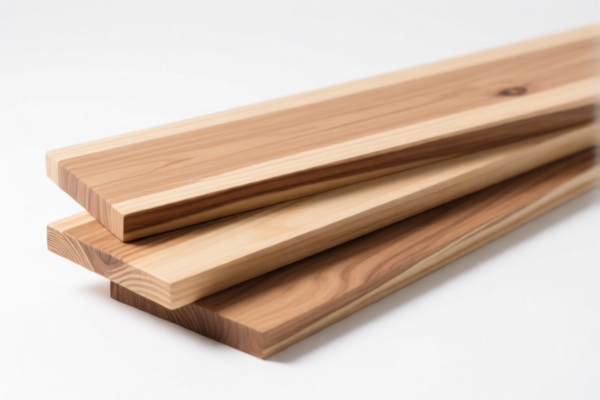
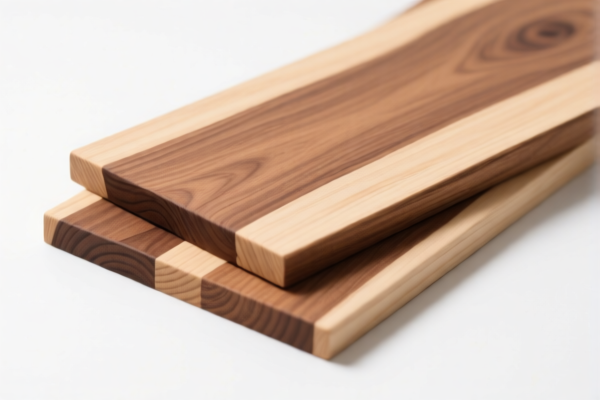
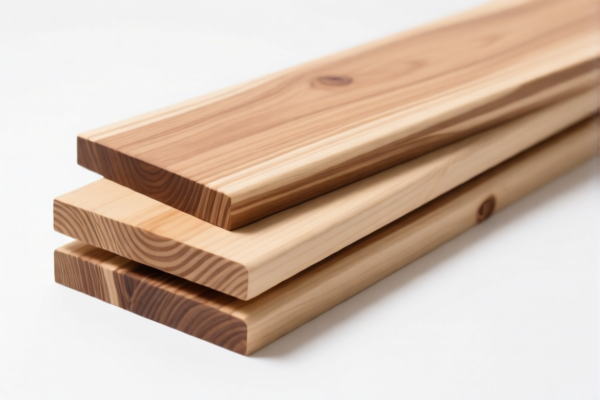
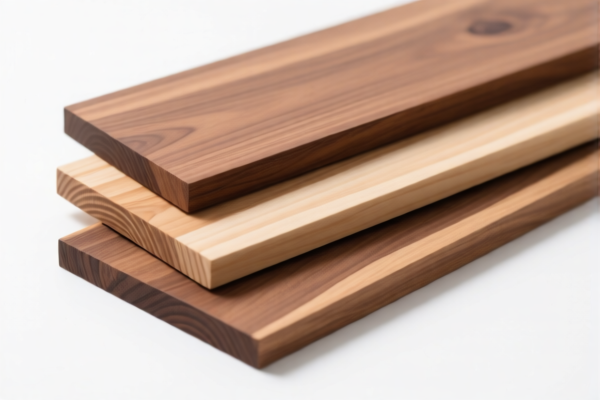
AI Analysis
🌲 Paulownia Wood Rough Boards (Unprocessed Timber)
🌐 HS Code Reference & Customs Clearance Guide | 2026 Latest Tariff Analysis | Professional Level Clearance Strategy
📌 1. Product Definition & Classification: Do You Really Understand "Paulownia Rough Boards"?
Paulownia (often called "King of Woods" in timber trade) is a fast-growing, lightweight, and rot-resistant hardwood. In international trade, "Rough Boards" specifically refers to wood that has been sawn or chipped lengthwise but has not been further processed (such as planing, sanding, or edge-joining) beyond the basic sawing stage.
Key Distinction: * Rough Sawn (Unplaned): Raw logs cut into planks. Surface is rough. Thickness > 6mm. * Dimension Lumber (Planed/Sanded): Processed, smooth surfaces, ready for furniture.
⚠️ Critical Classification Point:
- If the wood is non-coniferous (Paulownia is a broadleaf/hardwood) AND thickness > 6mm AND not planed/sanded → It falls under Heading 44.07.
- Specifically, Paulownia is classified under "Other non-coniferous" wood.
📦 2. HS Code Classification Details (2026 Latest Tariff Authority Match)
Based on the provided <DATA>, here is the exact classification for Paulownia Wood Rough Boards:
| HS Code | Product Description | Applicable Scenario | Coniferous? | Processed? |
|---|---|---|---|---|
4407.99.02.95 |
Wood sawn or chipped lengthwise, sliced or peeled, whether or not planed, sanded or end-jointed, of a thickness exceeding 6 mm: Other: Other Other nonconiferous | Paulownia rough planks, raw lumber, unprocessed timber sheets | ❌ No (Hardwood) | ❌ No (Rough/Unplaned) |
🔍 Explanation of HS Code Breakdown: - 4407: Wood sawn or chipped lengthwise... thickness > 6 mm. - 99: Other non-coniferous wood (includes Paulownia, Oak, Walnut, etc.). - 02.95: Specific sub-category for "Other" non-coniferous woods not elsewhere specified (like Pine/Spruce would be different).
💰 3. 2026 Latest Tariff Rate Details (Including Additional Duties & Policy Surcharges)
✅ Applicable Country: United States (US)
✅ Country of Origin: China (CN) (Assumed based on typical Paulownia export origin and provided tax context)
✅ Effective Date: Current 2026 Tariff Structure
🎯 HS Code: 4407.99.02.95 —— Paulownia Wood Rough Boards (Non-Coniferous)
| Item | Content |
|---|---|
| Base Tariff (MFN) | 0.0% |
| Section 301 Additional Tariff | +25.0% |
| Total Tariff Rate | 25.0% |
| Tax Calculation | CIF Value × 25.0% |
| De Minimis Eligibility | ❌ Not Eligible (Wood products are generally excluded from de minimis exemptions for Section 301 goods) |
| Legal Basis Path | HTSUS:4407.99.02.95 → USITC Footnote 9903.88.01 (Section 301 List 3/4 exclusions do not typically apply to standard rough lumber unless specific exemptions are granted) |
📌 Interpretation:
- Base Rate: Wood products often have low or zero base MFN rates to encourage raw material import, but this varies by specific subheading. Here, it is 0%.
- Additional Tariff: The 25% is a Section 301 additional tariff imposed on specific Chinese goods. Rough wood boards from China are subject to this.
- No IEEPA Surcharges: Unlike electronics or high-tech components, raw lumber does not typically incur the extra IEEPA 10% surcharge mentioned in other categories (like displays). The total is capped at 25%.
- High Cost Alert: 25% is a significant cost adder. Profit margins for Paulownia, which is a volume-heavy, low-value-per-unit commodity, can be severely impacted.
🛠️ 4. Practical Customs Clearance Advice (Real-World Pitfall Avoidance)
✅ 1. Documentation Checklist (Essential)
| Document | Required | Notes |
|---|---|---|
| ✅ Commercial Invoice | ✔️ | Must clearly state "Paulownia Wood Rough Boards", specify dimensions, thickness, and volume (CBM). |
| ✅ Packing List | ✔️ | Detail number of bundles, total pieces, gross/net weight. |
| ✅ Phytosanitary Certificate | ✔️ | CRITICAL: US CBP and USDA require proof that the wood is free from pests/diseases. Must be issued by the origin country's agricultural authority. |
| ✅ ISPM 15 Mark | ✔️ | Wooden packaging/pallets MUST bear the official IPPC stamp indicating heat treatment or fumigation. |
| ✅ Country of Origin Certificate | ✔️ | To prove origin for Section 301 application. |
| ✅ Timber Harvest Documentation | ✔️ | May be required under Lacey Act to prove legal harvest. |
✅ 2. Declaration Tips (Key Mantras)
🔥 “Accurate Species, Exact Thickness, Phytosanitary is King!”
| Scenario | Correct Declaration | Wrong Practice |
|---|---|---|
| Paulownia Rough Boards | 4407.99.02.95 |
Misdeclare as "Coniferous" (Pine) → Wrong code, potential penalty |
| Thickness ≤ 6mm | 44.09 (Continuously shaped) |
Declare as 44.07 → Incorrect classification |
| Planed/Sanded Boards | 44.09 (Molded/Sanded) |
Declare as Rough → Under-declaring processing, risk of penalty |
| Untreated Pallets | ❌ Fail Inspection | No ISPM 15 mark → Rejection, destruction, or fumigation at importer's cost |
⚠️ Important: If the boards are planed, sanded, or end-jointed, they may still fall under 44.07 if the thickness exceeds 6mm, but if they are shaped continuously (e.g., tongue-and-groove, molded edges), they move to 44.09. Paulownia rough boards are typically flat-sawn, so 44.07 is correct.
✅ 3. Special Circumstances Handling
| Scenario | Handling Advice |
|---|---|
| Mixed Species | If mixed with Pine (coniferous), the entire shipment may be scrutinized. Keep shipments species-specific if possible. |
| Moisture Content | USDA may require moisture content verification to prevent mold during transit. Dry kiln certification helps. |
| Value Declared Low | Do not under-invoice. US CBP uses market data for Paulownia. Discrepancies lead to audits and back-taxes. |
| Transshipment | If transshipped through a third country (e.g., Vietnam), ensure no "substantial transformation" occurred, or origin remains China → 25% tariff applies. |
🌍 5. Global Market Comparison (2026)
| Country/Region | Recommended HS Code | Tariff (China Origin) | Certification Required | Notes |
|---|---|---|---|---|
| 🇺🇸 USA | 4407.99.02.95 |
25.0% | Phytosanitary + ISPM 15 | High duty due to Section 301 |
| 🇪🇺 EU | 4407.99.00 |
0% - 2.5% | FLEGT/EUTR Compliance | No Section 301, but strict FLEGT rules |
| 🇨🇳 China | 4407.99.02.95 |
5% (Import) | N/A | For domestic sales from export processing |
| 🇯🇵 Japan | 4407.99.00 |
5% - 7% | IPPC Mark | Generally lower duties than US |
📌 Conclusion:
- USA has the highest entry barrier for Chinese Paulownia due to the 25% Section 301 tariff.
- EU and Japan are more cost-effective for timber imports, but have stricter environmental and sustainability compliance (FLEGT, IPPC).
📌 6. Common Errors & Pitfall Guide (Lessons Learned)
❌ Error 1: Misclassifying Paulownia as "Coniferous" (e.g., Pine).
👉 Consequence: Wrong HS code (4407.49...), potential penalty for misdeclaration. Paulownia is a hardwood (non-coniferous).
❌ Error 2: Forgetting the Phytosanitary Certificate.
👉 Consequence: Shipment held at port, fumigation charges ($$$), or rejection/return.
❌ Error 3: Not checking thickness.
👉 Consequence: If thickness is exactly 6mm or less, it may fall under different codes (e.g., 44.08 for veneer sheets or 44.09 if shaped). Ensure thickness > 6mm for 44.07.
❌ Error 4: Ignoring ISPM 15 on Pallets.
👉 Consequence: Entire container rejected if wooden pallets lack the stamp. Use plastic or heat-treated wood with visible stamp.
✅ Correct Declaration Example:
"Paulownia Wood Rough Boards, Non-Coniferous, Sawn, Thickness 25mm, Unplaned, HS Code 4407.99.02.95, Origin: China"
🎯 7. Conclusion: Professional Clearance, Cost Efficiency!
🎯 Remember These Keys:
🔹 "Rough = 44.07, Planed = 44.09"
🔹 "Paulownia = Non-Coniferous, Check Subheading 99"
🔹 "25% Duty in US, Budget Accordingly!"
🔹 "Phytosanitary + ISPM 15 = Non-Negotiable"
📌 Pro Tip:
If you are importing Paulownia into the US, consider:
1. Pre-clearance: Ensure all phyto docs are perfect before shipment.
2. Cost Calculation: Factor in the 25% additional tariff in your pricing model.
3. Alternative Origins: Explore Paulownia from non-China origins (e.g., Vietnam, Turkey) if available, to avoid Section 301 tariffs (though verify origin rules carefully).
📣 Immediate Action:
📞 Consult with a licensed customs broker for Advance Ruling if your product specifications are unique.
📄 Ensure Phytosanitary Certificates are requested from the supplier before shipment.
🚀 Secure your supply chain, avoid port delays, and maximize profit margins!
✨ Professional clearance starts with accurate classification!
💼 Your timber shipment deserves precision, not penalties!
Customer Reviews
About HS Code Classification
The Harmonized System (HS) is an internationally standardized nomenclature developed by the World Customs Organization (WCO) to classify traded products. Over 200 countries use the HS system as the basis for customs tariffs, trade statistics, and import/export regulations.
Each HS code follows a hierarchical structure:
- Chapter (2 digits) — Broad category of goods (e.g., Chapter 84: Machinery and Mechanical Appliances)
- Heading (4 digits) — More specific grouping within the chapter
- Subheading (6 digits) — Internationally standardized breakdown, used by all WCO member countries
- National subdivisions (8-10 digits) — Country-specific extensions for further classification, such as US HTSUS 10-digit codes
Correct HS code classification is essential for smooth customs clearance, accurate duty payment, and compliance with trade regulations. Misclassification can lead to customs delays, overpayment of duties, or penalties.
When importing from CN to US, the applicable tariff rates may include:
- Most-Favored-Nation (MFN) rate — The standard duty rate applied to WTO members
- General rate — Applied to countries without trade agreements
- Trade remedy duties — Additional tariffs such as Section 301 (anti-dumping), Section 232 (national security), or countervailing duties
The information provided on this page is for reference purposes only. For official classification, please consult with your local customs authority or a licensed customs broker.