Peeled Douglas Fir Wood
CN → US| HS编码 | 关税税率 | 原产国 | 目的国 | 文档 |
|---|---|---|---|---|
| 4407190055 | 35.0% | CN | US | 官方文档 |
| 4407190057 | 35.0% | CN | US | 官方文档 |
商品图片
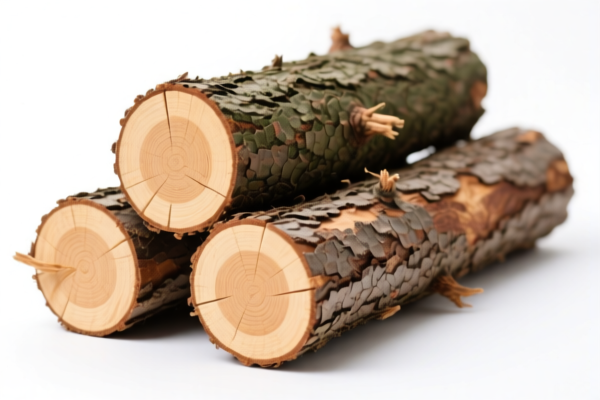
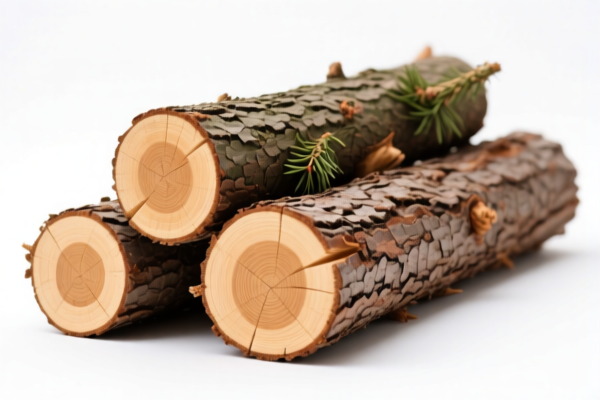
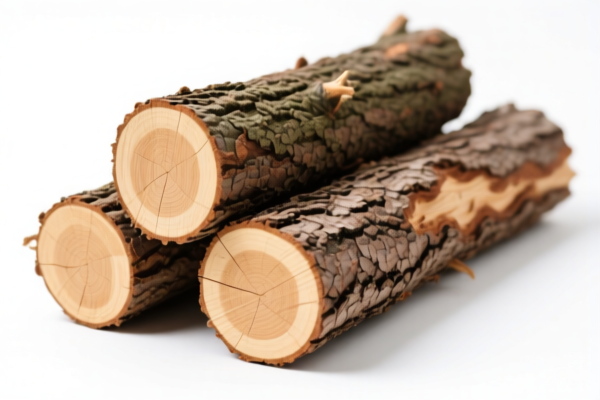
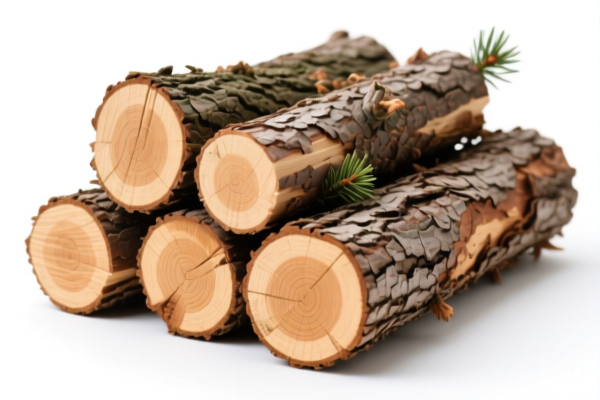
AI分析
🌲 Peeled Douglas-Fir Wood (Pseudotsuga menziesii)
🌐 HS Code Reference & Customs Clearance Guide | 2026 Latest Tariff Analysis | Professional Compliance Strategy
📌 I. Product Definition & Classification: Do You Truly Understand "Peeled Douglas-Fir"?
Douglas-fir (Pseudotsuga menziesii) is a premium coniferous timber widely used in construction, engineering, and woodworking. In international trade, "Peeled Douglas-Fir" specifically refers to wood that has been sawn, chipped, sliced, or peeled longitudinally, with a thickness exceeding 6 mm.
The key distinction lies in the dimensions and treatment status: * Peeled vs. Sawn: "Peeled" implies the wood has been rotated against a blade to produce continuous sheets or veneers (though the HS description covers both sawn and peeled products). * Thickness: Must be > 6 mm. (Thinner woods fall under veneer sheets, typically HS 4408). * Treatment: The provided data specifies "Not treated" wood. Treated wood (chemical/pressure) often falls under different subheadings or requires additional phytosanitary documentation.
⚠️ Critical Distinction:
- If the wood is Rough (unplaned, un-sanded) AND has a minimum dimension ≥ 5.1 cm but < 12.7 cm → HS 4407.19.00.55
- If the wood is Other (includes planed, sanded, end-jointed, or dimensions outside the rough range) → HS 4407.19.00.57
📦 II. HS Code Classification Details (2026 Latest Tariff Authority Cross-Reference)
| HS Code | Product Description | Application Scenario | Key Criteria |
|---|---|---|---|
4407.19.00.55 |
Douglas-fir (Pseudotsuga menziesii), Rough, Not Treated, Thickness > 6mm, Min Dim 5.1cm–12.7cm | Rough-sawn logs, construction timber, raw structural beams | ✅ Rough surface ✅ Min dim 5.1–12.7 cm |
4407.19.00.57 |
Douglas-fir (Pseudotsuga menziesii), Other, Not Treated, Thickness > 6mm | Planed, sanded, end-jointed, or thicker/thinner rough pieces | ✅ Not Rough OR Different Dimensions |
🔍 Key Reminder:
- Both codes apply to Coniferous wood, specifically Douglas-fir.
- Thickness: Must exceed 6 mm. If ≤ 6 mm, it is considered veneer (HS 4408 series).
- Treatment: Must be Untreated. If chemically treated, it may require different classification or additional environmental compliance.
💰 III. 2026 Latest Tariff Rate Breakdown (Including Surtaxes & Policy Add-ons)
✅ Applicable Country: United States (US)
✅ Origin: China (CN) [Implied by tax structure]
✅ Effective Date: Current US Tariff Structure
🎯 1. 4407.19.00.55 —— Rough Douglas-Fir (Specific Dimensions)
| Item | Details |
|---|---|
| Base Tariff Rate | 0.0% (Most Favored Nation / General) |
| Section 301 Surtax | +25.0% |
| Total Tax Rate | 25.0% |
| Tax Calculation | CIF Value × 25% |
| Legal Basis | USITC Footnote for HS 4407.19.00 |
📌 Explanation:
- The base rate is 0%, which is favorable for raw timber.
- However, a 25% surtax applies due to trade tensions (Section 301 tariffs on Chinese-origin goods).
- Total effective rate: 25%. This is a significant cost factor for raw timber imports.
🎯 2. 4407.19.00.57 —— Other Douglas-Fir (Planed/Sanded/Other)
| Item | Details |
|---|---|
| Base Tariff Rate | 0.0% |
| Section 301 Surtax | +25.0% |
| Total Tax Rate | 25.0% |
| Tax Calculation | CIF Value × 25% |
| Legal Basis | USITC Footnote for HS 4407.19.00 |
📌 Note:
- Same tax structure as4407.19.00.55.
- Whether the wood is planed, sanded, or has different dimensions, the 25% surtax remains constant.
- No additional duties for "finished" appearance in this category.
🛠️ IV. Customs Clearance Practical Advice (Real-World Pitfall Guide)
✅ 1. Required Documentation Checklist (All Mandatory)
| Document | Required? | Explanation |
|---|---|---|
| ✅ Commercial Invoice | ✔️ | Must clearly state "Douglas-fir (Pseudotsuga menziesii)", HS Code, and CIF Value |
| ✅ Packing List | ✔️ | Detail dimensions, weight, and number of pieces |
| ✅ Phytosanitary Certificate | ✔️ | CRITICAL: Proves wood is free from pests and diseases (ISPM 15 compliant if packaged) |
| ✅ Wood Treatment Declaration | ✔️ | Confirm "Not Treated" or specify treatment if applicable (for 4407.19.00.55/57, it must be Not Treated) |
| ✅ Bill of Lading/Air Waybill | ✔️ | Standard shipping document |
| ✅ Certificate of Origin | ✔️ | To verify origin for tariff assessment |
✅ 2. Declaration Tips (Key Mnemonic)
🔥 "Measure First, Declare Second: 5.1-12.7cm is Rough, Else It's Other!"
| Scenario | Correct HS Code | Incorrect Practice |
|---|---|---|
| Rough, 5.1–12.7 cm min dim | 4407.19.00.55 |
Declare as 4407.19.00.57 → Risk of misclassification audit |
| Planed, Sanded, or >12.7 cm | 4407.19.00.57 |
Declare as 4407.19.00.55 → Higher scrutiny |
| Thickness ≤ 6 mm | Not 4407 | Use HS 4408 (Veneer) → Avoid penalty |
| Chemically Treated | Not 4407.19.00.55/57 | May require HS 4407.19.00.50 (Treated) or other → Check ISPM 15 |
✅ 3. Special Circumstances Handling
| Situation | Handling Advice |
|---|---|
| Mixed Dimensions | Separate shipments by dimension if possible. If mixed, declare the most common or highest-duty code, but provide detailed packing list. |
| End-Jointed Boards | Typically fall under 4407.19.00.57 ("Other"). Ensure description specifies "End-Jointed". |
| Pest Inspection | Douglas-fir is susceptible to certain borers. Ensure Phytosanitary Certificate is valid and wood is free from visible insect activity. |
| Valuation Dispute | Base value is critical for the 25% calculation. Ensure CIF includes freight and insurance accurately. |
🌍 V. Global Market Comparison (2026 Latest)
| Country/Region | Recommended HS Code | Tariff Rate | Certification | Notes |
|---|---|---|---|---|
| 🇺🇸 USA | 4407.19.00.55 / .57 |
25.0% (0% base + 25% surtax) | Phytosanitary, ISPM 15 | High tariff impact on raw timber |
| 🇨🇳 China | 4407.19.00 |
Varies (MFN ~3-6%) | Phytosanitary | Import duty lower, but environmental rules strict |
| 🇪🇺 EU | 4407.10 |
0%–3% (if EUTR compliant) | EUTR Due Diligence | Strict legality verification |
| 🇬🇧 UK | 4407.10 |
0%–3% | UKCA/Plant Health | Post-Brexit rules apply |
| 🇯🇵 Japan | 4407.10 |
0%–3% | Phytosanitary | High quality standards |
📌 Conclusion:
- USA imposes a 25% surtax, making Chinese Douglas-fir significantly more expensive.
- Phytosanitary compliance is globally critical, but especially strict in the US and EU.
- Consider third-country origin (e.g., Canada, EU) for US imports to avoid 25% surtax.
📌 VI. Common Errors & Pitfall Guide (Lessons Learned)
❌ Error 1: Declaring ≤ 6 mm wood as 4407
👉 Consequence: Wrong classification (should be HS 4408 Veneer) → Delay + Penalty
❌ Error 2: Ignoring dimension limits (5.1–12.7 cm)
👉 Consequence: Misdeclaring 4407.19.00.55 for planed/sanded wood → Audit Risk
❌ Error 3: Failing to provide Phytosanitary Certificate
👉 Consequence: Shipment Held/Rejected at US Customs due to pest risk
❌ Error 4: Incorrectly stating "Treated" when "Not Treated"
👉 Consequence: Incorrect HS Code → Tariff Misclassification
✅ Correct Practice:
"Douglas-fir (Pseudotsuga menziesii), Peeled/Sawn, Not Treated, Thickness 7 mm, Min Dim 10 cm, Rough, Phytosanitary Certificate Attached"
🎯 VII. Conclusion: Precise Classification Saves Costs!
🎯 Remember the Mnemonic:
🔹 ">6mm is Timber, <6mm is Veneer."
🔹 "5.1-12.7cm Rough is .55, Else It's .57."
🔹 "25% Surtax Applies, So Source Wisely!"
📌 Tips:
- If your Douglas-fir is sourced from Canada, Mexico, or Europe, you may avoid the 25% surtax (USMCA/FTA benefits).
- Always verify dimensions before shipping to ensure correct HS Code assignment.
- Use HS Code Pre-Ruling from US Customs (CBP) for large shipments to mitigate risk.
📣 Immediate Action:
📞 Contact a licensed Customs Broker
📸 Provide Photos + Dimensions + Treatment Status
🚀 Ensure Phytosanitary Certificate is ready before loading!
✨ Professional Customs Clearance Starts with Accurate Classification!
💼 Every 1% of error costs you more in duties and delays!
用户评价
关于 HS 编码归类
协调制度(HS)是由世界海关组织(WCO)制定的国际贸易商品分类标准。全球 200 多个国家采用 HS 系统作为海关关税、贸易统计和进出口监管的基础。
每个 HS 编码遵循以下层级结构:
- 章(2 位)——商品大类(例如:第 84 章:机器和机械设备)
- 品目(4 位)——章内的更具体分类
- 子目(6 位)——国际通用细分,所有 WCO 成员国统一使用
- 本国细分(8-10 位)——各国自行扩展的细分编码,如美国 HTSUS 10 位编码
正确的 HS 编码归类对于顺利通关、准确缴纳关税和遵守贸易法规至关重要。错误归类可能导致海关延误、多缴关税或罚款。
从CN进口到US时,适用的关税税率可能包括:
- 最惠国(MFN)税率——适用于 WTO 成员国的标准关税税率
- 普通税率——适用于无贸易协定国家
- 贸易救济关税——附加关税,如 301 条款(反倾销)、232 条款(国家安全)或反补贴税
本页内容仅供参考。如需正式归类,请咨询当地海关或持牌报关代理。