Peeled Douglas Fir Wood
CN → US| HS Code | Tariff Rate | Origin | Destination | Doc |
|---|---|---|---|---|
| 4407190055 | 35.0% | CN | US | Official Doc |
| 4407190057 | 35.0% | CN | US | Official Doc |
Product Images
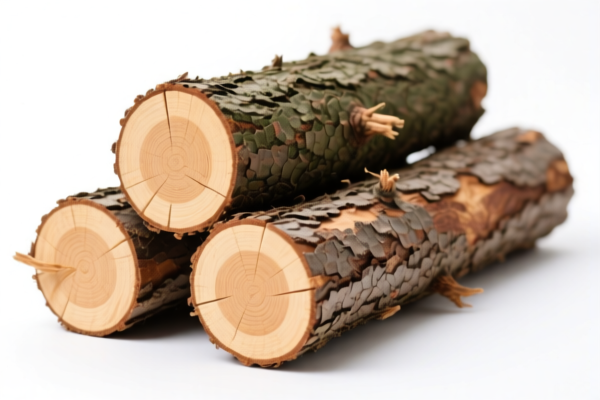
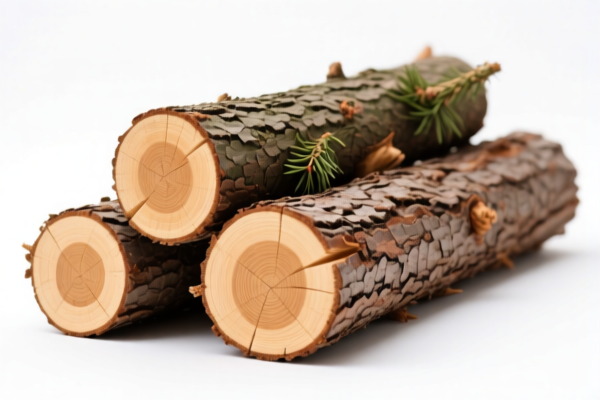
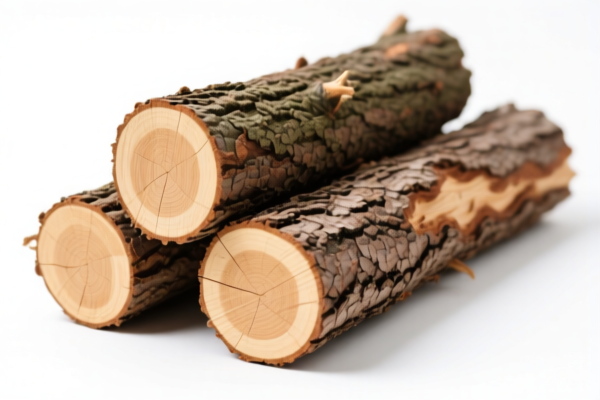
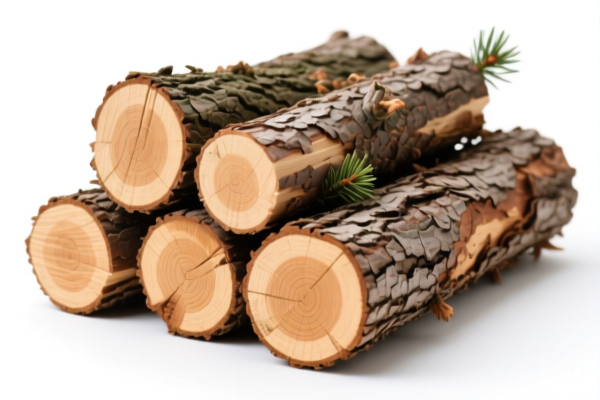
AI Analysis
🌲 Peeled Douglas-Fir Wood (Pseudotsuga menziesii)
🌐 HS Code Reference & Customs Clearance Guide | 2026 Latest Tariff Analysis | Professional Compliance Strategy
📌 I. Product Definition & Classification: Do You Truly Understand "Peeled Douglas-Fir"?
Douglas-fir (Pseudotsuga menziesii) is a premium coniferous timber widely used in construction, engineering, and woodworking. In international trade, "Peeled Douglas-Fir" specifically refers to wood that has been sawn, chipped, sliced, or peeled longitudinally, with a thickness exceeding 6 mm.
The key distinction lies in the dimensions and treatment status: * Peeled vs. Sawn: "Peeled" implies the wood has been rotated against a blade to produce continuous sheets or veneers (though the HS description covers both sawn and peeled products). * Thickness: Must be > 6 mm. (Thinner woods fall under veneer sheets, typically HS 4408). * Treatment: The provided data specifies "Not treated" wood. Treated wood (chemical/pressure) often falls under different subheadings or requires additional phytosanitary documentation.
⚠️ Critical Distinction:
- If the wood is Rough (unplaned, un-sanded) AND has a minimum dimension ≥ 5.1 cm but < 12.7 cm → HS 4407.19.00.55
- If the wood is Other (includes planed, sanded, end-jointed, or dimensions outside the rough range) → HS 4407.19.00.57
📦 II. HS Code Classification Details (2026 Latest Tariff Authority Cross-Reference)
| HS Code | Product Description | Application Scenario | Key Criteria |
|---|---|---|---|
4407.19.00.55 |
Douglas-fir (Pseudotsuga menziesii), Rough, Not Treated, Thickness > 6mm, Min Dim 5.1cm–12.7cm | Rough-sawn logs, construction timber, raw structural beams | ✅ Rough surface ✅ Min dim 5.1–12.7 cm |
4407.19.00.57 |
Douglas-fir (Pseudotsuga menziesii), Other, Not Treated, Thickness > 6mm | Planed, sanded, end-jointed, or thicker/thinner rough pieces | ✅ Not Rough OR Different Dimensions |
🔍 Key Reminder:
- Both codes apply to Coniferous wood, specifically Douglas-fir.
- Thickness: Must exceed 6 mm. If ≤ 6 mm, it is considered veneer (HS 4408 series).
- Treatment: Must be Untreated. If chemically treated, it may require different classification or additional environmental compliance.
💰 III. 2026 Latest Tariff Rate Breakdown (Including Surtaxes & Policy Add-ons)
✅ Applicable Country: United States (US)
✅ Origin: China (CN) [Implied by tax structure]
✅ Effective Date: Current US Tariff Structure
🎯 1. 4407.19.00.55 —— Rough Douglas-Fir (Specific Dimensions)
| Item | Details |
|---|---|
| Base Tariff Rate | 0.0% (Most Favored Nation / General) |
| Section 301 Surtax | +25.0% |
| Total Tax Rate | 25.0% |
| Tax Calculation | CIF Value × 25% |
| Legal Basis | USITC Footnote for HS 4407.19.00 |
📌 Explanation:
- The base rate is 0%, which is favorable for raw timber.
- However, a 25% surtax applies due to trade tensions (Section 301 tariffs on Chinese-origin goods).
- Total effective rate: 25%. This is a significant cost factor for raw timber imports.
🎯 2. 4407.19.00.57 —— Other Douglas-Fir (Planed/Sanded/Other)
| Item | Details |
|---|---|
| Base Tariff Rate | 0.0% |
| Section 301 Surtax | +25.0% |
| Total Tax Rate | 25.0% |
| Tax Calculation | CIF Value × 25% |
| Legal Basis | USITC Footnote for HS 4407.19.00 |
📌 Note:
- Same tax structure as4407.19.00.55.
- Whether the wood is planed, sanded, or has different dimensions, the 25% surtax remains constant.
- No additional duties for "finished" appearance in this category.
🛠️ IV. Customs Clearance Practical Advice (Real-World Pitfall Guide)
✅ 1. Required Documentation Checklist (All Mandatory)
| Document | Required? | Explanation |
|---|---|---|
| ✅ Commercial Invoice | ✔️ | Must clearly state "Douglas-fir (Pseudotsuga menziesii)", HS Code, and CIF Value |
| ✅ Packing List | ✔️ | Detail dimensions, weight, and number of pieces |
| ✅ Phytosanitary Certificate | ✔️ | CRITICAL: Proves wood is free from pests and diseases (ISPM 15 compliant if packaged) |
| ✅ Wood Treatment Declaration | ✔️ | Confirm "Not Treated" or specify treatment if applicable (for 4407.19.00.55/57, it must be Not Treated) |
| ✅ Bill of Lading/Air Waybill | ✔️ | Standard shipping document |
| ✅ Certificate of Origin | ✔️ | To verify origin for tariff assessment |
✅ 2. Declaration Tips (Key Mnemonic)
🔥 "Measure First, Declare Second: 5.1-12.7cm is Rough, Else It's Other!"
| Scenario | Correct HS Code | Incorrect Practice |
|---|---|---|
| Rough, 5.1–12.7 cm min dim | 4407.19.00.55 |
Declare as 4407.19.00.57 → Risk of misclassification audit |
| Planed, Sanded, or >12.7 cm | 4407.19.00.57 |
Declare as 4407.19.00.55 → Higher scrutiny |
| Thickness ≤ 6 mm | Not 4407 | Use HS 4408 (Veneer) → Avoid penalty |
| Chemically Treated | Not 4407.19.00.55/57 | May require HS 4407.19.00.50 (Treated) or other → Check ISPM 15 |
✅ 3. Special Circumstances Handling
| Situation | Handling Advice |
|---|---|
| Mixed Dimensions | Separate shipments by dimension if possible. If mixed, declare the most common or highest-duty code, but provide detailed packing list. |
| End-Jointed Boards | Typically fall under 4407.19.00.57 ("Other"). Ensure description specifies "End-Jointed". |
| Pest Inspection | Douglas-fir is susceptible to certain borers. Ensure Phytosanitary Certificate is valid and wood is free from visible insect activity. |
| Valuation Dispute | Base value is critical for the 25% calculation. Ensure CIF includes freight and insurance accurately. |
🌍 V. Global Market Comparison (2026 Latest)
| Country/Region | Recommended HS Code | Tariff Rate | Certification | Notes |
|---|---|---|---|---|
| 🇺🇸 USA | 4407.19.00.55 / .57 |
25.0% (0% base + 25% surtax) | Phytosanitary, ISPM 15 | High tariff impact on raw timber |
| 🇨🇳 China | 4407.19.00 |
Varies (MFN ~3-6%) | Phytosanitary | Import duty lower, but environmental rules strict |
| 🇪🇺 EU | 4407.10 |
0%–3% (if EUTR compliant) | EUTR Due Diligence | Strict legality verification |
| 🇬🇧 UK | 4407.10 |
0%–3% | UKCA/Plant Health | Post-Brexit rules apply |
| 🇯🇵 Japan | 4407.10 |
0%–3% | Phytosanitary | High quality standards |
📌 Conclusion:
- USA imposes a 25% surtax, making Chinese Douglas-fir significantly more expensive.
- Phytosanitary compliance is globally critical, but especially strict in the US and EU.
- Consider third-country origin (e.g., Canada, EU) for US imports to avoid 25% surtax.
📌 VI. Common Errors & Pitfall Guide (Lessons Learned)
❌ Error 1: Declaring ≤ 6 mm wood as 4407
👉 Consequence: Wrong classification (should be HS 4408 Veneer) → Delay + Penalty
❌ Error 2: Ignoring dimension limits (5.1–12.7 cm)
👉 Consequence: Misdeclaring 4407.19.00.55 for planed/sanded wood → Audit Risk
❌ Error 3: Failing to provide Phytosanitary Certificate
👉 Consequence: Shipment Held/Rejected at US Customs due to pest risk
❌ Error 4: Incorrectly stating "Treated" when "Not Treated"
👉 Consequence: Incorrect HS Code → Tariff Misclassification
✅ Correct Practice:
"Douglas-fir (Pseudotsuga menziesii), Peeled/Sawn, Not Treated, Thickness 7 mm, Min Dim 10 cm, Rough, Phytosanitary Certificate Attached"
🎯 VII. Conclusion: Precise Classification Saves Costs!
🎯 Remember the Mnemonic:
🔹 ">6mm is Timber, <6mm is Veneer."
🔹 "5.1-12.7cm Rough is .55, Else It's .57."
🔹 "25% Surtax Applies, So Source Wisely!"
📌 Tips:
- If your Douglas-fir is sourced from Canada, Mexico, or Europe, you may avoid the 25% surtax (USMCA/FTA benefits).
- Always verify dimensions before shipping to ensure correct HS Code assignment.
- Use HS Code Pre-Ruling from US Customs (CBP) for large shipments to mitigate risk.
📣 Immediate Action:
📞 Contact a licensed Customs Broker
📸 Provide Photos + Dimensions + Treatment Status
🚀 Ensure Phytosanitary Certificate is ready before loading!
✨ Professional Customs Clearance Starts with Accurate Classification!
💼 Every 1% of error costs you more in duties and delays!
Customer Reviews
About HS Code Classification
The Harmonized System (HS) is an internationally standardized nomenclature developed by the World Customs Organization (WCO) to classify traded products. Over 200 countries use the HS system as the basis for customs tariffs, trade statistics, and import/export regulations.
Each HS code follows a hierarchical structure:
- Chapter (2 digits) — Broad category of goods (e.g., Chapter 84: Machinery and Mechanical Appliances)
- Heading (4 digits) — More specific grouping within the chapter
- Subheading (6 digits) — Internationally standardized breakdown, used by all WCO member countries
- National subdivisions (8-10 digits) — Country-specific extensions for further classification, such as US HTSUS 10-digit codes
Correct HS code classification is essential for smooth customs clearance, accurate duty payment, and compliance with trade regulations. Misclassification can lead to customs delays, overpayment of duties, or penalties.
When importing from CN to US, the applicable tariff rates may include:
- Most-Favored-Nation (MFN) rate — The standard duty rate applied to WTO members
- General rate — Applied to countries without trade agreements
- Trade remedy duties — Additional tariffs such as Section 301 (anti-dumping), Section 232 (national security), or countervailing duties
The information provided on this page is for reference purposes only. For official classification, please consult with your local customs authority or a licensed customs broker.