Perforated Paper Tube
CN → US| HS编码 | 关税税率 | 原产国 | 目的国 | 文档 |
|---|---|---|---|---|
| 4823908680 | 35.0% | CN | US | 官方文档 |
| 4819504020 | 35.0% | CN | US | 官方文档 |
| 4805934050 | 35.0% | CN | US | 官方文档 |
| 4823908000 | 35.0% | CN | US | 官方文档 |
| 4805934010 | 35.0% | CN | US | 官方文档 |
商品图片
AI分析
📜 Perforated Paper Tube (Paper Core/Spool)
🌐 HS Code Reference & Customs Clearance Guide | 2026 Latest Tariff Breakdown | Professional Compliance Strategy
📌 Part 1: Product Definition & Classification: Is It a "Tube" or a "Sheet"?
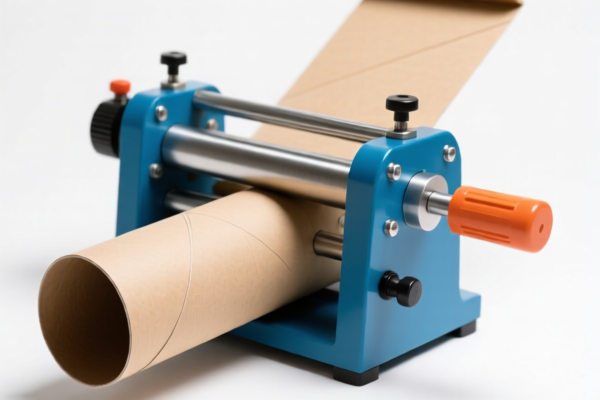
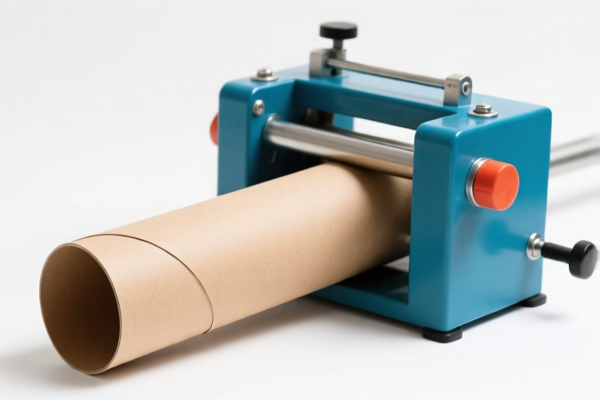
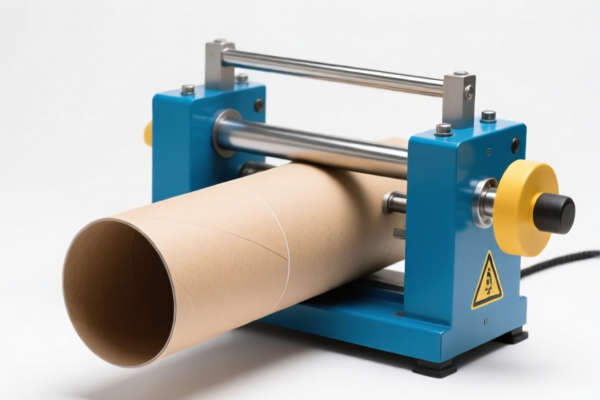
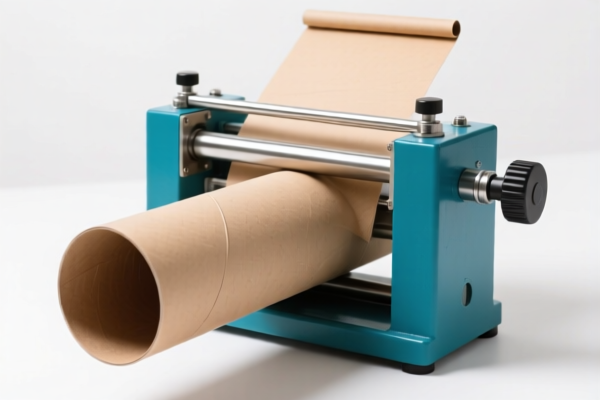
Perforated paper tubes are cylindrical paper products used for winding textiles, films, foils, or paper itself. In international trade, the critical distinction lies in the structural integrity and intended function:
- Structural Cores (Paper Cores/Spools): Rigid, tubular shapes used to support rolls. These fall under Chapter 48 (Paper and Paperboard) as tubular containers or cores.
- Cut Sheets/Punchouts: If the paper is merely perforated sheets cut into specific shapes (like gaskets or washers) and not forming a continuous tube structure, it may be classified as Other Paper Articles.
⚠️ Key Distinction Point:
- If the product is a rigid cylinder used as a core for winding materials → Classify under 4819.50 (Tubes/Drums) or 4805 (Paperboard Cores).
- If the product is cut into specific shapes (e.g., discs, washers) or is a flat sheet with perforations used for other purposes → Classify under 4823 (Cut Paper/Other Articles).
📦 Part 2: HS Code Classification Details (2026 Latest Tariff Reference)
| HS Code | Product Description | Scenario / Application | Tax Rate (China → US) |
|---|---|---|---|
4823.90.86.80 |
Perforated paper tube; material is paper; form is paper articles cut into specific shapes. Falls under "Other paper articles". | Custom-shaped paper cores, cut perforated tubes, non-standard shapes. | 35% |
4819.50.40.20 |
Paper tube; material is paper; form is a tubular container. Matches classification for fiber drums, cans, tubes, and similar containers. | Standard industrial paper tubes, spools for textiles/films, cylindrical packaging. | 35% |
4805.93.40.50 |
Paper tube; material is paper; form is a tube core. Matches the tubular characteristics of uncoated paperboard. | Heavy-duty paperboard cores, uncoated tube cores for industrial winding. | 35% |
4823.90.80.00 |
Paper tube; material is paper; form is tubular article. Belongs to gaskets, washers, or similar paper articles under other sizes/shapes. | Paper washers, gaskets, or tubes used as sealing components. | 35% |
4805.93.40.10 |
Paper tube; material is paper; form is paperboard/paper article. Matches attributes of paperboard category. | General paperboard tubes, mixed material cores where paperboard is dominant. | 35% |
🔍 Key Reminder:
- All HS codes listed above carry a 35% total duty for goods originating from China. - Do not classify simple cardboard tubes under packaging codes (e.g., 4819.10) if they are used as industrial cores (4819.50/4805), as the subheadings differ significantly. - "Perforated" alone does not change the chapter; it depends on whether the final form is a tube (4805/4819) or a cut article (4823).
💰 Part 3: 2026 Latest Tariff Rate Breakdown (Including Surcharges)
✅ Applicable Country: United States (US)
✅ Country of Origin: China (CN)
✅ Effective Date: November 10, 2025 (for all subsequent imports)
🎯 1. Universal Rate for All Listed HS Codes (4823.90.86.80, 4819.50.40.20, 4805.93.40.50, 4823.90.80.00, 4805.93.40.10)
| Item | Detail |
|---|---|
| Base Duty Rate | 0% (Ad Valorem) |
| Section 301 Surcharge | +25% (Based on USITC Footnote for China-origin goods) |
| Section 122 Surcharge | +10% (Under IEEPA for China-origin goods, effective Nov 10, 2025) |
| Total Effective Rate | 35% |
| Tax Calculation | CIF Value × 35% |
| De Minimis Exemption? | ❌ NO (Not eligible for Section 321 de minimis exemption due to high duties) |
| Legal Basis Path | USITC:48xx.xx.xx.xx → FOOTNOTE:301 → IEEPA:122 |
📌 Explanation:
- "Base Duty 0%": Paper and paperboard products generally have low or zero base duties under US Harmonized Tariff Schedule. - "Section 301 +25%": This is the primary retaliatory tariff on Chinese goods under Trade Act of 1974, Section 301. - "Section 122 +10%": This is a newer surcharge under the International Emergency Economic Powers Act (IEEPA), specifically targeting certain Chinese imports since late 2025. - Total 35%: This is a high tariff rate. Importers must factor this into their landed cost calculations immediately.
🛠️ Part 4: Customs Clearance Practical Advice (Avoid Pitfalls)
✅ 1. Documentation Checklist (Mandatory)
| Document | Required? | Explanation |
|---|---|---|
| ✅ Product Specification Sheet | ✔️ | Must detail diameter, wall thickness, length, paper type (kraft, testliner), and perforation pattern. |
| ✅ Product Photos | ✔️ | Clear images showing the tube structure, perforations, and any labels. |
| ✅ Commercial Invoice | ✔️ | Must clearly state "Paper Tube" or "Paper Core" and origin "Made in China". |
| ✅ Packing List | ✔️ | Specify net/gross weight and quantity per carton. |
| ✅ Certificate of Origin (CO) | ✔️ | If applicable for any potential free-trade zone benefits (though unlikely for China→US under current tariffs). |
✅ 2. Declaration Tips (Critical Keywords)
🔥 "Describe Shape, Describe Function, Avoid Ambiguity!"
| Scenario | Correct Declaration | Wrong Declaration |
|---|---|---|
| Standard Cylindrical Core | "Paper Tube, Kraft Paper, Perforated, for Winding Textiles, HS 4819.50.40.20" | "Cardboard Pipe" or "Packaging Material" (Too vague, may trigger inspection) |
| Cut Tube Sections | "Paper Core Cut to Length, HS 4823.90.80.00" | "Paper Sheets" (If they are still tubular, this is misclassification) |
| Washer/Gasket Shape | "Paper Gasket, Perforated, HS 4823.90.86.80" | "Paper Tube" (If the shape is not tubular, this is incorrect) |
✅ 3. Special Cases & Handling
| Situation | Advice |
|---|---|
| High-Volume Bulk Imports | Consider Advance Ruling from US CBP to confirm the HS code before shipment to avoid delays at the border. |
| Mixed Shipments | If paper tubes are packed with other items (e.g., plastic inserts), declare them separately to avoid complicating the valuation of the paper tube. |
| Recycled Paper Content | If the tube is made of 100% recycled content, ensure this is stated in the spec sheet, though it does not change the tariff rate in this case. |
| Perforation Purpose | If perforations are for easy tearing (e.g., for retail), it may still be a tube. If perforations create holes for ventilation in packaging, it might be classified as a container. Clarify in documentation. |
🌍 Part 5: Global Market Comparison (2026)
| Country/Region | Recommended HS Code | Total Tariff (China Origin) | Notes |
|---|---|---|---|
| 🇺🇸 USA | 4819.50.40.20 / 4805.93.40.50 etc. |
35% (Base 0% + 25% + 10%) | High cost due to Section 301 & 122. |
| 🇨🇳 China | 4819.50.40.20 |
5-13% | Import duties apply when China exports to itself (rare) or for domestic use. |
| 🇪🇺 EU | 4819.50.00 |
0-3% | Generally low duties. No US-style surcharges. |
| 🇬🇧 UK | 4819.50.00 |
0% | Post-Brexit, many paper products have 0% duty. |
| 🇨🇦 Canada | 4819.50.00 |
0% | CUSMA allows duty-free entry for eligible paper goods. |
📌 Conclusion:
- The US market is the most challenging for Chinese paper tubes due to the 35% total tariff. - EU and Asia remain more cost-effective for Chinese exports. - If shipping to the US, optimize packaging to reduce CIF value where possible (e.g., efficient stacking).
📌 Part 6: Common Errors & Pitfalls (Lessons Learned)
❌ Error 1: Classifying "Paper Tube" as "Cardboard Box" (4819.10)
👉 Consequence: Wrong HS code leads to reclassification by CBP, potential penalties, and duty underpayment. Paper tubes are 4819.50 or 4805, not boxes.
❌ Error 2: Ignoring the "Perforated" aspect
👉 Consequence: If perforations make the tube act as a filter or seal, it might be classified differently. Always provide technical specs.
❌ Error 3: Assuming "Paper" means "Low Value"
👉 Consequence: Even if the item is cheap, the 35% tariff applies to the CIF value. A $1,000 shipment owes $350 in duties. Budget accordingly.
❌ Error 4: Not declaring "Country of Origin" clearly
👉 Consequence: If origin is unclear, CBP may apply the highest possible duty rate from any country of origin.
✅ Correct Practice:
"Paper Tube, Perforated, Kraft Paper, 100mm Diameter, 1000mm Length, Made in China, HS 4819.50.40.20"
🎯 Part 7: Conclusion: Professional Clearance, Cost Savings, Efficiency!
🎯 Remember the Key Takeaways:
🔹 "Tubes are not Boxes: Use 4819/4805, not 4819.10!"
🔹 "35% is the Reality: Base 0% + 25% (301) + 10% (122) = 35%"
🔹 "Specs Matter: Describe Perforation, Material, and Shape clearly!"
📌 Pro Tip:
If you are importing into the US, verify the HS code with a licensed customs broker before shipping. A small misclassification can lead to significant delays and fines.
📣 Immediate Action:
📞 Contact a customs broker + Provide product specs + Confirm HS Code
🚀 Clear customs smoothly, minimize costs, and scale your paper tube business!
✨ Professional Clearance Starts with Accurate Classification!
💼 Every cent of duty counts in global trade!
用户评价
关于 HS 编码归类
协调制度(HS)是由世界海关组织(WCO)制定的国际贸易商品分类标准。全球 200 多个国家采用 HS 系统作为海关关税、贸易统计和进出口监管的基础。
每个 HS 编码遵循以下层级结构:
- 章(2 位)——商品大类(例如:第 84 章:机器和机械设备)
- 品目(4 位)——章内的更具体分类
- 子目(6 位)——国际通用细分,所有 WCO 成员国统一使用
- 本国细分(8-10 位)——各国自行扩展的细分编码,如美国 HTSUS 10 位编码
正确的 HS 编码归类对于顺利通关、准确缴纳关税和遵守贸易法规至关重要。错误归类可能导致海关延误、多缴关税或罚款。
从CN进口到US时,适用的关税税率可能包括:
- 最惠国(MFN)税率——适用于 WTO 成员国的标准关税税率
- 普通税率——适用于无贸易协定国家
- 贸易救济关税——附加关税,如 301 条款(反倾销)、232 条款(国家安全)或反补贴税
本页内容仅供参考。如需正式归类,请咨询当地海关或持牌报关代理。