Perforated Paper Tube
CN → US| HS Code | Tariff Rate | Origin | Destination | Doc |
|---|---|---|---|---|
| 4823908680 | 35.0% | CN | US | Official Doc |
| 4819504020 | 35.0% | CN | US | Official Doc |
| 4805934050 | 35.0% | CN | US | Official Doc |
| 4823908000 | 35.0% | CN | US | Official Doc |
| 4805934010 | 35.0% | CN | US | Official Doc |
Product Images
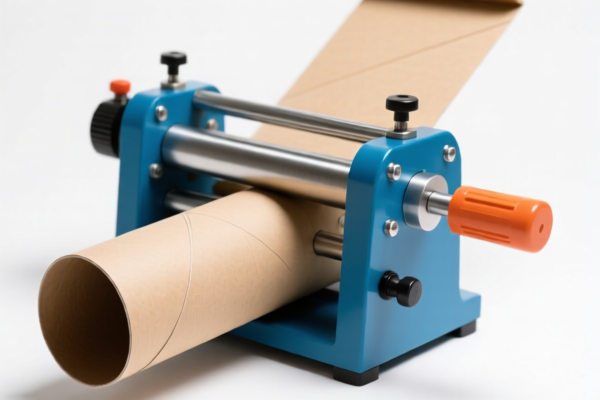
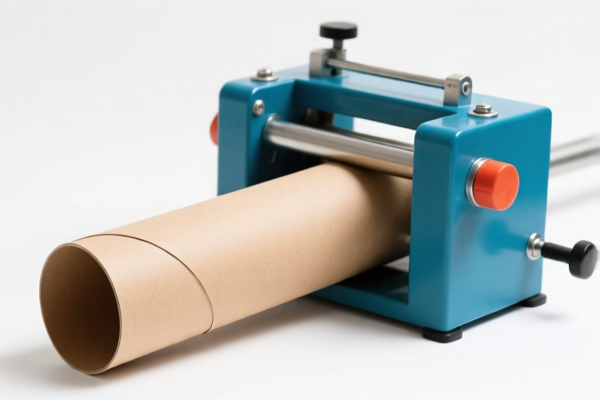
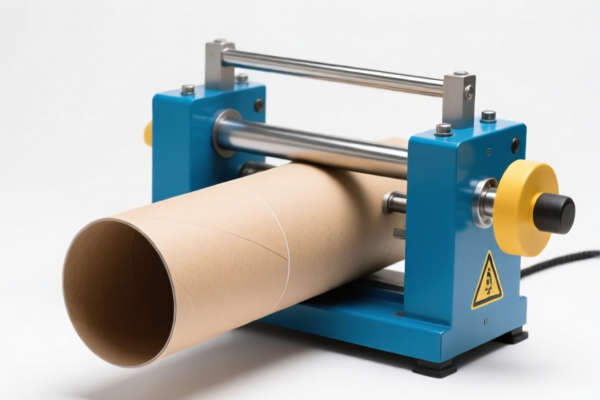
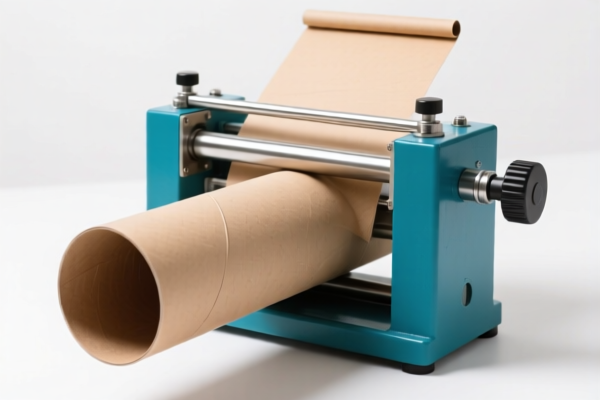
AI Analysis
📜 Perforated Paper Tube (Paper Core/Spool)
🌐 HS Code Reference & Customs Clearance Guide | 2026 Latest Tariff Breakdown | Professional Compliance Strategy
📌 Part 1: Product Definition & Classification: Is It a "Tube" or a "Sheet"?
Perforated paper tubes are cylindrical paper products used for winding textiles, films, foils, or paper itself. In international trade, the critical distinction lies in the structural integrity and intended function:
- Structural Cores (Paper Cores/Spools): Rigid, tubular shapes used to support rolls. These fall under Chapter 48 (Paper and Paperboard) as tubular containers or cores.
- Cut Sheets/Punchouts: If the paper is merely perforated sheets cut into specific shapes (like gaskets or washers) and not forming a continuous tube structure, it may be classified as Other Paper Articles.
⚠️ Key Distinction Point:
- If the product is a rigid cylinder used as a core for winding materials → Classify under 4819.50 (Tubes/Drums) or 4805 (Paperboard Cores).
- If the product is cut into specific shapes (e.g., discs, washers) or is a flat sheet with perforations used for other purposes → Classify under 4823 (Cut Paper/Other Articles).
📦 Part 2: HS Code Classification Details (2026 Latest Tariff Reference)
| HS Code | Product Description | Scenario / Application | Tax Rate (China → US) |
|---|---|---|---|
4823.90.86.80 |
Perforated paper tube; material is paper; form is paper articles cut into specific shapes. Falls under "Other paper articles". | Custom-shaped paper cores, cut perforated tubes, non-standard shapes. | 35% |
4819.50.40.20 |
Paper tube; material is paper; form is a tubular container. Matches classification for fiber drums, cans, tubes, and similar containers. | Standard industrial paper tubes, spools for textiles/films, cylindrical packaging. | 35% |
4805.93.40.50 |
Paper tube; material is paper; form is a tube core. Matches the tubular characteristics of uncoated paperboard. | Heavy-duty paperboard cores, uncoated tube cores for industrial winding. | 35% |
4823.90.80.00 |
Paper tube; material is paper; form is tubular article. Belongs to gaskets, washers, or similar paper articles under other sizes/shapes. | Paper washers, gaskets, or tubes used as sealing components. | 35% |
4805.93.40.10 |
Paper tube; material is paper; form is paperboard/paper article. Matches attributes of paperboard category. | General paperboard tubes, mixed material cores where paperboard is dominant. | 35% |
🔍 Key Reminder:
- All HS codes listed above carry a 35% total duty for goods originating from China. - Do not classify simple cardboard tubes under packaging codes (e.g., 4819.10) if they are used as industrial cores (4819.50/4805), as the subheadings differ significantly. - "Perforated" alone does not change the chapter; it depends on whether the final form is a tube (4805/4819) or a cut article (4823).
💰 Part 3: 2026 Latest Tariff Rate Breakdown (Including Surcharges)
✅ Applicable Country: United States (US)
✅ Country of Origin: China (CN)
✅ Effective Date: November 10, 2025 (for all subsequent imports)
🎯 1. Universal Rate for All Listed HS Codes (4823.90.86.80, 4819.50.40.20, 4805.93.40.50, 4823.90.80.00, 4805.93.40.10)
| Item | Detail |
|---|---|
| Base Duty Rate | 0% (Ad Valorem) |
| Section 301 Surcharge | +25% (Based on USITC Footnote for China-origin goods) |
| Section 122 Surcharge | +10% (Under IEEPA for China-origin goods, effective Nov 10, 2025) |
| Total Effective Rate | 35% |
| Tax Calculation | CIF Value × 35% |
| De Minimis Exemption? | ❌ NO (Not eligible for Section 321 de minimis exemption due to high duties) |
| Legal Basis Path | USITC:48xx.xx.xx.xx → FOOTNOTE:301 → IEEPA:122 |
📌 Explanation:
- "Base Duty 0%": Paper and paperboard products generally have low or zero base duties under US Harmonized Tariff Schedule. - "Section 301 +25%": This is the primary retaliatory tariff on Chinese goods under Trade Act of 1974, Section 301. - "Section 122 +10%": This is a newer surcharge under the International Emergency Economic Powers Act (IEEPA), specifically targeting certain Chinese imports since late 2025. - Total 35%: This is a high tariff rate. Importers must factor this into their landed cost calculations immediately.
🛠️ Part 4: Customs Clearance Practical Advice (Avoid Pitfalls)
✅ 1. Documentation Checklist (Mandatory)
| Document | Required? | Explanation |
|---|---|---|
| ✅ Product Specification Sheet | ✔️ | Must detail diameter, wall thickness, length, paper type (kraft, testliner), and perforation pattern. |
| ✅ Product Photos | ✔️ | Clear images showing the tube structure, perforations, and any labels. |
| ✅ Commercial Invoice | ✔️ | Must clearly state "Paper Tube" or "Paper Core" and origin "Made in China". |
| ✅ Packing List | ✔️ | Specify net/gross weight and quantity per carton. |
| ✅ Certificate of Origin (CO) | ✔️ | If applicable for any potential free-trade zone benefits (though unlikely for China→US under current tariffs). |
✅ 2. Declaration Tips (Critical Keywords)
🔥 "Describe Shape, Describe Function, Avoid Ambiguity!"
| Scenario | Correct Declaration | Wrong Declaration |
|---|---|---|
| Standard Cylindrical Core | "Paper Tube, Kraft Paper, Perforated, for Winding Textiles, HS 4819.50.40.20" | "Cardboard Pipe" or "Packaging Material" (Too vague, may trigger inspection) |
| Cut Tube Sections | "Paper Core Cut to Length, HS 4823.90.80.00" | "Paper Sheets" (If they are still tubular, this is misclassification) |
| Washer/Gasket Shape | "Paper Gasket, Perforated, HS 4823.90.86.80" | "Paper Tube" (If the shape is not tubular, this is incorrect) |
✅ 3. Special Cases & Handling
| Situation | Advice |
|---|---|
| High-Volume Bulk Imports | Consider Advance Ruling from US CBP to confirm the HS code before shipment to avoid delays at the border. |
| Mixed Shipments | If paper tubes are packed with other items (e.g., plastic inserts), declare them separately to avoid complicating the valuation of the paper tube. |
| Recycled Paper Content | If the tube is made of 100% recycled content, ensure this is stated in the spec sheet, though it does not change the tariff rate in this case. |
| Perforation Purpose | If perforations are for easy tearing (e.g., for retail), it may still be a tube. If perforations create holes for ventilation in packaging, it might be classified as a container. Clarify in documentation. |
🌍 Part 5: Global Market Comparison (2026)
| Country/Region | Recommended HS Code | Total Tariff (China Origin) | Notes |
|---|---|---|---|
| 🇺🇸 USA | 4819.50.40.20 / 4805.93.40.50 etc. |
35% (Base 0% + 25% + 10%) | High cost due to Section 301 & 122. |
| 🇨🇳 China | 4819.50.40.20 |
5-13% | Import duties apply when China exports to itself (rare) or for domestic use. |
| 🇪🇺 EU | 4819.50.00 |
0-3% | Generally low duties. No US-style surcharges. |
| 🇬🇧 UK | 4819.50.00 |
0% | Post-Brexit, many paper products have 0% duty. |
| 🇨🇦 Canada | 4819.50.00 |
0% | CUSMA allows duty-free entry for eligible paper goods. |
📌 Conclusion:
- The US market is the most challenging for Chinese paper tubes due to the 35% total tariff. - EU and Asia remain more cost-effective for Chinese exports. - If shipping to the US, optimize packaging to reduce CIF value where possible (e.g., efficient stacking).
📌 Part 6: Common Errors & Pitfalls (Lessons Learned)
❌ Error 1: Classifying "Paper Tube" as "Cardboard Box" (4819.10)
👉 Consequence: Wrong HS code leads to reclassification by CBP, potential penalties, and duty underpayment. Paper tubes are 4819.50 or 4805, not boxes.
❌ Error 2: Ignoring the "Perforated" aspect
👉 Consequence: If perforations make the tube act as a filter or seal, it might be classified differently. Always provide technical specs.
❌ Error 3: Assuming "Paper" means "Low Value"
👉 Consequence: Even if the item is cheap, the 35% tariff applies to the CIF value. A $1,000 shipment owes $350 in duties. Budget accordingly.
❌ Error 4: Not declaring "Country of Origin" clearly
👉 Consequence: If origin is unclear, CBP may apply the highest possible duty rate from any country of origin.
✅ Correct Practice:
"Paper Tube, Perforated, Kraft Paper, 100mm Diameter, 1000mm Length, Made in China, HS 4819.50.40.20"
🎯 Part 7: Conclusion: Professional Clearance, Cost Savings, Efficiency!
🎯 Remember the Key Takeaways:
🔹 "Tubes are not Boxes: Use 4819/4805, not 4819.10!"
🔹 "35% is the Reality: Base 0% + 25% (301) + 10% (122) = 35%"
🔹 "Specs Matter: Describe Perforation, Material, and Shape clearly!"
📌 Pro Tip:
If you are importing into the US, verify the HS code with a licensed customs broker before shipping. A small misclassification can lead to significant delays and fines.
📣 Immediate Action:
📞 Contact a customs broker + Provide product specs + Confirm HS Code
🚀 Clear customs smoothly, minimize costs, and scale your paper tube business!
✨ Professional Clearance Starts with Accurate Classification!
💼 Every cent of duty counts in global trade!
Customer Reviews
About HS Code Classification
The Harmonized System (HS) is an internationally standardized nomenclature developed by the World Customs Organization (WCO) to classify traded products. Over 200 countries use the HS system as the basis for customs tariffs, trade statistics, and import/export regulations.
Each HS code follows a hierarchical structure:
- Chapter (2 digits) — Broad category of goods (e.g., Chapter 84: Machinery and Mechanical Appliances)
- Heading (4 digits) — More specific grouping within the chapter
- Subheading (6 digits) — Internationally standardized breakdown, used by all WCO member countries
- National subdivisions (8-10 digits) — Country-specific extensions for further classification, such as US HTSUS 10-digit codes
Correct HS code classification is essential for smooth customs clearance, accurate duty payment, and compliance with trade regulations. Misclassification can lead to customs delays, overpayment of duties, or penalties.
When importing from CN to US, the applicable tariff rates may include:
- Most-Favored-Nation (MFN) rate — The standard duty rate applied to WTO members
- General rate — Applied to countries without trade agreements
- Trade remedy duties — Additional tariffs such as Section 301 (anti-dumping), Section 232 (national security), or countervailing duties
The information provided on this page is for reference purposes only. For official classification, please consult with your local customs authority or a licensed customs broker.