Pet Seat Belt 2 in 1
CN → US| HS编码 | 关税税率 | 原产国 | 目的国 | 文档 |
|---|---|---|---|---|
| 6307909891 | 24.5% | CN | US | 官方文档 |
| 8708210000 | 37.5% | CN | US | 官方文档 |
| 6307907500 | 14.3% | CN | US | 官方文档 |
| 8708210000 | 37.5% | CN | US | 官方文档 |
商品图片
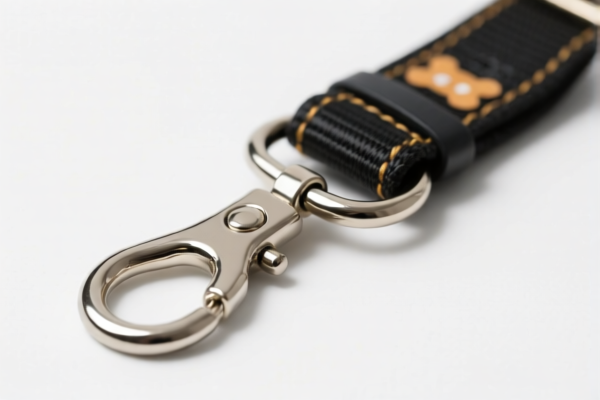
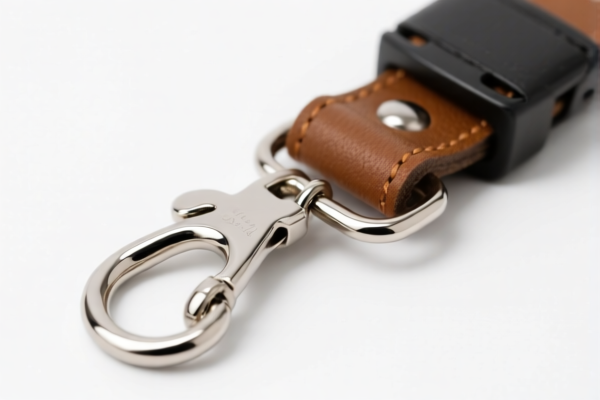
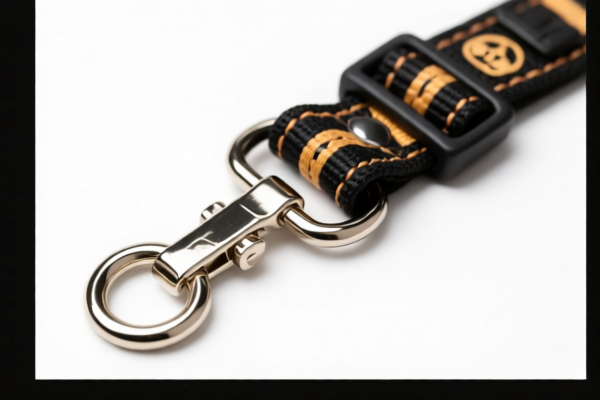
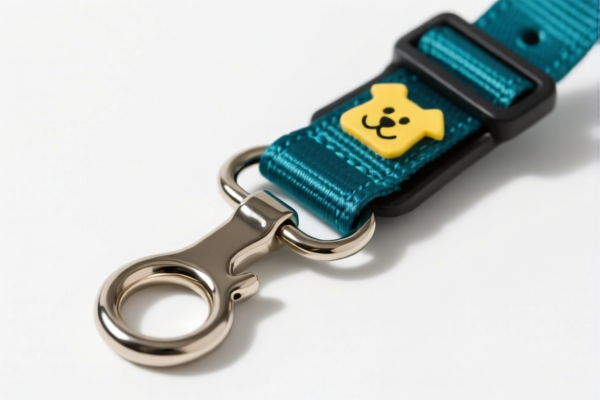
AI分析
🐕 Pet Seat Belt 2-in-1 (Animal Care Products vs. Vehicle Parts)
🌐 HS Code Reference & Customs Clearance Guide | 2026 Latest Tariff Analysis | Professional Clearance Strategy
📌 I. Product Definition & Classification: What is "Pet Seat Belt 2-in-1"?
The "Pet Seat Belt 2-in-1" is a hybrid product designed for animal care, specifically to secure pets in vehicles. In international trade, its classification hinges on its primary function and designated use:
- Animal Care Products: If primarily marketed for pet safety/harnesses, it falls under Chapter 96 or Chapter 63 (made-up textile articles).
- Vehicle Parts: If marketed specifically as a vehicle accessory for human/animal restraint systems, it may fall under Chapter 87 (Motor vehicle parts).
⚠️ Key Distinction Point: - Functional Match: The term "Seat Belt" strongly implies a safety restraint function. - Material Ambiguity: The input data does not specify material, but assumes textile/plastic composite (common for pet harnesses). - Classification Logic: The decision rests on whether the customs authority views it as a "vehicle part" (8708) or a "pet accessory/textile good" (6307).
📦 II. HS Code Classification Details (Based on Provided Data)
The following HS Codes are derived strictly from the provided <DATA> set. Note that the data contains conflicting interpretations regarding "Vehicle Parts" vs. "Pet Accessories."
| HS Code | Product Description | Source Logic Summary | Total Tax Rate | Tax Breakdown |
|---|---|---|---|---|
6307.90.98.91 |
Other Made-Up Articles; Other (General Textile/Accessories) | Classified as a general made-up textile product/accessory. No specific material conflict; fits "other accessories" bucket. | 24.5% | Base: 7.0% + Sec 301: 7.5% + Sec 122: 10% |
8708.21.00.00 |
Safety Belts for Motor Vehicles (Vehicle Part) | Matched based on the term "Seat Belt" and function as a restraint system. Assumes fabric/plastic material consistent with vehicle parts. (Appears twice in data with slightly different reasoning) | 37.5% | Base: 2.5% + Sec 301: 25.0% + Sec 122: 10% |
6307.90.75.00 |
Pet Accessories / Other Made-Up Articles | Classified as a pet supply (functional match). Material inferred as textile/webbing. Fits under "other made-up articles" for accessories. | 14.3% | Base: 4.3% + Sec 301: 0.0% + Sec 122: 10% |
🔍 Critical Conflict in Data: - Two entries point to 8708.21.00.00 (Vehicle Parts) with a 37.5% tax rate. - Two entries point to 6307.xxxx (Textiles/Pet Goods) with lower rates (24.5% and 14.3%). - Risk: Misclassification as a vehicle part (8708) significantly increases tax liability due to the 25% Section 301 tariff.
💰 III. 2026 Latest Tariff Rate Detailed Explanation (USA Import from China)
✅ Applicable Country: United States (US)
✅ Origin: China (CN)
✅ Effective Date: 2025/2026 (Post-Nov 10, 2025 rules apply)
🎯 1. 8708.21.00.00 — Safety Belts for Motor Vehicles (High Risk/High Cost)
| Item | Detail |
|---|---|
| Base Tariff | 2.5% (ad valorem) |
| Section 301 Tariff (USITC) | +25.0% (High punitive tariff on vehicle parts/accessories from China) |
| Section 122 Tariff | +10.0% (Additional safeguard tariff) |
| Total Effective Rate | 37.5% |
| Calculation Base | CIF Value × 37.5% |
| De Minimis Exemption? | ❌ NO (Deny de minimis) |
| Legal Basis | IEEPA:9903.01.24 → USITC:8708.21.00.00 → FOOTNOTE:301 |
📌 Explanation:
- This classification treats the item as a vehicle part.
- The 25% Section 301 tariff is the primary cost driver.
- Conclusion: This is the most expensive classification. Avoid unless the product is strictly defined as a OEM vehicle safety component.
🎯 2. 6307.90.98.91 — Other Made-Up Textile Articles (Medium Risk)
| Item | Detail |
|---|---|
| Base Tariff | 7.0% (ad valorem) |
| Section 301 Tariff (USITC) | +7.5% (Lower tier Section 301 rate for general textile accessories) |
| Section 122 Tariff | +10.0% |
| Total Effective Rate | 24.5% |
| Calculation Base | CIF Value × 24.5% |
| De Minimis Exemption? | ❌ NO |
| Legal Basis | General textile chapter rules + Section 122 |
📌 Explanation:
- Classified as a general textile made-up article.
- Lower Section 301 rate (7.5%) compared to vehicle parts (25%).
- Conclusion: A safer bet if the product can be argued as a "textile accessory" rather than a "vehicle part."
🎯 3. 6307.90.75.00 — Pet Accessories / Textile Webbing (Lowest Cost)
| Item | Detail |
|---|---|
| Base Tariff | 4.3% (ad valorem) |
| Section 301 Tariff (USITC) | 0.0% (Exempt or lower tier for specific textile/webbing items) |
| Section 122 Tariff | +10.0% |
| Total Effective Rate | 14.3% |
| Calculation Base | CIF Value × 14.3% |
| De Minimis Exemption? | ❌ NO |
| Legal Basis | Specific textile/pet accessory subheading + Section 122 |
📌 Explanation:
- This is the most cost-effective classification.
- Relies on the argument that the product is a pet accessory made of textile webbing, not a vehicle part.
- Zero Section 301 tariff makes this highly attractive.
- Conclusion: Aim for this classification if marketing materials emphasize "Pet Safety" over "Vehicle Safety."
🛠️ IV. Customs Clearance Practical Advice (Actionable Strategy)
✅ 1. Documentation Checklist (Critical for Success)
| Document | Required? | Purpose |
|---|---|---|
| Product Photos | ✅ Yes | Must clearly show pet branding, D-rings for leashes, or pet-shaped components to argue against "vehicle part" status. |
| Marketing Materials | ✅ Yes | Brochures/websites should highlight "Pet Safety", "Dog Car Seat", etc. Avoid phrases like "OE Replacement Part." |
| Composition Statement | ✅ Yes | Detail materials (e.g., "Nylon Webbing, Plastic Buckle"). Emphasize textile content. |
| Commercial Invoice | ✅ Yes | Use description: "Pet Harness/Seat Belt for Animal Restraint" NOT "Vehicle Seat Belt." |
| Usage Declaration | ✅ Yes | State: "Designed primarily for use with domestic animals." |
✅ 2. Classification Strategy & Tips
🔥 "Target the Pet, Avoid the Car!"
| Scenario | Recommended HS Code | Why? | Risk Level |
|---|---|---|---|
| Marketing as Pet Product | 6307.90.75.00 |
Lowest tax (14.3%). No Sec 301. Focus on pet use. | 🟢 Low (if documented well) |
| General Textile Accessory | 6307.90.98.91 |
Medium tax (24.5%). Fallback if pet-specific subheading is questioned. | 🟡 Medium |
| Marketing as Car Part | 8708.21.00.00 |
Highest tax (37.5%). High Sec 301 penalty. | 🔴 High |
📌 Key Argument for Clearance:
- Not a Vehicle Part: Argue that the product is not designed to restrain human occupants in a motor vehicle (which is the core definition of 8708.21).
- Primary Use: Emphasize that the primary use is for pets, which falls under animal care/textiles.
- Material: Highlight textile/webbing composition to align with Chapter 63.
✅ 3. Special Considerations
| Situation | Advice |
|---|---|
| Dual Packaging | If sold in boxes with both "Car Seat" and "Dog" imagery, provide a clear Usage Statement to guide customs toward the pet classification. |
| Buckle Type | If the buckle is a standard automotive lap/shoulder belt clip, it may force classification to 8708. Ensure the design is distinct (e.g., carabiner, pet-specific clip). |
| Section 122 Impact | Note that all classifications in the data include a 10% Section 122 tariff. This is a baseline cost for most Chinese imports under current rules. |
🌍 V. Global Market Comparison (Contextual Note)
| Market | Recommended HS Code | Est. Tax Impact | Comment |
|---|---|---|---|
| 🇺🇸 USA | 6307.90.75.00 |
14.3% | Best rate if classified as pet textile. |
| 🇨🇳 China | 6307.90.98.00 (Est.) |
~5-10% | Lower base rates, no Sec 301/122. |
| 🇪🇺 EU | 6307.90.98 |
~4% + VAT | Generally lower duties, no equivalent Sec 301. |
📌 Conclusion:
- The USA market is the primary concern due to Section 301 and 122 tariffs.
- Misclassification as a vehicle part adds 23.2% more cost than the pet textile classification.
📌 VI. Common Mistakes & Pitfalls
❌ Mistake 1: Using the term "Car Seat Belt" in the invoice.
👉 Result: Customs may default to 8708.21.00.00 (37.5%).
✅ Fix: Use "Pet Restraint System" or "Animal Safety Harness."
❌ Mistake 2: Ignoring Section 122 Tariff.
👉 Result: Underpayment of 10%.
✅ Fix: Budget for 10% Section 122 on all goods from China.
❌ Mistake 3: Assuming "De Minimis" (Section 321) applies.
👉 Result: Entry seizure or retroactive duty payment.
✅ Fix: All HS codes in the data indicate "Deny de minimis". Formal entry is required.
🎯 VII. Conclusion: Smart Clearance, Lower Costs!
🎯 Remember the Strategy:
🔹 "Pet First, Car Second" – Market it as a pet product to unlock the 14.3% rate.
🔹 "Textile is Your Friend" – Emphasize nylon/webbing material to stay in Chapter 63.
🔹 "Avoid the 37.5% Trap" – Never classify as a vehicle part unless absolutely necessary.
📌 Pro Tip:
If possible, apply for an Advance Ruling (CBP Ruling) with the US Customs and Border Protection. Submit your product photos, marketing copy, and composition details. Get a binding determination for 6307.90.75.00 to eliminate audit risk.
📣 Immediate Action:
📞 Contact your customs broker with the following declaration:
"This product is a pet accessory made of textile webbing, primarily for animal restraint. Please classify under 6307.90.75.00 to apply the lower tariff rate."
✨ Precision in Classification, Profit in Clearance!
💼 Your margin depends on the right HS Code.
用户评价
关于 HS 编码归类
协调制度(HS)是由世界海关组织(WCO)制定的国际贸易商品分类标准。全球 200 多个国家采用 HS 系统作为海关关税、贸易统计和进出口监管的基础。
每个 HS 编码遵循以下层级结构:
- 章(2 位)——商品大类(例如:第 84 章:机器和机械设备)
- 品目(4 位)——章内的更具体分类
- 子目(6 位)——国际通用细分,所有 WCO 成员国统一使用
- 本国细分(8-10 位)——各国自行扩展的细分编码,如美国 HTSUS 10 位编码
正确的 HS 编码归类对于顺利通关、准确缴纳关税和遵守贸易法规至关重要。错误归类可能导致海关延误、多缴关税或罚款。
从CN进口到US时,适用的关税税率可能包括:
- 最惠国(MFN)税率——适用于 WTO 成员国的标准关税税率
- 普通税率——适用于无贸易协定国家
- 贸易救济关税——附加关税,如 301 条款(反倾销)、232 条款(国家安全)或反补贴税
本页内容仅供参考。如需正式归类,请咨询当地海关或持牌报关代理。