Pet Seat Belt 2 in 1
CN → US| HS Code | Tariff Rate | Origin | Destination | Doc |
|---|---|---|---|---|
| 6307909891 | 24.5% | CN | US | Official Doc |
| 8708210000 | 37.5% | CN | US | Official Doc |
| 6307907500 | 14.3% | CN | US | Official Doc |
| 8708210000 | 37.5% | CN | US | Official Doc |
Product Images
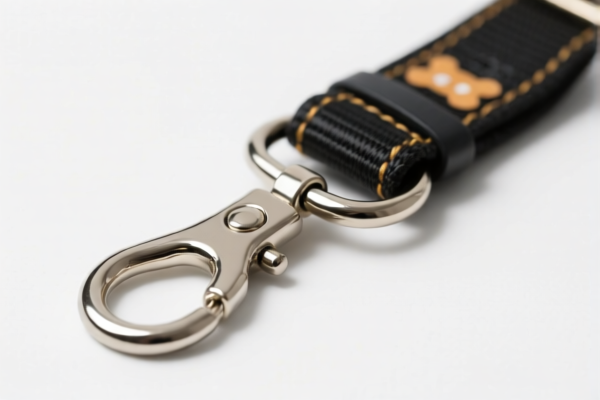
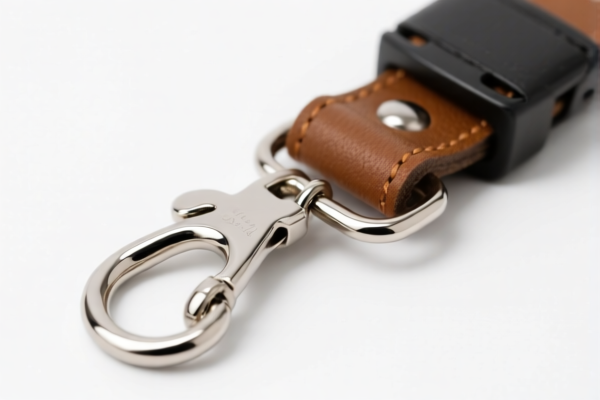
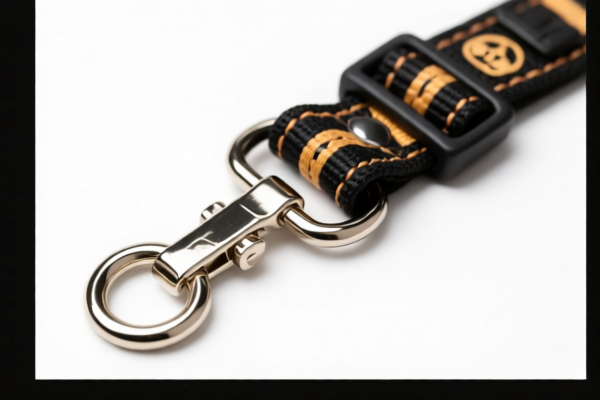
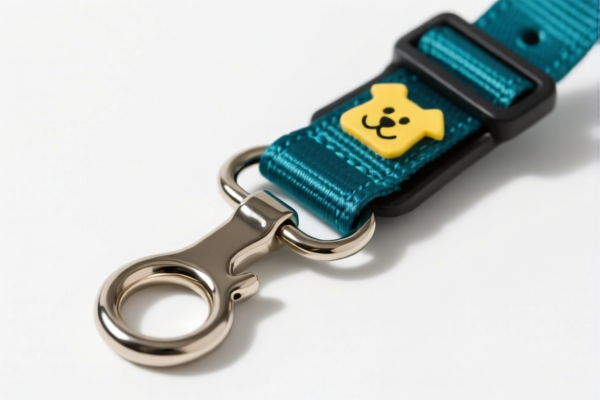
AI Analysis
🐕 Pet Seat Belt 2-in-1 (Animal Care Products vs. Vehicle Parts)
🌐 HS Code Reference & Customs Clearance Guide | 2026 Latest Tariff Analysis | Professional Clearance Strategy
📌 I. Product Definition & Classification: What is "Pet Seat Belt 2-in-1"?
The "Pet Seat Belt 2-in-1" is a hybrid product designed for animal care, specifically to secure pets in vehicles. In international trade, its classification hinges on its primary function and designated use:
- Animal Care Products: If primarily marketed for pet safety/harnesses, it falls under Chapter 96 or Chapter 63 (made-up textile articles).
- Vehicle Parts: If marketed specifically as a vehicle accessory for human/animal restraint systems, it may fall under Chapter 87 (Motor vehicle parts).
⚠️ Key Distinction Point: - Functional Match: The term "Seat Belt" strongly implies a safety restraint function. - Material Ambiguity: The input data does not specify material, but assumes textile/plastic composite (common for pet harnesses). - Classification Logic: The decision rests on whether the customs authority views it as a "vehicle part" (8708) or a "pet accessory/textile good" (6307).
📦 II. HS Code Classification Details (Based on Provided Data)
The following HS Codes are derived strictly from the provided <DATA> set. Note that the data contains conflicting interpretations regarding "Vehicle Parts" vs. "Pet Accessories."
| HS Code | Product Description | Source Logic Summary | Total Tax Rate | Tax Breakdown |
|---|---|---|---|---|
6307.90.98.91 |
Other Made-Up Articles; Other (General Textile/Accessories) | Classified as a general made-up textile product/accessory. No specific material conflict; fits "other accessories" bucket. | 24.5% | Base: 7.0% + Sec 301: 7.5% + Sec 122: 10% |
8708.21.00.00 |
Safety Belts for Motor Vehicles (Vehicle Part) | Matched based on the term "Seat Belt" and function as a restraint system. Assumes fabric/plastic material consistent with vehicle parts. (Appears twice in data with slightly different reasoning) | 37.5% | Base: 2.5% + Sec 301: 25.0% + Sec 122: 10% |
6307.90.75.00 |
Pet Accessories / Other Made-Up Articles | Classified as a pet supply (functional match). Material inferred as textile/webbing. Fits under "other made-up articles" for accessories. | 14.3% | Base: 4.3% + Sec 301: 0.0% + Sec 122: 10% |
🔍 Critical Conflict in Data: - Two entries point to 8708.21.00.00 (Vehicle Parts) with a 37.5% tax rate. - Two entries point to 6307.xxxx (Textiles/Pet Goods) with lower rates (24.5% and 14.3%). - Risk: Misclassification as a vehicle part (8708) significantly increases tax liability due to the 25% Section 301 tariff.
💰 III. 2026 Latest Tariff Rate Detailed Explanation (USA Import from China)
✅ Applicable Country: United States (US)
✅ Origin: China (CN)
✅ Effective Date: 2025/2026 (Post-Nov 10, 2025 rules apply)
🎯 1. 8708.21.00.00 — Safety Belts for Motor Vehicles (High Risk/High Cost)
| Item | Detail |
|---|---|
| Base Tariff | 2.5% (ad valorem) |
| Section 301 Tariff (USITC) | +25.0% (High punitive tariff on vehicle parts/accessories from China) |
| Section 122 Tariff | +10.0% (Additional safeguard tariff) |
| Total Effective Rate | 37.5% |
| Calculation Base | CIF Value × 37.5% |
| De Minimis Exemption? | ❌ NO (Deny de minimis) |
| Legal Basis | IEEPA:9903.01.24 → USITC:8708.21.00.00 → FOOTNOTE:301 |
📌 Explanation:
- This classification treats the item as a vehicle part.
- The 25% Section 301 tariff is the primary cost driver.
- Conclusion: This is the most expensive classification. Avoid unless the product is strictly defined as a OEM vehicle safety component.
🎯 2. 6307.90.98.91 — Other Made-Up Textile Articles (Medium Risk)
| Item | Detail |
|---|---|
| Base Tariff | 7.0% (ad valorem) |
| Section 301 Tariff (USITC) | +7.5% (Lower tier Section 301 rate for general textile accessories) |
| Section 122 Tariff | +10.0% |
| Total Effective Rate | 24.5% |
| Calculation Base | CIF Value × 24.5% |
| De Minimis Exemption? | ❌ NO |
| Legal Basis | General textile chapter rules + Section 122 |
📌 Explanation:
- Classified as a general textile made-up article.
- Lower Section 301 rate (7.5%) compared to vehicle parts (25%).
- Conclusion: A safer bet if the product can be argued as a "textile accessory" rather than a "vehicle part."
🎯 3. 6307.90.75.00 — Pet Accessories / Textile Webbing (Lowest Cost)
| Item | Detail |
|---|---|
| Base Tariff | 4.3% (ad valorem) |
| Section 301 Tariff (USITC) | 0.0% (Exempt or lower tier for specific textile/webbing items) |
| Section 122 Tariff | +10.0% |
| Total Effective Rate | 14.3% |
| Calculation Base | CIF Value × 14.3% |
| De Minimis Exemption? | ❌ NO |
| Legal Basis | Specific textile/pet accessory subheading + Section 122 |
📌 Explanation:
- This is the most cost-effective classification.
- Relies on the argument that the product is a pet accessory made of textile webbing, not a vehicle part.
- Zero Section 301 tariff makes this highly attractive.
- Conclusion: Aim for this classification if marketing materials emphasize "Pet Safety" over "Vehicle Safety."
🛠️ IV. Customs Clearance Practical Advice (Actionable Strategy)
✅ 1. Documentation Checklist (Critical for Success)
| Document | Required? | Purpose |
|---|---|---|
| Product Photos | ✅ Yes | Must clearly show pet branding, D-rings for leashes, or pet-shaped components to argue against "vehicle part" status. |
| Marketing Materials | ✅ Yes | Brochures/websites should highlight "Pet Safety", "Dog Car Seat", etc. Avoid phrases like "OE Replacement Part." |
| Composition Statement | ✅ Yes | Detail materials (e.g., "Nylon Webbing, Plastic Buckle"). Emphasize textile content. |
| Commercial Invoice | ✅ Yes | Use description: "Pet Harness/Seat Belt for Animal Restraint" NOT "Vehicle Seat Belt." |
| Usage Declaration | ✅ Yes | State: "Designed primarily for use with domestic animals." |
✅ 2. Classification Strategy & Tips
🔥 "Target the Pet, Avoid the Car!"
| Scenario | Recommended HS Code | Why? | Risk Level |
|---|---|---|---|
| Marketing as Pet Product | 6307.90.75.00 |
Lowest tax (14.3%). No Sec 301. Focus on pet use. | 🟢 Low (if documented well) |
| General Textile Accessory | 6307.90.98.91 |
Medium tax (24.5%). Fallback if pet-specific subheading is questioned. | 🟡 Medium |
| Marketing as Car Part | 8708.21.00.00 |
Highest tax (37.5%). High Sec 301 penalty. | 🔴 High |
📌 Key Argument for Clearance:
- Not a Vehicle Part: Argue that the product is not designed to restrain human occupants in a motor vehicle (which is the core definition of 8708.21).
- Primary Use: Emphasize that the primary use is for pets, which falls under animal care/textiles.
- Material: Highlight textile/webbing composition to align with Chapter 63.
✅ 3. Special Considerations
| Situation | Advice |
|---|---|
| Dual Packaging | If sold in boxes with both "Car Seat" and "Dog" imagery, provide a clear Usage Statement to guide customs toward the pet classification. |
| Buckle Type | If the buckle is a standard automotive lap/shoulder belt clip, it may force classification to 8708. Ensure the design is distinct (e.g., carabiner, pet-specific clip). |
| Section 122 Impact | Note that all classifications in the data include a 10% Section 122 tariff. This is a baseline cost for most Chinese imports under current rules. |
🌍 V. Global Market Comparison (Contextual Note)
| Market | Recommended HS Code | Est. Tax Impact | Comment |
|---|---|---|---|
| 🇺🇸 USA | 6307.90.75.00 |
14.3% | Best rate if classified as pet textile. |
| 🇨🇳 China | 6307.90.98.00 (Est.) |
~5-10% | Lower base rates, no Sec 301/122. |
| 🇪🇺 EU | 6307.90.98 |
~4% + VAT | Generally lower duties, no equivalent Sec 301. |
📌 Conclusion:
- The USA market is the primary concern due to Section 301 and 122 tariffs.
- Misclassification as a vehicle part adds 23.2% more cost than the pet textile classification.
📌 VI. Common Mistakes & Pitfalls
❌ Mistake 1: Using the term "Car Seat Belt" in the invoice.
👉 Result: Customs may default to 8708.21.00.00 (37.5%).
✅ Fix: Use "Pet Restraint System" or "Animal Safety Harness."
❌ Mistake 2: Ignoring Section 122 Tariff.
👉 Result: Underpayment of 10%.
✅ Fix: Budget for 10% Section 122 on all goods from China.
❌ Mistake 3: Assuming "De Minimis" (Section 321) applies.
👉 Result: Entry seizure or retroactive duty payment.
✅ Fix: All HS codes in the data indicate "Deny de minimis". Formal entry is required.
🎯 VII. Conclusion: Smart Clearance, Lower Costs!
🎯 Remember the Strategy:
🔹 "Pet First, Car Second" – Market it as a pet product to unlock the 14.3% rate.
🔹 "Textile is Your Friend" – Emphasize nylon/webbing material to stay in Chapter 63.
🔹 "Avoid the 37.5% Trap" – Never classify as a vehicle part unless absolutely necessary.
📌 Pro Tip:
If possible, apply for an Advance Ruling (CBP Ruling) with the US Customs and Border Protection. Submit your product photos, marketing copy, and composition details. Get a binding determination for 6307.90.75.00 to eliminate audit risk.
📣 Immediate Action:
📞 Contact your customs broker with the following declaration:
"This product is a pet accessory made of textile webbing, primarily for animal restraint. Please classify under 6307.90.75.00 to apply the lower tariff rate."
✨ Precision in Classification, Profit in Clearance!
💼 Your margin depends on the right HS Code.
Customer Reviews
About HS Code Classification
The Harmonized System (HS) is an internationally standardized nomenclature developed by the World Customs Organization (WCO) to classify traded products. Over 200 countries use the HS system as the basis for customs tariffs, trade statistics, and import/export regulations.
Each HS code follows a hierarchical structure:
- Chapter (2 digits) — Broad category of goods (e.g., Chapter 84: Machinery and Mechanical Appliances)
- Heading (4 digits) — More specific grouping within the chapter
- Subheading (6 digits) — Internationally standardized breakdown, used by all WCO member countries
- National subdivisions (8-10 digits) — Country-specific extensions for further classification, such as US HTSUS 10-digit codes
Correct HS code classification is essential for smooth customs clearance, accurate duty payment, and compliance with trade regulations. Misclassification can lead to customs delays, overpayment of duties, or penalties.
When importing from CN to US, the applicable tariff rates may include:
- Most-Favored-Nation (MFN) rate — The standard duty rate applied to WTO members
- General rate — Applied to countries without trade agreements
- Trade remedy duties — Additional tariffs such as Section 301 (anti-dumping), Section 232 (national security), or countervailing duties
The information provided on this page is for reference purposes only. For official classification, please consult with your local customs authority or a licensed customs broker.