Petroleum based Low Volatility Adhesive
CN → US| HS编码 | 关税税率 | 原产国 | 目的国 | 文档 |
|---|---|---|---|---|
| 3506990000 | 37.1% | CN | US | 官方文档 |
| 3506915000 | 37.1% | CN | US | 官方文档 |
| 3901909000 | 41.5% | CN | US | 官方文档 |
| 3901905501 | 41.5% | CN | US | 官方文档 |
| 3824994900 | 41.5% | CN | US | 官方文档 |
商品图片
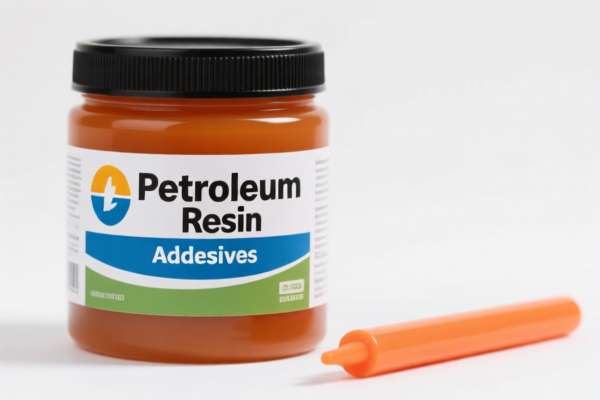

AI分析
🧪 Petroleum-Based Low Volatility Adhesive: The High-Cost Classification Trap
🌐 HS Code Reference & Customs Clearance Guide | 2026 Latest Tariff Analysis | Professional Compliance Strategy
📌 I. Product Definition & Classification: Is it a Glue or a Resin?
"Petroleum-based Low Volatility Adhesive" (石油基低挥发性粘结剂) is a complex chemical product. In international trade, its classification hinges on chemical composition and primary function. It sits at the intersection of Chapter 35 (Albuminoidal Substances; Glues) and Chapter 39 (Plastics and Articles Thereof).
Key Distinction:
- Classified as Glue (Ch 35): If the primary value and function are as an adhesive (binding agent), especially if it is pre-mixed or formulated for bonding.
- Classified as Polymer/Resin (Ch 39): If it is primarily a raw chemical polymer/resin used as an intermediate ingredient for further manufacturing, not directly as a consumer adhesive.
⚠️ Critical Warning:
Misclassification can lead to significant duty discrepancies (37.1% vs 41.5%) and potential customs audits due to the high additional tariffs applicable to Chinese origin goods entering the US.
📦 II. HS Code Classification Details (2026 Latest Tariff Authority)
Based on the provided data, there are 5 possible HS Codes depending on the specific chemical structure and intended use. Below is the authoritative breakdown:
| HS Code | Product Description | Classification Logic | Applicable Scenario |
|---|---|---|---|
3506.99.00.00 |
Other Prepared Adhesives | Petroleum-based binders are considered "prepared adhesives." The material is petroleum-based, fitting the scope of adhesives. | ✅ Final Product: Ready-to-use adhesive products where the binding property is the primary function. |
3506.91.50.00 |
Other Adhesives Based on Polymers | The adhesive is based on polymers, meeting the material requirements for "adhesives based on polymers." | ✅ Polymer-Based Glue: Specifically formulated adhesives where the polymer is the key binding component. |
3901.90.90.00 |
Other Ethylene Polymers | Petroleum-based binders are chemically synthetic polymers/resins, falling under the category of ethylene polymers. | ⚠️ Raw Material: If sold primarily as a chemical resin/polymer for industrial synthesis, not as a finished glue. |
3901.90.55.01 |
Ethylene Copolymers & Primary Polymers | Classified as high-molecular-weight polymer products, possessing attributes of ethylene copolymers or primary polymers. | ⚠️ Raw Material: Similar to above; focuses on the polymer chemistry rather than the adhesive function. |
3824.99.49.00 |
Other Chemical Products | Sourced from hydrocarbons of petroleum, shale oil, or natural gas, matching the material characteristics of this category. | ⚠️ Hydrocarbon Product: If the product is primarily a hydrocarbon mixture without a clear adhesive or polymer classification. |
🔍 重点提醒 (Key Takeaway):
- Glue Category (35xx): Lower total tax burden (37.1%). Choose if the product is marketed and used as an adhesive.
- Polymer/Resin Category (39xx/38xx): Higher total tax burden (41.5%). Choose if the product is a raw chemical intermediate.
- Do NOT guess: Customs will inspect the SDS (Safety Data Sheet) and technical specifications. If it is labeled "Adhesive," declaring it as a "Polymer" may trigger an audit for undervaluation or misdeclaration.
💰 III. 2026 Latest Tariff Rate Breakdown (Including Surtaxes & Policy Add-ons)
✅ Applicable Country: United States (US)
✅ Country of Origin: China (CN)
✅ Effective Time: From November 10, 2025 (including subsequent imports)
🎯 1. HS Code 3506.99.00.00 & 3506.91.50.00 — Adhesives (Ch 35)
| Item | Content |
|---|---|
| Base Tariff | 2.1% |
| Section 301 Surtax (25%) | +25% (Standard USITC Section 301 tariff on Chinese goods) |
| 122 Provision Surtax (10%) | +10% (Specific tariff provision for Chinese imports) |
| Total Tariff Rate | 37.1% |
| Tax Calculation | CIF Value × 37.1% |
| De Minimis Exemption | ❌ Not Eligible (High tariffs exclude small package exemptions) |
| Legal Basis Path | USITC:3506.99.00.00 → SECTION301:8524.11.10.00 (Generic application for Ch 35) → PROVISION122 |
📌 Explanation:
- The 2.1% base duty is standard for prepared adhesives.
- The 25% and 10% surcharges are added specifically due to the product's origin (China).
- Total Cost Impact: For every $10,000 worth of adhesive, you pay $3,710 in duties alone.
🎯 2. HS Code 3901.90.90.00, 3901.90.55.01, & 3824.99.49.00 — Polymers & Chemicals (Ch 39/38)
| Item | Content |
|---|---|
| Base Tariff | 6.5% |
| Section 301 Surtax (25%) | +25% (Standard USITC Section 301 tariff) |
| 122 Provision Surtax (10%) | +10% (Specific tariff provision for Chinese imports) |
| Total Tariff Rate | 41.5% |
| Tax Calculation | CIF Value × 41.5% |
| De Minimis Exemption | ❌ Not Eligible |
| Legal Basis Path | USITC:3901.90.90.00 / 3824.99.49.00 → SECTION301 → PROVISION122 |
📌 Explanation:
- Although the base tariff is higher (6.5% vs 2.1%), the total rate (41.5%) is significantly worse than the adhesive category.
- Strategic Implication: If your product is technically a polymer but functions as an adhesive, always declare as Adhesive (Ch 35) to save 4.4% on the total CIF value. Misdeclaring as polymer to "simplify" documentation is risky and more expensive.
🛠️ IV. Customs Clearance Practical Advice (Avoid Pitfalls)
✅ 1. Required Documentation Checklist (Non-negotiable)
| Document | Must Provide | Explanation |
|---|---|---|
| ✅ Technical Data Sheet (TDS) | ✔️ | Must explicitly state: "Adhesive," "Binder," or "Polymer." Crucial for HS Code validation. |
| ✅ Safety Data Sheet (SDS) | ✔️ | Shows chemical composition. If it lists "pre-mixed adhesive," it supports Ch 35. |
| ✅ Commercial Invoice | ✔️ | Description must match HS Code. Use precise terms: "Petroleum-based Adhesive" vs "Ethylene Resin." |
| ✅ Product Photos | ✔️ | Show packaging, labeling, and container type. |
| ✅ Statement of Function | ✔️ | A brief letter stating: "This product is used primarily for bonding materials, not as a raw chemical intermediate." |
✅ 2. Declaration Strategy (Key Formulas)
🔥 "Function Determines Code: Adhesive = 35%, Polymer = 41.5%!"
| Scenario | Correct Declaration | Risk of Wrong Declaration |
|---|---|---|
| Ready-to-use glue | 3506.99.00.00 or 3506.91.50.00 |
Declaring as Polymer → Overpay 4.4% + Audit Risk |
| Raw Resin for mixing | 3901.90.90.00 |
Declaring as Adhesive → Under-declaration → Penalties + Back Taxes |
| Hydrocarbon Mixture | 3824.99.49.00 |
Declaring as Adhesive → Functional mismatch → Customs Rejection |
✅ 3. Special Circumstances Handling
| Situation | Handling Advice |
|---|---|
| OEM Custom Adhesive | Provide the end-user’s specification. If the end-use is bonding, stick to Ch 35. |
| Mixed Container | If shipping adhesives and raw polymers together, declare separately. Mixing can lead to audits on the entire shipment. |
| Low Volatility Claim | Ensure the SDS confirms "Low VOC" if marketing claims it. This does not change HS Code but affects EPA/REACH compliance in some markets. |
| Hydrocarbon Base | If the product is >80% hydrocarbons, Customs may push for 3824 or 3901. Be prepared with a chemical composition breakdown. |
🌍 V. Global Market Comparison (2026 Latest)
| Country/Region | Recommended HS Code | Total Tariff (China Origin) | Certification Requirements | Notes |
|---|---|---|---|---|
| 🇺🇸 USA | 3506.99.00.00 (Adhesive) |
37.1% | TSCA (EPA) | High tariff due to 301 + 122. Polymer rate is 41.5%. |
| 🇨🇳 China | 3506.99.00.00 |
5-8% | No special import tax | Lower base rate, no surtaxes. |
| 🇪🇺 EU | 3506.91.50.00 |
0-6.5% | REACH Registration | No additional surtaxes. REACH compliance is key. |
| 🇬🇧 UK | 3506.91.50.00 |
0-6.5% | UK REACH | Post-Brexit, similar to EU but requires UK REACH. |
📌 Conclusion:
- The US is the most expensive market due to aggressive surtaxes (37.1% - 41.5%).
- Strategic Tip: If possible, classify as Adhesive (Ch 35) to save 4.4% compared to Polymer (Ch 39).
- EU/UK are significantly more cost-effective, but REACH/UK REACH compliance is mandatory and costly.
📌 VI. Common Mistakes & Pitfalls (Lessons from Tears)
❌ Mistake 1: Declaring "Adhesive" as "Plastic Resin" to avoid complexity.
👉 Result: You pay 41.5% instead of 37.1%. No functional justification for glue.
❌ Mistake 2: Ignoring the "Low Volatility" aspect in SDS.
👉 Result: EPA/TSCA compliance issues in the US. While not a tariff issue, it can lead to seizure.
❌ Mistake 3: Using vague terms like "Chemical Binder" on the invoice.
👉 Result: Customs delays for classification review. Use precise terms: "Petroleum-based Pre-mixed Adhesive."
❌ Mistake 4: Assuming all "Petroleum-based" products go to Ch 38.
👉 Result: If it functions as an adhesive, Ch 35 is more appropriate and cheaper.
✅ Correct Practice:
"Petroleum-based Pre-mixed Adhesive, Low VOC, For Industrial Bonding, Model XYZ, TSCA Compliant"
🎯 VII. Conclusion: Precise Classification Saves Money
🎯 Remember the Golden Rule:
🔹 "Adhesive = 37.1% | Polymer = 41.5% | Hydrocarbon = 41.5%"
🔹 "Function First: If it bonds, declare as Glue!"
🔹 "4.4% difference is huge on bulk shipments!"
📌 Pro Tip:
If your product is originating from Vietnam, Mexico, or Thailand, you may be eligible for IEEPA Exemptions or lower tariffs.
Recommendation: Apply for a Binding Ruling from US Customs (CBP) before large shipments to lock in the HS Code and duty rate.
📣 Immediate Action:
📞 Contact your customs broker + Provide SDS/TDS + Apply for CBP Ruling
🚀 Ensure your Petroleum-based Adhesive clears customs efficiently, minimizing costs and delays!
✨ Professional Clearance Starts with Accurate Classification!
💼 Every percentage point saved is pure profit!
用户评价
关于 HS 编码归类
协调制度(HS)是由世界海关组织(WCO)制定的国际贸易商品分类标准。全球 200 多个国家采用 HS 系统作为海关关税、贸易统计和进出口监管的基础。
每个 HS 编码遵循以下层级结构:
- 章(2 位)——商品大类(例如:第 84 章:机器和机械设备)
- 品目(4 位)——章内的更具体分类
- 子目(6 位)——国际通用细分,所有 WCO 成员国统一使用
- 本国细分(8-10 位)——各国自行扩展的细分编码,如美国 HTSUS 10 位编码
正确的 HS 编码归类对于顺利通关、准确缴纳关税和遵守贸易法规至关重要。错误归类可能导致海关延误、多缴关税或罚款。
从CN进口到US时,适用的关税税率可能包括:
- 最惠国(MFN)税率——适用于 WTO 成员国的标准关税税率
- 普通税率——适用于无贸易协定国家
- 贸易救济关税——附加关税,如 301 条款(反倾销)、232 条款(国家安全)或反补贴税
本页内容仅供参考。如需正式归类,请咨询当地海关或持牌报关代理。