Petroleum based Low Volatility Adhesive
CN → US| HS Code | Tariff Rate | Origin | Destination | Doc |
|---|---|---|---|---|
| 3506990000 | 37.1% | CN | US | Official Doc |
| 3506915000 | 37.1% | CN | US | Official Doc |
| 3901909000 | 41.5% | CN | US | Official Doc |
| 3901905501 | 41.5% | CN | US | Official Doc |
| 3824994900 | 41.5% | CN | US | Official Doc |
Product Images
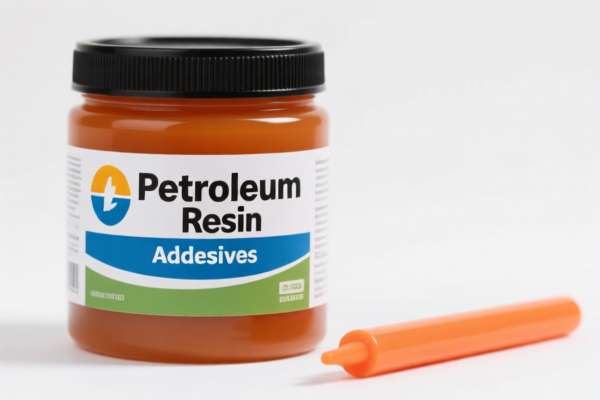

AI Analysis
🧪 Petroleum-Based Low Volatility Adhesive: The High-Cost Classification Trap
🌐 HS Code Reference & Customs Clearance Guide | 2026 Latest Tariff Analysis | Professional Compliance Strategy
📌 I. Product Definition & Classification: Is it a Glue or a Resin?
"Petroleum-based Low Volatility Adhesive" (石油基低挥发性粘结剂) is a complex chemical product. In international trade, its classification hinges on chemical composition and primary function. It sits at the intersection of Chapter 35 (Albuminoidal Substances; Glues) and Chapter 39 (Plastics and Articles Thereof).
Key Distinction:
- Classified as Glue (Ch 35): If the primary value and function are as an adhesive (binding agent), especially if it is pre-mixed or formulated for bonding.
- Classified as Polymer/Resin (Ch 39): If it is primarily a raw chemical polymer/resin used as an intermediate ingredient for further manufacturing, not directly as a consumer adhesive.
⚠️ Critical Warning:
Misclassification can lead to significant duty discrepancies (37.1% vs 41.5%) and potential customs audits due to the high additional tariffs applicable to Chinese origin goods entering the US.
📦 II. HS Code Classification Details (2026 Latest Tariff Authority)
Based on the provided data, there are 5 possible HS Codes depending on the specific chemical structure and intended use. Below is the authoritative breakdown:
| HS Code | Product Description | Classification Logic | Applicable Scenario |
|---|---|---|---|
3506.99.00.00 |
Other Prepared Adhesives | Petroleum-based binders are considered "prepared adhesives." The material is petroleum-based, fitting the scope of adhesives. | ✅ Final Product: Ready-to-use adhesive products where the binding property is the primary function. |
3506.91.50.00 |
Other Adhesives Based on Polymers | The adhesive is based on polymers, meeting the material requirements for "adhesives based on polymers." | ✅ Polymer-Based Glue: Specifically formulated adhesives where the polymer is the key binding component. |
3901.90.90.00 |
Other Ethylene Polymers | Petroleum-based binders are chemically synthetic polymers/resins, falling under the category of ethylene polymers. | ⚠️ Raw Material: If sold primarily as a chemical resin/polymer for industrial synthesis, not as a finished glue. |
3901.90.55.01 |
Ethylene Copolymers & Primary Polymers | Classified as high-molecular-weight polymer products, possessing attributes of ethylene copolymers or primary polymers. | ⚠️ Raw Material: Similar to above; focuses on the polymer chemistry rather than the adhesive function. |
3824.99.49.00 |
Other Chemical Products | Sourced from hydrocarbons of petroleum, shale oil, or natural gas, matching the material characteristics of this category. | ⚠️ Hydrocarbon Product: If the product is primarily a hydrocarbon mixture without a clear adhesive or polymer classification. |
🔍 重点提醒 (Key Takeaway):
- Glue Category (35xx): Lower total tax burden (37.1%). Choose if the product is marketed and used as an adhesive.
- Polymer/Resin Category (39xx/38xx): Higher total tax burden (41.5%). Choose if the product is a raw chemical intermediate.
- Do NOT guess: Customs will inspect the SDS (Safety Data Sheet) and technical specifications. If it is labeled "Adhesive," declaring it as a "Polymer" may trigger an audit for undervaluation or misdeclaration.
💰 III. 2026 Latest Tariff Rate Breakdown (Including Surtaxes & Policy Add-ons)
✅ Applicable Country: United States (US)
✅ Country of Origin: China (CN)
✅ Effective Time: From November 10, 2025 (including subsequent imports)
🎯 1. HS Code 3506.99.00.00 & 3506.91.50.00 — Adhesives (Ch 35)
| Item | Content |
|---|---|
| Base Tariff | 2.1% |
| Section 301 Surtax (25%) | +25% (Standard USITC Section 301 tariff on Chinese goods) |
| 122 Provision Surtax (10%) | +10% (Specific tariff provision for Chinese imports) |
| Total Tariff Rate | 37.1% |
| Tax Calculation | CIF Value × 37.1% |
| De Minimis Exemption | ❌ Not Eligible (High tariffs exclude small package exemptions) |
| Legal Basis Path | USITC:3506.99.00.00 → SECTION301:8524.11.10.00 (Generic application for Ch 35) → PROVISION122 |
📌 Explanation:
- The 2.1% base duty is standard for prepared adhesives.
- The 25% and 10% surcharges are added specifically due to the product's origin (China).
- Total Cost Impact: For every $10,000 worth of adhesive, you pay $3,710 in duties alone.
🎯 2. HS Code 3901.90.90.00, 3901.90.55.01, & 3824.99.49.00 — Polymers & Chemicals (Ch 39/38)
| Item | Content |
|---|---|
| Base Tariff | 6.5% |
| Section 301 Surtax (25%) | +25% (Standard USITC Section 301 tariff) |
| 122 Provision Surtax (10%) | +10% (Specific tariff provision for Chinese imports) |
| Total Tariff Rate | 41.5% |
| Tax Calculation | CIF Value × 41.5% |
| De Minimis Exemption | ❌ Not Eligible |
| Legal Basis Path | USITC:3901.90.90.00 / 3824.99.49.00 → SECTION301 → PROVISION122 |
📌 Explanation:
- Although the base tariff is higher (6.5% vs 2.1%), the total rate (41.5%) is significantly worse than the adhesive category.
- Strategic Implication: If your product is technically a polymer but functions as an adhesive, always declare as Adhesive (Ch 35) to save 4.4% on the total CIF value. Misdeclaring as polymer to "simplify" documentation is risky and more expensive.
🛠️ IV. Customs Clearance Practical Advice (Avoid Pitfalls)
✅ 1. Required Documentation Checklist (Non-negotiable)
| Document | Must Provide | Explanation |
|---|---|---|
| ✅ Technical Data Sheet (TDS) | ✔️ | Must explicitly state: "Adhesive," "Binder," or "Polymer." Crucial for HS Code validation. |
| ✅ Safety Data Sheet (SDS) | ✔️ | Shows chemical composition. If it lists "pre-mixed adhesive," it supports Ch 35. |
| ✅ Commercial Invoice | ✔️ | Description must match HS Code. Use precise terms: "Petroleum-based Adhesive" vs "Ethylene Resin." |
| ✅ Product Photos | ✔️ | Show packaging, labeling, and container type. |
| ✅ Statement of Function | ✔️ | A brief letter stating: "This product is used primarily for bonding materials, not as a raw chemical intermediate." |
✅ 2. Declaration Strategy (Key Formulas)
🔥 "Function Determines Code: Adhesive = 35%, Polymer = 41.5%!"
| Scenario | Correct Declaration | Risk of Wrong Declaration |
|---|---|---|
| Ready-to-use glue | 3506.99.00.00 or 3506.91.50.00 |
Declaring as Polymer → Overpay 4.4% + Audit Risk |
| Raw Resin for mixing | 3901.90.90.00 |
Declaring as Adhesive → Under-declaration → Penalties + Back Taxes |
| Hydrocarbon Mixture | 3824.99.49.00 |
Declaring as Adhesive → Functional mismatch → Customs Rejection |
✅ 3. Special Circumstances Handling
| Situation | Handling Advice |
|---|---|
| OEM Custom Adhesive | Provide the end-user’s specification. If the end-use is bonding, stick to Ch 35. |
| Mixed Container | If shipping adhesives and raw polymers together, declare separately. Mixing can lead to audits on the entire shipment. |
| Low Volatility Claim | Ensure the SDS confirms "Low VOC" if marketing claims it. This does not change HS Code but affects EPA/REACH compliance in some markets. |
| Hydrocarbon Base | If the product is >80% hydrocarbons, Customs may push for 3824 or 3901. Be prepared with a chemical composition breakdown. |
🌍 V. Global Market Comparison (2026 Latest)
| Country/Region | Recommended HS Code | Total Tariff (China Origin) | Certification Requirements | Notes |
|---|---|---|---|---|
| 🇺🇸 USA | 3506.99.00.00 (Adhesive) |
37.1% | TSCA (EPA) | High tariff due to 301 + 122. Polymer rate is 41.5%. |
| 🇨🇳 China | 3506.99.00.00 |
5-8% | No special import tax | Lower base rate, no surtaxes. |
| 🇪🇺 EU | 3506.91.50.00 |
0-6.5% | REACH Registration | No additional surtaxes. REACH compliance is key. |
| 🇬🇧 UK | 3506.91.50.00 |
0-6.5% | UK REACH | Post-Brexit, similar to EU but requires UK REACH. |
📌 Conclusion:
- The US is the most expensive market due to aggressive surtaxes (37.1% - 41.5%).
- Strategic Tip: If possible, classify as Adhesive (Ch 35) to save 4.4% compared to Polymer (Ch 39).
- EU/UK are significantly more cost-effective, but REACH/UK REACH compliance is mandatory and costly.
📌 VI. Common Mistakes & Pitfalls (Lessons from Tears)
❌ Mistake 1: Declaring "Adhesive" as "Plastic Resin" to avoid complexity.
👉 Result: You pay 41.5% instead of 37.1%. No functional justification for glue.
❌ Mistake 2: Ignoring the "Low Volatility" aspect in SDS.
👉 Result: EPA/TSCA compliance issues in the US. While not a tariff issue, it can lead to seizure.
❌ Mistake 3: Using vague terms like "Chemical Binder" on the invoice.
👉 Result: Customs delays for classification review. Use precise terms: "Petroleum-based Pre-mixed Adhesive."
❌ Mistake 4: Assuming all "Petroleum-based" products go to Ch 38.
👉 Result: If it functions as an adhesive, Ch 35 is more appropriate and cheaper.
✅ Correct Practice:
"Petroleum-based Pre-mixed Adhesive, Low VOC, For Industrial Bonding, Model XYZ, TSCA Compliant"
🎯 VII. Conclusion: Precise Classification Saves Money
🎯 Remember the Golden Rule:
🔹 "Adhesive = 37.1% | Polymer = 41.5% | Hydrocarbon = 41.5%"
🔹 "Function First: If it bonds, declare as Glue!"
🔹 "4.4% difference is huge on bulk shipments!"
📌 Pro Tip:
If your product is originating from Vietnam, Mexico, or Thailand, you may be eligible for IEEPA Exemptions or lower tariffs.
Recommendation: Apply for a Binding Ruling from US Customs (CBP) before large shipments to lock in the HS Code and duty rate.
📣 Immediate Action:
📞 Contact your customs broker + Provide SDS/TDS + Apply for CBP Ruling
🚀 Ensure your Petroleum-based Adhesive clears customs efficiently, minimizing costs and delays!
✨ Professional Clearance Starts with Accurate Classification!
💼 Every percentage point saved is pure profit!
Customer Reviews
About HS Code Classification
The Harmonized System (HS) is an internationally standardized nomenclature developed by the World Customs Organization (WCO) to classify traded products. Over 200 countries use the HS system as the basis for customs tariffs, trade statistics, and import/export regulations.
Each HS code follows a hierarchical structure:
- Chapter (2 digits) — Broad category of goods (e.g., Chapter 84: Machinery and Mechanical Appliances)
- Heading (4 digits) — More specific grouping within the chapter
- Subheading (6 digits) — Internationally standardized breakdown, used by all WCO member countries
- National subdivisions (8-10 digits) — Country-specific extensions for further classification, such as US HTSUS 10-digit codes
Correct HS code classification is essential for smooth customs clearance, accurate duty payment, and compliance with trade regulations. Misclassification can lead to customs delays, overpayment of duties, or penalties.
When importing from CN to US, the applicable tariff rates may include:
- Most-Favored-Nation (MFN) rate — The standard duty rate applied to WTO members
- General rate — Applied to countries without trade agreements
- Trade remedy duties — Additional tariffs such as Section 301 (anti-dumping), Section 232 (national security), or countervailing duties
The information provided on this page is for reference purposes only. For official classification, please consult with your local customs authority or a licensed customs broker.