Photoelectric Poly(carbazole) Resin
CN → US商品图片

AI分析
⚡ Photoelectric Poly(carbazole) Resin (Polycarbazole)
🌐 HS Code Reference & Customs Clearance Guide | 2026 Latest Tariff Analysis | Professional Clearance Strategy
📌 I. Product Definition & Classification: Do You Truly Understand "Photoelectric Polycarbazole"?
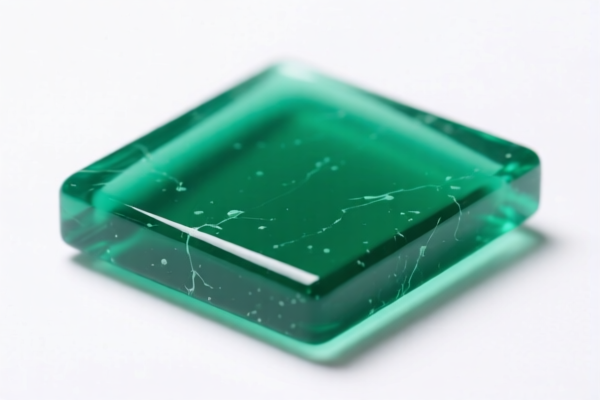
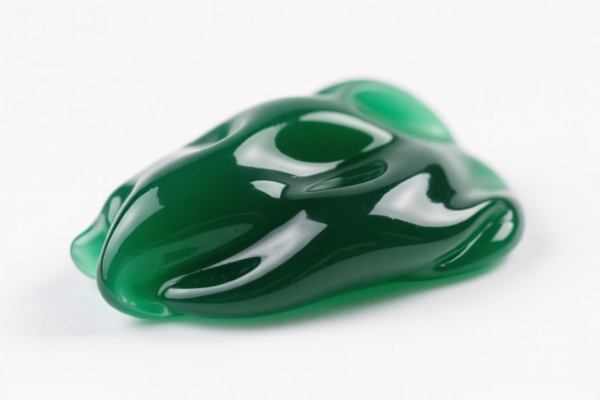
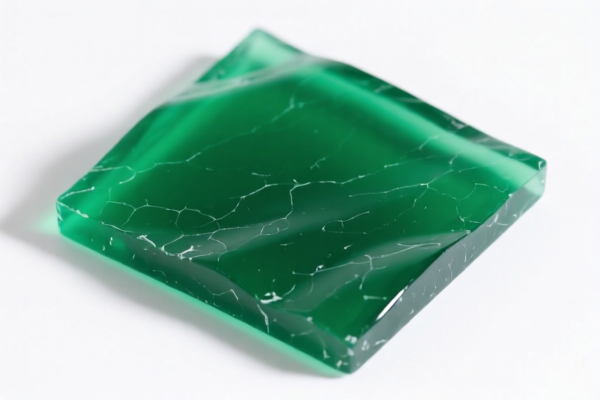
Polycarbazole (Poly(9-vinylicarbazole) or similar derivatives) is a high-performance conductive polymer and photoelectric organic semiconductor. It is widely used in organic light-emitting diodes (OLEDs), organic photovoltaics (solar cells), and field-effect transistors (OFETs).
In international trade, it is critical to distinguish between: 1. Raw Chemical Substance: Defined by its chemical structure (Carbazole derivative). 2. Prepared Preparations/Compounds: Mixed with other solvents, binders, or additives for specific application.
⚠️ Key Distinction Point: * If it is a pure chemical substance or a defined polymer with a specific molecular weight and structure → Classified under Chapter 39 (Plastics) or Chapter 29 (Organic Chemicals). * If it is a mixture designed for a specific electronic application (e.g., a pre-dispersed ink) → May fall under Chapter 32 (Dyes/Pigments/Preparations) or Chapter 38 (Miscellaneous Chemical Products). * CRITICAL: Most pure Polycarbazole resins are classified as Synthetic Polymers.
📦 II. HS Code Classification Details (2026 Latest Tariff Authority Comparison)
| HS Code | Product Description | Application Scenario | Key Characteristics |
|---|---|---|---|
3906.90.80.00 |
Acrylic polymers in primary forms; Other polymers (including Polycarbazole) | Raw conductive polymer powder/granules | ✅ Pure polymer, primary form |
3906.90.90.00 |
Other acrylic polymers in primary forms | Specialized modified polycarbazole | ✅ Pure polymer, modified |
3913.90.00.00 |
Natural polymers modified chemically; Synthetic polymers modified chemically | Chemically treated resins | ✅ If heavily modified |
3208.90.90.00 |
Paints/varnishes based on polymers | Polycarbazole as a coating ingredient | ❌ Mixed with solvents/binders |
3824.99.99.00 |
Prepared binders for foundry molds; Other prepared chemicals | Unspecified chemical preparations | ❌ Ambiguous mixture |
3818.00.00.00 |
Chemically pure elements | Rarely applies | ❌ Not pure element |
🔍 Key Reminder: * Pure Polycarbazole Resin is typically classified under
3906.90(Other Acrylic Polymers / Other Plastics in Primary Forms). This is the most common and accurate classification for raw conductive polymers. * If the product is not in primary form (e.g., pellets, powder, liquid solution intended for further manufacturing), it must be declared as such. * Do NOT classify as "Electronic Component" (8541) unless it is a finished device.
💰 III. 2026 Latest Tariff Rate Details (Including Surtaxes, Policy Add-ons)
✅ Applicable Country: United States (US)
✅ Origin: China (CN)
✅ Effective Date: From November 10, 2025 (including subsequent imports)
🎯 1. 3906.90.80.00 —— Polycarbazole Resin (Primary Form)
| Item | Content |
|---|---|
| Base Rate | 5.3% (ad valorem) |
| USITC Surtax | +25% (Under USITC Footnote 9903.88.01 for certain plastics) |
| IEEPA Surtax | +10% (For Chinese/HK products, from Nov 10, 2025) |
| Total Rate | 40.3% |
| Tax Calculation | CIF Value × 40.3% |
| De Minimis Exemption | ❌ Not Eligible (deny_de_minimis) |
| Legal Basis Path | IEEPA:9903.01.25 → IEEPA:9903.01.24 → USITC:3906.90.80.00 → FOOTNOTE:9903.88.01 |
📌 Explanation: * "USITC Surtax 25%" is from the Section 301 tariffs on specific plastic products. * "IEEPA 10%" is the additional tariff under the International Emergency Economic Powers Act for Chinese goods. * Total 40.3% is a high tariff, requiring early cost assessment.
🎯 2. 3906.90.90.00 —— Other Polymers (Primary Form)
| Item | Content |
|---|---|
| Base Rate | 5.3% |
| USITC Surtax | +25% |
| IEEPA Surtax | +10% |
| Total Rate | 40.3% |
| Tax Calculation | CIF × 40.3% |
| De Minimis Exemption | ❌ Not Eligible |
| Legal Basis Path | IEEPA:9903.01.25 → IEEPA:9903.01.24 → USITC:3906.90.90.00 → FOOTNOTE:9903.88.01 |
📌 Note: * Same as above, applies to modified or less common polymer forms. * Even if the polymer is "functionalized" for electronics, if it remains in primary form, it stays in Chapter 39.
🛠️ IV. Customs Clearance Practical Advice (Battle-Tested Pitfall Avoidance)
✅ 1. Preparation Checklist (Missing Documents = Delay)
| Document | Mandatory | Description |
|---|---|---|
| ✅ Chemical Composition Report | ✔️ | Must detail % of Polycarbazole, solvent content, additives |
| ✅ Safety Data Sheet (SDS) | ✔️ | Required for chemical import; check for hazardous material flags |
| ✅ Technical Data Sheet (TDS) | ✔️ | Molecular weight, viscosity, application method |
| ✅ Certificate of Analysis (COA) | ✔️ | Purity level, batch number, manufacturing date |
| ✅ Commercial Invoice | ✔️ | Clearly state "Polycarbazole Resin, Synthetic Polymer" |
| ✅ Country of Origin Certificate | ✔️ | Essential for tariff calculation and exemption checks |
| ✅ Packaging List | ✔️ | Indicate net/gross weight, number of containers |
✅ 2. Declaration Tips (Key Mantra)
🔥 "Primary Form is Key, Composition Must Be Clear, Name Precise, Tax Avoids Fear!"
| Scenario | Correct Declaration | Wrong Practice |
|---|---|---|
| Pure Polycarbazole Powder | 3906.90.80.00 + "Polycarbazole Resin" |
Declaring as "Electronic Material" → 301+ IEEPA |
| Solution/Ink Form | 3208.90.90.00 or 3906.90 depending on binder |
Ambiguous "Organic Semiconductor" → Audit Risk |
| Finished OLED Component | 8541.40 or 8533 |
Declaring as Resin → Wrong Chapter |
| Mixed Chemical Preparation | 3824.99.99.00 |
Misclassified as Pure Polymer → Penalties |
✅ 3. Special Cases Handling
| Scenario | Handling Advice |
|---|---|
| OEM Custom Polymer | Provide customer order + chemical structure diagram to prove primary form |
| With Solvents | If >50% solvent, may be classified as a preparation (3208 or 3824), not pure polymer |
| Hazardous Classification | Check if Polycarbazole is considered hazardous; if yes, additional safety docs required |
| USMCA Origin | If produced in Mexico/Canada, may qualify for 0% tariff under USMCA |
🌍 V. Global Customs Clearance Comparison (2026 Latest)
| Country/Region | Recommended HS Code | Tariff | Certification Requirement | Remarks |
|---|---|---|---|---|
| 🇺🇸 USA | 3906.90.80.00 |
40.3% (China) | TSCA Certification | High due to Section 301 + IEEPA |
| 🇨🇳 China | 3906.90.80.00 |
5.0% | N/A | No extra surtax |
| 🇪🇺 EU | 3906.90 |
6.5% | REACH Registration | No additional surtax |
| 🇦🇺 Australia | 3906.90 |
5.0% | AICIS Registration | No surtax |
| 🇯🇵 Japan | 3906.90 |
6.0% | CSCL Notification | No surtax |
📌 Conclusion: * USA is the most expensive market for Chinese-sourced Polycarbazole Resin due to combined tariffs. * EU, Japan, and Australia are more favorable for raw material imports. * Consider supply chain diversification if targeting the US market.
📌 VI. Common Mistakes & Pitfalls (Lessons Learned)
❌ Mistake 1: Classifying Polycarbazole as an "Electronic Component" (8541)
👉 Consequence: Incorrect Chapter, potential penalty, and higher duty assessment.
❌ Mistake 2: Ignoring Solvent Content
👉 Consequence: If the resin is dissolved, it is no longer "primary form" and may fall under different chapters with different duties.
❌ Mistake 3: Failing to Provide SDS
👉 Consequence: Customs detention, fines, or return of goods for missing safety documentation.
❌ Mistake 4: Vague Product Name "Organic Resin"
👉 Consequence: Customs may assign a higher default duty rate or request extensive verification.
✅ Correct Approach:
"Polycarbazole Resin, Synthetic, Primary Form, Powder, Purity >98%, No Solvents, TSCA Compliant, Model XYZ"
🎯 VII. Conclusion: Professional Declaration Saves Money!
🎯 Remember the Mantra:
🔹 "Primary Form is King, Composition is Truth, US Tariffs are High, Prepare Early!"
🔹 "HS Code Determines Life, Tax Difference is Huge, Declaration Accuracy Saves Thousands!"
📌 Pro Tip:
If your Polycarbazole Resin is originally produced in Vietnam, Mexico, or Thailand, you may qualify for IEEPA Exemption or USMCA Zero Duty.
Recommend Advance Ruling (Pre-classification) with US Customs to avoid clearance delays.
📣 Take Action Now:
📞 Contact Professional Customs Broker + Provide Chemical Specs + Apply for HS Code Pre-ruling
🚀 Ensure Smooth Clearance, Efficient Export, and Maximized Profit!
✨ Professional Customs Clearance Starts with Accurate Classification!
💼 Every Penny of Cost Deserves Precise Calculation!
用户评价
关于 HS 编码归类
协调制度(HS)是由世界海关组织(WCO)制定的国际贸易商品分类标准。全球 200 多个国家采用 HS 系统作为海关关税、贸易统计和进出口监管的基础。
每个 HS 编码遵循以下层级结构:
- 章(2 位)——商品大类(例如:第 84 章:机器和机械设备)
- 品目(4 位)——章内的更具体分类
- 子目(6 位)——国际通用细分,所有 WCO 成员国统一使用
- 本国细分(8-10 位)——各国自行扩展的细分编码,如美国 HTSUS 10 位编码
正确的 HS 编码归类对于顺利通关、准确缴纳关税和遵守贸易法规至关重要。错误归类可能导致海关延误、多缴关税或罚款。
从CN进口到US时,适用的关税税率可能包括:
- 最惠国(MFN)税率——适用于 WTO 成员国的标准关税税率
- 普通税率——适用于无贸易协定国家
- 贸易救济关税——附加关税,如 301 条款(反倾销)、232 条款(国家安全)或反补贴税
本页内容仅供参考。如需正式归类,请咨询当地海关或持牌报关代理。