Photoelectric Poly(carbazole) Resin
CN → USProduct Images
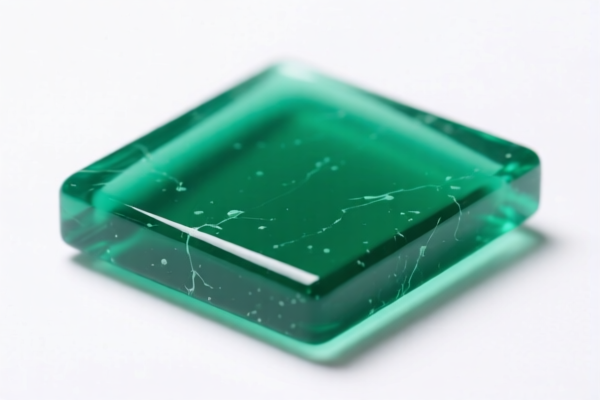

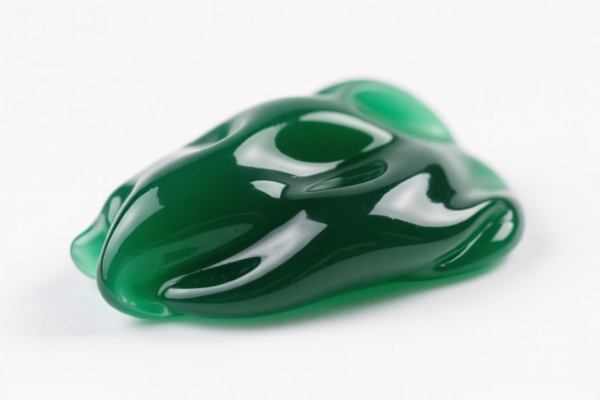
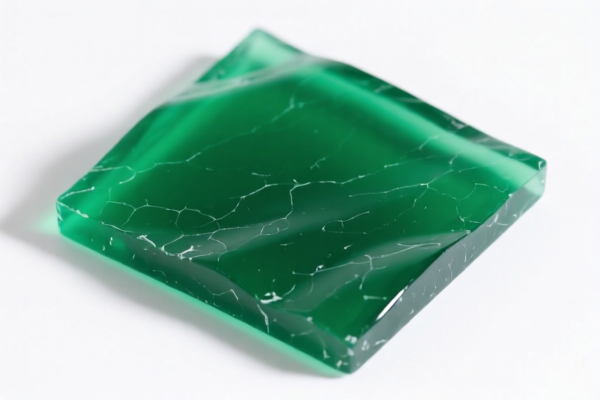
AI Analysis
⚡ Photoelectric Poly(carbazole) Resin (Polycarbazole)
🌐 HS Code Reference & Customs Clearance Guide | 2026 Latest Tariff Analysis | Professional Clearance Strategy
📌 I. Product Definition & Classification: Do You Truly Understand "Photoelectric Polycarbazole"?
Polycarbazole (Poly(9-vinylicarbazole) or similar derivatives) is a high-performance conductive polymer and photoelectric organic semiconductor. It is widely used in organic light-emitting diodes (OLEDs), organic photovoltaics (solar cells), and field-effect transistors (OFETs).
In international trade, it is critical to distinguish between: 1. Raw Chemical Substance: Defined by its chemical structure (Carbazole derivative). 2. Prepared Preparations/Compounds: Mixed with other solvents, binders, or additives for specific application.
⚠️ Key Distinction Point: * If it is a pure chemical substance or a defined polymer with a specific molecular weight and structure → Classified under Chapter 39 (Plastics) or Chapter 29 (Organic Chemicals). * If it is a mixture designed for a specific electronic application (e.g., a pre-dispersed ink) → May fall under Chapter 32 (Dyes/Pigments/Preparations) or Chapter 38 (Miscellaneous Chemical Products). * CRITICAL: Most pure Polycarbazole resins are classified as Synthetic Polymers.
📦 II. HS Code Classification Details (2026 Latest Tariff Authority Comparison)
| HS Code | Product Description | Application Scenario | Key Characteristics |
|---|---|---|---|
3906.90.80.00 |
Acrylic polymers in primary forms; Other polymers (including Polycarbazole) | Raw conductive polymer powder/granules | ✅ Pure polymer, primary form |
3906.90.90.00 |
Other acrylic polymers in primary forms | Specialized modified polycarbazole | ✅ Pure polymer, modified |
3913.90.00.00 |
Natural polymers modified chemically; Synthetic polymers modified chemically | Chemically treated resins | ✅ If heavily modified |
3208.90.90.00 |
Paints/varnishes based on polymers | Polycarbazole as a coating ingredient | ❌ Mixed with solvents/binders |
3824.99.99.00 |
Prepared binders for foundry molds; Other prepared chemicals | Unspecified chemical preparations | ❌ Ambiguous mixture |
3818.00.00.00 |
Chemically pure elements | Rarely applies | ❌ Not pure element |
🔍 Key Reminder: * Pure Polycarbazole Resin is typically classified under
3906.90(Other Acrylic Polymers / Other Plastics in Primary Forms). This is the most common and accurate classification for raw conductive polymers. * If the product is not in primary form (e.g., pellets, powder, liquid solution intended for further manufacturing), it must be declared as such. * Do NOT classify as "Electronic Component" (8541) unless it is a finished device.
💰 III. 2026 Latest Tariff Rate Details (Including Surtaxes, Policy Add-ons)
✅ Applicable Country: United States (US)
✅ Origin: China (CN)
✅ Effective Date: From November 10, 2025 (including subsequent imports)
🎯 1. 3906.90.80.00 —— Polycarbazole Resin (Primary Form)
| Item | Content |
|---|---|
| Base Rate | 5.3% (ad valorem) |
| USITC Surtax | +25% (Under USITC Footnote 9903.88.01 for certain plastics) |
| IEEPA Surtax | +10% (For Chinese/HK products, from Nov 10, 2025) |
| Total Rate | 40.3% |
| Tax Calculation | CIF Value × 40.3% |
| De Minimis Exemption | ❌ Not Eligible (deny_de_minimis) |
| Legal Basis Path | IEEPA:9903.01.25 → IEEPA:9903.01.24 → USITC:3906.90.80.00 → FOOTNOTE:9903.88.01 |
📌 Explanation: * "USITC Surtax 25%" is from the Section 301 tariffs on specific plastic products. * "IEEPA 10%" is the additional tariff under the International Emergency Economic Powers Act for Chinese goods. * Total 40.3% is a high tariff, requiring early cost assessment.
🎯 2. 3906.90.90.00 —— Other Polymers (Primary Form)
| Item | Content |
|---|---|
| Base Rate | 5.3% |
| USITC Surtax | +25% |
| IEEPA Surtax | +10% |
| Total Rate | 40.3% |
| Tax Calculation | CIF × 40.3% |
| De Minimis Exemption | ❌ Not Eligible |
| Legal Basis Path | IEEPA:9903.01.25 → IEEPA:9903.01.24 → USITC:3906.90.90.00 → FOOTNOTE:9903.88.01 |
📌 Note: * Same as above, applies to modified or less common polymer forms. * Even if the polymer is "functionalized" for electronics, if it remains in primary form, it stays in Chapter 39.
🛠️ IV. Customs Clearance Practical Advice (Battle-Tested Pitfall Avoidance)
✅ 1. Preparation Checklist (Missing Documents = Delay)
| Document | Mandatory | Description |
|---|---|---|
| ✅ Chemical Composition Report | ✔️ | Must detail % of Polycarbazole, solvent content, additives |
| ✅ Safety Data Sheet (SDS) | ✔️ | Required for chemical import; check for hazardous material flags |
| ✅ Technical Data Sheet (TDS) | ✔️ | Molecular weight, viscosity, application method |
| ✅ Certificate of Analysis (COA) | ✔️ | Purity level, batch number, manufacturing date |
| ✅ Commercial Invoice | ✔️ | Clearly state "Polycarbazole Resin, Synthetic Polymer" |
| ✅ Country of Origin Certificate | ✔️ | Essential for tariff calculation and exemption checks |
| ✅ Packaging List | ✔️ | Indicate net/gross weight, number of containers |
✅ 2. Declaration Tips (Key Mantra)
🔥 "Primary Form is Key, Composition Must Be Clear, Name Precise, Tax Avoids Fear!"
| Scenario | Correct Declaration | Wrong Practice |
|---|---|---|
| Pure Polycarbazole Powder | 3906.90.80.00 + "Polycarbazole Resin" |
Declaring as "Electronic Material" → 301+ IEEPA |
| Solution/Ink Form | 3208.90.90.00 or 3906.90 depending on binder |
Ambiguous "Organic Semiconductor" → Audit Risk |
| Finished OLED Component | 8541.40 or 8533 |
Declaring as Resin → Wrong Chapter |
| Mixed Chemical Preparation | 3824.99.99.00 |
Misclassified as Pure Polymer → Penalties |
✅ 3. Special Cases Handling
| Scenario | Handling Advice |
|---|---|
| OEM Custom Polymer | Provide customer order + chemical structure diagram to prove primary form |
| With Solvents | If >50% solvent, may be classified as a preparation (3208 or 3824), not pure polymer |
| Hazardous Classification | Check if Polycarbazole is considered hazardous; if yes, additional safety docs required |
| USMCA Origin | If produced in Mexico/Canada, may qualify for 0% tariff under USMCA |
🌍 V. Global Customs Clearance Comparison (2026 Latest)
| Country/Region | Recommended HS Code | Tariff | Certification Requirement | Remarks |
|---|---|---|---|---|
| 🇺🇸 USA | 3906.90.80.00 |
40.3% (China) | TSCA Certification | High due to Section 301 + IEEPA |
| 🇨🇳 China | 3906.90.80.00 |
5.0% | N/A | No extra surtax |
| 🇪🇺 EU | 3906.90 |
6.5% | REACH Registration | No additional surtax |
| 🇦🇺 Australia | 3906.90 |
5.0% | AICIS Registration | No surtax |
| 🇯🇵 Japan | 3906.90 |
6.0% | CSCL Notification | No surtax |
📌 Conclusion: * USA is the most expensive market for Chinese-sourced Polycarbazole Resin due to combined tariffs. * EU, Japan, and Australia are more favorable for raw material imports. * Consider supply chain diversification if targeting the US market.
📌 VI. Common Mistakes & Pitfalls (Lessons Learned)
❌ Mistake 1: Classifying Polycarbazole as an "Electronic Component" (8541)
👉 Consequence: Incorrect Chapter, potential penalty, and higher duty assessment.
❌ Mistake 2: Ignoring Solvent Content
👉 Consequence: If the resin is dissolved, it is no longer "primary form" and may fall under different chapters with different duties.
❌ Mistake 3: Failing to Provide SDS
👉 Consequence: Customs detention, fines, or return of goods for missing safety documentation.
❌ Mistake 4: Vague Product Name "Organic Resin"
👉 Consequence: Customs may assign a higher default duty rate or request extensive verification.
✅ Correct Approach:
"Polycarbazole Resin, Synthetic, Primary Form, Powder, Purity >98%, No Solvents, TSCA Compliant, Model XYZ"
🎯 VII. Conclusion: Professional Declaration Saves Money!
🎯 Remember the Mantra:
🔹 "Primary Form is King, Composition is Truth, US Tariffs are High, Prepare Early!"
🔹 "HS Code Determines Life, Tax Difference is Huge, Declaration Accuracy Saves Thousands!"
📌 Pro Tip:
If your Polycarbazole Resin is originally produced in Vietnam, Mexico, or Thailand, you may qualify for IEEPA Exemption or USMCA Zero Duty.
Recommend Advance Ruling (Pre-classification) with US Customs to avoid clearance delays.
📣 Take Action Now:
📞 Contact Professional Customs Broker + Provide Chemical Specs + Apply for HS Code Pre-ruling
🚀 Ensure Smooth Clearance, Efficient Export, and Maximized Profit!
✨ Professional Customs Clearance Starts with Accurate Classification!
💼 Every Penny of Cost Deserves Precise Calculation!
Customer Reviews
About HS Code Classification
The Harmonized System (HS) is an internationally standardized nomenclature developed by the World Customs Organization (WCO) to classify traded products. Over 200 countries use the HS system as the basis for customs tariffs, trade statistics, and import/export regulations.
Each HS code follows a hierarchical structure:
- Chapter (2 digits) — Broad category of goods (e.g., Chapter 84: Machinery and Mechanical Appliances)
- Heading (4 digits) — More specific grouping within the chapter
- Subheading (6 digits) — Internationally standardized breakdown, used by all WCO member countries
- National subdivisions (8-10 digits) — Country-specific extensions for further classification, such as US HTSUS 10-digit codes
Correct HS code classification is essential for smooth customs clearance, accurate duty payment, and compliance with trade regulations. Misclassification can lead to customs delays, overpayment of duties, or penalties.
When importing from CN to US, the applicable tariff rates may include:
- Most-Favored-Nation (MFN) rate — The standard duty rate applied to WTO members
- General rate — Applied to countries without trade agreements
- Trade remedy duties — Additional tariffs such as Section 301 (anti-dumping), Section 232 (national security), or countervailing duties
The information provided on this page is for reference purposes only. For official classification, please consult with your local customs authority or a licensed customs broker.