Photosensitive Emulsion Professional Edition
CN → US| HS编码 | 关税税率 | 原产国 | 目的国 | 文档 |
|---|---|---|---|---|
| 3707100090 | 38.0% | CN | US | 官方文档 |
| 3707100005 | 38.0% | CN | US | 官方文档 |
| 3506911000 | 35.0% | CN | US | 官方文档 |
| 3506915000 | 37.1% | CN | US | 官方文档 |
| 3707100090 | 38.0% | CN | US | 官方文档 |
商品图片
AI分析
🎞️ Photosensitive Emulsion (Professional Edition)
🌐 HS Code Reference & Clearance Guide | 2026 Latest Tariff Analysis | Professional Clearance Strategy 📌 I. Product Definition & Classification: Do You Truly Understand "Photosensitive Emulsion"?
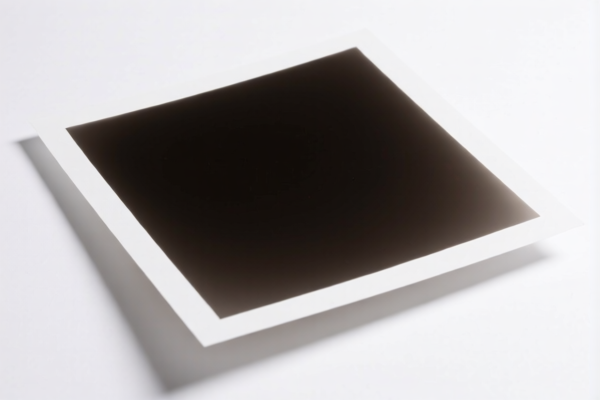
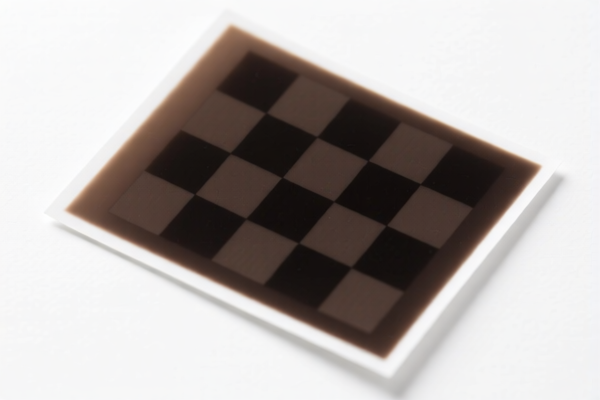
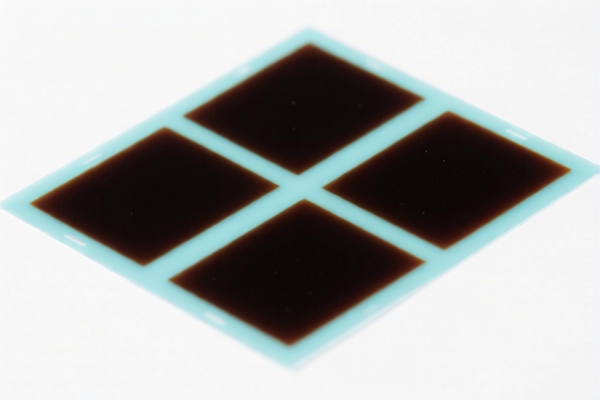
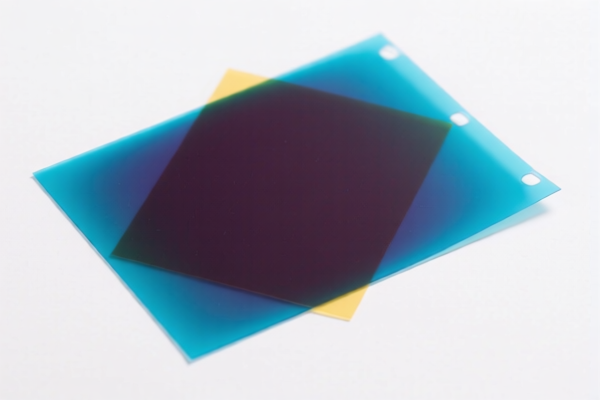
Photosensitive Emulsion is a core chemical material used in photography, printing, and industrial sensing technologies. It is typically a light-sensitive colloidal dispersion. In international trade, its classification depends heavily on its chemical nature (is it a photographic chemical or a polymer adhesive?) and its form (liquid emulsion vs. coated film).
⚠️ Key Distinction Point: - If it is strictly defined as a photographic chemical agent (sensitizer) for film/paper production → Classify under Chapter 37. - If it is inferred as a polymeric adhesive/coating with photo-functional properties → Classify under Chapter 35.
📦 II. HS Code Classification Details (2026 Latest Tariff Authority Comparison)
Based on the provided data, there are five potential HS codes. Note that 3707.10.00.90 appears twice with identical descriptions.
| HS Code | Product Description | Applicable Scenario | Total Tax Rate |
|---|---|---|---|
3707.10.00.90 |
Other photographic chemicals sensitized emulsions | Photography chemicals, sensitizing agents | 38.0% |
3707.10.00.05 |
Photosensitive emulsions (Other/Residual category) | Chemically identical to above, matched by residual principles | 38.0% |
3506.91.10.00 |
Organic polymer-based adhesives/coatings | Inferrable as organic polymer modified adhesive for optical/photo-functional coatings | 35.0% |
3506.91.50.00 |
Polymer/rubber-based adhesives | Classified as polymer or rubber-based adhesive, logical match to Chapter 39 polymers | 37.1% |
3707.10.00.90 |
Other photographic chemicals sensitized emulsions | Photography chemicals, matches "other" category description | 38.0% |
🔍 Key Reminder: - The most direct classification for "Photosensitive Emulsion" as a photographic chemical is under 3707.10 (Total 38%). - If the product is technically a coating/adhesive rather than a pure photographic sensitizer, it may fall under 3506.91 (Total 35%-37.1%). - Discrepancy Alert:
3506.91.10.00offers the lowest total tax rate (35%) if the product can be legally justified as an "organic polymer adhesive" rather than a photographic chemical.
💰 III. 2026 Latest Tariff Rate Details (Including Surcharges & Policy Add-ons)
✅ Applicable Country: USA (US) ✅ Origin: China (CN) ✅ Effective Date: 2025+ (Based on data structure implying current 301/IEEPA duties)
🎯 1. 3707.10.00.90 & 3707.10.00.05 — Photographic Chemicals (Emulsions)
| Item | Content |
|---|---|
| Base Tariff | 3.0% (Ad Valorem) |
| Section 301 Surcharge | +25.0% |
| Section 122 Surcharge | +10.0% |
| Total Rate | 38.0% |
| Tax Calculation | CIF Value × 38.0% |
| De Minimis Exemption | ❌ Not Applicable (High duty rate prevents de minimis entry) |
| Legal Basis Path | Base Rate 3% → USITC 301 Footnote (25%) → IEEPA Section 122 (10%) |
📌 Explanation: - Base Tariff (3%): Standard MFN rate for photographic chemicals. - Section 301 (25%): The major US-China trade war tariff. - Section 122 (10%): A specific additional surcharge mentioned in the data (likely related to specific trade remedies or national security provisions under Section 232/201 or specific IEEPA orders). - Total 38%: This is a high-cost category. Clearance must account for this significant burden.
🎯 2. 3506.91.10.00 — Polymer Adhesives/Coatings (Optical/Functional)
| Item | Content |
|---|---|
| Base Tariff | 0.0% |
| Section 301 Surcharge | +25.0% |
| Section 122 Surcharge | +10.0% |
| Total Rate | 35.0% |
| Tax Calculation | CIF Value × 35.0% |
| Legal Basis Path | Base Rate 0% → USITC 301 (25%) → IEEPA Section 122 (10%) |
📌 Strategy: - If the emulsion can be technically described as a "photopolymerizable adhesive" or "functional coating" rather than a raw photographic chemical, this code saves 3% compared to Chapter 37 codes. - Risk: Customs may challenge the classification if the primary use is clearly photography/printing plates.
🎯 3. 3506.91.50.00 — Polymer/Rubber Adhesives
| Item | Content |
|---|---|
| Base Tariff | 2.1% |
| Section 301 Surcharge | +25.0% |
| Section 122 Surcharge | +10.0% |
| Total Rate | 37.1% |
| Tax Calculation | CIF Value × 37.1% |
| Legal Basis Path | Base Rate 2.1% → USITC 301 (25%) → IEEPA Section 122 (10%) |
📌 Strategy: - This rate is intermediate. It applies if the product is viewed as a general-purpose polymer adhesive from Chapter 39 materials, rather than a specialized organic polymer adhesive (Code 10) or photographic chemical.
🛠️ IV. Clearance Practical Advice (Real-World Pitfall Avoidance)
✅ 1. Document Checklist (All are Critical)
| Document | Required | Description |
|---|---|---|
| ✅ Technical Data Sheet (TDS) | ✔️ | Must clearly state chemical composition (e.g., silver halide content vs. polymer content). |
| ✅ Formula/Composition Breakdown | ✔️ | Essential for determining if it’s a "chemical" (Ch 37) or "adhesive" (Ch 35). |
| ✅ Product Photos | ✔️ | Show packaging, labels, and physical state (liquid emulsion). |
| ✅ Declaration of Intended Use | ✔️ | Specify: "For use in photographic film production" vs. "For use as a printing plate coating adhesive." |
| ✅ Commercial Invoice | ✔️ | Must match HS code description exactly. |
| ✅ Certificate of Origin | ✔️ | Required for Section 122/301 duty assessment. |
✅ 2. Classification Strategy (Key Mnemonic)
🔥 "Define the Nature: Chemical or Glue? Code 37 is 38%, Code 35 is Cheaper!"
| Scenario | Correct HS Code | Tax Rate | Risk Level |
|---|---|---|---|
| Raw Silver Halide Emulsion for photography | 3707.10.00.90 |
38.0% | ✅ Low (Direct Match) |
| Functional Coating/Adhesive with photo-resist properties | 3506.91.10.00 |
35.0% | ⚠️ Medium (Requires Technical Justification) |
| General Polymer Adhesive with light sensitivity | 3506.91.50.00 |
37.1% | ⚠️ Medium |
| Any Photosensitive Material misclassified as "Other Chemicals" | Wrong Code | Varies | ❌ High (Penalty Risk) |
✅ 3. Special Case Handling
| Situation | Handling Advice |
|---|---|
| OEM Custom Emulsion | Provide client specifications proving it is a "sensitized emulsion" for Ch 37. Avoid ambiguous terms like "coating" unless targeting Ch 35. |
| Pre-coated Film vs. Liquid Emulsion | If sold as liquid emulsion for coating by the buyer, Ch 37 is safer. If sold as pre-coated, it might be 3703/3704 (not in data), but if liquid, stick to 3707. |
| Dispute on Section 122 | Ensure the origin is clearly China. If transshipped, provide full traceability to avoid penalties. |
| Valuation | CIF value is critical. Declare accurately to avoid duty evasion claims. |
🌍 V. Global Market Clearance Comparison (2026 Latest)
| Country/Region | Recommended HS Code | Tariff (Approx.) | Certification | Notes |
|---|---|---|---|---|
| 🇺🇸 USA | 3707.10.00.90 |
38.0% | None Specific | High duty due to 301+122. Ch 35 offers slight savings but higher audit risk. |
| 🇨🇳 China | 3707.10.00.90 |
~5-10% | CCC (if applicable) | No Section 301/122. Lower overall cost. |
| 🇪🇺 EU | 3707.10.00.90 |
~6.5% | REACH + SDS | No US-style surcharges. Standard MFN applies. |
| 🇯🇵 Japan | 3707.10.00.90 |
~6.0% | PMDA (if medical) | Standard MFN. Stable trade relations. |
📌 Conclusion: - USA is the most expensive market for this product due to 38% total duties. - EU/Asia markets offer significantly lower tax burdens (~6-10%). - Strategic Insight: For US imports, consider if the product can be classified under
3506.91.10.00(35%) to save 3%, but only if the chemical formulation strongly supports "adhesive/coating" classification.
📌 VI. Common Errors & Pitfalls (Blood & Tears Lessons)
❌ Error 1: Misclassifying "Photosensitive Emulsion" as "General Adhesive" (3506.91.50.00) without technical proof.
👉 Consequence: Customs reclassification → Back taxes + Penalties.
❌ Error 2: Ignoring the Section 122 (10%) surcharge. 👉 Consequence: Under-declaration of duties → Seizure or Debt Collection.
❌ Error 3: Using vague descriptions like "Chemical Liquid" on the Invoice. 👉 Consequence: Customs delays for classification review → Storage fees.
❌ Error 4: Assuming "Emulsion" automatically means 3707.
👉 Consequence: Missing opportunity to use 3506.91.10.00 (35%) if the product is technically a polymer coating.
✅ Correct Approach:
"Silver Halide Photosensitive Emulsion, Liquid, for Photographic Film Manufacturing, Model XYZ, MSDS Included"
🎯 VII. Conclusion: Professional Classification Saves Money!
🎯 Remember the Golden Rules:
🔹 "Ch 37 is Safe at 38%, Ch 35 is Smart at 35%."
🔹 "Technical Data Sheet is Your Best Friend."
🔹 "Always Declare CIF Value Accurately to Avoid Duty Evasion Claims."
📌 Pro Tip: If you are importing into the USA, conduct a Pre-Classification Ruling (Advance Ruling) with CBP using your Technical Data Sheet. This locks in the HS code and prevents unexpected audits.
📣 Immediate Action:
📞 Contact a licensed customs broker + Provide TDS + Apply for CBP Advance Ruling. 🚀 Ensure your photosensitive emulsion clears customs smoothly, efficiently, and at the lowest legal cost!
✨ Professional Clearance Starts with Accurate Classification! 💼 Your every dollar of cost is worth precise calculation!
用户评价
关于 HS 编码归类
协调制度(HS)是由世界海关组织(WCO)制定的国际贸易商品分类标准。全球 200 多个国家采用 HS 系统作为海关关税、贸易统计和进出口监管的基础。
每个 HS 编码遵循以下层级结构:
- 章(2 位)——商品大类(例如:第 84 章:机器和机械设备)
- 品目(4 位)——章内的更具体分类
- 子目(6 位)——国际通用细分,所有 WCO 成员国统一使用
- 本国细分(8-10 位)——各国自行扩展的细分编码,如美国 HTSUS 10 位编码
正确的 HS 编码归类对于顺利通关、准确缴纳关税和遵守贸易法规至关重要。错误归类可能导致海关延误、多缴关税或罚款。
从CN进口到US时,适用的关税税率可能包括:
- 最惠国(MFN)税率——适用于 WTO 成员国的标准关税税率
- 普通税率——适用于无贸易协定国家
- 贸易救济关税——附加关税,如 301 条款(反倾销)、232 条款(国家安全)或反补贴税
本页内容仅供参考。如需正式归类,请咨询当地海关或持牌报关代理。