Photosensitive Emulsion Professional Edition
CN → US| HS Code | Tariff Rate | Origin | Destination | Doc |
|---|---|---|---|---|
| 3707100090 | 38.0% | CN | US | Official Doc |
| 3707100005 | 38.0% | CN | US | Official Doc |
| 3506911000 | 35.0% | CN | US | Official Doc |
| 3506915000 | 37.1% | CN | US | Official Doc |
| 3707100090 | 38.0% | CN | US | Official Doc |
Product Images
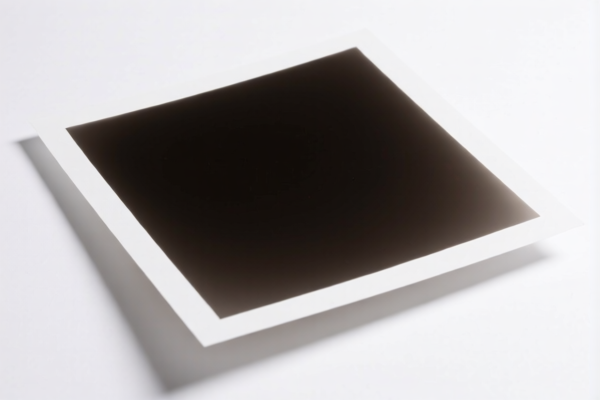
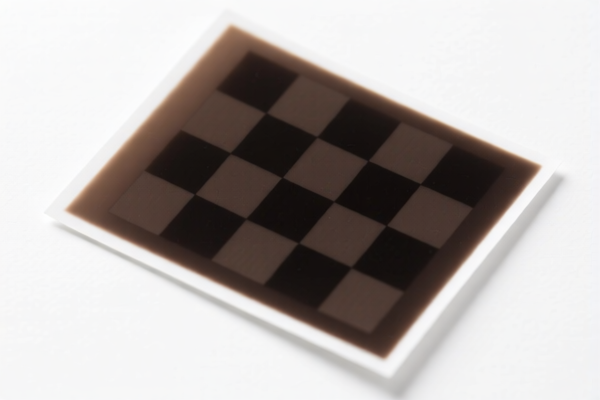
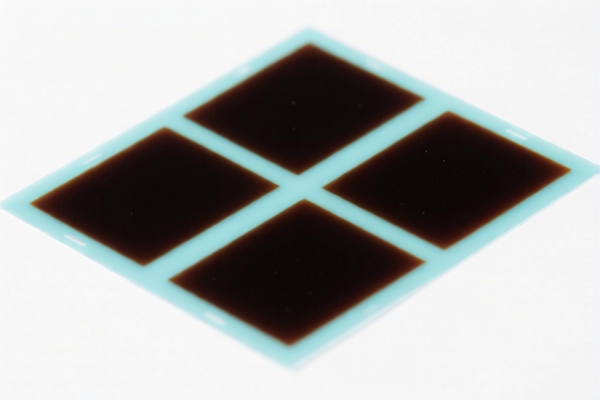
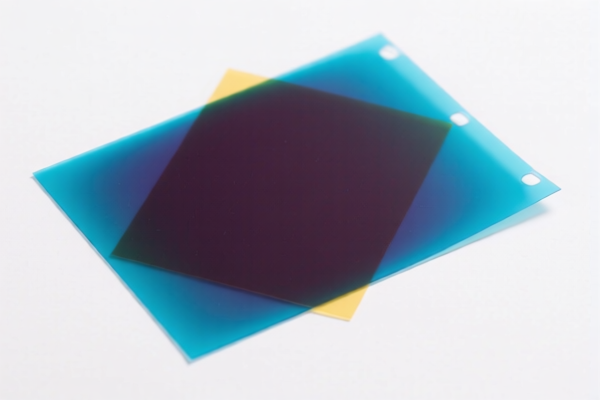
AI Analysis
🎞️ Photosensitive Emulsion (Professional Edition)
🌐 HS Code Reference & Clearance Guide | 2026 Latest Tariff Analysis | Professional Clearance Strategy 📌 I. Product Definition & Classification: Do You Truly Understand "Photosensitive Emulsion"?
Photosensitive Emulsion is a core chemical material used in photography, printing, and industrial sensing technologies. It is typically a light-sensitive colloidal dispersion. In international trade, its classification depends heavily on its chemical nature (is it a photographic chemical or a polymer adhesive?) and its form (liquid emulsion vs. coated film).
⚠️ Key Distinction Point: - If it is strictly defined as a photographic chemical agent (sensitizer) for film/paper production → Classify under Chapter 37. - If it is inferred as a polymeric adhesive/coating with photo-functional properties → Classify under Chapter 35.
📦 II. HS Code Classification Details (2026 Latest Tariff Authority Comparison)
Based on the provided data, there are five potential HS codes. Note that 3707.10.00.90 appears twice with identical descriptions.
| HS Code | Product Description | Applicable Scenario | Total Tax Rate |
|---|---|---|---|
3707.10.00.90 |
Other photographic chemicals sensitized emulsions | Photography chemicals, sensitizing agents | 38.0% |
3707.10.00.05 |
Photosensitive emulsions (Other/Residual category) | Chemically identical to above, matched by residual principles | 38.0% |
3506.91.10.00 |
Organic polymer-based adhesives/coatings | Inferrable as organic polymer modified adhesive for optical/photo-functional coatings | 35.0% |
3506.91.50.00 |
Polymer/rubber-based adhesives | Classified as polymer or rubber-based adhesive, logical match to Chapter 39 polymers | 37.1% |
3707.10.00.90 |
Other photographic chemicals sensitized emulsions | Photography chemicals, matches "other" category description | 38.0% |
🔍 Key Reminder: - The most direct classification for "Photosensitive Emulsion" as a photographic chemical is under 3707.10 (Total 38%). - If the product is technically a coating/adhesive rather than a pure photographic sensitizer, it may fall under 3506.91 (Total 35%-37.1%). - Discrepancy Alert:
3506.91.10.00offers the lowest total tax rate (35%) if the product can be legally justified as an "organic polymer adhesive" rather than a photographic chemical.
💰 III. 2026 Latest Tariff Rate Details (Including Surcharges & Policy Add-ons)
✅ Applicable Country: USA (US) ✅ Origin: China (CN) ✅ Effective Date: 2025+ (Based on data structure implying current 301/IEEPA duties)
🎯 1. 3707.10.00.90 & 3707.10.00.05 — Photographic Chemicals (Emulsions)
| Item | Content |
|---|---|
| Base Tariff | 3.0% (Ad Valorem) |
| Section 301 Surcharge | +25.0% |
| Section 122 Surcharge | +10.0% |
| Total Rate | 38.0% |
| Tax Calculation | CIF Value × 38.0% |
| De Minimis Exemption | ❌ Not Applicable (High duty rate prevents de minimis entry) |
| Legal Basis Path | Base Rate 3% → USITC 301 Footnote (25%) → IEEPA Section 122 (10%) |
📌 Explanation: - Base Tariff (3%): Standard MFN rate for photographic chemicals. - Section 301 (25%): The major US-China trade war tariff. - Section 122 (10%): A specific additional surcharge mentioned in the data (likely related to specific trade remedies or national security provisions under Section 232/201 or specific IEEPA orders). - Total 38%: This is a high-cost category. Clearance must account for this significant burden.
🎯 2. 3506.91.10.00 — Polymer Adhesives/Coatings (Optical/Functional)
| Item | Content |
|---|---|
| Base Tariff | 0.0% |
| Section 301 Surcharge | +25.0% |
| Section 122 Surcharge | +10.0% |
| Total Rate | 35.0% |
| Tax Calculation | CIF Value × 35.0% |
| Legal Basis Path | Base Rate 0% → USITC 301 (25%) → IEEPA Section 122 (10%) |
📌 Strategy: - If the emulsion can be technically described as a "photopolymerizable adhesive" or "functional coating" rather than a raw photographic chemical, this code saves 3% compared to Chapter 37 codes. - Risk: Customs may challenge the classification if the primary use is clearly photography/printing plates.
🎯 3. 3506.91.50.00 — Polymer/Rubber Adhesives
| Item | Content |
|---|---|
| Base Tariff | 2.1% |
| Section 301 Surcharge | +25.0% |
| Section 122 Surcharge | +10.0% |
| Total Rate | 37.1% |
| Tax Calculation | CIF Value × 37.1% |
| Legal Basis Path | Base Rate 2.1% → USITC 301 (25%) → IEEPA Section 122 (10%) |
📌 Strategy: - This rate is intermediate. It applies if the product is viewed as a general-purpose polymer adhesive from Chapter 39 materials, rather than a specialized organic polymer adhesive (Code 10) or photographic chemical.
🛠️ IV. Clearance Practical Advice (Real-World Pitfall Avoidance)
✅ 1. Document Checklist (All are Critical)
| Document | Required | Description |
|---|---|---|
| ✅ Technical Data Sheet (TDS) | ✔️ | Must clearly state chemical composition (e.g., silver halide content vs. polymer content). |
| ✅ Formula/Composition Breakdown | ✔️ | Essential for determining if it’s a "chemical" (Ch 37) or "adhesive" (Ch 35). |
| ✅ Product Photos | ✔️ | Show packaging, labels, and physical state (liquid emulsion). |
| ✅ Declaration of Intended Use | ✔️ | Specify: "For use in photographic film production" vs. "For use as a printing plate coating adhesive." |
| ✅ Commercial Invoice | ✔️ | Must match HS code description exactly. |
| ✅ Certificate of Origin | ✔️ | Required for Section 122/301 duty assessment. |
✅ 2. Classification Strategy (Key Mnemonic)
🔥 "Define the Nature: Chemical or Glue? Code 37 is 38%, Code 35 is Cheaper!"
| Scenario | Correct HS Code | Tax Rate | Risk Level |
|---|---|---|---|
| Raw Silver Halide Emulsion for photography | 3707.10.00.90 |
38.0% | ✅ Low (Direct Match) |
| Functional Coating/Adhesive with photo-resist properties | 3506.91.10.00 |
35.0% | ⚠️ Medium (Requires Technical Justification) |
| General Polymer Adhesive with light sensitivity | 3506.91.50.00 |
37.1% | ⚠️ Medium |
| Any Photosensitive Material misclassified as "Other Chemicals" | Wrong Code | Varies | ❌ High (Penalty Risk) |
✅ 3. Special Case Handling
| Situation | Handling Advice |
|---|---|
| OEM Custom Emulsion | Provide client specifications proving it is a "sensitized emulsion" for Ch 37. Avoid ambiguous terms like "coating" unless targeting Ch 35. |
| Pre-coated Film vs. Liquid Emulsion | If sold as liquid emulsion for coating by the buyer, Ch 37 is safer. If sold as pre-coated, it might be 3703/3704 (not in data), but if liquid, stick to 3707. |
| Dispute on Section 122 | Ensure the origin is clearly China. If transshipped, provide full traceability to avoid penalties. |
| Valuation | CIF value is critical. Declare accurately to avoid duty evasion claims. |
🌍 V. Global Market Clearance Comparison (2026 Latest)
| Country/Region | Recommended HS Code | Tariff (Approx.) | Certification | Notes |
|---|---|---|---|---|
| 🇺🇸 USA | 3707.10.00.90 |
38.0% | None Specific | High duty due to 301+122. Ch 35 offers slight savings but higher audit risk. |
| 🇨🇳 China | 3707.10.00.90 |
~5-10% | CCC (if applicable) | No Section 301/122. Lower overall cost. |
| 🇪🇺 EU | 3707.10.00.90 |
~6.5% | REACH + SDS | No US-style surcharges. Standard MFN applies. |
| 🇯🇵 Japan | 3707.10.00.90 |
~6.0% | PMDA (if medical) | Standard MFN. Stable trade relations. |
📌 Conclusion: - USA is the most expensive market for this product due to 38% total duties. - EU/Asia markets offer significantly lower tax burdens (~6-10%). - Strategic Insight: For US imports, consider if the product can be classified under
3506.91.10.00(35%) to save 3%, but only if the chemical formulation strongly supports "adhesive/coating" classification.
📌 VI. Common Errors & Pitfalls (Blood & Tears Lessons)
❌ Error 1: Misclassifying "Photosensitive Emulsion" as "General Adhesive" (3506.91.50.00) without technical proof.
👉 Consequence: Customs reclassification → Back taxes + Penalties.
❌ Error 2: Ignoring the Section 122 (10%) surcharge. 👉 Consequence: Under-declaration of duties → Seizure or Debt Collection.
❌ Error 3: Using vague descriptions like "Chemical Liquid" on the Invoice. 👉 Consequence: Customs delays for classification review → Storage fees.
❌ Error 4: Assuming "Emulsion" automatically means 3707.
👉 Consequence: Missing opportunity to use 3506.91.10.00 (35%) if the product is technically a polymer coating.
✅ Correct Approach:
"Silver Halide Photosensitive Emulsion, Liquid, for Photographic Film Manufacturing, Model XYZ, MSDS Included"
🎯 VII. Conclusion: Professional Classification Saves Money!
🎯 Remember the Golden Rules:
🔹 "Ch 37 is Safe at 38%, Ch 35 is Smart at 35%."
🔹 "Technical Data Sheet is Your Best Friend."
🔹 "Always Declare CIF Value Accurately to Avoid Duty Evasion Claims."
📌 Pro Tip: If you are importing into the USA, conduct a Pre-Classification Ruling (Advance Ruling) with CBP using your Technical Data Sheet. This locks in the HS code and prevents unexpected audits.
📣 Immediate Action:
📞 Contact a licensed customs broker + Provide TDS + Apply for CBP Advance Ruling. 🚀 Ensure your photosensitive emulsion clears customs smoothly, efficiently, and at the lowest legal cost!
✨ Professional Clearance Starts with Accurate Classification! 💼 Your every dollar of cost is worth precise calculation!
Customer Reviews
About HS Code Classification
The Harmonized System (HS) is an internationally standardized nomenclature developed by the World Customs Organization (WCO) to classify traded products. Over 200 countries use the HS system as the basis for customs tariffs, trade statistics, and import/export regulations.
Each HS code follows a hierarchical structure:
- Chapter (2 digits) — Broad category of goods (e.g., Chapter 84: Machinery and Mechanical Appliances)
- Heading (4 digits) — More specific grouping within the chapter
- Subheading (6 digits) — Internationally standardized breakdown, used by all WCO member countries
- National subdivisions (8-10 digits) — Country-specific extensions for further classification, such as US HTSUS 10-digit codes
Correct HS code classification is essential for smooth customs clearance, accurate duty payment, and compliance with trade regulations. Misclassification can lead to customs delays, overpayment of duties, or penalties.
When importing from CN to US, the applicable tariff rates may include:
- Most-Favored-Nation (MFN) rate — The standard duty rate applied to WTO members
- General rate — Applied to countries without trade agreements
- Trade remedy duties — Additional tariffs such as Section 301 (anti-dumping), Section 232 (national security), or countervailing duties
The information provided on this page is for reference purposes only. For official classification, please consult with your local customs authority or a licensed customs broker.