Pillow Filling
CN → US| HS编码 | 关税税率 | 原产国 | 目的国 | 文档 |
|---|---|---|---|---|
| 5601210090 | 38.6% | CN | US | 官方文档 |
| 5601220091 | 41.3% | CN | US | 官方文档 |
| 9404902060 | 23.5% | CN | US | 官方文档 |
| 9404902030 | 23.5% | CN | US | 官方文档 |
| 6307908995 | 17.0% | CN | US | 官方文档 |
| 6307909891 | 24.5% | CN | US | 官方文档 |
商品图片
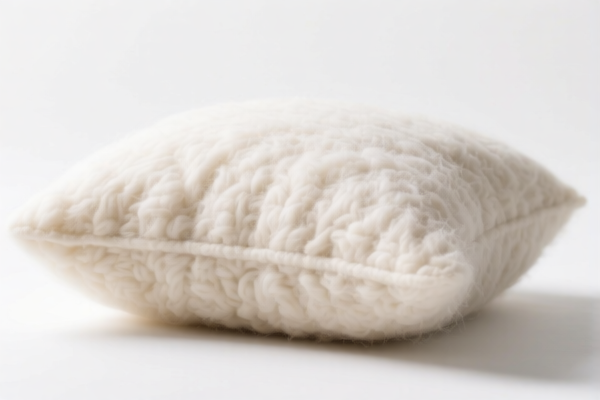
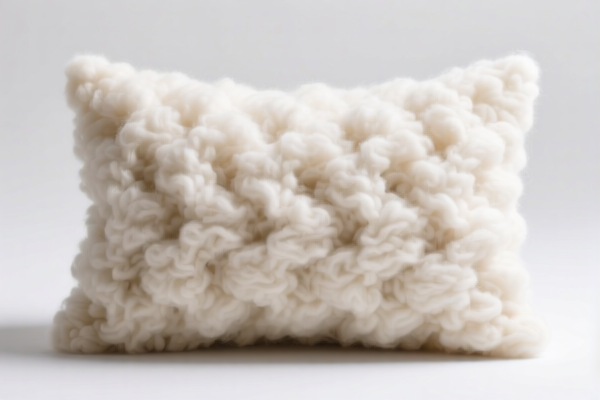
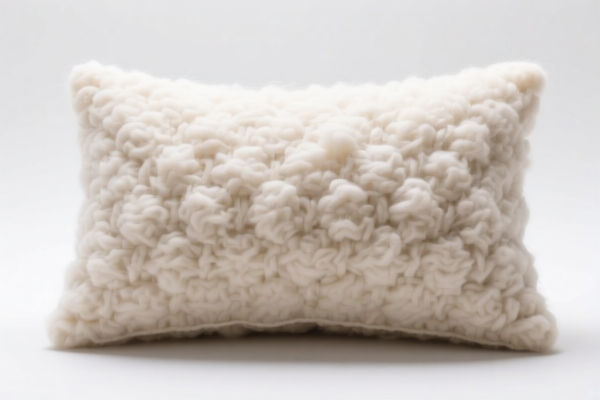
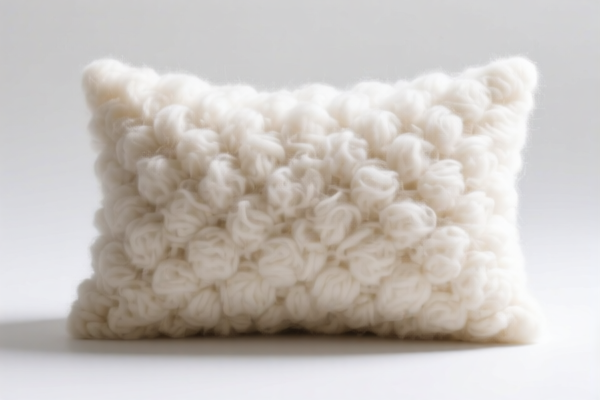
AI分析
🛏️ Pillow Filling: Material, HS Code & US Customs Strategy (2026 Latest)
🌐 HS Code Reference & Clearance Guide | 2026 Tax Regulations | Professional Customs Clearance Strategy
📌 I. Product Definition: What Exactly is "Pillow Filling"?
"Pillow Filling" is not a single product category in international trade. It is a broad term that encompasses materials used to stuff pillows, cushions, or bedding accessories. In customs classification, the HS Code depends entirely on two factors: 1. Material Composition: Is it natural fiber (cotton), synthetic fiber, or a specific textile? 2. Product Form: Is it raw loose fill, processed batting/padding, or a finished article (like a pillow)?
⚠️ Critical Distinction:
- If the item is loose filling material (e.g., raw cotton, fiber batting) → It falls under Chapter 56 (Wadding/Fibers).
- If the item is a finished pillow (encased in fabric) → It falls under Chapter 94 (Articles of Bedding).
- If it is a miscellaneous textile article (not standard bedding/fiber) → It may fall under Chapter 63.
📦 II. HS Code Classification Matrix (2026 Latest Tariff Schedule)
Based on the provided data, here are the specific HS Codes applicable to different forms of "Pillow Filling":
| HS Code | Product Description | Material Inference | Key Classification Logic |
|---|---|---|---|
| 5601.21.00.90 | Wadding and articles thereof (in the form of padding or filling stuffings) | Cotton or Natural Fibers | Raw or processed natural fiber filling; not yet made into a finished article. |
| 5601.22.00.91 | Wadding and articles thereof (other than cotton) | Synthetic/Artificial Fibers | Polyester, microfiber, or man-made fiber batting/filling. |
| 9404.90.20.60 | Articles of bedding and similar furnishing (Other) | Other Filling Materials | Finished pillows or bedding items where the filling is not primarily cotton/synthetic wadding but other types. |
| 9404.90.20.30 | Articles of bedding and similar furnishing (Pillows) | Cotton-filled Pillows | Finished pillows with cotton filling. Note: This is for the completed article, not loose filling. |
| 6307.90.89.95 | Made-up textile articles (Other) | Cotton or Fiber Blends | Miscellaneous textile items that don't fit standard bedding or wadding categories (e.g., non-standard cushion inserts). |
🔍 重点提醒 (Key Warning):
- 5601 vs 9404: The biggest mistake importers make is misclassifying finished pillows (HS 9404) as loose filling (HS 5601).
- 5601: Raw/processed material (e.g., a bale of cotton batting).
- 9404: Finished consumer product (e.g., a sewn pillow ready for use).
- Material Matters:
- Cotton → Look at 5601.21 (Loose) or 9404.90.20.30 (Finished).
- Synthetic Fiber → Look at 5601.22 (Loose) or 9404.90.20.60 (Finished/Other).
💰 III. 2026 US Tariff Rate Breakdown (Detailed Tax Clauses)
✅ Applicable Country: United States (US)
✅ Origin: China (CN)
✅ Effective Date: 2025-11-10 (Subsequent imports subject to these rates)
🎯 1. 5601.21.00.90 – Cotton Wadding/Filling (Loose Material)
| Item | Detail |
|---|---|
| Base Duty | 3.6% |
| Section 301 Duty | 25.0% |
| 122 Clause Duty | 10.0% |
| Total Effective Tax Rate | 38.6% |
| De Minimis Exemption | ❌ NO (Not eligible for $800 de minimis exemption) |
| Legal Basis | Base Tariff + Section 301 (Footnote 9903.88.01) + IEEPA 122 (10%) |
📌 Explanation:
- This code applies to raw or processed cotton filling (not sewn pillows).
- The 38.6% total rate is extremely high due to the combination of base duties and multiple punitive tariffs.
- Crucial: If you are shipping finished cotton pillows, you should NOT use this code. Use 9404 instead to lower the tax burden (see below).
🎯 2. 5601.22.00.91 – Synthetic Fiber Wadding/Filling
| Item | Detail |
|---|---|
| Base Duty | 6.3% |
| Section 301 Duty | 25.0% |
| 122 Clause Duty | 10.0% |
| Total Effective Tax Rate | 41.3% |
| De Minimis Exemption | ❌ NO |
| Legal Basis | Base Tariff + Section 301 + IEEPA 122 |
📌 Explanation:
- Applies to polyester, microfiber, or synthetic batting.
- This is the highest tax bracket among all options at 41.3%.
- Strategy: If you are selling finished synthetic pillows, avoid this code. Use 9404.90.20.60 (23.5%) instead.
🎯 3. 9404.90.20.60 – Other Bedding Articles (Synthetic/Other Fill)
| Item | Detail |
|---|---|
| Base Duty | 6.0% |
| Section 301 Duty | 7.5% |
| 122 Clause Duty | 10.0% |
| Total Effective Tax Rate | 23.5% |
| De Minimis Exemption | ❌ NO |
| Legal Basis | Base Tariff + Section 301 (Lower Footnote) + IEEPA 122 |
📌 Explanation:
- Applies to finished pillows or bedding items with synthetic/other fill.
- Significant Savings: Only 23.5% total vs. 41.3% for loose synthetic filling.
- Why lower? Finished articles often have lower Section 301 add-ons compared to raw materials.
🎯 4. 9404.90.20.30 – Cotton Pillows (Finished Article)
| Item | Detail |
|---|---|
| Base Duty | 6.0% |
| Section 301 Duty | 7.5% |
| 122 Clause Duty | 10.0% |
| Total Effective Tax Rate | 23.5% |
| De Minimis Exemption | ❌ NO |
| Legal Basis | Base Tariff + Section 301 (Lower Footnote) + IEEPA 122 |
📌 Explanation:
- Applies to finished cotton-filled pillows.
- Same optimal rate as synthetic pillows: 23.5%.
- Key Advantage: Avoids the 3.6% base duty of raw cotton by being classified as an "article of bedding" with a more favorable Section 301 footnote.
🎯 5. 6307.90.89.95 – Other Made-up Textile Articles
| Item | Detail |
|---|---|
| Base Duty | 7.0% |
| Section 301 Duty | 0.0% |
| 122 Clause Duty | 10.0% |
| Total Effective Tax Rate | 17.0% |
| De Minimis Exemption | ❌ NO |
| Legal Basis | Base Tariff + IEEPA 122 |
📌 Explanation:
- The Lowest Tax Rate! Only 17.0%.
- Caution: This code is for "other" textile articles. It must NOT be used for standard pillows (which belong in 9404) or raw wadding (5601).
- Usage: Use this ONLY if the item is a non-standard textile fill insert (e.g., a decorative cushion cover with filling, or a specific textile craft item) that does not meet the definition of "pillow" or "wadding." Misclassification here can lead to severe penalties.
🛠️ IV. Customs Clearance Best Practices (Real-World Advice)
✅ 1. Documentation Checklist (Must-Haves)
| Document | Required | Purpose |
|---|---|---|
| ✅ Commercial Invoice | ✔️ | Must clearly state "Pillow Filling" OR "Finished Pillow" and material (Cotton/Polyester). |
| ✅ Product Photos | ✔️ | Show if it’s loose material (in bag/bale) or a sewn product. |
| ✅ Material Composition Statement | ✔️ | Specify % of Cotton vs. Polyester. Critical for 5601 vs 9404. |
| ✅ Bill of Lading | ✔️ | Ensure packaging details match invoice (e.g., "Cartons of Cotton Batting" vs. "Cartons of Pillows"). |
| ✅ ISF Filing (10+2) | ✔️ | Required for ocean freight. HS Code must match manifest. |
✅ 2. Declaration Tips (Crucial for Cost Savings)
🔥 "Don't Ship Raw When You Can Ship Finished!"
| Scenario | Recommended HS Code | Tax Rate | Why? |
|---|---|---|---|
| Loose Cotton Batting | 5601.21.00.90 | 38.6% | Unavoidable. It’s a raw material. |
| Loose Polyester Fill | 5601.22.00.91 | 41.3% | Unavoidable. Highest tax. |
| Finished Cotton Pillow | 9404.90.20.30 | 23.5% | Save 15%+ vs. raw cotton fill. |
| Finished Synthetic Pillow | 9404.90.20.60 | 23.5% | Save 17.8% vs. raw synthetic fill. |
| Non-Standard Textile Insert | 6307.90.89.95 | 17.0% | Lowest Tax, but must prove it’s NOT a standard pillow. |
⚠️ Warning: Do not misdeclare a "finished pillow" as "textile filling" to get 17%. CBP will inspect, find it’s a pillow, and reassess at 23.5% + penalties. Accuracy is key.
✅ 3. Special Considerations
| Situation | Advice |
|---|---|
| De Minimis ($800) Exemption | ❌ None of these codes qualify. All are subject to Section 301 and 122 duties. Do not rely on informal entry for these items. |
| Hybrid Products | If your product is "pillow-shaped but used as a decorative cushion," argue for 6307.90.89.95 if possible, but provide strong evidence it’s not "bedding." |
| Origin Labeling | Must clearly mark "Made in China" on the product and packaging. Failure can lead to seizure. |
🌍 V. Global Market Comparison (2026)
| Market | Recommended HS Code | Est. Total Tax | Key Requirement |
|---|---|---|---|
| 🇺🇸 USA | 9404.90.20.30/60 | 23.5% | ISF Filing, IEEPA Compliance |
| 🇨🇳 China | 5601/9404 | 5-10% | CCC Certification (if applicable) |
| 🇪🇺 EU | 5601/9404 | 6-12% | CE/REACH Compliance |
| 🇯🇵 Japan | 5601/9404 | 5-8% | JIS Standards |
📌 Conclusion:
- The US market is the most punitive due to Section 301 and 122 tariffs.
- Optimization Strategy: If you are producing in China, consider shifting from selling raw filling to selling finished pillows where possible. This drops the tax from ~40% to ~23.5%.
- For non-standard items, carefully evaluate if 6307.90.89.95 is defensible to achieve the 17% rate.
📌 VI. Common Pitfalls & How to Avoid Them
❌ Pitfall 1: Declaring a "Cotton Pillow" as "Cotton Wadding" (5601.21) to try for a lower rate.
👉 Result: CBP will see it’s a finished article, deny the lower rate, and impose penalties. Plus, 5601 is actually 38.6%, not lower!
❌ Pitfall 2: Ignoring the 122-Clause (10%) in calculations.
👉 Result: Under-budgeting by 10% on every shipment. Always include the 10% IEEPA duty in your landed cost.
❌ Pitfall 3: Misidentifying Material.
👉 Result: If you say "Synthetic" but the content is 60% Cotton, CBP may reclassify to 5601.21 (Cotton), changing the base duty and potentially the Section 301 footnote. Provide accurate material specs.
✅ Correct Strategy:
- Identify: Is it raw material or finished good?
- Classify: Use 5601 for raw, 9404 for finished bedding, 6307 for miscellaneous textiles.
- Calculate: Add Base + 301 + 122.
- Document: Ensure invoice/photos match the HS Code description perfectly.
🎯 VII. Final Recommendation
🎯 For "Pillow Filling" Imports to the US:
- If you are selling LOOSE FILLING:
- Accept the 38.6% - 41.3% tax. It’s a raw material category. Optimize supply chain costs to absorb this.
- If you are selling FINISHED PILLOWS:
- Use 9404.90.20.30 (Cotton) or 9404.90.20.60 (Synthetic).
- Total Tax: 23.5%. This is a ~15-18% savings over raw material classification.
- If you are selling UNIQUE/DECORATIVE TEXTILE ITEMS:
- Investigate 6307.90.89.95.
- Total Tax: 17.0%. The lowest rate, but requires strict adherence to "non-bedding" definition.
📣 Immediate Action Step:
📞 Contact your customs broker with:
1. Product Photos (Inside and Out)
2. Material Composition Breakdown
3. Intended Use (Bedding vs. Decorative vs. Raw Material)
🚀 Get an Advance Ruling (Ruling Letter) from CBP if your shipment volume is high. This locks in your HS Code and tax rate for 5 years.
✨ Professional Clearance, Precision Classification!
💼 Every Point of Tax Difference is Pure Profit!
用户评价
关于 HS 编码归类
协调制度(HS)是由世界海关组织(WCO)制定的国际贸易商品分类标准。全球 200 多个国家采用 HS 系统作为海关关税、贸易统计和进出口监管的基础。
每个 HS 编码遵循以下层级结构:
- 章(2 位)——商品大类(例如:第 84 章:机器和机械设备)
- 品目(4 位)——章内的更具体分类
- 子目(6 位)——国际通用细分,所有 WCO 成员国统一使用
- 本国细分(8-10 位)——各国自行扩展的细分编码,如美国 HTSUS 10 位编码
正确的 HS 编码归类对于顺利通关、准确缴纳关税和遵守贸易法规至关重要。错误归类可能导致海关延误、多缴关税或罚款。
从CN进口到US时,适用的关税税率可能包括:
- 最惠国(MFN)税率——适用于 WTO 成员国的标准关税税率
- 普通税率——适用于无贸易协定国家
- 贸易救济关税——附加关税,如 301 条款(反倾销)、232 条款(国家安全)或反补贴税
本页内容仅供参考。如需正式归类,请咨询当地海关或持牌报关代理。