Pillow Filling
CN → US| HS Code | Tariff Rate | Origin | Destination | Doc |
|---|---|---|---|---|
| 5601210090 | 38.6% | CN | US | Official Doc |
| 5601220091 | 41.3% | CN | US | Official Doc |
| 9404902060 | 23.5% | CN | US | Official Doc |
| 9404902030 | 23.5% | CN | US | Official Doc |
| 6307908995 | 17.0% | CN | US | Official Doc |
| 6307909891 | 24.5% | CN | US | Official Doc |
Product Images
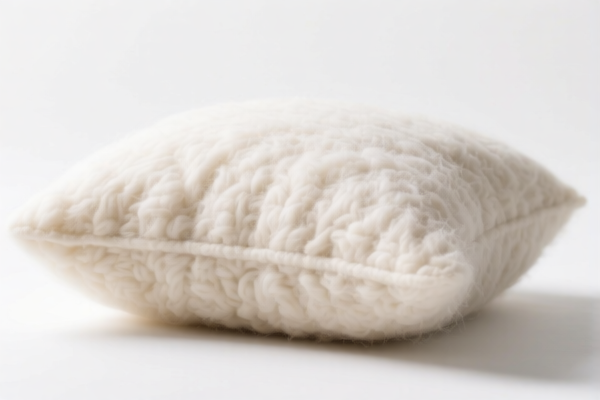
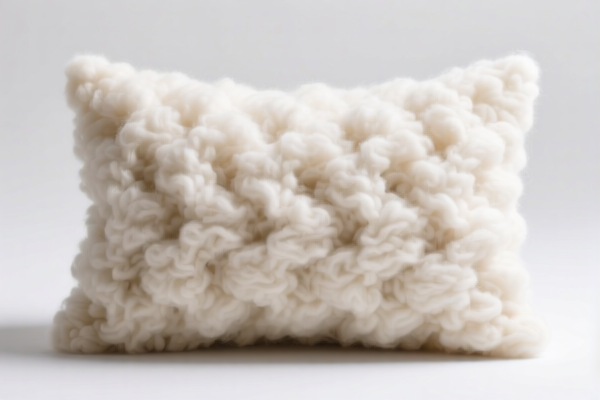
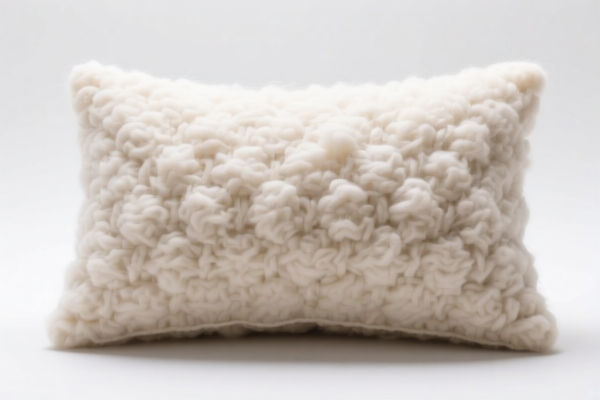
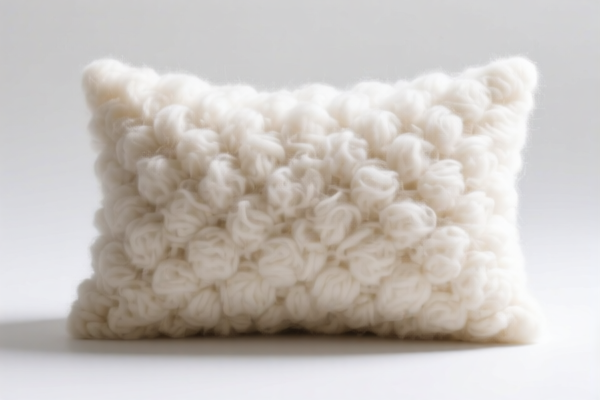
AI Analysis
🛏️ Pillow Filling: Material, HS Code & US Customs Strategy (2026 Latest)
🌐 HS Code Reference & Clearance Guide | 2026 Tax Regulations | Professional Customs Clearance Strategy
📌 I. Product Definition: What Exactly is "Pillow Filling"?
"Pillow Filling" is not a single product category in international trade. It is a broad term that encompasses materials used to stuff pillows, cushions, or bedding accessories. In customs classification, the HS Code depends entirely on two factors: 1. Material Composition: Is it natural fiber (cotton), synthetic fiber, or a specific textile? 2. Product Form: Is it raw loose fill, processed batting/padding, or a finished article (like a pillow)?
⚠️ Critical Distinction:
- If the item is loose filling material (e.g., raw cotton, fiber batting) → It falls under Chapter 56 (Wadding/Fibers).
- If the item is a finished pillow (encased in fabric) → It falls under Chapter 94 (Articles of Bedding).
- If it is a miscellaneous textile article (not standard bedding/fiber) → It may fall under Chapter 63.
📦 II. HS Code Classification Matrix (2026 Latest Tariff Schedule)
Based on the provided data, here are the specific HS Codes applicable to different forms of "Pillow Filling":
| HS Code | Product Description | Material Inference | Key Classification Logic |
|---|---|---|---|
| 5601.21.00.90 | Wadding and articles thereof (in the form of padding or filling stuffings) | Cotton or Natural Fibers | Raw or processed natural fiber filling; not yet made into a finished article. |
| 5601.22.00.91 | Wadding and articles thereof (other than cotton) | Synthetic/Artificial Fibers | Polyester, microfiber, or man-made fiber batting/filling. |
| 9404.90.20.60 | Articles of bedding and similar furnishing (Other) | Other Filling Materials | Finished pillows or bedding items where the filling is not primarily cotton/synthetic wadding but other types. |
| 9404.90.20.30 | Articles of bedding and similar furnishing (Pillows) | Cotton-filled Pillows | Finished pillows with cotton filling. Note: This is for the completed article, not loose filling. |
| 6307.90.89.95 | Made-up textile articles (Other) | Cotton or Fiber Blends | Miscellaneous textile items that don't fit standard bedding or wadding categories (e.g., non-standard cushion inserts). |
🔍 重点提醒 (Key Warning):
- 5601 vs 9404: The biggest mistake importers make is misclassifying finished pillows (HS 9404) as loose filling (HS 5601).
- 5601: Raw/processed material (e.g., a bale of cotton batting).
- 9404: Finished consumer product (e.g., a sewn pillow ready for use).
- Material Matters:
- Cotton → Look at 5601.21 (Loose) or 9404.90.20.30 (Finished).
- Synthetic Fiber → Look at 5601.22 (Loose) or 9404.90.20.60 (Finished/Other).
💰 III. 2026 US Tariff Rate Breakdown (Detailed Tax Clauses)
✅ Applicable Country: United States (US)
✅ Origin: China (CN)
✅ Effective Date: 2025-11-10 (Subsequent imports subject to these rates)
🎯 1. 5601.21.00.90 – Cotton Wadding/Filling (Loose Material)
| Item | Detail |
|---|---|
| Base Duty | 3.6% |
| Section 301 Duty | 25.0% |
| 122 Clause Duty | 10.0% |
| Total Effective Tax Rate | 38.6% |
| De Minimis Exemption | ❌ NO (Not eligible for $800 de minimis exemption) |
| Legal Basis | Base Tariff + Section 301 (Footnote 9903.88.01) + IEEPA 122 (10%) |
📌 Explanation:
- This code applies to raw or processed cotton filling (not sewn pillows).
- The 38.6% total rate is extremely high due to the combination of base duties and multiple punitive tariffs.
- Crucial: If you are shipping finished cotton pillows, you should NOT use this code. Use 9404 instead to lower the tax burden (see below).
🎯 2. 5601.22.00.91 – Synthetic Fiber Wadding/Filling
| Item | Detail |
|---|---|
| Base Duty | 6.3% |
| Section 301 Duty | 25.0% |
| 122 Clause Duty | 10.0% |
| Total Effective Tax Rate | 41.3% |
| De Minimis Exemption | ❌ NO |
| Legal Basis | Base Tariff + Section 301 + IEEPA 122 |
📌 Explanation:
- Applies to polyester, microfiber, or synthetic batting.
- This is the highest tax bracket among all options at 41.3%.
- Strategy: If you are selling finished synthetic pillows, avoid this code. Use 9404.90.20.60 (23.5%) instead.
🎯 3. 9404.90.20.60 – Other Bedding Articles (Synthetic/Other Fill)
| Item | Detail |
|---|---|
| Base Duty | 6.0% |
| Section 301 Duty | 7.5% |
| 122 Clause Duty | 10.0% |
| Total Effective Tax Rate | 23.5% |
| De Minimis Exemption | ❌ NO |
| Legal Basis | Base Tariff + Section 301 (Lower Footnote) + IEEPA 122 |
📌 Explanation:
- Applies to finished pillows or bedding items with synthetic/other fill.
- Significant Savings: Only 23.5% total vs. 41.3% for loose synthetic filling.
- Why lower? Finished articles often have lower Section 301 add-ons compared to raw materials.
🎯 4. 9404.90.20.30 – Cotton Pillows (Finished Article)
| Item | Detail |
|---|---|
| Base Duty | 6.0% |
| Section 301 Duty | 7.5% |
| 122 Clause Duty | 10.0% |
| Total Effective Tax Rate | 23.5% |
| De Minimis Exemption | ❌ NO |
| Legal Basis | Base Tariff + Section 301 (Lower Footnote) + IEEPA 122 |
📌 Explanation:
- Applies to finished cotton-filled pillows.
- Same optimal rate as synthetic pillows: 23.5%.
- Key Advantage: Avoids the 3.6% base duty of raw cotton by being classified as an "article of bedding" with a more favorable Section 301 footnote.
🎯 5. 6307.90.89.95 – Other Made-up Textile Articles
| Item | Detail |
|---|---|
| Base Duty | 7.0% |
| Section 301 Duty | 0.0% |
| 122 Clause Duty | 10.0% |
| Total Effective Tax Rate | 17.0% |
| De Minimis Exemption | ❌ NO |
| Legal Basis | Base Tariff + IEEPA 122 |
📌 Explanation:
- The Lowest Tax Rate! Only 17.0%.
- Caution: This code is for "other" textile articles. It must NOT be used for standard pillows (which belong in 9404) or raw wadding (5601).
- Usage: Use this ONLY if the item is a non-standard textile fill insert (e.g., a decorative cushion cover with filling, or a specific textile craft item) that does not meet the definition of "pillow" or "wadding." Misclassification here can lead to severe penalties.
🛠️ IV. Customs Clearance Best Practices (Real-World Advice)
✅ 1. Documentation Checklist (Must-Haves)
| Document | Required | Purpose |
|---|---|---|
| ✅ Commercial Invoice | ✔️ | Must clearly state "Pillow Filling" OR "Finished Pillow" and material (Cotton/Polyester). |
| ✅ Product Photos | ✔️ | Show if it’s loose material (in bag/bale) or a sewn product. |
| ✅ Material Composition Statement | ✔️ | Specify % of Cotton vs. Polyester. Critical for 5601 vs 9404. |
| ✅ Bill of Lading | ✔️ | Ensure packaging details match invoice (e.g., "Cartons of Cotton Batting" vs. "Cartons of Pillows"). |
| ✅ ISF Filing (10+2) | ✔️ | Required for ocean freight. HS Code must match manifest. |
✅ 2. Declaration Tips (Crucial for Cost Savings)
🔥 "Don't Ship Raw When You Can Ship Finished!"
| Scenario | Recommended HS Code | Tax Rate | Why? |
|---|---|---|---|
| Loose Cotton Batting | 5601.21.00.90 | 38.6% | Unavoidable. It’s a raw material. |
| Loose Polyester Fill | 5601.22.00.91 | 41.3% | Unavoidable. Highest tax. |
| Finished Cotton Pillow | 9404.90.20.30 | 23.5% | Save 15%+ vs. raw cotton fill. |
| Finished Synthetic Pillow | 9404.90.20.60 | 23.5% | Save 17.8% vs. raw synthetic fill. |
| Non-Standard Textile Insert | 6307.90.89.95 | 17.0% | Lowest Tax, but must prove it’s NOT a standard pillow. |
⚠️ Warning: Do not misdeclare a "finished pillow" as "textile filling" to get 17%. CBP will inspect, find it’s a pillow, and reassess at 23.5% + penalties. Accuracy is key.
✅ 3. Special Considerations
| Situation | Advice |
|---|---|
| De Minimis ($800) Exemption | ❌ None of these codes qualify. All are subject to Section 301 and 122 duties. Do not rely on informal entry for these items. |
| Hybrid Products | If your product is "pillow-shaped but used as a decorative cushion," argue for 6307.90.89.95 if possible, but provide strong evidence it’s not "bedding." |
| Origin Labeling | Must clearly mark "Made in China" on the product and packaging. Failure can lead to seizure. |
🌍 V. Global Market Comparison (2026)
| Market | Recommended HS Code | Est. Total Tax | Key Requirement |
|---|---|---|---|
| 🇺🇸 USA | 9404.90.20.30/60 | 23.5% | ISF Filing, IEEPA Compliance |
| 🇨🇳 China | 5601/9404 | 5-10% | CCC Certification (if applicable) |
| 🇪🇺 EU | 5601/9404 | 6-12% | CE/REACH Compliance |
| 🇯🇵 Japan | 5601/9404 | 5-8% | JIS Standards |
📌 Conclusion:
- The US market is the most punitive due to Section 301 and 122 tariffs.
- Optimization Strategy: If you are producing in China, consider shifting from selling raw filling to selling finished pillows where possible. This drops the tax from ~40% to ~23.5%.
- For non-standard items, carefully evaluate if 6307.90.89.95 is defensible to achieve the 17% rate.
📌 VI. Common Pitfalls & How to Avoid Them
❌ Pitfall 1: Declaring a "Cotton Pillow" as "Cotton Wadding" (5601.21) to try for a lower rate.
👉 Result: CBP will see it’s a finished article, deny the lower rate, and impose penalties. Plus, 5601 is actually 38.6%, not lower!
❌ Pitfall 2: Ignoring the 122-Clause (10%) in calculations.
👉 Result: Under-budgeting by 10% on every shipment. Always include the 10% IEEPA duty in your landed cost.
❌ Pitfall 3: Misidentifying Material.
👉 Result: If you say "Synthetic" but the content is 60% Cotton, CBP may reclassify to 5601.21 (Cotton), changing the base duty and potentially the Section 301 footnote. Provide accurate material specs.
✅ Correct Strategy:
- Identify: Is it raw material or finished good?
- Classify: Use 5601 for raw, 9404 for finished bedding, 6307 for miscellaneous textiles.
- Calculate: Add Base + 301 + 122.
- Document: Ensure invoice/photos match the HS Code description perfectly.
🎯 VII. Final Recommendation
🎯 For "Pillow Filling" Imports to the US:
- If you are selling LOOSE FILLING:
- Accept the 38.6% - 41.3% tax. It’s a raw material category. Optimize supply chain costs to absorb this.
- If you are selling FINISHED PILLOWS:
- Use 9404.90.20.30 (Cotton) or 9404.90.20.60 (Synthetic).
- Total Tax: 23.5%. This is a ~15-18% savings over raw material classification.
- If you are selling UNIQUE/DECORATIVE TEXTILE ITEMS:
- Investigate 6307.90.89.95.
- Total Tax: 17.0%. The lowest rate, but requires strict adherence to "non-bedding" definition.
📣 Immediate Action Step:
📞 Contact your customs broker with:
1. Product Photos (Inside and Out)
2. Material Composition Breakdown
3. Intended Use (Bedding vs. Decorative vs. Raw Material)
🚀 Get an Advance Ruling (Ruling Letter) from CBP if your shipment volume is high. This locks in your HS Code and tax rate for 5 years.
✨ Professional Clearance, Precision Classification!
💼 Every Point of Tax Difference is Pure Profit!
Customer Reviews
About HS Code Classification
The Harmonized System (HS) is an internationally standardized nomenclature developed by the World Customs Organization (WCO) to classify traded products. Over 200 countries use the HS system as the basis for customs tariffs, trade statistics, and import/export regulations.
Each HS code follows a hierarchical structure:
- Chapter (2 digits) — Broad category of goods (e.g., Chapter 84: Machinery and Mechanical Appliances)
- Heading (4 digits) — More specific grouping within the chapter
- Subheading (6 digits) — Internationally standardized breakdown, used by all WCO member countries
- National subdivisions (8-10 digits) — Country-specific extensions for further classification, such as US HTSUS 10-digit codes
Correct HS code classification is essential for smooth customs clearance, accurate duty payment, and compliance with trade regulations. Misclassification can lead to customs delays, overpayment of duties, or penalties.
When importing from CN to US, the applicable tariff rates may include:
- Most-Favored-Nation (MFN) rate — The standard duty rate applied to WTO members
- General rate — Applied to countries without trade agreements
- Trade remedy duties — Additional tariffs such as Section 301 (anti-dumping), Section 232 (national security), or countervailing duties
The information provided on this page is for reference purposes only. For official classification, please consult with your local customs authority or a licensed customs broker.