Pine Timber (Unstripped or Roughly Squared)
CN → US| HS编码 | 关税税率 | 原产国 | 目的国 | 文档 |
|---|---|---|---|---|
| 4404100080 | 35.0% | CN | US | 官方文档 |
| 4403220165 | 35.0% | CN | US | 官方文档 |
| 4403210165 | 35.0% | CN | US | 官方文档 |
| 4407110042 | 35.0% | CN | US | 官方文档 |
| 4404100090 | 35.0% | CN | US | 官方文档 |
商品图片
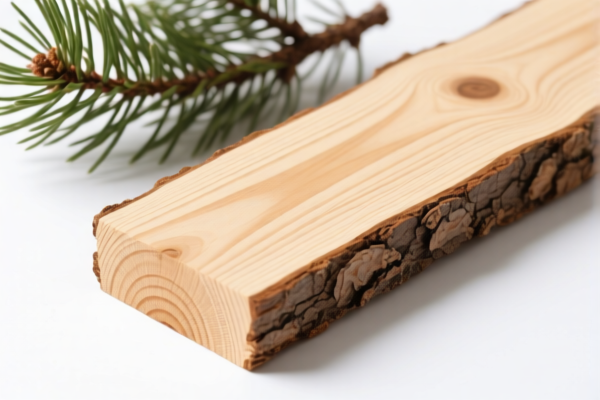
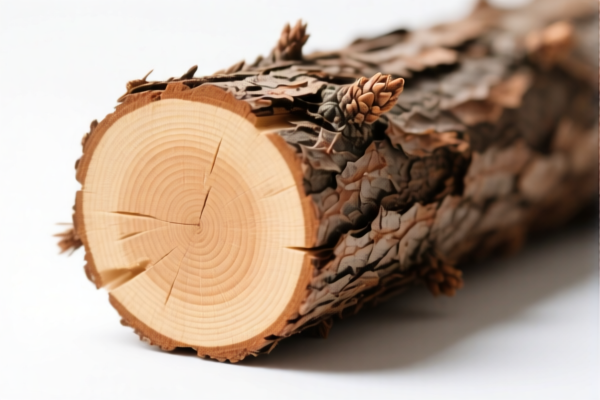
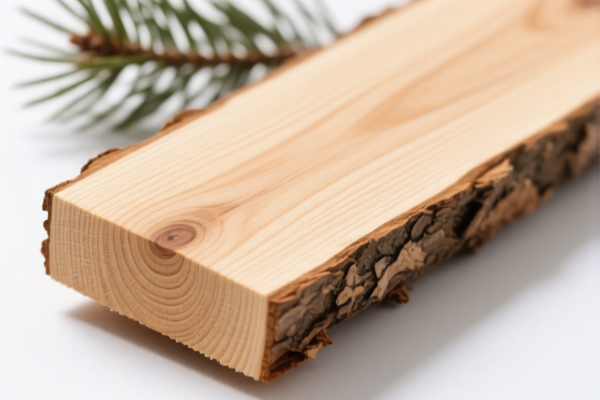
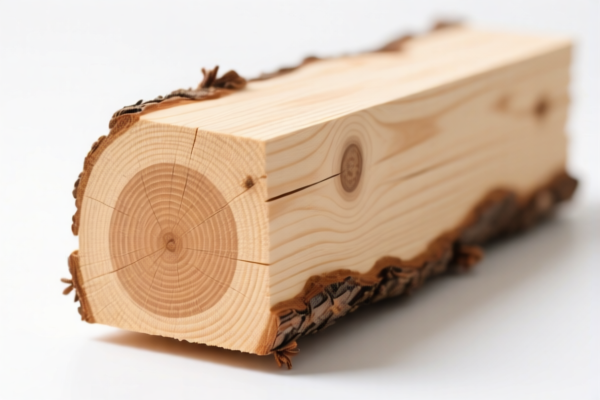
AI分析
🌲 Pine Timber (Unstripped or Roughly Squared)
🌐 HS Code Reference & Customs Clearance Guide | 2026 Latest Tariff Analysis | Professional Level Strategy
📌 I. Product Definition & Classification: Do You Really Understand "Pine Timber"?
Pine timber, specifically in its raw or semi-processed state, is a foundational commodity in global construction and woodworking industries. In international trade, it is categorized based on two critical factors: 1. Material Type: Is it Softwood (Coniferous) or Hardwood? (Pine is strictly Coniferous/Softwood). 2. Processing Degree: Is it merely unstripped (bark removed), roughly squared, or further processed into planks/lumber?
⚠️ Key Distinction Point:
- If the wood is unstripped or roughly squared (preserving a natural or primitive block shape), it falls under Chapter 44 headings 4403 (Wood in the rough) or 4404 (Charcoal/Wood rods).
- If it is sawn into regular shapes (planks, beams), it may fall under 4407 (Wood sawn lengthwise).
- Crucial Note for US Imports: All pine timber imported from China is subject to significant additional tariffs (Section 301 + Section 122), regardless of the specific subheading.
📦 II. HS Code Classification Details (2026 Latest Tariff Authority Mapping)
Based on the specific description "Unstripped or Roughly Squared", here are the 5 most relevant HS Codes and their precise applicability:
| HS Code | Product Description | Applicable Scenario | Key Feature Match |
|---|---|---|---|
4403.22.01.65 |
Wood, unconverted or simply sawn, of other coniferous species (Pine) | Most Accurate Match. For pine that is "roughly squared" or "notched." | ✅ Matches "Roughly Squared" & "Pine" |
4403.21.01.65 |
Wood, unconverted or simply sawn, of pine (Pinus spp.) | Direct Match. Specifically for Pinus species in rough/squared form. | ✅ No material or shape conflict |
4404.10.00.80 |
Charcoal; wood rods, roughly squared but not further manufactured | Specific Match for Rods/Piles. If the timber is in the form of rods, piles, or posts. | ✅ Matches "Rods, piles, posts" primitive processing |
4407.11.00.42 |
Wood sawn lengthwise, veneered sheets, of pine, thickness > 6mm | Match for Unstripped/Sawn. If the wood has been sawn but remains unstripped or roughly cut. | ✅ Matches "Unstripped or Roughly Cut" |
4404.10.00.90 |
Charcoal; wood rods, roughly squared, other | Fallback Match. For pine in rough square form not specified elsewhere. | ✅ Matches "Rough Wood" & "Non-specific Use" |
🔍 Focus Reminder:
-4403.22.01.65and4403.21.01.65are the standard classifications for "roughly squared" pine timber.
-4404codes apply if the timber is in the form of rods, stakes, or piles (primitive forms).
-4407.11.00.42applies if the wood has undergone some sawing but remains in a rough, unstripped state.
- All these codes incur the same total tax rate for US imports from China.
💰 III. 2026 Latest Tariff Rate Breakdown (Including Surtaxes & Policy Add-ons)
✅ Applicable Country: United States (US)
✅ Origin: China (CN)
✅ Effective Date: From Nov 10, 2025 (and subsequent imports)
🎯 1. 4403.22.01.65 & 4403.21.01.65 – Pine Timber (Roughly Squared)
| Item | Content |
|---|---|
| Base Duty Rate | 0.0% (ad valorem) |
| Section 301 Surcharge | +25.0% (USITC Footnote 9903.88.01) |
| Section 122 Surcharge | +10.0% (Targeting China) |
| Total Tax Rate | 35.0% |
| Tax Calculation | CIF Value × 35% |
| De Minimis Eligibility | ❌ Not Eligible (deny_de_minimis) |
| Legal Authority Path | IEEPA:9903.01.25 → IEEPA:9903.01.24 → USITC:4403.22.01.65 → FOOTNOTE:9903.88.01 |
📌 Explanation:
- The 25% is the standard Section 301 tariff for Chinese timber products.
- The 10% is an additional Section 122 tariff specifically targeting certain Chinese imports.
- Total 35% is a high barrier to entry. Cost planning must include this full amount.
🎯 2. 4404.10.00.80 & 4404.10.00.90 – Wood Rods/Piles (Primitive Form)
| Item | Content |
|---|---|
| Base Duty Rate | 0.0% |
| Section 301 Surcharge | +25.0% |
| Section 122 Surcharge | +10.0% |
| Total Tax Rate | 35.0% |
| Tax Calculation | CIF Value × 35% |
| De Minimis Eligibility | ❌ Not Eligible |
| Legal Authority Path | Same as above |
📌 Note:
- Even though these are "raw" forms (rods/piles), they are not exempt from surtaxes.
- The definition of "Roughly Squared" is strictly enforced; if the wood is planed or finished, it may shift to a different code, but the tariff risk remains similar.
🎯 3. 4407.11.00.42 – Pine Wood, Sawn but Unstripped
| Item | Content |
|---|---|
| Base Duty Rate | 0.0% |
| Section 301 Surcharge | +25.0% |
| Section 122 Surcharge | +10.0% |
| Total Tax Rate | 35.0% |
| Tax Calculation | CIF Value × 35% |
| De Minimis Eligibility | ❌ Not Eligible |
📌 Key Distinction:
- This code is for wood that has been sawn but remains unstripped (bark removed) or roughly cut.
- Do not confuse with "Sawn Lumber" (which might have different processing definitions). The "Rough" nature is key.
🛠️ IV. Customs Clearance Practical Advice (Battle-Tested Pitfall Avoidance)
✅ 1. Required Documentation Checklist (Non-negotiable)
| Document | Must Provide | Explanation |
|---|---|---|
| ✅ Product Specification Sheet | ✔️ | Must specify: Pine species (Pinus spp.), Dimensions, Moisture Content, Treatment (Heat Treated/Fumigated). |
| ✅ ISPM 15 Phytosanitary Certificate | ✔️ | Critical. Wood packaging and raw timber must be treated and marked to prevent pest spread. |
| ✅ Commercial Invoice | ✔️ | Clearly state: "Pine Timber, Unstripped/Roughly Squared, HS Code [Insert Code]." |
| ✅ Packing List | ✔️ | Detail the quantity, weight, and packaging type (e.g., bundles, pallets). |
| ✅ Bill of Lading | ✔️ | Standard shipping document. |
| ✅ Certificate of Origin (CO) | ✔️ | Required for proving Chinese origin (which triggers the 35% tax). |
⚠️ Critical Warning:
- Phytosanitary Compliance: Failure to provide a valid ISPM 15 certificate can result in immediate rejection, destruction, or re-export of the cargo at the importer's expense.
- Labeling: Ensure each piece or bundle is marked with the treatment stamp (e.g., "HT" for Heat Treated).
✅ 2. Declaration Tips (Key Mantra)
🔥 "Be Specific on 'Rough,' Declare Treatment, Avoid Ambiguity!"
| Scenario | Correct Declaration | Wrong Approach |
|---|---|---|
| Roughly Squared Pine | "Pine Timber, Roughly Squared, Heat Treated, HS 4403.22.01.65" | "Wood Lumber" → Too vague, high risk of audit. |
| Wood Rods/Piles | "Pine Wood Rods, Primitive Form, HS 4404.10.00.80" | "Raw Wood" → May trigger questions on intended use. |
| Unstripped/Sawn | "Pine Sawn Wood, Unstripped, Rough Cut, HS 4407.11.00.42" | "Pine Planks" → Implies finished lumber, leading to misclassification. |
| Treated vs. Untreated | Must declare Heat Treatment (HT) status | "Untreated" → May be rejected by US CBP/USDA. |
✅ 3. Special Circumstances Handling
| Situation | Handling Advice |
|---|---|
| Mixed Shipments (Pine + Other Woods) | Separate Declaration! Do not mix Pine with Hardwood. Pine must be clearly identified to apply the correct 4403/4404 code. |
| OEM Custom Sizes | Provide technical drawings. "Roughly Squared" allows for tolerance, but extreme deviations may be seen as "Sawn Lumber." |
| Treated Wood | Ensure the ISPM 15 mark is visible and matches the phytosanitary certificate. |
| Duty Drawback/Exemption? | ❌ None Available. Pine timber from China is fully subject to 35% tariffs. No de minimis exemption. |
🌍 V. Global Market Comparison (2026 Latest)
| Country/Region | Recommended HS Code | Tariff (China Origin) | Certification | Remarks |
|---|---|---|---|---|
| 🇺🇸 USA | 4403.22.01.65 etc. |
35% (Base 0% + 25% Sec 301 + 10% Sec 122) | ISPM 15, Phytosanitary | Highest barrier. Cost impact is severe. |
| 🇨🇳 China | 4403.22.01.65 |
5-10% (Import Duty) | None specific | Standard import rules. |
| 🇪🇺 EU | 4403.22.00 |
0% (Most Favored Nation) | FSC/PEFC (Voluntary), ISPM 15 | No punitive surtaxes, but strict environmental regulations. |
| 🇦🇺 Australia | 4403.22.00 |
5% | Biosecurity Permit | Strict biosecurity checks. |
📌 Conclusion:
- The USA is the most challenging market due to the cumulative 35% tariff burden.
- Cost-Benefit Analysis: Importers must calculate if the cost savings of Chinese pine outweigh the 35% tariff.
- Alternative Sources: Consider sourcing from Vietnam, Russia, or North America to avoid Section 301/122 tariffs, though supply chain stability must be assessed.
📌 VI. Common Mistakes & Pitfall Guide (Lessons Learned)
❌ Mistake 1: Declaring as "Lumber" or "Planks" when it is "Roughly Squared"
👉 Consequence: Misclassification risk. If deemed "processed," different codes may apply, but the tariff rate (35%) often remains similar, leading to delays in clearance.
❌ Mistake 2: Ignoring ISPM 15 Treatment
👉 Consequence: Cargo Rejected. The US Department of Agriculture (USDA) will block entry. You face destruction or re-export costs.
❌ Mistake 3: Vague Description: "Wood"
👉 Consequence: Customs may assign a higher default duty rate or initiate an anti-circumvention investigation.
❌ Mistake 4: Assuming De Minimis Exemption (Section 321)
👉 Consequence: Not Allowed. Timber is excluded from de minimis benefits. All shipments are subject to full duty and surtaxes.
✅ Correct Practice:
"Pine Timber (Pinus spp.), Roughly Squared, Heat Treated per ISPM 15, HS Code 4403.22.01.65, Origin China, Total Duty 35%"
🎯 VII. Conclusion: Professional Declaration, Risk Mitigation, Cost Control!
🎯 Remember the Mantra:
🔹 "Roughly Squared means 4403/4404, Sawn but Rough means 4407."
🔹 "35% Tax is Fixed, No De Minimis, ISPM 15 is Key!"
🔹 "HS Code Determines Tax, 35% Must Be Paid, Clearance Depends on Treatment!"
📌 Pro Tip:
If your pine timber is sourced from non-China countries (e.g., Canada, Russia), the Section 301/122 tariffs do not apply. The tariff may drop to 0-5%.
Recommendation:
📞 Contact a licensed customs broker + Provide ISPM 15 Certificate + Apply for Advance Ruling if unsure about "Roughly Squared" definition.
🚀 Ensure your supply chain is optimized to absorb or avoid the 35% tariff burden.
✨ Professional Clearance Starts with Precise Classification!
💼 Your Cost Structure Depends on Accurate HS Codes!
用户评价
关于 HS 编码归类
协调制度(HS)是由世界海关组织(WCO)制定的国际贸易商品分类标准。全球 200 多个国家采用 HS 系统作为海关关税、贸易统计和进出口监管的基础。
每个 HS 编码遵循以下层级结构:
- 章(2 位)——商品大类(例如:第 84 章:机器和机械设备)
- 品目(4 位)——章内的更具体分类
- 子目(6 位)——国际通用细分,所有 WCO 成员国统一使用
- 本国细分(8-10 位)——各国自行扩展的细分编码,如美国 HTSUS 10 位编码
正确的 HS 编码归类对于顺利通关、准确缴纳关税和遵守贸易法规至关重要。错误归类可能导致海关延误、多缴关税或罚款。
从CN进口到US时,适用的关税税率可能包括:
- 最惠国(MFN)税率——适用于 WTO 成员国的标准关税税率
- 普通税率——适用于无贸易协定国家
- 贸易救济关税——附加关税,如 301 条款(反倾销)、232 条款(国家安全)或反补贴税
本页内容仅供参考。如需正式归类,请咨询当地海关或持牌报关代理。