Pine construction lumber
CN → US| HS编码 | 关税税率 | 原产国 | 目的国 | 文档 |
|---|---|---|---|---|
| 4408100145 | 35.0% | CN | US | 官方文档 |
| 4407110043 | 35.0% | CN | US | 官方文档 |
| 4409101020 | 35.0% | CN | US | 官方文档 |
| 4407190068 | 35.0% | CN | US | 官方文档 |
| 4409104010 | 35.0% | CN | US | 官方文档 |
商品图片
AI分析
🌲 Pine Construction Lumber (Pinewood & Fir)
🌐 HS Code Reference & Customs Clearance Guide | 2026 Tariff Full Breakdown | Professional Entry Strategy for US Imports
📌 I. Product Definition & Classification: Do You Really Know "Pine Lumber"?
Pine construction lumber, often referred to in trade as "Softwood Lumber" or "Coniferous Wood," is a critical building material used in residential framing, industrial pallets, and furniture manufacturing. In international trade, it is strictly categorized under Chapter 44 (Wood and articles of wood; wood charcoal).
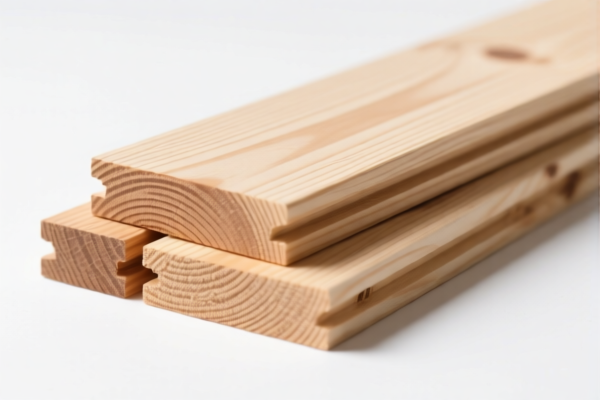
Key Distinctions Matter: * Raw Sawn Wood (4407/4408): Logs or planks that have been cut longitudinally but remain largely unprocessed. * Profiled/Tongue & Groove (4409): Lumber shaped with grooves, tongues, or profiles, often used for interior paneling, cladding, or decorative wall coverings.
⚠️ Critical Classification Point:
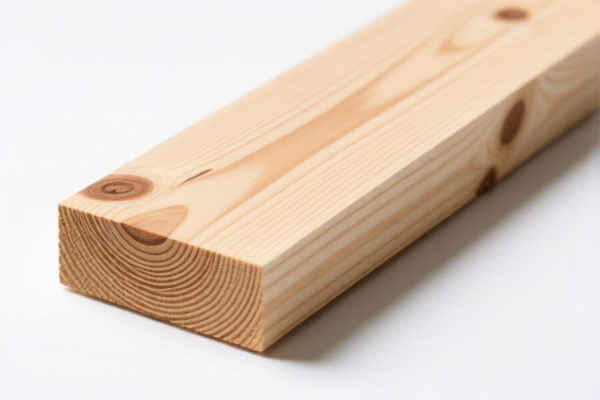
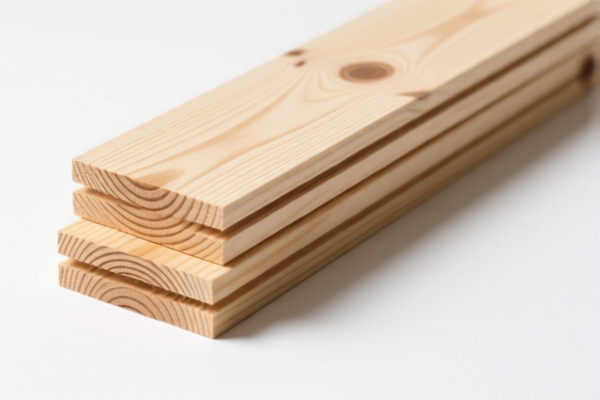
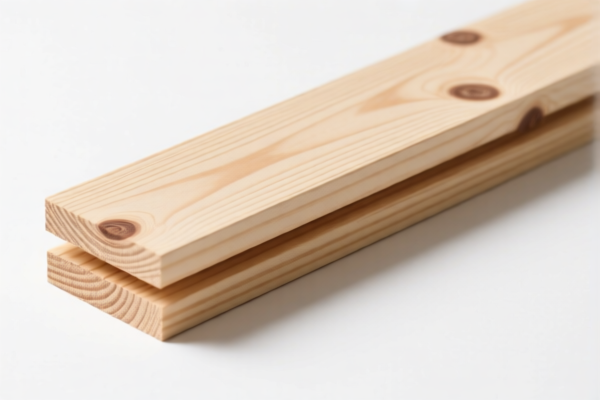
- If the wood is plainly sawn (flat boards/planks) and unprocessed → Falls under 4407 or 4408.
- If the wood is profiled (T&G, beveled, sanded for paneling) → Falls under 4409.
- Misclassification Risk: Declaring profiled pine as "plain sawn" to avoid higher scrutiny can lead to severe penalties. The tax structure below applies to all mentioned codes due to US-China trade policies.
📦 II. HS Code Classification Details (2026 Latest Tariff Alignment)
| HS Code | Product Description | Application Scenario | Processing Level |
|---|---|---|---|
4408.10.01.45 |
Pine/Fir Boards (Veneer Sheets) | Plywood substrate, veneer backing, high-grade softwood sheets | ⚙️ Sliced/Sawn thin sheets |
4407.11.00.43 |
Pine Lumber, Longitudinally Sawn | Standard framing lumber, untreated coniferous wood planks | 🪚 Plain sawn, unprocessed |
4409.10.10.20 |
Pine/Fir Panels (Wall Paneling) | Interior wood paneling, tongue-and-groove cladding, decorative cores | 🔨 Profiled/Shaped |
4407.19.00.68 |
Fir Lumber (>6mm thickness) | Thicker softwood planks, structural beams, generic coniferous wood | 🪚 Sawn, >6mm thick |
4409.10.40.10 |
Pine Lumber (Qualified Core Material) | Specific certified pine core, finished paneling materials | 🔨 Profiled, specialized |
🔍 Key Takeaway:
- All these codes fall under Coniferous Wood (Pinaceae family, primarily Pine and Fir/Spruce).
- The difference lies in processing depth: Plain sawn (4407/4408) vs. Profiled/T&G (4409).
- Note on Thickness:4407.19specifically highlights thickness >6mm, distinguishing it from thinner veneers or light siding.
💰 III. 2026 Latest Tariff Rate Breakdown (Including Surtaxes & Policy Add-ons)
✅ Target Market: United States (US)
✅ Country of Origin: China (CN)
✅ Effective Date: Rates apply to imports from China, including those subject to Section 301 and IEEPA provisions.
🎯 1. 4408.10.01.45 & 4407.11.00.43 & 4407.19.00.68
(Plain Sawn & Veneer Sheets)
| Item | Detail |
|---|---|
| Base Duty Rate | 0.0% (Ad Valorem) |
| Section 301 Surtax | +25.0% (USITC Footnote 9903.88.01 applicable to softwood lumber) |
| IEEPA Surtax | +10.0% (Section 122 Provision: Targeted Chinese Import Surtax) |
| Total Effective Rate | 35.0% |
| Tax Calculation | CIF Value × 35% |
| De Minimis Exemption | ❌ Not Applicable (deny_de_minimis) |
| Legal Basis Path | IEEPA:9903.01.25 → Section 122: 10% → USITC:4408/4407 → FOOTNOTE:9903.88.01 |
📌 Explanation:
- The 25% is the standard Section 301 tariff on many Chinese wood products.
- The 10% is the additional "122 Clause" surcharge targeting specific Chinese imports.
- Total 35% is a significant cost burden. This rate is uniform across plain sawn and veneer pine from China.
🎯 2. 4409.10.10.20 & 4409.10.40.10
(Profiled Lumber / Wall Paneling)
| Item | Detail |
|---|---|
| Base Duty Rate | 0.0% (Ad Valorem) |
| Section 301 Surtax | +25.0% |
| IEEPA Surtax | +10.0% (Section 122 Provision) |
| Total Effective Rate | 35.0% |
| Tax Calculation | CIF Value × 35% |
| De Minimis Exemption | ❌ Not Applicable (deny_de_minimis) |
| Legal Basis Path | IEEPA:9903.01.24 → Section 122: 10% → USITC:4409 → FOOTNOTE:9903.88.01 |
📌 Explanation:
- Even though4409items are more processed, they still attract the full 35% composite rate.
- Why? Section 301 covers "wooden panels" and "lumber." Profiled wood is often viewed as a value-added version of base lumber, thus remaining in the tariff scope.
- No Lower Rate: Do not assume profiled wood has a lower duty; it is taxed at the same high rate as raw lumber for Chinese origin.
🛠️ IV. Customs Clearance Practical Advice (Battle-Tested Pitfall Avoidance)
✅ 1. Mandatory Documentation Checklist
| Document | Required? | Explanation |
|---|---|---|
| ✅ Commercial Invoice | ✔️ | Must clearly state "Pine/Fir Lumber," species, dimensions, and treatment status. |
| ✅ Packing List | ✔️ | Detail number of bundles, pallets, and total board feet/m³. |
| ✅ Phytosanitary Certificate | ✔️ | CRITICAL. Issued by the exporting country’s plant protection agency. |
| ✅ ISPM 15 Marking | ✔️ | All wood packaging (pallets/crates) MUST bear the IPPC stamp. |
| ✅ Fumigation Certificate | ✔️ | If wood is not heat-treated (HT), fumigation proof is mandatory. |
| ✅ Product Specifications | ✔️ | Include moisture content, grade (No.1, No.2), and dimensions (e.g., 2x4, 1x6). |
| ✅ Proof of Origin | ✔️ | Essential for verifying CN origin and applying the correct surtaxes. |
✅ 2. Declaration Tips (Key Mnemonics)
🔥 "Species Clear, Treatment Proven, Profile Defined, Tax Avoided!"
| Scenario | Correct Declaration | Common Mistake |
|---|---|---|
| Plain Sawn Planks | "Pine Lumber, Sawn, Untreated" → 4407.11.00.43 |
Calling it "Wooden Board" → Vague, delays inspection. |
| Tongue & Groove | "Pine Wall Panel, Profiled, T&G" → 4409.10.10.20 |
Calling it "Pine Plank" → Misclassification risk. |
| Veneer Sheets | "Pine Veneer Slices, 1mm" → 4408.10.01.45 |
Calling it "Thin Wood" → Could be misruled as paper or other. |
| Fire-Treated Wood | "Heat Treated (HT) Pine Lumber" | Failing to declare HT → Rejected at port for pest risk. |
✅ 3. Special Case Handling
| Situation | Handling Advice |
|---|---|
| Bark Presence | If bark is present, it may be classified as "logs" or "stripped wood," changing the HS Code. Remove bark before shipment if possible. |
| Mixed Species | If a shipment contains Pine AND Fir, declare as "Coniferous Lumber, Pine/Fir Mix" and use the higher-risk code or split shipments. |
| Moisture Content | High moisture can trigger additional phytosanitary checks. Ensure moisture content is <20% (or as per ISPM 15) to avoid rejection. |
| 122 Clause Impact | The 10% IEEPA surcharge is non-negotiable for Chinese-origin goods. Plan cash flow accordingly. |
🌍 V. Global Market Comparison (2026 Latest)
| Country/Region | Recommended HS Code | Base Duty | Surtaxes (China) | Total Rate | Notes |
|---|---|---|---|---|---|
| 🇺🇸 USA | 4407 / 4409 |
0% | 25% (301) + 10% (122) | 35% | High barrier. Ensure strict phytosanitary compliance. |
| 🇨🇳 China | 4407 / 4409 |
0-5% | None | 0-5% | Export hub. Many Chinese exporters use this route. |
| 🇪🇺 EU | 4407 / 4409 |
0% | None | 0% | No Section 301/122. But strict FLEGT/EUTR regulations apply. |
| 🇨🇦 Canada | 4407 |
0% | None | 0% | Close competitor. NAFTA/USMCA benefits may apply if Canadian origin. |
📌 Conclusion:
- USA is the only market with the 35% punitive rate for Chinese pine lumber.
- EU and Canada are more favorable from a tariff perspective, but Phytosanitary/FLEGT rules are extremely strict.
- Strategy: If targeting the US, ensure perfect documentation to avoid storage fees and demurrage, which can outweigh the tariff savings from minor errors.
📌 VI. Common Errors & Pitfalls (Lessons Learned)
❌ Error 1: Declaring "Pine Lumber" without specifying "Profiled" vs "Sawn"
👉 Consequence: Customs may detain shipment for classification review, causing delays.
👉 Fix: Clearly describe shape (e.g., "Plain Sawn" or "Tongue & Groove").
❌ Error 2: Using Non-ISPM 15 Compliant Pallets
👉 Consequence: Entire shipment rejected or required re-palleting at destination.
👉 Fix: Use heat-treated (HT) wood pallets with visible IPPC mark.
❌ Error 3: Ignoring the 10% IEEPA Surtax in Cost Calculations
👉 Consequence: Profit margin wiped out by unexpected 10% tax.
👉 Fix: Include 35% total landed cost in your pricing model.
❌ Error 4: Misidentifying Fir as Pine
👉 Consequence: While tax is the same (35%), phytosanitary rules may differ slightly by species.
👉 Fix: Be accurate in botanical description (Pinaceae family is acceptable if species not known).
✅ Correct Practice:
"2x4 Pine Framing Lumber, Heat Treated, ISPM 15 Compliant Pallets, HS 4407.11.00.43, Origin: China"
🎯 VII. Conclusion: Professional Clearance, Cost Control, Efficiency!
🎯 Remember the Mantra:
🔹 "Species Clear, Treatment Proven, Tax 35%, Don't Let Bark Ruin It!"
🔹 "HS Code Defines the Tax, Documentation Defines the Speed!"
📌 Pro Tip:
If your pine lumber is originally sourced from Vietnam, Thailand, or Malaysia, you may avoid the Section 301 + IEEPA surtaxes. However, anti-circumvention rules are strict. Ensure genuine transformation occurs in the third country.
For Chinese origin, pre-apply for a Binding Ruling if the product shape is ambiguous.
📣 Take Action Now:
📞 Contact a licensed customs broker + Provide product photos + Verify ISPM 15 compliance
🚀 Clear customs smoothly, avoid delays, protect your margins!
✨ Professional Clearance Starts with Precise Classification!
💼 Every dollar of duty must be accounted for!
用户评价
关于 HS 编码归类
协调制度(HS)是由世界海关组织(WCO)制定的国际贸易商品分类标准。全球 200 多个国家采用 HS 系统作为海关关税、贸易统计和进出口监管的基础。
每个 HS 编码遵循以下层级结构:
- 章(2 位)——商品大类(例如:第 84 章:机器和机械设备)
- 品目(4 位)——章内的更具体分类
- 子目(6 位)——国际通用细分,所有 WCO 成员国统一使用
- 本国细分(8-10 位)——各国自行扩展的细分编码,如美国 HTSUS 10 位编码
正确的 HS 编码归类对于顺利通关、准确缴纳关税和遵守贸易法规至关重要。错误归类可能导致海关延误、多缴关税或罚款。
从CN进口到US时,适用的关税税率可能包括:
- 最惠国(MFN)税率——适用于 WTO 成员国的标准关税税率
- 普通税率——适用于无贸易协定国家
- 贸易救济关税——附加关税,如 301 条款(反倾销)、232 条款(国家安全)或反补贴税
本页内容仅供参考。如需正式归类,请咨询当地海关或持牌报关代理。