Pine construction lumber
CN → US| HS Code | Tariff Rate | Origin | Destination | Doc |
|---|---|---|---|---|
| 4408100145 | 35.0% | CN | US | Official Doc |
| 4407110043 | 35.0% | CN | US | Official Doc |
| 4409101020 | 35.0% | CN | US | Official Doc |
| 4407190068 | 35.0% | CN | US | Official Doc |
| 4409104010 | 35.0% | CN | US | Official Doc |
Product Images
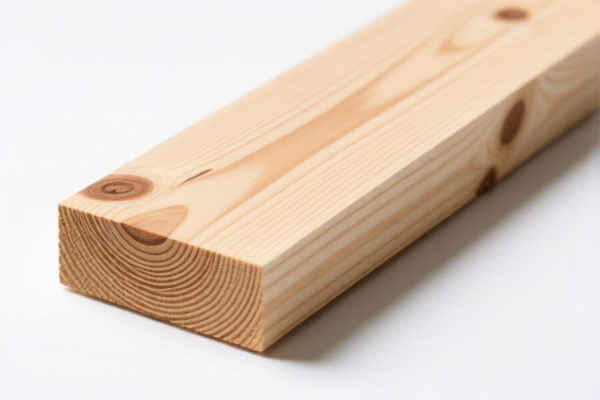
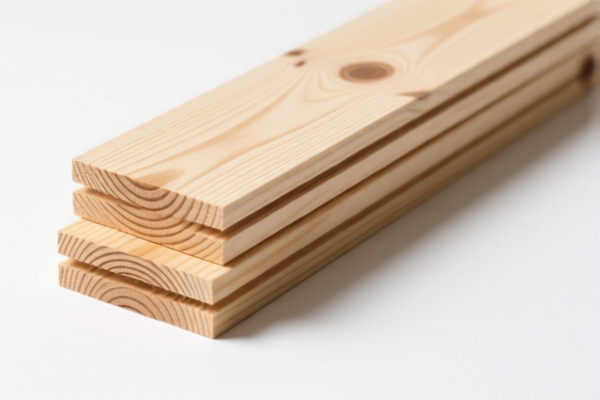
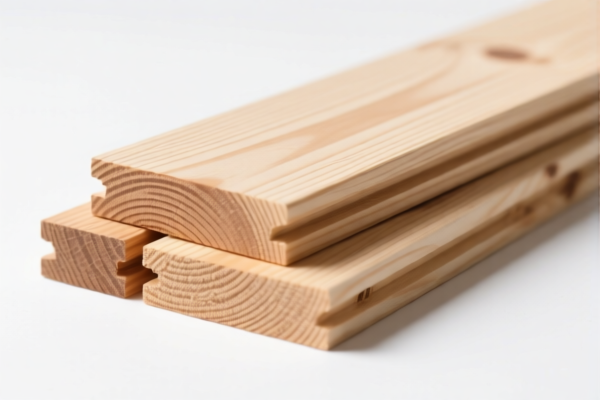
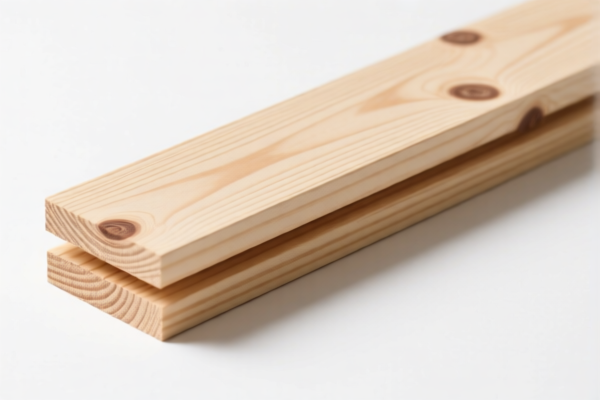
AI Analysis
🌲 Pine Construction Lumber (Pinewood & Fir)
🌐 HS Code Reference & Customs Clearance Guide | 2026 Tariff Full Breakdown | Professional Entry Strategy for US Imports
📌 I. Product Definition & Classification: Do You Really Know "Pine Lumber"?
Pine construction lumber, often referred to in trade as "Softwood Lumber" or "Coniferous Wood," is a critical building material used in residential framing, industrial pallets, and furniture manufacturing. In international trade, it is strictly categorized under Chapter 44 (Wood and articles of wood; wood charcoal).
Key Distinctions Matter: * Raw Sawn Wood (4407/4408): Logs or planks that have been cut longitudinally but remain largely unprocessed. * Profiled/Tongue & Groove (4409): Lumber shaped with grooves, tongues, or profiles, often used for interior paneling, cladding, or decorative wall coverings.
⚠️ Critical Classification Point:
- If the wood is plainly sawn (flat boards/planks) and unprocessed → Falls under 4407 or 4408.
- If the wood is profiled (T&G, beveled, sanded for paneling) → Falls under 4409.
- Misclassification Risk: Declaring profiled pine as "plain sawn" to avoid higher scrutiny can lead to severe penalties. The tax structure below applies to all mentioned codes due to US-China trade policies.
📦 II. HS Code Classification Details (2026 Latest Tariff Alignment)
| HS Code | Product Description | Application Scenario | Processing Level |
|---|---|---|---|
4408.10.01.45 |
Pine/Fir Boards (Veneer Sheets) | Plywood substrate, veneer backing, high-grade softwood sheets | ⚙️ Sliced/Sawn thin sheets |
4407.11.00.43 |
Pine Lumber, Longitudinally Sawn | Standard framing lumber, untreated coniferous wood planks | 🪚 Plain sawn, unprocessed |
4409.10.10.20 |
Pine/Fir Panels (Wall Paneling) | Interior wood paneling, tongue-and-groove cladding, decorative cores | 🔨 Profiled/Shaped |
4407.19.00.68 |
Fir Lumber (>6mm thickness) | Thicker softwood planks, structural beams, generic coniferous wood | 🪚 Sawn, >6mm thick |
4409.10.40.10 |
Pine Lumber (Qualified Core Material) | Specific certified pine core, finished paneling materials | 🔨 Profiled, specialized |
🔍 Key Takeaway:
- All these codes fall under Coniferous Wood (Pinaceae family, primarily Pine and Fir/Spruce).
- The difference lies in processing depth: Plain sawn (4407/4408) vs. Profiled/T&G (4409).
- Note on Thickness:4407.19specifically highlights thickness >6mm, distinguishing it from thinner veneers or light siding.
💰 III. 2026 Latest Tariff Rate Breakdown (Including Surtaxes & Policy Add-ons)
✅ Target Market: United States (US)
✅ Country of Origin: China (CN)
✅ Effective Date: Rates apply to imports from China, including those subject to Section 301 and IEEPA provisions.
🎯 1. 4408.10.01.45 & 4407.11.00.43 & 4407.19.00.68
(Plain Sawn & Veneer Sheets)
| Item | Detail |
|---|---|
| Base Duty Rate | 0.0% (Ad Valorem) |
| Section 301 Surtax | +25.0% (USITC Footnote 9903.88.01 applicable to softwood lumber) |
| IEEPA Surtax | +10.0% (Section 122 Provision: Targeted Chinese Import Surtax) |
| Total Effective Rate | 35.0% |
| Tax Calculation | CIF Value × 35% |
| De Minimis Exemption | ❌ Not Applicable (deny_de_minimis) |
| Legal Basis Path | IEEPA:9903.01.25 → Section 122: 10% → USITC:4408/4407 → FOOTNOTE:9903.88.01 |
📌 Explanation:
- The 25% is the standard Section 301 tariff on many Chinese wood products.
- The 10% is the additional "122 Clause" surcharge targeting specific Chinese imports.
- Total 35% is a significant cost burden. This rate is uniform across plain sawn and veneer pine from China.
🎯 2. 4409.10.10.20 & 4409.10.40.10
(Profiled Lumber / Wall Paneling)
| Item | Detail |
|---|---|
| Base Duty Rate | 0.0% (Ad Valorem) |
| Section 301 Surtax | +25.0% |
| IEEPA Surtax | +10.0% (Section 122 Provision) |
| Total Effective Rate | 35.0% |
| Tax Calculation | CIF Value × 35% |
| De Minimis Exemption | ❌ Not Applicable (deny_de_minimis) |
| Legal Basis Path | IEEPA:9903.01.24 → Section 122: 10% → USITC:4409 → FOOTNOTE:9903.88.01 |
📌 Explanation:
- Even though4409items are more processed, they still attract the full 35% composite rate.
- Why? Section 301 covers "wooden panels" and "lumber." Profiled wood is often viewed as a value-added version of base lumber, thus remaining in the tariff scope.
- No Lower Rate: Do not assume profiled wood has a lower duty; it is taxed at the same high rate as raw lumber for Chinese origin.
🛠️ IV. Customs Clearance Practical Advice (Battle-Tested Pitfall Avoidance)
✅ 1. Mandatory Documentation Checklist
| Document | Required? | Explanation |
|---|---|---|
| ✅ Commercial Invoice | ✔️ | Must clearly state "Pine/Fir Lumber," species, dimensions, and treatment status. |
| ✅ Packing List | ✔️ | Detail number of bundles, pallets, and total board feet/m³. |
| ✅ Phytosanitary Certificate | ✔️ | CRITICAL. Issued by the exporting country’s plant protection agency. |
| ✅ ISPM 15 Marking | ✔️ | All wood packaging (pallets/crates) MUST bear the IPPC stamp. |
| ✅ Fumigation Certificate | ✔️ | If wood is not heat-treated (HT), fumigation proof is mandatory. |
| ✅ Product Specifications | ✔️ | Include moisture content, grade (No.1, No.2), and dimensions (e.g., 2x4, 1x6). |
| ✅ Proof of Origin | ✔️ | Essential for verifying CN origin and applying the correct surtaxes. |
✅ 2. Declaration Tips (Key Mnemonics)
🔥 "Species Clear, Treatment Proven, Profile Defined, Tax Avoided!"
| Scenario | Correct Declaration | Common Mistake |
|---|---|---|
| Plain Sawn Planks | "Pine Lumber, Sawn, Untreated" → 4407.11.00.43 |
Calling it "Wooden Board" → Vague, delays inspection. |
| Tongue & Groove | "Pine Wall Panel, Profiled, T&G" → 4409.10.10.20 |
Calling it "Pine Plank" → Misclassification risk. |
| Veneer Sheets | "Pine Veneer Slices, 1mm" → 4408.10.01.45 |
Calling it "Thin Wood" → Could be misruled as paper or other. |
| Fire-Treated Wood | "Heat Treated (HT) Pine Lumber" | Failing to declare HT → Rejected at port for pest risk. |
✅ 3. Special Case Handling
| Situation | Handling Advice |
|---|---|
| Bark Presence | If bark is present, it may be classified as "logs" or "stripped wood," changing the HS Code. Remove bark before shipment if possible. |
| Mixed Species | If a shipment contains Pine AND Fir, declare as "Coniferous Lumber, Pine/Fir Mix" and use the higher-risk code or split shipments. |
| Moisture Content | High moisture can trigger additional phytosanitary checks. Ensure moisture content is <20% (or as per ISPM 15) to avoid rejection. |
| 122 Clause Impact | The 10% IEEPA surcharge is non-negotiable for Chinese-origin goods. Plan cash flow accordingly. |
🌍 V. Global Market Comparison (2026 Latest)
| Country/Region | Recommended HS Code | Base Duty | Surtaxes (China) | Total Rate | Notes |
|---|---|---|---|---|---|
| 🇺🇸 USA | 4407 / 4409 |
0% | 25% (301) + 10% (122) | 35% | High barrier. Ensure strict phytosanitary compliance. |
| 🇨🇳 China | 4407 / 4409 |
0-5% | None | 0-5% | Export hub. Many Chinese exporters use this route. |
| 🇪🇺 EU | 4407 / 4409 |
0% | None | 0% | No Section 301/122. But strict FLEGT/EUTR regulations apply. |
| 🇨🇦 Canada | 4407 |
0% | None | 0% | Close competitor. NAFTA/USMCA benefits may apply if Canadian origin. |
📌 Conclusion:
- USA is the only market with the 35% punitive rate for Chinese pine lumber.
- EU and Canada are more favorable from a tariff perspective, but Phytosanitary/FLEGT rules are extremely strict.
- Strategy: If targeting the US, ensure perfect documentation to avoid storage fees and demurrage, which can outweigh the tariff savings from minor errors.
📌 VI. Common Errors & Pitfalls (Lessons Learned)
❌ Error 1: Declaring "Pine Lumber" without specifying "Profiled" vs "Sawn"
👉 Consequence: Customs may detain shipment for classification review, causing delays.
👉 Fix: Clearly describe shape (e.g., "Plain Sawn" or "Tongue & Groove").
❌ Error 2: Using Non-ISPM 15 Compliant Pallets
👉 Consequence: Entire shipment rejected or required re-palleting at destination.
👉 Fix: Use heat-treated (HT) wood pallets with visible IPPC mark.
❌ Error 3: Ignoring the 10% IEEPA Surtax in Cost Calculations
👉 Consequence: Profit margin wiped out by unexpected 10% tax.
👉 Fix: Include 35% total landed cost in your pricing model.
❌ Error 4: Misidentifying Fir as Pine
👉 Consequence: While tax is the same (35%), phytosanitary rules may differ slightly by species.
👉 Fix: Be accurate in botanical description (Pinaceae family is acceptable if species not known).
✅ Correct Practice:
"2x4 Pine Framing Lumber, Heat Treated, ISPM 15 Compliant Pallets, HS 4407.11.00.43, Origin: China"
🎯 VII. Conclusion: Professional Clearance, Cost Control, Efficiency!
🎯 Remember the Mantra:
🔹 "Species Clear, Treatment Proven, Tax 35%, Don't Let Bark Ruin It!"
🔹 "HS Code Defines the Tax, Documentation Defines the Speed!"
📌 Pro Tip:
If your pine lumber is originally sourced from Vietnam, Thailand, or Malaysia, you may avoid the Section 301 + IEEPA surtaxes. However, anti-circumvention rules are strict. Ensure genuine transformation occurs in the third country.
For Chinese origin, pre-apply for a Binding Ruling if the product shape is ambiguous.
📣 Take Action Now:
📞 Contact a licensed customs broker + Provide product photos + Verify ISPM 15 compliance
🚀 Clear customs smoothly, avoid delays, protect your margins!
✨ Professional Clearance Starts with Precise Classification!
💼 Every dollar of duty must be accounted for!
Customer Reviews
About HS Code Classification
The Harmonized System (HS) is an internationally standardized nomenclature developed by the World Customs Organization (WCO) to classify traded products. Over 200 countries use the HS system as the basis for customs tariffs, trade statistics, and import/export regulations.
Each HS code follows a hierarchical structure:
- Chapter (2 digits) — Broad category of goods (e.g., Chapter 84: Machinery and Mechanical Appliances)
- Heading (4 digits) — More specific grouping within the chapter
- Subheading (6 digits) — Internationally standardized breakdown, used by all WCO member countries
- National subdivisions (8-10 digits) — Country-specific extensions for further classification, such as US HTSUS 10-digit codes
Correct HS code classification is essential for smooth customs clearance, accurate duty payment, and compliance with trade regulations. Misclassification can lead to customs delays, overpayment of duties, or penalties.
When importing from CN to US, the applicable tariff rates may include:
- Most-Favored-Nation (MFN) rate — The standard duty rate applied to WTO members
- General rate — Applied to countries without trade agreements
- Trade remedy duties — Additional tariffs such as Section 301 (anti-dumping), Section 232 (national security), or countervailing duties
The information provided on this page is for reference purposes only. For official classification, please consult with your local customs authority or a licensed customs broker.