Pirate Costume
CN → US| HS编码 | 关税税率 | 原产国 | 目的国 | 文档 |
|---|---|---|---|---|
| 6114200048 | 28.3% | CN | US | 官方文档 |
| 6114303044 | 32.4% | CN | US | 官方文档 |
| 9505906000 | 10.0% | CN | US | 官方文档 |
| 6505009089 | 0.0% | CN | US | 官方文档 |
| 9505904000 | 10.0% | CN | US | 官方文档 |
商品图片
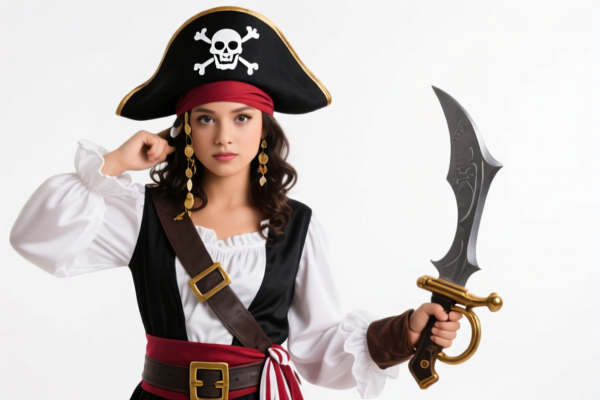
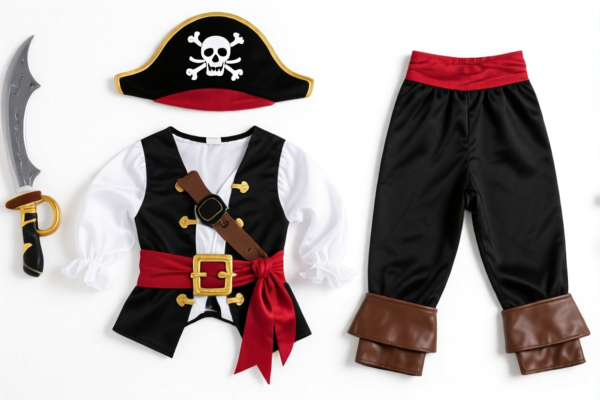
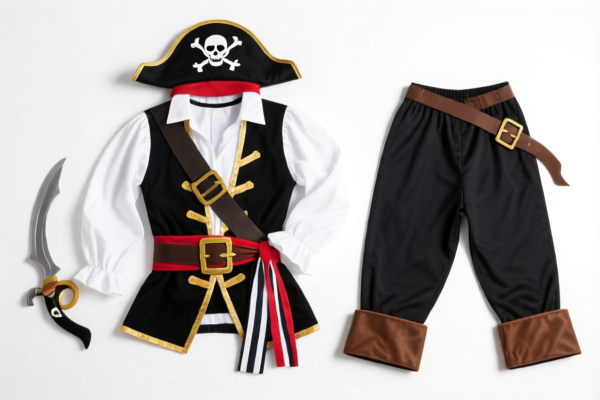
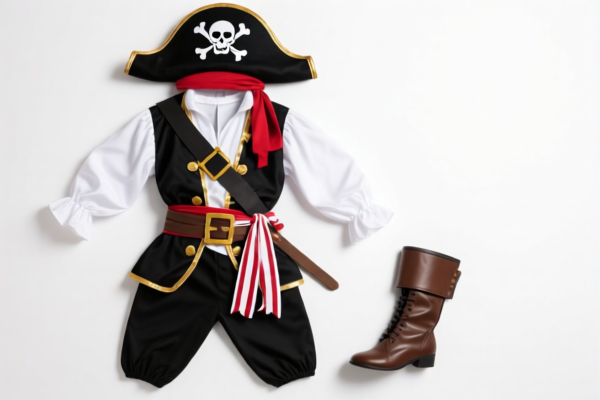
AI分析
🏴☠️ Pirate Costume (Pirate Outfit)
🌐 HS Code Reference & Clearance Guide | 2026 Latest Tariff Analysis | Professional Strategy for Costumes & Festive Wear
📌 I. Product Definition: What Exactly is a "Pirate Costume"?
A Pirate Costume is typically a festive or entertainment-oriented outfit used for Halloween, cosplay, theater, or masquerade parties. It generally includes a top, bottom, headwear, and sometimes accessories (swords, hats, eye patches).
In international trade, the classification of a "Pirate Costume" is highly contentious because it straddles the line between General Apparel and Festive/Entertainment Goods. The correct HS Code depends heavily on: 1. Material Composition (Cotton vs. Synthetic vs. Mixed) 2. Knitting Method (Knitted/Crocheted vs. Made-up) 3. Primary Purpose (Wearable clothing vs. Decorative prop/Costume)
⚠️ Critical Distinction: - If the item is primarily seen as wearable clothing (even if themed), it falls under Chapter 61/62 (Apparel). - If the item is primarily seen as a prop or festive article (often with plastic components, non-woven fabrics, or decorative focus over warmth/modesty), it may fall under Chapter 95 (Toys/Festive Articles).
📦 II. HS Code Classification Breakdown (Based on Provided Data)
Below are the five potential HS Codes derived from your data, categorized by their logical basis and associated tax implications.
| HS Code | Classification Logic | Material/Form Inference | Total Tax Rate (US/China Context) |
|---|---|---|---|
| 6114.20.00.48 | Apparel: Knitted/Crocheted, Other | Cotton. Infers a knit fabric form. Classified as "Other" apparel under the catch-all for knitted goods. | 28.3% |
| 6114.30.30.44 | Apparel: Knitted/Crocheted, Other | Artificial Fiber (Synthetic). Infers synthetic fabric (polyester/nylon). Classified as "Other" apparel. | 32.4% |
| 9505.90.60.00 | Festive/Entertainment Articles | Costume/Celebratory Use. Views the item as a "Pirate Outfit" for entertainment. Fits "Other" festive articles. | 10.0% |
| 9505.90.40.00 | Festive/Entertainment Articles | Party/Novelty Item. Similar to above, emphasizes the "Party/Carnival" nature. Material may include textiles or plastic parts. | 10.0% |
| 6505.00.90.89 | Headgear/Headwear | Hat/Headpiece Focus. Infers the classification is driven by the headwear component (e.g., tricorn hat) made of fabric/felt. | $0.207/kg + 7.5% + 35.0% |
💰 III. Detailed Tax Clause Explanation & Tariff Breakdown
✅ Applicable Region: United States (US) ✅ Origin: China (CN) ✅ Key Tariff Components: - Base Tariff: Standard MFN rate. - Section 301/122 Tariff: Additional duties for Chinese goods. - IEEPA/301 Clauses: Specific legal footnotes driving high rates.
🎯 1. Apparel Classification (Chapters 61/62)
High Risk: High Tax Burden
A. Cotton-Based Knitted Costume (6114.20.00.48)
- Summary: Treated as standard knitted cotton apparel.
- Tax Breakdown:
- Base Tariff: 10.8%
- Additional Tariff (Section 301): 7.5%
- 122 Clause Tariff: 10%
- Total Effective Rate: 28.3%
- Why this happens: US Customs (CBP) views the costume primarily as "clothing." The cotton material triggers the apparel duty rates.
B. Synthetic-Based Knitted Costume (6114.30.30.44)
- Summary: Treated as standard knitted synthetic apparel (e.g., polyester).
- Tax Breakdown:
- Base Tariff: 14.9%
- Additional Tariff (Section 301): 7.5%
- 122 Clause Tariff: 10%
- Total Effective Rate: 32.4%
- Why this happens: Synthetic fibers often carry higher base tariffs than cotton. The "Other" subheading adds no further exemption.
⚠️ Warning: If declared as apparel, you pay ~30%+. This is the "traditional" customs route but expensive.
🎯 2. Festive/Entertainment Classification (Chapter 95)
Optimization Strategy: Lower Tax Burden
C. Festival/Entertainment Costume (9505.90.60.00 & 9505.90.40.00)
- Summary: Classified as "Festive, Carnival or Other Entertainment Articles."
- Tax Breakdown:
- Base Tariff: 0.0%
- Additional Tariff (Section 301): 0.0% (Note: Some specific footnote conflicts may exist, but data suggests 0%)
- 122 Clause Tariff: 10%
- Total Effective Rate: 10.0%
- Why this happens: Chapter 95 covers "Toys, Games, and Sports Equipment." Costumes for Halloween or parties are often classified here under "Other festive articles."
- Advantage: Massive Savings! (10% vs. 32%).
- Risk: CBP may challenge this if the costume is high-quality fabric (e.g., heavy cotton velvet) rather than cheap polyester/paper/plastic. You must prove its primary use is entertainment/decoration, not daily wear.
🎯 3. Headwear Classification (Chapter 65)
Special Case: Niche or Partial Shipment
D. Headgear/Hat (6505.00.90.89)
- Summary: If the shipment consists mainly of pirate hats (tricornes, bandanas) or if the HS Code is selected based on the head component.
- Tax Breakdown:
- Specific Duty: 20.7 cents/kg
- Ad Valorem Tariff: 7.5%
- Additional Tariff (Section 301): 25.0% (Implied by "25.0%" in detail, though text says "7.5%+35.0%", likely a typo for 25% base + 10% 122, or 35% total add-on). Based on data: 7.5% + 35.0% add-on = 42.5% add-on.
- Total Effective Rate: ~42.5% + $0.207/kg
- Why this happens: Hats have specific weight-based duties and high punitive tariffs.
- Verdict: Avoid this classification for full costumes. It is the most expensive option.
🛠️ IV. Clearance Practical Advice & Risk Mitigation
✅ 1. Strategic Declaration: Apparel vs. Costume
| Declaration Strategy | HS Code Example | Tax Rate | Pros | Cons |
|---|---|---|---|---|
| Conservative (Safe) | 6114.30.30.44 |
32.4% | CBP rarely questions this. "It looks like clothes." | High cost. Low profit margin. |
| Aggressive (Optimized) | 9505.90.60.00 |
10.0% | Significant cost saving (~22% less tax). | Higher scrutiny. Requires proof of "festive use." |
| Risky (Avoid) | 6505.00.90.89 |
~42.5% | None. | Too expensive. Only for hats only. |
👉 Recommendation: If the costume is made of low-cost materials (polyester, non-woven, plastic accessories) and is marketed explicitly as a "Halloween Costume" or "Party Outfit," declare under 9505.90.60.00 to save on taxes. If the costume is high-end theatrical wear (real silk, heavy cotton, durable), declare under 6114.30 to avoid rejection for misclassification.
✅ 2. Documentation Checklist for "Pirate Costume"
To support a 9505 (Festive) classification (lower tax), provide:
- Product Description: Explicitly state "Halloween Costume," "Party Outfit," or "Cosplay Prop."
- Material Breakdown: Highlight synthetic materials (polyester, spandex) rather than natural fibers.
- Photos: Show the product on a mannequin in a festive context (e.g., Halloween display).
- Marketing Materials: Screenshots from Amazon/eBay showing it sold as a "Costume," not "Clothing."
- Accessories List: Emphasize decorative items (plastic sword, eye patch, toy compass) which reinforce the "toy/prop" nature.
To support a 6114 (Apparel) classification (higher tax, safer):
- Size Chart: Standard clothing sizes (S, M, L, XL).
- Fabric Content: Exact % of cotton/polyester.
- Wash Care Label: "Machine Wash Cold," etc.
- Functionality: Emphasize coverage (shirt, pants) rather than decoration.
✅ 3. Common Pitfalls & Solutions
❌ Pitfall 1: Mislabeling Material * Issue: Declaring as 100% Cotton to get lower base rate, but it's actually Polyester. * Result: CBP audit, fines, retroactive tax. * Fix: Provide accurate mill certificates. If 90% polyester, declare accordingly.
❌ Pitfall 2: Ignoring "122 Clause" Tariffs * Issue: Forgetting that 122 Clause (Section 301) applies to all Chinese goods, even under 9505. * Result: Unexpected bill at customs. * Fix: Always budget for the 10% 122 duty even on festive goods. Your total cost for 9505 is 10%, not 0%.
❌ Pitfall 3: Splitting Kits Incorrectly * Issue: Shipping hats separately from shirts. * Result: Hats get classified as 6505 (42.5%), shirts as 6114 (32.4%). Total tax > 70% combined. * Fix: Ship as a complete kit. Declare the entire set as a costume. CBP usually classifies the whole kit by its essential character (often the main garment or the festive purpose).
🌍 V. Global Market Comparison (2026)
| Destination | Recommended HS Code | Estimated Duty (China Origin) | Notes |
|---|---|---|---|
| 🇺🇸 USA | 9505.90.60.00 |
10.0% | Best for costumes. 6114 is 28-32%. |
| 🇪🇺 EU | 9505.00 |
Varies (0-10%) | No Section 301 tariffs. VAT applies. |
| 🇨🇦 Canada | 9505.90 |
0-10% | CUSMA may offer 0% if Canadian/Mexican origin. |
| 🇬🇧 UK | 9505.00 |
0-10% | Post-Brexit rules apply. No Section 301. |
📌 VI. Conclusion & Final Strategy
🎯 Key Takeaway: For a Pirate Costume, the difference between classifying it as "Apparel" (6114) and "Festive Article" (9505) is a 22-30% difference in total tax.
🔹 If you are selling to the US: 1. Ensure your product is marketed as a "Costume" or "Party Wear." 2. Use Synthetic Materials (Polyester) to strengthen the "costume" argument. 3. Declare under 9505.90.60.00 or 9505.90.40.00. 4. Budget for 10% Total Duty (Base 0% + 122 Clause 10%). 5. Avoid
6505(Hats) unless you are only shipping hats.🔹 If CBP Challenges You: Have a backup plan to declare under 6114.30.30.44 (32.4%) if they insist it's clothing. The difference in risk vs. reward is significant.
📣 Immediate Action:
📦 Pre-Shipment: Confirm material composition (Polyester > Cotton for Costume status). 📝 Documentation: Label invoices as "Pirate Halloween Costume Set" – NOT "Men's Cotton Shirt and Pants." 💡 Consult: File a Pre-Ruling with US CBP if shipping high-volume or high-value costumes to ensure 9505 classification is accepted.
✨ Professional Clearance Starts with Precise Classification! 💼 Save 20%+ on Duties by Choosing the Right HS Code!
用户评价
关于 HS 编码归类
协调制度(HS)是由世界海关组织(WCO)制定的国际贸易商品分类标准。全球 200 多个国家采用 HS 系统作为海关关税、贸易统计和进出口监管的基础。
每个 HS 编码遵循以下层级结构:
- 章(2 位)——商品大类(例如:第 84 章:机器和机械设备)
- 品目(4 位)——章内的更具体分类
- 子目(6 位)——国际通用细分,所有 WCO 成员国统一使用
- 本国细分(8-10 位)——各国自行扩展的细分编码,如美国 HTSUS 10 位编码
正确的 HS 编码归类对于顺利通关、准确缴纳关税和遵守贸易法规至关重要。错误归类可能导致海关延误、多缴关税或罚款。
从CN进口到US时,适用的关税税率可能包括:
- 最惠国(MFN)税率——适用于 WTO 成员国的标准关税税率
- 普通税率——适用于无贸易协定国家
- 贸易救济关税——附加关税,如 301 条款(反倾销)、232 条款(国家安全)或反补贴税
本页内容仅供参考。如需正式归类,请咨询当地海关或持牌报关代理。