Pirate Costume
CN → US| HS Code | Tariff Rate | Origin | Destination | Doc |
|---|---|---|---|---|
| 6114200048 | 28.3% | CN | US | Official Doc |
| 6114303044 | 32.4% | CN | US | Official Doc |
| 9505906000 | 10.0% | CN | US | Official Doc |
| 6505009089 | 0.0% | CN | US | Official Doc |
| 9505904000 | 10.0% | CN | US | Official Doc |
Product Images
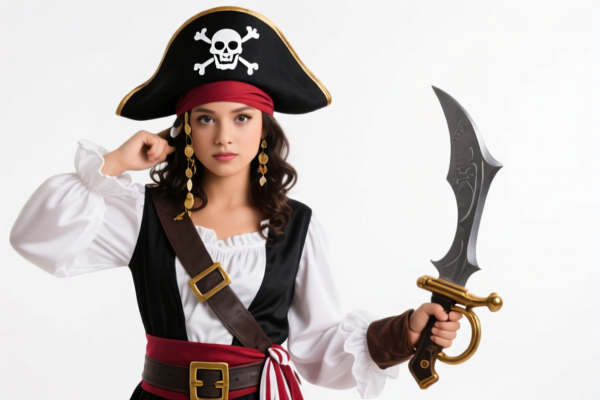
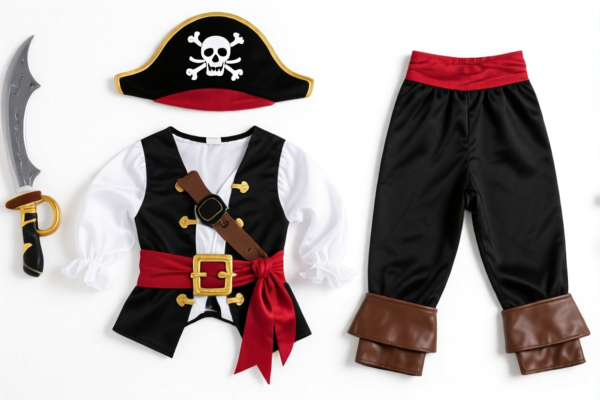
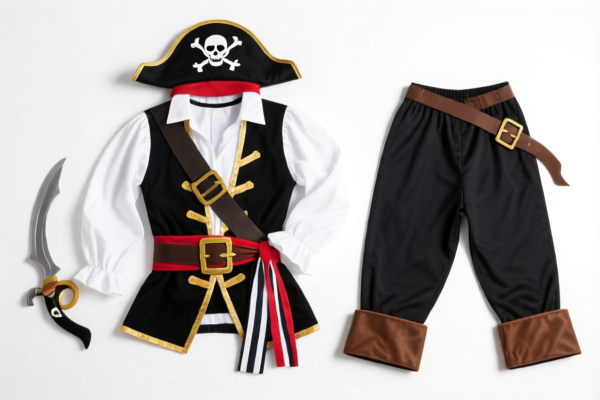
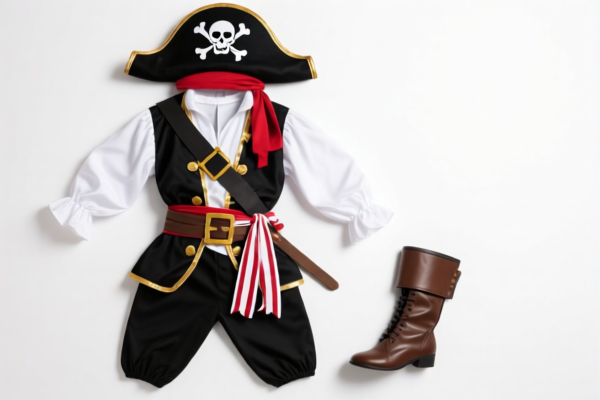
AI Analysis
🏴☠️ Pirate Costume (Pirate Outfit)
🌐 HS Code Reference & Clearance Guide | 2026 Latest Tariff Analysis | Professional Strategy for Costumes & Festive Wear
📌 I. Product Definition: What Exactly is a "Pirate Costume"?
A Pirate Costume is typically a festive or entertainment-oriented outfit used for Halloween, cosplay, theater, or masquerade parties. It generally includes a top, bottom, headwear, and sometimes accessories (swords, hats, eye patches).
In international trade, the classification of a "Pirate Costume" is highly contentious because it straddles the line between General Apparel and Festive/Entertainment Goods. The correct HS Code depends heavily on: 1. Material Composition (Cotton vs. Synthetic vs. Mixed) 2. Knitting Method (Knitted/Crocheted vs. Made-up) 3. Primary Purpose (Wearable clothing vs. Decorative prop/Costume)
⚠️ Critical Distinction: - If the item is primarily seen as wearable clothing (even if themed), it falls under Chapter 61/62 (Apparel). - If the item is primarily seen as a prop or festive article (often with plastic components, non-woven fabrics, or decorative focus over warmth/modesty), it may fall under Chapter 95 (Toys/Festive Articles).
📦 II. HS Code Classification Breakdown (Based on Provided Data)
Below are the five potential HS Codes derived from your data, categorized by their logical basis and associated tax implications.
| HS Code | Classification Logic | Material/Form Inference | Total Tax Rate (US/China Context) |
|---|---|---|---|
| 6114.20.00.48 | Apparel: Knitted/Crocheted, Other | Cotton. Infers a knit fabric form. Classified as "Other" apparel under the catch-all for knitted goods. | 28.3% |
| 6114.30.30.44 | Apparel: Knitted/Crocheted, Other | Artificial Fiber (Synthetic). Infers synthetic fabric (polyester/nylon). Classified as "Other" apparel. | 32.4% |
| 9505.90.60.00 | Festive/Entertainment Articles | Costume/Celebratory Use. Views the item as a "Pirate Outfit" for entertainment. Fits "Other" festive articles. | 10.0% |
| 9505.90.40.00 | Festive/Entertainment Articles | Party/Novelty Item. Similar to above, emphasizes the "Party/Carnival" nature. Material may include textiles or plastic parts. | 10.0% |
| 6505.00.90.89 | Headgear/Headwear | Hat/Headpiece Focus. Infers the classification is driven by the headwear component (e.g., tricorn hat) made of fabric/felt. | $0.207/kg + 7.5% + 35.0% |
💰 III. Detailed Tax Clause Explanation & Tariff Breakdown
✅ Applicable Region: United States (US) ✅ Origin: China (CN) ✅ Key Tariff Components: - Base Tariff: Standard MFN rate. - Section 301/122 Tariff: Additional duties for Chinese goods. - IEEPA/301 Clauses: Specific legal footnotes driving high rates.
🎯 1. Apparel Classification (Chapters 61/62)
High Risk: High Tax Burden
A. Cotton-Based Knitted Costume (6114.20.00.48)
- Summary: Treated as standard knitted cotton apparel.
- Tax Breakdown:
- Base Tariff: 10.8%
- Additional Tariff (Section 301): 7.5%
- 122 Clause Tariff: 10%
- Total Effective Rate: 28.3%
- Why this happens: US Customs (CBP) views the costume primarily as "clothing." The cotton material triggers the apparel duty rates.
B. Synthetic-Based Knitted Costume (6114.30.30.44)
- Summary: Treated as standard knitted synthetic apparel (e.g., polyester).
- Tax Breakdown:
- Base Tariff: 14.9%
- Additional Tariff (Section 301): 7.5%
- 122 Clause Tariff: 10%
- Total Effective Rate: 32.4%
- Why this happens: Synthetic fibers often carry higher base tariffs than cotton. The "Other" subheading adds no further exemption.
⚠️ Warning: If declared as apparel, you pay ~30%+. This is the "traditional" customs route but expensive.
🎯 2. Festive/Entertainment Classification (Chapter 95)
Optimization Strategy: Lower Tax Burden
C. Festival/Entertainment Costume (9505.90.60.00 & 9505.90.40.00)
- Summary: Classified as "Festive, Carnival or Other Entertainment Articles."
- Tax Breakdown:
- Base Tariff: 0.0%
- Additional Tariff (Section 301): 0.0% (Note: Some specific footnote conflicts may exist, but data suggests 0%)
- 122 Clause Tariff: 10%
- Total Effective Rate: 10.0%
- Why this happens: Chapter 95 covers "Toys, Games, and Sports Equipment." Costumes for Halloween or parties are often classified here under "Other festive articles."
- Advantage: Massive Savings! (10% vs. 32%).
- Risk: CBP may challenge this if the costume is high-quality fabric (e.g., heavy cotton velvet) rather than cheap polyester/paper/plastic. You must prove its primary use is entertainment/decoration, not daily wear.
🎯 3. Headwear Classification (Chapter 65)
Special Case: Niche or Partial Shipment
D. Headgear/Hat (6505.00.90.89)
- Summary: If the shipment consists mainly of pirate hats (tricornes, bandanas) or if the HS Code is selected based on the head component.
- Tax Breakdown:
- Specific Duty: 20.7 cents/kg
- Ad Valorem Tariff: 7.5%
- Additional Tariff (Section 301): 25.0% (Implied by "25.0%" in detail, though text says "7.5%+35.0%", likely a typo for 25% base + 10% 122, or 35% total add-on). Based on data: 7.5% + 35.0% add-on = 42.5% add-on.
- Total Effective Rate: ~42.5% + $0.207/kg
- Why this happens: Hats have specific weight-based duties and high punitive tariffs.
- Verdict: Avoid this classification for full costumes. It is the most expensive option.
🛠️ IV. Clearance Practical Advice & Risk Mitigation
✅ 1. Strategic Declaration: Apparel vs. Costume
| Declaration Strategy | HS Code Example | Tax Rate | Pros | Cons |
|---|---|---|---|---|
| Conservative (Safe) | 6114.30.30.44 |
32.4% | CBP rarely questions this. "It looks like clothes." | High cost. Low profit margin. |
| Aggressive (Optimized) | 9505.90.60.00 |
10.0% | Significant cost saving (~22% less tax). | Higher scrutiny. Requires proof of "festive use." |
| Risky (Avoid) | 6505.00.90.89 |
~42.5% | None. | Too expensive. Only for hats only. |
👉 Recommendation: If the costume is made of low-cost materials (polyester, non-woven, plastic accessories) and is marketed explicitly as a "Halloween Costume" or "Party Outfit," declare under 9505.90.60.00 to save on taxes. If the costume is high-end theatrical wear (real silk, heavy cotton, durable), declare under 6114.30 to avoid rejection for misclassification.
✅ 2. Documentation Checklist for "Pirate Costume"
To support a 9505 (Festive) classification (lower tax), provide:
- Product Description: Explicitly state "Halloween Costume," "Party Outfit," or "Cosplay Prop."
- Material Breakdown: Highlight synthetic materials (polyester, spandex) rather than natural fibers.
- Photos: Show the product on a mannequin in a festive context (e.g., Halloween display).
- Marketing Materials: Screenshots from Amazon/eBay showing it sold as a "Costume," not "Clothing."
- Accessories List: Emphasize decorative items (plastic sword, eye patch, toy compass) which reinforce the "toy/prop" nature.
To support a 6114 (Apparel) classification (higher tax, safer):
- Size Chart: Standard clothing sizes (S, M, L, XL).
- Fabric Content: Exact % of cotton/polyester.
- Wash Care Label: "Machine Wash Cold," etc.
- Functionality: Emphasize coverage (shirt, pants) rather than decoration.
✅ 3. Common Pitfalls & Solutions
❌ Pitfall 1: Mislabeling Material * Issue: Declaring as 100% Cotton to get lower base rate, but it's actually Polyester. * Result: CBP audit, fines, retroactive tax. * Fix: Provide accurate mill certificates. If 90% polyester, declare accordingly.
❌ Pitfall 2: Ignoring "122 Clause" Tariffs * Issue: Forgetting that 122 Clause (Section 301) applies to all Chinese goods, even under 9505. * Result: Unexpected bill at customs. * Fix: Always budget for the 10% 122 duty even on festive goods. Your total cost for 9505 is 10%, not 0%.
❌ Pitfall 3: Splitting Kits Incorrectly * Issue: Shipping hats separately from shirts. * Result: Hats get classified as 6505 (42.5%), shirts as 6114 (32.4%). Total tax > 70% combined. * Fix: Ship as a complete kit. Declare the entire set as a costume. CBP usually classifies the whole kit by its essential character (often the main garment or the festive purpose).
🌍 V. Global Market Comparison (2026)
| Destination | Recommended HS Code | Estimated Duty (China Origin) | Notes |
|---|---|---|---|
| 🇺🇸 USA | 9505.90.60.00 |
10.0% | Best for costumes. 6114 is 28-32%. |
| 🇪🇺 EU | 9505.00 |
Varies (0-10%) | No Section 301 tariffs. VAT applies. |
| 🇨🇦 Canada | 9505.90 |
0-10% | CUSMA may offer 0% if Canadian/Mexican origin. |
| 🇬🇧 UK | 9505.00 |
0-10% | Post-Brexit rules apply. No Section 301. |
📌 VI. Conclusion & Final Strategy
🎯 Key Takeaway: For a Pirate Costume, the difference between classifying it as "Apparel" (6114) and "Festive Article" (9505) is a 22-30% difference in total tax.
🔹 If you are selling to the US: 1. Ensure your product is marketed as a "Costume" or "Party Wear." 2. Use Synthetic Materials (Polyester) to strengthen the "costume" argument. 3. Declare under 9505.90.60.00 or 9505.90.40.00. 4. Budget for 10% Total Duty (Base 0% + 122 Clause 10%). 5. Avoid
6505(Hats) unless you are only shipping hats.🔹 If CBP Challenges You: Have a backup plan to declare under 6114.30.30.44 (32.4%) if they insist it's clothing. The difference in risk vs. reward is significant.
📣 Immediate Action:
📦 Pre-Shipment: Confirm material composition (Polyester > Cotton for Costume status). 📝 Documentation: Label invoices as "Pirate Halloween Costume Set" – NOT "Men's Cotton Shirt and Pants." 💡 Consult: File a Pre-Ruling with US CBP if shipping high-volume or high-value costumes to ensure 9505 classification is accepted.
✨ Professional Clearance Starts with Precise Classification! 💼 Save 20%+ on Duties by Choosing the Right HS Code!
Customer Reviews
About HS Code Classification
The Harmonized System (HS) is an internationally standardized nomenclature developed by the World Customs Organization (WCO) to classify traded products. Over 200 countries use the HS system as the basis for customs tariffs, trade statistics, and import/export regulations.
Each HS code follows a hierarchical structure:
- Chapter (2 digits) — Broad category of goods (e.g., Chapter 84: Machinery and Mechanical Appliances)
- Heading (4 digits) — More specific grouping within the chapter
- Subheading (6 digits) — Internationally standardized breakdown, used by all WCO member countries
- National subdivisions (8-10 digits) — Country-specific extensions for further classification, such as US HTSUS 10-digit codes
Correct HS code classification is essential for smooth customs clearance, accurate duty payment, and compliance with trade regulations. Misclassification can lead to customs delays, overpayment of duties, or penalties.
When importing from CN to US, the applicable tariff rates may include:
- Most-Favored-Nation (MFN) rate — The standard duty rate applied to WTO members
- General rate — Applied to countries without trade agreements
- Trade remedy duties — Additional tariffs such as Section 301 (anti-dumping), Section 232 (national security), or countervailing duties
The information provided on this page is for reference purposes only. For official classification, please consult with your local customs authority or a licensed customs broker.