Plaits Sheet for Commercial Use
CN → US| HS编码 | 关税税率 | 原产国 | 目的国 | 文档 |
|---|---|---|---|---|
| 5911900040 | 38.8% | CN | US | 官方文档 |
| 7314126000 | 85.0% | CN | US | 官方文档 |
| 5911900080 | 38.8% | CN | US | 官方文档 |
| 5407932030 | 47.0% | CN | US | 官方文档 |
| 3926305000 | 22.8% | CN | US | 官方文档 |
商品图片
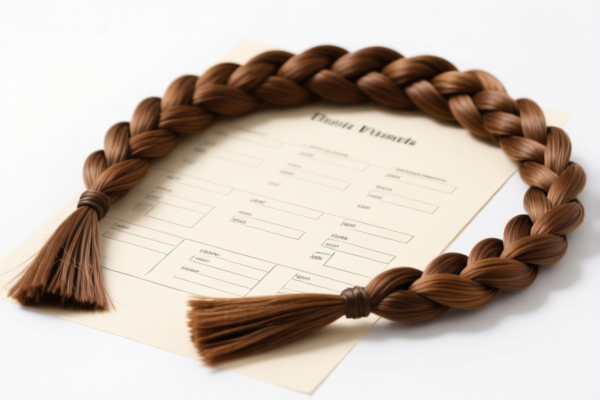
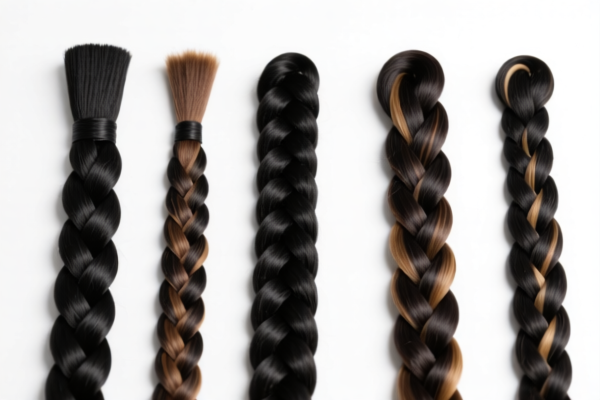
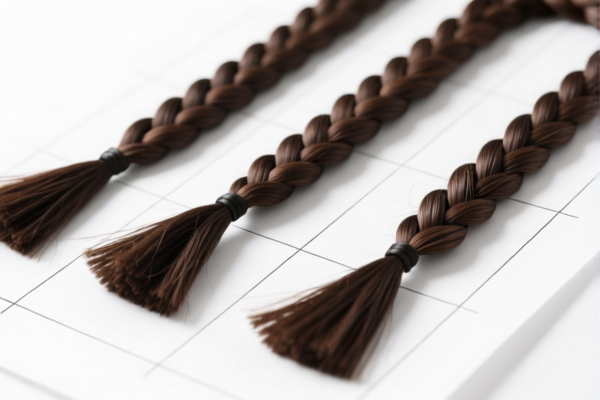
AI分析
🧶 Plaits Sheet for Commercial Use
🌐 HS Code Reference & Customs Clearance Guide | 2026 Latest Tariff Full Analysis | Professional Clearance Strategy
📌 I. Product Definition & Classification: Do You Really Understand "Plaits Sheet"?
Plaits Sheet (often referred to as woven strips, braided sheets, or industrial woven fabrics) is a versatile material used in industrial manufacturing, furniture assembly, and technical applications. In international trade, its classification depends heavily on its material composition, structure, and specific end-use.
⚠️ Key Distinction Point:
- If made of textile fibers (cotton, synthetic) for industrial filtering or technical use → Chapter 59
- If made of metal wire (steel, aluminum, copper) for industrial mesh → Chapter 73
- If made of synthetic filament yarns → Chapter 54
- If made of plastic for furniture components → Chapter 39
📦 II. HS Code Classification Details (2026 Latest Tariff Authority Comparison)
| HS Code | Product Description | Application Scenario | Material Inference | Tax Rate (Total) |
|---|---|---|---|---|
5911.90.00.40 |
Industrial Woven Sheets, Textile Form, Technical Use | Industrial filtering, technical textile products | Textile/Fabric | 38.8% |
7314.12.60.00 |
Industrial Woven Sheets, Metal Form | Industrial mesh, metal strips | Steel/Aluminum/Copper | 85.0% |
5911.90.00.80 |
Industrial Woven Sheets, Other Textile Category | Technical textiles, other categories | Textile/Fabric | 38.8% |
5407.93.20.30 |
Industrial Woven Sheets, Synthetic Filament Yarn | Synthetic fabric sheets, technical use | Synthetic Filament | 47.0% |
3926.30.50.00 |
Furniture Woven Sheets, Plastic Component | Furniture components, plastic weave | Plastic | 22.8% |
🔍 Key Reminder:
- Metal vs. Non-Metal: This is the most critical distinction. If the "plait" is made of metal wire, it falls under Chapter 73 (Metal Articles), which incurs the highest tariff (85.0%).
- Textile vs. Plastic: If it's a soft, flexible sheet, it's likely Chapter 59 or 54. If it's rigid plastic weaving, it's Chapter 39.
- Use Case: "Industrial" vs. "Furniture" use can shift the code within the same material chapter.
💰 III. 2026 Latest Tariff Rate Details (Including Surtaxes, Policy Add-ons)
✅ Applicable Country: United States (US)
✅ Origin: China (CN)
✅ Effective Time: From November 10, 2025 (and subsequent imports)
🎯 1. 5911.90.00.40 & 5911.90.00.80 —— Industrial Woven Sheets (Textile)
| Item | Content |
|---|---|
| Base Tariff | 3.8% (ad valorem) |
| Section 301 Surtax | +25.0% |
| IEEPA Surtax (122 Clause) | +10.0% |
| Total Rate | 38.8% |
| Calculation | CIF Value × 38.8% |
| De Minimis Exemption | ❌ Not Eligible |
| Legal Basis Path | USITC:5911.90.00.40/80 → Footnote: 301 → IEEPA:122 |
📌 Explanation:
- Both codes fall under Chapter 59 (Textile Articles for Technical Uses).
- The 25% Section 301 tariff applies to most textile products from China.
- The 10% IEEPA tariff is applied on top, bringing the total to 38.8%.
- Strategy: If possible, optimize product description to ensure it's not misclassified as metal or plastic, which have different rates.
🎯 2. 7314.12.60.00 —— Industrial Woven Sheets (Metal)
| Item | Content |
|---|---|
| Base Tariff | 0.0% |
| Section 301 Surtax | +25.0% |
| IEEPA Surtax (122 Clause) | +10.0% |
| Steel/Aluminum/Copper Surtax | +50.0% |
| Total Rate | 85.0% |
| Calculation | CIF Value × 85.0% |
| De Minimis Exemption | ❌ Not Eligible |
| Legal Basis Path | USITC:7314.12.60.00 → Footnote: 301 → IEEPA:122 → Steel/Al/Cu Footnote |
📌 Critical Warning:
- This is the highest tax bracket.
- If your "plait sheet" is made of metal wire (steel, aluminum, copper), it is subject to an additional 50% surtax on top of the standard 301/IEEPA tariffs.
- Total: 85%. This is extremely costly.
- Action: Verify material. If it's a synthetic fiber coated to look metallic, do NOT classify as metal unless explicitly required.
🎯 3. 5407.93.20.30 —— Industrial Woven Sheets (Synthetic Filament)
| Item | Content |
|---|---|
| Base Tariff | 12.0% |
| Section 301 Surtax | +25.0% |
| IEEPA Surtax (122 Clause) | +10.0% |
| Total Rate | 47.0% |
| Calculation | CIF Value × 47.0% |
| De Minimis Exemption | ❌ Not Eligible |
| Legal Basis Path | USITC:5407.93.20.30 → Footnote: 301 → IEEPA:122 |
📌 Explanation:
- Applies to synthetic filament yarn fabrics (e.g., polyester, nylon).
- Higher base rate (12%) compared to Chapter 59 (3.8%).
- Strategy: If the product is a blend, ensure the primary material is correctly identified.
🎯 4. 3926.30.50.00 —— Furniture Woven Sheets (Plastic)
| Item | Content |
|---|---|
| Base Tariff | 5.3% |
| Section 301 Surtax | +7.5% |
| IEEPA Surtax (122 Clause) | +10.0% |
| Total Rate | 22.8% |
| Calculation | CIF Value × 22.8% |
| De Minimis Exemption | ❌ Not Eligible |
| Legal Basis Path | USITC:3926.30.50.00 → Footnote: 301 → IEEPA:122 |
📌 Explanation:
- This is the most cost-effective classification if the product is a plastic component for furniture.
- Lower base rate and lower 301 surtax (7.5% vs 25%).
- Strategy: If the sheet is used in furniture and is plastic-based, this is the optimal code.
🛠️ IV. Customs Clearance Practical Advice (Pitfall Avoidance Guide)
✅ 1. Document Preparation Checklist (No Exceptions)
| Document | Required | Description |
|---|---|---|
| ✅ Product Specifications | ✔️ | Detailed material composition (e.g., 100% Polyester, Stainless Steel Wire, PVC) |
| ✅ Material Certificate | ✔️ | Proof of material (crucial to avoid 85% metal tariff) |
| ✅ Product Photos | ✔️ | Clear images showing weave structure, flexibility, and end-use |
| ✅ Commercial Invoice | ✔️ | Clearly state "Plait Sheet for Industrial/Furniture Use" |
| ✅ Packing List | ✔️ | Detail weight, dimensions, and quantity |
✅ 2. Declaration Tips (Key Mnemonic)
🔥 "Material First, Use Second, Code Third, Tax Saves!"
| Scenario | Correct Declaration | Wrong Practice |
|---|---|---|
| Metal Wire Mesh | 7314.12.60.00 |
Misdeclare as textile → 85% tax vs 38.8% |
| Plastic Furniture Weave | 3926.30.50.00 |
Misdeclare as textile → 22.8% vs 38.8% |
| Synthetic Fabric | 5407.93.20.30 |
Misdeclare as metal → 47% vs 85% |
| Technical Textile | 5911.90.00.40 |
Misdeclare as plastic → 38.8% vs 22.8% |
✅ 3. Special Situation Handling
| Situation | Handling Advice |
|---|---|
| Mixed Material | If blend, classify based on principal material. Provide blend ratio proof. |
| Coated Fabric | If fabric is coated with plastic, it may shift to Chapter 39 or 59. Analyze coating weight. |
| OEM Customization | Provide design drawings to prove end-use (e.g., furniture vs. industrial filter). |
| Plastic vs. Rubber | Ensure it's not classified as rubber (Chapter 40), which has different tariffs. |
🌍 V. Global Market Clearance Comparison (2026 Latest)
| Country/Region | Recommended HS Code | Tariff | Certification | Remarks |
|---|---|---|---|---|
| 🇺🇸 USA | 5911.90.00.40 |
38.8% | None specific | 85% for metal! |
| 🇨🇳 China | 5911.90.00.40 |
5% | CCC (if applicable) | No extra surtax |
| 🇪🇺 EU | 5911.90 |
0-6.5% | CE (if relevant) | No surtax |
| 🇦🇺 Australia | 5911.90 |
5% | N/A | No surtax |
| 🇯🇵 Japan | 5911.90 |
0-6% | PSE (if electrical) | No surtax |
📌 Conclusion:
- USA is the most challenging market due to high surtaxes, especially for metal products (85%).
- Plastic/Furniture use offers the lowest tax (22.8%) in the US.
- Non-US markets have significantly lower barriers.
📌 VI. Common Errors & Pitfall Guide (Blood-Test Lessons)
❌ Error 1: Classifying metal wire mesh as textile
👉 Consequence: Tariff drops from 85% to 38.8% if declared correctly as textile, but if it IS metal and declared as textile, it’s misdeclaration → Fine + Back Taxes!
👉 Correction: If metal, declare as 7314.12.60.00 (85%) but ensure material is truly metal. If it's plastic-coated wire, consider Chapter 39 or 59.
❌ Error 2: Classifying plastic furniture weave as technical textile
👉 Consequence: Tax increases from 22.8% to 38.8%.
👉 Correction: Use 3926.30.50.00 for plastic furniture components.
❌ Error 3: Ignoring material composition
👉 Consequence: Customs may reclassify based on inspection, leading to delays.
👉 Correction: Provide material certificates and photos.
❌ Error 4: Using vague terms like "Industrial Sheet"
👉 Consequence: Customs ambiguity → Higher duty assessment.
👉 Correction: Be specific: "Plastic Woven Sheet for Furniture, Model XYZ, Material: PVC."
✅ Correct Practice:
"Plastic Woven Sheet for Furniture, Model ABC, 100% PVC, Flexible, Non-Industrial Technical Use"
🎯 VII. Conclusion: Precise Classification, Cost Savings!
🎯 Remember the Mnemonic:
🔹 "Metal is 85%, Plastic is 22.8%, Textile is 38.8%!"
🔹 "Check material first, avoid 85% metal tax!"
📌 Tips:
- If your product is plastic-based and used in furniture, aim for 3926.30.50.00 (22.8%).
- If metal, prepare for 7314.12.60.00 (85%) unless you can prove it's not steel/aluminum/copper.
- Pre-classification Ruling: Apply for an Advance Ruling from US Customs if the material is ambiguous.
📣 Immediate Action:
📞 Consult a professional customs broker + Provide material proof + Apply for Advance Ruling
🚀 Ensure your "Plaits Sheet" clears customs efficiently and profitably!
✨ Professional Clearance Starts with Accurate Classification!
💼 Every cent saved is profit gained!
用户评价
关于 HS 编码归类
协调制度(HS)是由世界海关组织(WCO)制定的国际贸易商品分类标准。全球 200 多个国家采用 HS 系统作为海关关税、贸易统计和进出口监管的基础。
每个 HS 编码遵循以下层级结构:
- 章(2 位)——商品大类(例如:第 84 章:机器和机械设备)
- 品目(4 位)——章内的更具体分类
- 子目(6 位)——国际通用细分,所有 WCO 成员国统一使用
- 本国细分(8-10 位)——各国自行扩展的细分编码,如美国 HTSUS 10 位编码
正确的 HS 编码归类对于顺利通关、准确缴纳关税和遵守贸易法规至关重要。错误归类可能导致海关延误、多缴关税或罚款。
从CN进口到US时,适用的关税税率可能包括:
- 最惠国(MFN)税率——适用于 WTO 成员国的标准关税税率
- 普通税率——适用于无贸易协定国家
- 贸易救济关税——附加关税,如 301 条款(反倾销)、232 条款(国家安全)或反补贴税
本页内容仅供参考。如需正式归类,请咨询当地海关或持牌报关代理。