Plaits Sheet for Commercial Use
CN → US| HS Code | Tariff Rate | Origin | Destination | Doc |
|---|---|---|---|---|
| 5911900040 | 38.8% | CN | US | Official Doc |
| 7314126000 | 85.0% | CN | US | Official Doc |
| 5911900080 | 38.8% | CN | US | Official Doc |
| 5407932030 | 47.0% | CN | US | Official Doc |
| 3926305000 | 22.8% | CN | US | Official Doc |
Product Images
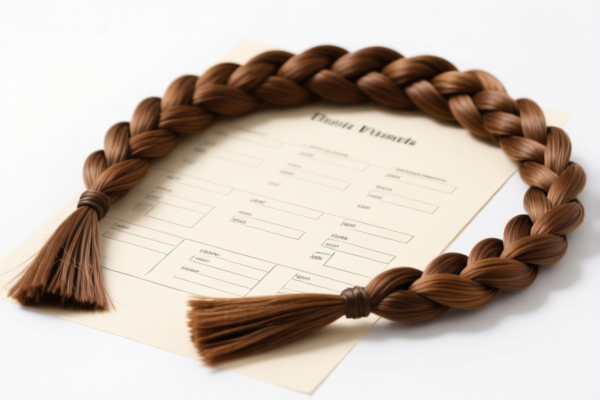
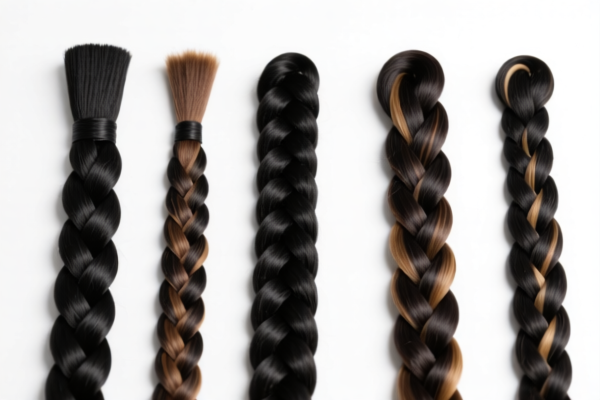
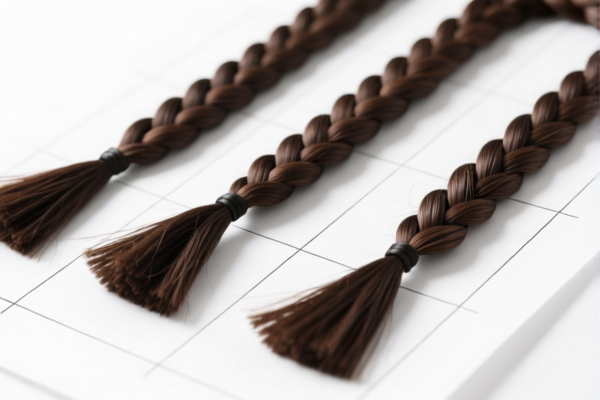
AI Analysis
🧶 Plaits Sheet for Commercial Use
🌐 HS Code Reference & Customs Clearance Guide | 2026 Latest Tariff Full Analysis | Professional Clearance Strategy
📌 I. Product Definition & Classification: Do You Really Understand "Plaits Sheet"?
Plaits Sheet (often referred to as woven strips, braided sheets, or industrial woven fabrics) is a versatile material used in industrial manufacturing, furniture assembly, and technical applications. In international trade, its classification depends heavily on its material composition, structure, and specific end-use.
⚠️ Key Distinction Point:
- If made of textile fibers (cotton, synthetic) for industrial filtering or technical use → Chapter 59
- If made of metal wire (steel, aluminum, copper) for industrial mesh → Chapter 73
- If made of synthetic filament yarns → Chapter 54
- If made of plastic for furniture components → Chapter 39
📦 II. HS Code Classification Details (2026 Latest Tariff Authority Comparison)
| HS Code | Product Description | Application Scenario | Material Inference | Tax Rate (Total) |
|---|---|---|---|---|
5911.90.00.40 |
Industrial Woven Sheets, Textile Form, Technical Use | Industrial filtering, technical textile products | Textile/Fabric | 38.8% |
7314.12.60.00 |
Industrial Woven Sheets, Metal Form | Industrial mesh, metal strips | Steel/Aluminum/Copper | 85.0% |
5911.90.00.80 |
Industrial Woven Sheets, Other Textile Category | Technical textiles, other categories | Textile/Fabric | 38.8% |
5407.93.20.30 |
Industrial Woven Sheets, Synthetic Filament Yarn | Synthetic fabric sheets, technical use | Synthetic Filament | 47.0% |
3926.30.50.00 |
Furniture Woven Sheets, Plastic Component | Furniture components, plastic weave | Plastic | 22.8% |
🔍 Key Reminder:
- Metal vs. Non-Metal: This is the most critical distinction. If the "plait" is made of metal wire, it falls under Chapter 73 (Metal Articles), which incurs the highest tariff (85.0%).
- Textile vs. Plastic: If it's a soft, flexible sheet, it's likely Chapter 59 or 54. If it's rigid plastic weaving, it's Chapter 39.
- Use Case: "Industrial" vs. "Furniture" use can shift the code within the same material chapter.
💰 III. 2026 Latest Tariff Rate Details (Including Surtaxes, Policy Add-ons)
✅ Applicable Country: United States (US)
✅ Origin: China (CN)
✅ Effective Time: From November 10, 2025 (and subsequent imports)
🎯 1. 5911.90.00.40 & 5911.90.00.80 —— Industrial Woven Sheets (Textile)
| Item | Content |
|---|---|
| Base Tariff | 3.8% (ad valorem) |
| Section 301 Surtax | +25.0% |
| IEEPA Surtax (122 Clause) | +10.0% |
| Total Rate | 38.8% |
| Calculation | CIF Value × 38.8% |
| De Minimis Exemption | ❌ Not Eligible |
| Legal Basis Path | USITC:5911.90.00.40/80 → Footnote: 301 → IEEPA:122 |
📌 Explanation:
- Both codes fall under Chapter 59 (Textile Articles for Technical Uses).
- The 25% Section 301 tariff applies to most textile products from China.
- The 10% IEEPA tariff is applied on top, bringing the total to 38.8%.
- Strategy: If possible, optimize product description to ensure it's not misclassified as metal or plastic, which have different rates.
🎯 2. 7314.12.60.00 —— Industrial Woven Sheets (Metal)
| Item | Content |
|---|---|
| Base Tariff | 0.0% |
| Section 301 Surtax | +25.0% |
| IEEPA Surtax (122 Clause) | +10.0% |
| Steel/Aluminum/Copper Surtax | +50.0% |
| Total Rate | 85.0% |
| Calculation | CIF Value × 85.0% |
| De Minimis Exemption | ❌ Not Eligible |
| Legal Basis Path | USITC:7314.12.60.00 → Footnote: 301 → IEEPA:122 → Steel/Al/Cu Footnote |
📌 Critical Warning:
- This is the highest tax bracket.
- If your "plait sheet" is made of metal wire (steel, aluminum, copper), it is subject to an additional 50% surtax on top of the standard 301/IEEPA tariffs.
- Total: 85%. This is extremely costly.
- Action: Verify material. If it's a synthetic fiber coated to look metallic, do NOT classify as metal unless explicitly required.
🎯 3. 5407.93.20.30 —— Industrial Woven Sheets (Synthetic Filament)
| Item | Content |
|---|---|
| Base Tariff | 12.0% |
| Section 301 Surtax | +25.0% |
| IEEPA Surtax (122 Clause) | +10.0% |
| Total Rate | 47.0% |
| Calculation | CIF Value × 47.0% |
| De Minimis Exemption | ❌ Not Eligible |
| Legal Basis Path | USITC:5407.93.20.30 → Footnote: 301 → IEEPA:122 |
📌 Explanation:
- Applies to synthetic filament yarn fabrics (e.g., polyester, nylon).
- Higher base rate (12%) compared to Chapter 59 (3.8%).
- Strategy: If the product is a blend, ensure the primary material is correctly identified.
🎯 4. 3926.30.50.00 —— Furniture Woven Sheets (Plastic)
| Item | Content |
|---|---|
| Base Tariff | 5.3% |
| Section 301 Surtax | +7.5% |
| IEEPA Surtax (122 Clause) | +10.0% |
| Total Rate | 22.8% |
| Calculation | CIF Value × 22.8% |
| De Minimis Exemption | ❌ Not Eligible |
| Legal Basis Path | USITC:3926.30.50.00 → Footnote: 301 → IEEPA:122 |
📌 Explanation:
- This is the most cost-effective classification if the product is a plastic component for furniture.
- Lower base rate and lower 301 surtax (7.5% vs 25%).
- Strategy: If the sheet is used in furniture and is plastic-based, this is the optimal code.
🛠️ IV. Customs Clearance Practical Advice (Pitfall Avoidance Guide)
✅ 1. Document Preparation Checklist (No Exceptions)
| Document | Required | Description |
|---|---|---|
| ✅ Product Specifications | ✔️ | Detailed material composition (e.g., 100% Polyester, Stainless Steel Wire, PVC) |
| ✅ Material Certificate | ✔️ | Proof of material (crucial to avoid 85% metal tariff) |
| ✅ Product Photos | ✔️ | Clear images showing weave structure, flexibility, and end-use |
| ✅ Commercial Invoice | ✔️ | Clearly state "Plait Sheet for Industrial/Furniture Use" |
| ✅ Packing List | ✔️ | Detail weight, dimensions, and quantity |
✅ 2. Declaration Tips (Key Mnemonic)
🔥 "Material First, Use Second, Code Third, Tax Saves!"
| Scenario | Correct Declaration | Wrong Practice |
|---|---|---|
| Metal Wire Mesh | 7314.12.60.00 |
Misdeclare as textile → 85% tax vs 38.8% |
| Plastic Furniture Weave | 3926.30.50.00 |
Misdeclare as textile → 22.8% vs 38.8% |
| Synthetic Fabric | 5407.93.20.30 |
Misdeclare as metal → 47% vs 85% |
| Technical Textile | 5911.90.00.40 |
Misdeclare as plastic → 38.8% vs 22.8% |
✅ 3. Special Situation Handling
| Situation | Handling Advice |
|---|---|
| Mixed Material | If blend, classify based on principal material. Provide blend ratio proof. |
| Coated Fabric | If fabric is coated with plastic, it may shift to Chapter 39 or 59. Analyze coating weight. |
| OEM Customization | Provide design drawings to prove end-use (e.g., furniture vs. industrial filter). |
| Plastic vs. Rubber | Ensure it's not classified as rubber (Chapter 40), which has different tariffs. |
🌍 V. Global Market Clearance Comparison (2026 Latest)
| Country/Region | Recommended HS Code | Tariff | Certification | Remarks |
|---|---|---|---|---|
| 🇺🇸 USA | 5911.90.00.40 |
38.8% | None specific | 85% for metal! |
| 🇨🇳 China | 5911.90.00.40 |
5% | CCC (if applicable) | No extra surtax |
| 🇪🇺 EU | 5911.90 |
0-6.5% | CE (if relevant) | No surtax |
| 🇦🇺 Australia | 5911.90 |
5% | N/A | No surtax |
| 🇯🇵 Japan | 5911.90 |
0-6% | PSE (if electrical) | No surtax |
📌 Conclusion:
- USA is the most challenging market due to high surtaxes, especially for metal products (85%).
- Plastic/Furniture use offers the lowest tax (22.8%) in the US.
- Non-US markets have significantly lower barriers.
📌 VI. Common Errors & Pitfall Guide (Blood-Test Lessons)
❌ Error 1: Classifying metal wire mesh as textile
👉 Consequence: Tariff drops from 85% to 38.8% if declared correctly as textile, but if it IS metal and declared as textile, it’s misdeclaration → Fine + Back Taxes!
👉 Correction: If metal, declare as 7314.12.60.00 (85%) but ensure material is truly metal. If it's plastic-coated wire, consider Chapter 39 or 59.
❌ Error 2: Classifying plastic furniture weave as technical textile
👉 Consequence: Tax increases from 22.8% to 38.8%.
👉 Correction: Use 3926.30.50.00 for plastic furniture components.
❌ Error 3: Ignoring material composition
👉 Consequence: Customs may reclassify based on inspection, leading to delays.
👉 Correction: Provide material certificates and photos.
❌ Error 4: Using vague terms like "Industrial Sheet"
👉 Consequence: Customs ambiguity → Higher duty assessment.
👉 Correction: Be specific: "Plastic Woven Sheet for Furniture, Model XYZ, Material: PVC."
✅ Correct Practice:
"Plastic Woven Sheet for Furniture, Model ABC, 100% PVC, Flexible, Non-Industrial Technical Use"
🎯 VII. Conclusion: Precise Classification, Cost Savings!
🎯 Remember the Mnemonic:
🔹 "Metal is 85%, Plastic is 22.8%, Textile is 38.8%!"
🔹 "Check material first, avoid 85% metal tax!"
📌 Tips:
- If your product is plastic-based and used in furniture, aim for 3926.30.50.00 (22.8%).
- If metal, prepare for 7314.12.60.00 (85%) unless you can prove it's not steel/aluminum/copper.
- Pre-classification Ruling: Apply for an Advance Ruling from US Customs if the material is ambiguous.
📣 Immediate Action:
📞 Consult a professional customs broker + Provide material proof + Apply for Advance Ruling
🚀 Ensure your "Plaits Sheet" clears customs efficiently and profitably!
✨ Professional Clearance Starts with Accurate Classification!
💼 Every cent saved is profit gained!
Customer Reviews
About HS Code Classification
The Harmonized System (HS) is an internationally standardized nomenclature developed by the World Customs Organization (WCO) to classify traded products. Over 200 countries use the HS system as the basis for customs tariffs, trade statistics, and import/export regulations.
Each HS code follows a hierarchical structure:
- Chapter (2 digits) — Broad category of goods (e.g., Chapter 84: Machinery and Mechanical Appliances)
- Heading (4 digits) — More specific grouping within the chapter
- Subheading (6 digits) — Internationally standardized breakdown, used by all WCO member countries
- National subdivisions (8-10 digits) — Country-specific extensions for further classification, such as US HTSUS 10-digit codes
Correct HS code classification is essential for smooth customs clearance, accurate duty payment, and compliance with trade regulations. Misclassification can lead to customs delays, overpayment of duties, or penalties.
When importing from CN to US, the applicable tariff rates may include:
- Most-Favored-Nation (MFN) rate — The standard duty rate applied to WTO members
- General rate — Applied to countries without trade agreements
- Trade remedy duties — Additional tariffs such as Section 301 (anti-dumping), Section 232 (national security), or countervailing duties
The information provided on this page is for reference purposes only. For official classification, please consult with your local customs authority or a licensed customs broker.