Plant Fiber Reinforced Conveyor Belt
CN → US| HS编码 | 关税税率 | 原产国 | 目的国 | 文档 |
|---|---|---|---|---|
| 4823902000 | 35.0% | CN | US | 官方文档 |
| 4823908000 | 35.0% | CN | US | 官方文档 |
| 4411940040 | 35.0% | CN | US | 官方文档 |
| 4411940010 | 35.0% | CN | US | 官方文档 |
| 5910009000 | 37.6% | CN | US | 官方文档 |
商品图片
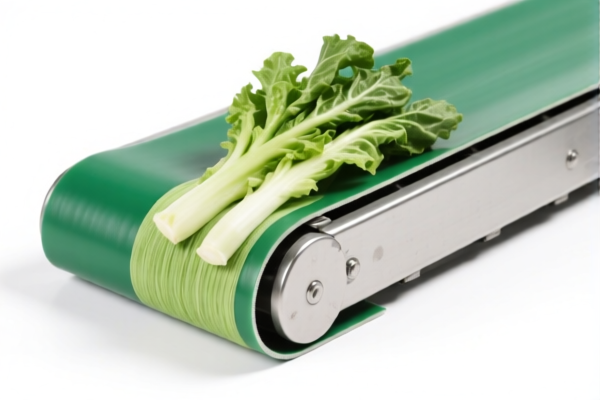
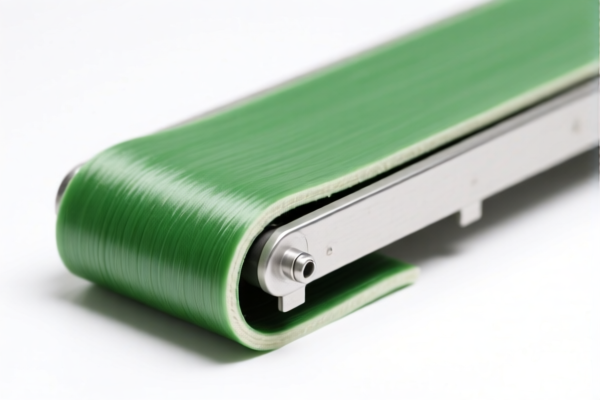
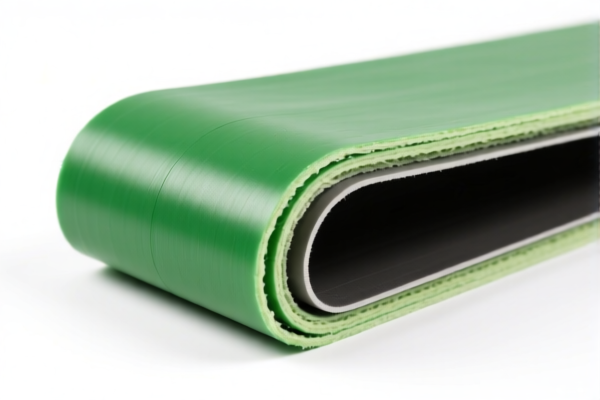
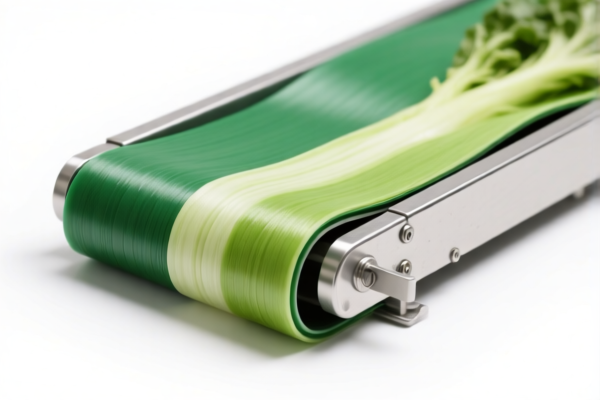
AI分析
🏭 Plant Fiber Reinforced Conveyor Belt: HS Code Classification & Customs Strategy (2026)
🌐 HS Code Reference & Customs Guide | 2026 Latest Tariff Analysis | Professional Clearance Strategy
📌 Part 1: Product Definition & Classification – What is "Plant Fiber Reinforced"?
The term "Plant Fiber Reinforced Conveyor Belt" presents a classification ambiguity because it blends material composition (plant/fibers) with end-use (conveyor belt). In international trade, customs authorities prioritize the essential character or specific function of the product.
- Material Perspective: "Plant fiber" implies cellulose, wood pulp, or non-woven mats.
- Functional Perspective: "Conveyor belt" is a specific industrial article designed for transporting materials.
⚠️ Critical Distinction:
- If the product is primarily a sheet/board made of fibers used for structural reinforcement → It may be classified under Chapter 48 (Paper) or Chapter 44 (Wood/Plant Fibers).
- If the product is a finished conveyor belt made with textile/plant fiber reinforcement → It is classified under Chapter 59 (Impregnated Textile Products).
- Customs Reality: If it is a "belt" intended for mechanical transport, Chapter 59 is often the correct functional classification. If it is a "board/panel" that happens to be strong due to fibers, Chapter 48/44 applies.
📦 Part 2: HS Code Classification Details (Based on Provided Data)
Below are the specific HS Codes from the reference data, explained based on their technical attributes.
| HS Code | Product Description & Attribute Analysis | Applicable Scenario |
|---|---|---|
| 5910.00.90.00 | Textile-Reinforced Conveyor Belts: The product is a conveyor belt where the reinforcement layer consists of textile/plant fibers. The "belt" form and "transport" function define its essential character. | Finished conveyor belts using plant/textile cords or fabric for strength. |
| 4823.90.20.00 | Plant Fiber Reinforced Boards (Cellulose): Classified as a paper/cellulose product. The shape is a "board/panel," not a continuous belt. It relies on cellulose/plant fiber properties. | Rigid sheets/boards made of paper pulp or plant fibers, used for structural reinforcement, not for flexible transport. |
| 4823.90.80.00 | Plant Fiber Reinforced Boards (Non-Woven/Mat): Similar to above, but emphasizes the fiber mat/non-woven nature. Falls under paper/cellulose制品. | Non-woven plant fiber mats/boards used for insulation, packaging, or rigid support, not for flexible conveying. |
| 4411.94.00.40 | Plant Fiber Reinforced Boards (Wood-like): Classified as a wood/wood-based fiber board. The "plant fiber" is interpreted as wood fiber or lignocellulosic material. | Fiberboards made from compressed wood/plant fibers, used for construction or furniture, not as flexible belts. |
| 4411.94.00.10 | Plant Fiber Reinforced Boards (Wood Fiber): Specifically for boards where the fiber is derived from wood. The "reinforced board" aspect matches the fiberboard definition. | High-density fiberboards (HDF) or similar wood-based panels. |
🔍 Key Insight:
- 5910.00.90.00 is the only code that explicitly recognizes the "Conveyor Belt" function.
- Codes 4823 and 4411 classify the product as a "Board/Panel" based on material (cellulose/wood fiber), ignoring the "belt" function.
- Selection Rule: If the item is a flexible belt for transport, use 5910. If it is a rigid board made of plant fibers, use 4823 or 4411.
💰 Part 3: 2026 Tariff Rate Breakdown (Detailed Tax Clauses)
✅ Applicable Country: United States (US)
✅ Origin: China (CN)
✅ Effective Date: November 10, 2025 (for imports thereafter)
🎯 1. 5910.00.90.00 – Textile-Reinforced Conveyor Belts
| Item | Content |
|---|---|
| Base Tariff | 2.6% (Ad Valorem) |
| USITC Additional Tariff (Section 301) | +25% |
| IEEPA Additional Tariff (Section 122) | +10% |
| Total Tariff Rate | 37.6% |
| Tax Calculation | CIF Value × 37.6% |
| De Minimis Eligibility | ❌ Not Eligible (High duty rate prohibits de minimis exemption) |
| Legal Basis Path | USITC:5910.00.90.00 → FOOTNOTE:301 → IEEPA:9903.01.24 → Section 122: 10% |
📌 Explanation:
- 2.6%: Standard Most Favored Nation (MFN) rate for conveyor belts.
- 25%: Section 301 tariff on Chinese goods in Chapter 59.
- 10%: IEEPA Section 122 tariff targeting specific Chinese imports.
- Total: 37.6%. This is a significant cost burden. Importers must calculate margin impact carefully.
🎯 2. 4823.90.20.00 – Plant Fiber Reinforced Boards (Cellulose)
| Item | Content |
|---|---|
| Base Tariff | 0.0% |
| USITC Additional Tariff (Section 301) | +25% |
| IEEPA Additional Tariff (Section 122) | +10% |
| Total Tariff Rate | 35.0% |
| Tax Calculation | CIF Value × 35.0% |
| De Minimis Eligibility | ❌ Not Eligible |
| Legal Basis Path | USITC:4823.90.20.00 → FOOTNOTE:301 → IEEPA:9903.01.24 → Section 122: 10% |
📌 Explanation:
- 0.0% Base: Paper/board products often have low base duties.
- 25% + 10%: Still subject to Section 301 and Section 122 tariffs.
- Total: 35.0%. Slightly lower than conveyor belts, but still high.
🎯 3. 4823.90.80.00 – Plant Fiber Reinforced Boards (Non-Woven)
| Item | Content |
|---|---|
| Base Tariff | 0.0% |
| USITC Additional Tariff (Section 301) | +25% |
| IEEPA Additional Tariff (Section 122) | +10% |
| Total Tariff Rate | 35.0% |
| Tax Calculation | CIF Value × 35.0% |
| De Minimis Eligibility | ❌ Not Eligible |
| Legal Basis Path | USITC:4823.90.80.00 → FOOTNOTE:301 → IEEPA:9903.01.24 → Section 122: 10% |
🎯 4. 4411.94.00.40 & 4411.94.00.10 – Plant Fiber Reinforced Boards (Wood-based)
| Item | Content |
|---|---|
| Base Tariff | 0.0% |
| USITC Additional Tariff (Section 301) | +25% |
| IEEPA Additional Tariff (Section 122) | +10% |
| Total Tariff Rate | 35.0% |
| Tax Calculation | CIF Value × 35.0% |
| De Minimis Eligibility | ❌ Not Eligible |
| Legal Basis Path | USITC:4411.94.00.XX → FOOTNOTE:301 → IEEPA:9903.01.24 → Section 122: 10% |
📌 Summary for Boards:
All "Board/Panel" classifications under Chapters 44 and 48 have a 35.0% total duty. This is 2.6% lower than the conveyor belt classification (5910.00.90.00).
🛠️ Part 4: Customs Clearance Practical Advice (Avoiding Pitfalls)
✅ 1. Preparation Checklist (Mandatory)
| Document | Required? | Description |
|---|---|---|
| ✅ Product Specification Sheet | ✔️ | Must clearly state: Material (Plant Fiber/Cellulose/Wood), Form (Belt vs. Board), Thickness, Reinforcement Type. |
| ✅ Photos (Clear & Detailed) | ✔️ | Show the product's flexibility. Is it a rigid board? Or a flexible belt? Include close-ups of the fiber texture. |
| ✅ Commercial Invoice | ✔️ | Must accurately describe the product. Avoid vague terms like "Fiber Product." Use "Conveyor Belt" or "Fiberboard." |
| ✅ Bill of Lading/Air Waybill | ✔️ | Ensure HS Code matches the commercial invoice. |
| ✅ Origin Certificate (CO) | ✔️ | If applicable, to verify origin (China). |
✅ 2. Declaration Strategy (Key Tips)
🔥 "Form Dictates Function, Function Dictates Code"
| Scenario | Correct HS Code | Why? |
|---|---|---|
| Flexible belt for machinery | 5910.00.90.00 |
It is a "Conveyor Belt." The plant fiber is just the reinforcement material. |
| Rigid sheet/panel for construction | 4823.90.20.00 / 4411.94.00.10 |
It is a "Board." It cannot bend like a belt. It is used as a structural material. |
| Non-woven mat for insulation | 4823.90.80.00 |
It is a "Cellulose/Cotton-like" product, not a finished belt or rigid board. |
⚠️ Common Error:
Calling a "rigid plant fiber board" a "conveyor belt" to avoid higher duties?
❌ Risk: Customs will inspect the physical good. If it’s rigid, they will reclassify it to 4823/4411. If it’s flexible but declared as a board, they will reclassify to 5910.
✅ Advice: Be truthful about the product's physical form. If it bends, it’s likely a belt. If it doesn’t, it’s a board.
✅ 3. Special Considerations
| Situation | Recommendation |
|---|---|
| Mixed Shipment (Boards + Belts) | Do not combine in one HS code. Declare separately. Mixing will lead to audits and potential penalties. |
| Plant Fiber Source | If the fiber is wood-based, lean towards 4411. If it is non-wood cellulose (e.g., hemp, jute, straw), lean towards 4823. |
| Reinforcement Material | If the belt has a metal cord core, it might be classified differently (e.g., 4016 or 8438). This guide assumes pure plant/textile reinforcement. |
🌍 Part 5: Global Market Comparison (2026)
| Country/Region | Recommended HS Code | Total Duty Rate | Remarks |
|---|---|---|---|
| 🇺🇸 USA | 5910.00.90.00 |
37.6% | High duty due to Sec 301 & 122. |
| 🇨🇳 China | 5910.00.90.00 |
~10% | Lower base duty, no US-style additional tariffs. |
| 🇪🇺 EU | 5910.00.00 |
~6% | No Section 301/122 equivalent. Standard CE rules apply. |
| 🇦🇺 Australia | 5910.00.00 |
~5% | No significant additional tariffs. |
| 🇯🇵 Japan | 5910.00.00 |
~6% | Standard MFN rates. |
📌 Conclusion:
The USA is the most challenging market for this product due to the 35%-37.6% duty burden.
- If the product is a conveyor belt, expect 37.6%.
- If it is a board/panel, expect 35.0%.
- Strategy: Consider sourcing from countries with US free trade agreements (e.g., Mexico, Canada) or verify if the product qualifies for any exclusions.
📌 Part 6: Common Errors & Pitfalls (Lessons Learned)
❌ Error 1: Declaring a rigid board as a conveyor belt (5910.00.90.00) to avoid inspection?
👉 Consequence: Customs will seize the goods, demand reclassification, and impose penalties. The duty difference is only 2.6%, but the delay cost is huge.
❌ Error 2: Declaring a flexible belt as a board (4823) to save 2.6%?
👉 Consequence: Customs may accept it, but if audited, they will find it’s a belt. This is misclassification.
❌ Error 3: Ignoring the Section 122 10% Tariff.
👉 Consequence: Many importers forget this additional 10%. They only budget for 25% (Sec 301). Total is 35-37.6%. Failing to include this leads to underpayment and penalties.
✅ Correct Approach:
"Plant Fiber Reinforced Conveyor Belt, Flexible, Textile/Cellosine Cord, Width 500mm, for Industrial Use, Made in China."
Use HS Code5910.00.90.00.
🎯 Part 7: Final Recommendation
🎯 Key Takeaway:
🔹 "If it bends, it’s a belt (5910, 37.6%). If it stands, it’s a board (4823/4411, 35.0%)."
🔹 "Section 122 10% is mandatory. Don’t forget it!"
📌 Action Item:
1. Confirm Product Form: Is it rigid or flexible?
2. Select HS Code: 5910.00.90.00 (Belt) or 4823/4411 (Board).
3. Calculate Landed Cost: Include 37.6% (Belt) or 35.0% (Board) in your budget.
4. Document Everything: Keep photos and specs ready for customs inspection.
✨ Professional Clearance, Start with Accurate Classification!
💼 Your Profit Margin Depends on Precision!
用户评价
关于 HS 编码归类
协调制度(HS)是由世界海关组织(WCO)制定的国际贸易商品分类标准。全球 200 多个国家采用 HS 系统作为海关关税、贸易统计和进出口监管的基础。
每个 HS 编码遵循以下层级结构:
- 章(2 位)——商品大类(例如:第 84 章:机器和机械设备)
- 品目(4 位)——章内的更具体分类
- 子目(6 位)——国际通用细分,所有 WCO 成员国统一使用
- 本国细分(8-10 位)——各国自行扩展的细分编码,如美国 HTSUS 10 位编码
正确的 HS 编码归类对于顺利通关、准确缴纳关税和遵守贸易法规至关重要。错误归类可能导致海关延误、多缴关税或罚款。
从CN进口到US时,适用的关税税率可能包括:
- 最惠国(MFN)税率——适用于 WTO 成员国的标准关税税率
- 普通税率——适用于无贸易协定国家
- 贸易救济关税——附加关税,如 301 条款(反倾销)、232 条款(国家安全)或反补贴税
本页内容仅供参考。如需正式归类,请咨询当地海关或持牌报关代理。