Plant Fiber Reinforced Conveyor Belt
CN → US| HS Code | Tariff Rate | Origin | Destination | Doc |
|---|---|---|---|---|
| 4823902000 | 35.0% | CN | US | Official Doc |
| 4823908000 | 35.0% | CN | US | Official Doc |
| 4411940040 | 35.0% | CN | US | Official Doc |
| 4411940010 | 35.0% | CN | US | Official Doc |
| 5910009000 | 37.6% | CN | US | Official Doc |
Product Images
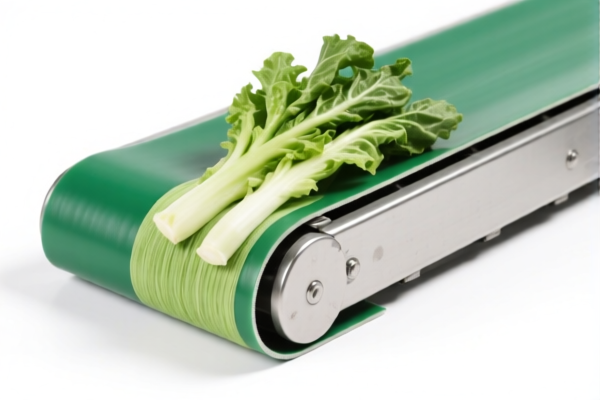
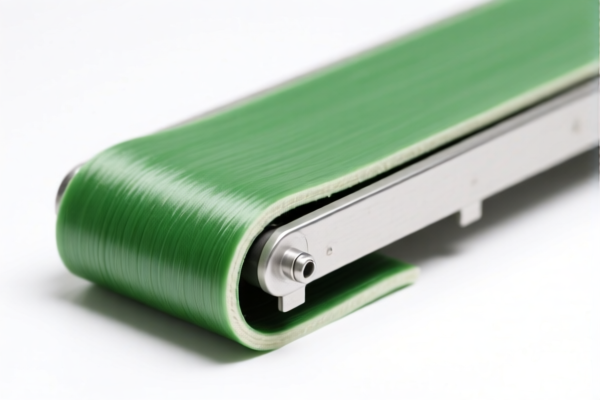
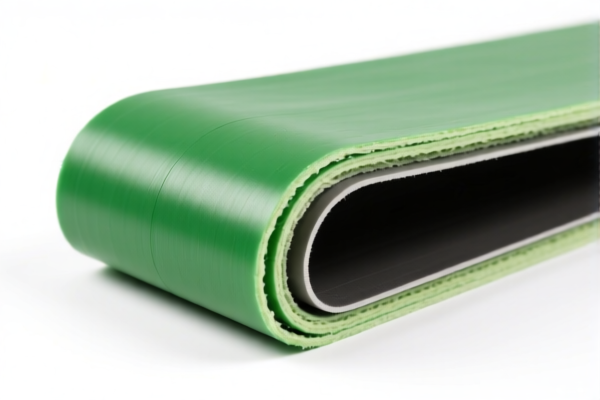
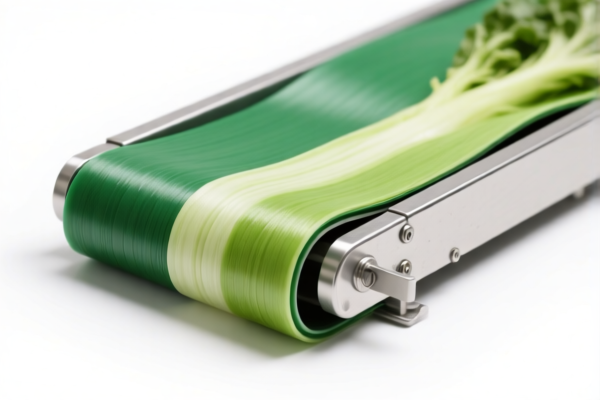
AI Analysis
🏭 Plant Fiber Reinforced Conveyor Belt: HS Code Classification & Customs Strategy (2026)
🌐 HS Code Reference & Customs Guide | 2026 Latest Tariff Analysis | Professional Clearance Strategy
📌 Part 1: Product Definition & Classification – What is "Plant Fiber Reinforced"?
The term "Plant Fiber Reinforced Conveyor Belt" presents a classification ambiguity because it blends material composition (plant/fibers) with end-use (conveyor belt). In international trade, customs authorities prioritize the essential character or specific function of the product.
- Material Perspective: "Plant fiber" implies cellulose, wood pulp, or non-woven mats.
- Functional Perspective: "Conveyor belt" is a specific industrial article designed for transporting materials.
⚠️ Critical Distinction:
- If the product is primarily a sheet/board made of fibers used for structural reinforcement → It may be classified under Chapter 48 (Paper) or Chapter 44 (Wood/Plant Fibers).
- If the product is a finished conveyor belt made with textile/plant fiber reinforcement → It is classified under Chapter 59 (Impregnated Textile Products).
- Customs Reality: If it is a "belt" intended for mechanical transport, Chapter 59 is often the correct functional classification. If it is a "board/panel" that happens to be strong due to fibers, Chapter 48/44 applies.
📦 Part 2: HS Code Classification Details (Based on Provided Data)
Below are the specific HS Codes from the reference data, explained based on their technical attributes.
| HS Code | Product Description & Attribute Analysis | Applicable Scenario |
|---|---|---|
| 5910.00.90.00 | Textile-Reinforced Conveyor Belts: The product is a conveyor belt where the reinforcement layer consists of textile/plant fibers. The "belt" form and "transport" function define its essential character. | Finished conveyor belts using plant/textile cords or fabric for strength. |
| 4823.90.20.00 | Plant Fiber Reinforced Boards (Cellulose): Classified as a paper/cellulose product. The shape is a "board/panel," not a continuous belt. It relies on cellulose/plant fiber properties. | Rigid sheets/boards made of paper pulp or plant fibers, used for structural reinforcement, not for flexible transport. |
| 4823.90.80.00 | Plant Fiber Reinforced Boards (Non-Woven/Mat): Similar to above, but emphasizes the fiber mat/non-woven nature. Falls under paper/cellulose制品. | Non-woven plant fiber mats/boards used for insulation, packaging, or rigid support, not for flexible conveying. |
| 4411.94.00.40 | Plant Fiber Reinforced Boards (Wood-like): Classified as a wood/wood-based fiber board. The "plant fiber" is interpreted as wood fiber or lignocellulosic material. | Fiberboards made from compressed wood/plant fibers, used for construction or furniture, not as flexible belts. |
| 4411.94.00.10 | Plant Fiber Reinforced Boards (Wood Fiber): Specifically for boards where the fiber is derived from wood. The "reinforced board" aspect matches the fiberboard definition. | High-density fiberboards (HDF) or similar wood-based panels. |
🔍 Key Insight:
- 5910.00.90.00 is the only code that explicitly recognizes the "Conveyor Belt" function.
- Codes 4823 and 4411 classify the product as a "Board/Panel" based on material (cellulose/wood fiber), ignoring the "belt" function.
- Selection Rule: If the item is a flexible belt for transport, use 5910. If it is a rigid board made of plant fibers, use 4823 or 4411.
💰 Part 3: 2026 Tariff Rate Breakdown (Detailed Tax Clauses)
✅ Applicable Country: United States (US)
✅ Origin: China (CN)
✅ Effective Date: November 10, 2025 (for imports thereafter)
🎯 1. 5910.00.90.00 – Textile-Reinforced Conveyor Belts
| Item | Content |
|---|---|
| Base Tariff | 2.6% (Ad Valorem) |
| USITC Additional Tariff (Section 301) | +25% |
| IEEPA Additional Tariff (Section 122) | +10% |
| Total Tariff Rate | 37.6% |
| Tax Calculation | CIF Value × 37.6% |
| De Minimis Eligibility | ❌ Not Eligible (High duty rate prohibits de minimis exemption) |
| Legal Basis Path | USITC:5910.00.90.00 → FOOTNOTE:301 → IEEPA:9903.01.24 → Section 122: 10% |
📌 Explanation:
- 2.6%: Standard Most Favored Nation (MFN) rate for conveyor belts.
- 25%: Section 301 tariff on Chinese goods in Chapter 59.
- 10%: IEEPA Section 122 tariff targeting specific Chinese imports.
- Total: 37.6%. This is a significant cost burden. Importers must calculate margin impact carefully.
🎯 2. 4823.90.20.00 – Plant Fiber Reinforced Boards (Cellulose)
| Item | Content |
|---|---|
| Base Tariff | 0.0% |
| USITC Additional Tariff (Section 301) | +25% |
| IEEPA Additional Tariff (Section 122) | +10% |
| Total Tariff Rate | 35.0% |
| Tax Calculation | CIF Value × 35.0% |
| De Minimis Eligibility | ❌ Not Eligible |
| Legal Basis Path | USITC:4823.90.20.00 → FOOTNOTE:301 → IEEPA:9903.01.24 → Section 122: 10% |
📌 Explanation:
- 0.0% Base: Paper/board products often have low base duties.
- 25% + 10%: Still subject to Section 301 and Section 122 tariffs.
- Total: 35.0%. Slightly lower than conveyor belts, but still high.
🎯 3. 4823.90.80.00 – Plant Fiber Reinforced Boards (Non-Woven)
| Item | Content |
|---|---|
| Base Tariff | 0.0% |
| USITC Additional Tariff (Section 301) | +25% |
| IEEPA Additional Tariff (Section 122) | +10% |
| Total Tariff Rate | 35.0% |
| Tax Calculation | CIF Value × 35.0% |
| De Minimis Eligibility | ❌ Not Eligible |
| Legal Basis Path | USITC:4823.90.80.00 → FOOTNOTE:301 → IEEPA:9903.01.24 → Section 122: 10% |
🎯 4. 4411.94.00.40 & 4411.94.00.10 – Plant Fiber Reinforced Boards (Wood-based)
| Item | Content |
|---|---|
| Base Tariff | 0.0% |
| USITC Additional Tariff (Section 301) | +25% |
| IEEPA Additional Tariff (Section 122) | +10% |
| Total Tariff Rate | 35.0% |
| Tax Calculation | CIF Value × 35.0% |
| De Minimis Eligibility | ❌ Not Eligible |
| Legal Basis Path | USITC:4411.94.00.XX → FOOTNOTE:301 → IEEPA:9903.01.24 → Section 122: 10% |
📌 Summary for Boards:
All "Board/Panel" classifications under Chapters 44 and 48 have a 35.0% total duty. This is 2.6% lower than the conveyor belt classification (5910.00.90.00).
🛠️ Part 4: Customs Clearance Practical Advice (Avoiding Pitfalls)
✅ 1. Preparation Checklist (Mandatory)
| Document | Required? | Description |
|---|---|---|
| ✅ Product Specification Sheet | ✔️ | Must clearly state: Material (Plant Fiber/Cellulose/Wood), Form (Belt vs. Board), Thickness, Reinforcement Type. |
| ✅ Photos (Clear & Detailed) | ✔️ | Show the product's flexibility. Is it a rigid board? Or a flexible belt? Include close-ups of the fiber texture. |
| ✅ Commercial Invoice | ✔️ | Must accurately describe the product. Avoid vague terms like "Fiber Product." Use "Conveyor Belt" or "Fiberboard." |
| ✅ Bill of Lading/Air Waybill | ✔️ | Ensure HS Code matches the commercial invoice. |
| ✅ Origin Certificate (CO) | ✔️ | If applicable, to verify origin (China). |
✅ 2. Declaration Strategy (Key Tips)
🔥 "Form Dictates Function, Function Dictates Code"
| Scenario | Correct HS Code | Why? |
|---|---|---|
| Flexible belt for machinery | 5910.00.90.00 |
It is a "Conveyor Belt." The plant fiber is just the reinforcement material. |
| Rigid sheet/panel for construction | 4823.90.20.00 / 4411.94.00.10 |
It is a "Board." It cannot bend like a belt. It is used as a structural material. |
| Non-woven mat for insulation | 4823.90.80.00 |
It is a "Cellulose/Cotton-like" product, not a finished belt or rigid board. |
⚠️ Common Error:
Calling a "rigid plant fiber board" a "conveyor belt" to avoid higher duties?
❌ Risk: Customs will inspect the physical good. If it’s rigid, they will reclassify it to 4823/4411. If it’s flexible but declared as a board, they will reclassify to 5910.
✅ Advice: Be truthful about the product's physical form. If it bends, it’s likely a belt. If it doesn’t, it’s a board.
✅ 3. Special Considerations
| Situation | Recommendation |
|---|---|
| Mixed Shipment (Boards + Belts) | Do not combine in one HS code. Declare separately. Mixing will lead to audits and potential penalties. |
| Plant Fiber Source | If the fiber is wood-based, lean towards 4411. If it is non-wood cellulose (e.g., hemp, jute, straw), lean towards 4823. |
| Reinforcement Material | If the belt has a metal cord core, it might be classified differently (e.g., 4016 or 8438). This guide assumes pure plant/textile reinforcement. |
🌍 Part 5: Global Market Comparison (2026)
| Country/Region | Recommended HS Code | Total Duty Rate | Remarks |
|---|---|---|---|
| 🇺🇸 USA | 5910.00.90.00 |
37.6% | High duty due to Sec 301 & 122. |
| 🇨🇳 China | 5910.00.90.00 |
~10% | Lower base duty, no US-style additional tariffs. |
| 🇪🇺 EU | 5910.00.00 |
~6% | No Section 301/122 equivalent. Standard CE rules apply. |
| 🇦🇺 Australia | 5910.00.00 |
~5% | No significant additional tariffs. |
| 🇯🇵 Japan | 5910.00.00 |
~6% | Standard MFN rates. |
📌 Conclusion:
The USA is the most challenging market for this product due to the 35%-37.6% duty burden.
- If the product is a conveyor belt, expect 37.6%.
- If it is a board/panel, expect 35.0%.
- Strategy: Consider sourcing from countries with US free trade agreements (e.g., Mexico, Canada) or verify if the product qualifies for any exclusions.
📌 Part 6: Common Errors & Pitfalls (Lessons Learned)
❌ Error 1: Declaring a rigid board as a conveyor belt (5910.00.90.00) to avoid inspection?
👉 Consequence: Customs will seize the goods, demand reclassification, and impose penalties. The duty difference is only 2.6%, but the delay cost is huge.
❌ Error 2: Declaring a flexible belt as a board (4823) to save 2.6%?
👉 Consequence: Customs may accept it, but if audited, they will find it’s a belt. This is misclassification.
❌ Error 3: Ignoring the Section 122 10% Tariff.
👉 Consequence: Many importers forget this additional 10%. They only budget for 25% (Sec 301). Total is 35-37.6%. Failing to include this leads to underpayment and penalties.
✅ Correct Approach:
"Plant Fiber Reinforced Conveyor Belt, Flexible, Textile/Cellosine Cord, Width 500mm, for Industrial Use, Made in China."
Use HS Code5910.00.90.00.
🎯 Part 7: Final Recommendation
🎯 Key Takeaway:
🔹 "If it bends, it’s a belt (5910, 37.6%). If it stands, it’s a board (4823/4411, 35.0%)."
🔹 "Section 122 10% is mandatory. Don’t forget it!"
📌 Action Item:
1. Confirm Product Form: Is it rigid or flexible?
2. Select HS Code: 5910.00.90.00 (Belt) or 4823/4411 (Board).
3. Calculate Landed Cost: Include 37.6% (Belt) or 35.0% (Board) in your budget.
4. Document Everything: Keep photos and specs ready for customs inspection.
✨ Professional Clearance, Start with Accurate Classification!
💼 Your Profit Margin Depends on Precision!
Customer Reviews
About HS Code Classification
The Harmonized System (HS) is an internationally standardized nomenclature developed by the World Customs Organization (WCO) to classify traded products. Over 200 countries use the HS system as the basis for customs tariffs, trade statistics, and import/export regulations.
Each HS code follows a hierarchical structure:
- Chapter (2 digits) — Broad category of goods (e.g., Chapter 84: Machinery and Mechanical Appliances)
- Heading (4 digits) — More specific grouping within the chapter
- Subheading (6 digits) — Internationally standardized breakdown, used by all WCO member countries
- National subdivisions (8-10 digits) — Country-specific extensions for further classification, such as US HTSUS 10-digit codes
Correct HS code classification is essential for smooth customs clearance, accurate duty payment, and compliance with trade regulations. Misclassification can lead to customs delays, overpayment of duties, or penalties.
When importing from CN to US, the applicable tariff rates may include:
- Most-Favored-Nation (MFN) rate — The standard duty rate applied to WTO members
- General rate — Applied to countries without trade agreements
- Trade remedy duties — Additional tariffs such as Section 301 (anti-dumping), Section 232 (national security), or countervailing duties
The information provided on this page is for reference purposes only. For official classification, please consult with your local customs authority or a licensed customs broker.