Plant Fiber Woven Tool Bag
CN → US| HS编码 | 关税税率 | 原产国 | 目的国 | 文档 |
|---|---|---|---|---|
| 4602192940 | 40.3% | CN | US | 官方文档 |
| 4602192920 | 40.3% | CN | US | 官方文档 |
| 4823908000 | 35.0% | CN | US | 官方文档 |
| 4823902000 | 35.0% | CN | US | 官方文档 |
| 4202124000 | 41.3% | CN | US | 官方文档 |
商品图片
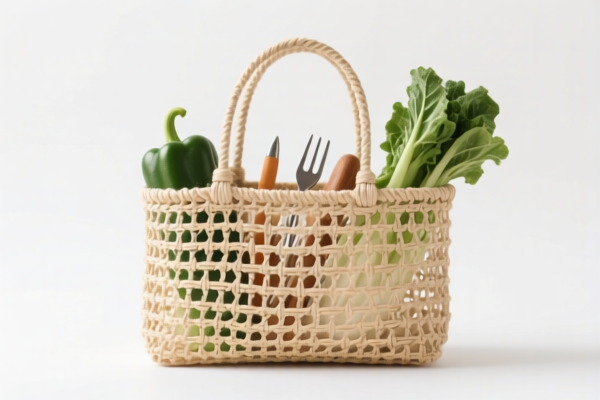
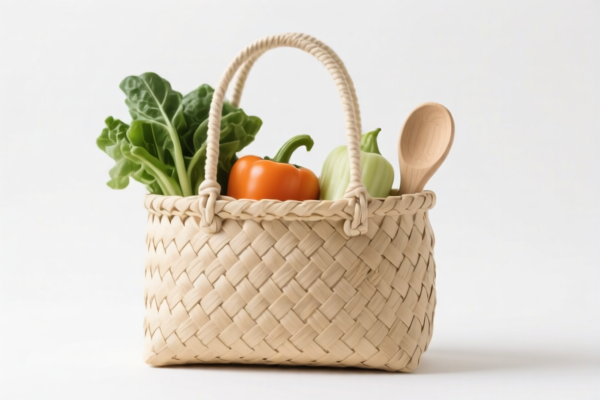
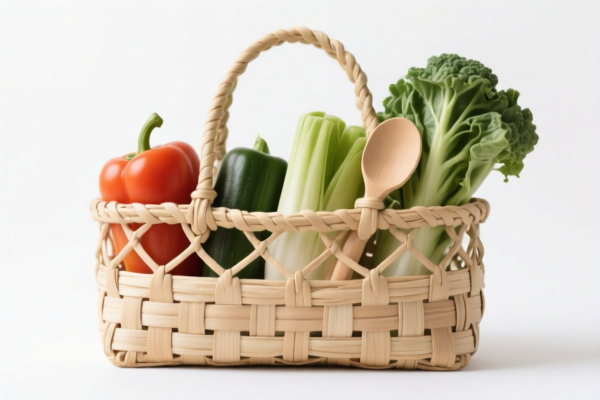
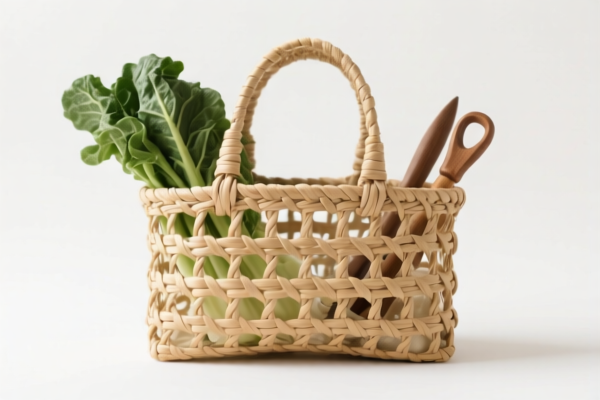
AI分析
🧺 Plant Fiber Woven Tool Bag (植物纤维编织工具包/收纳袋)
🌐 HS Code Reference & Clearance Guide | 2026 Latest Tariff Analysis | Professional US Entry Strategy
📌 I. Product Definition & Classification: What Exactly Is a "Plant Fiber Woven Tool Bag"?
A "Plant Fiber Woven Tool Bag" is an industrial or household accessory made from natural vegetative fibers (such as bamboo, rattan, water hyacinth, or straw) woven into a container. In international trade, its classification hinges on two critical factors: 1. Material Nature: Is it strictly a textile/vegetable fiber product, or is it processed like paper/cardboard? 2. Function/Shape: Is it a flexible bag for carrying tools (Chapter 42), or is it a rigid/semi-rigid container resembling a file folder or sheet product (Chapter 48)?
⚠️ Key Distinction Point:
- If the item is a soft-sided, flexible bag designed to hold tools, cosmetics, or personal items, it typically falls under Chapter 42 (Articles of Leather; Saddle Harness) or Chapter 46 (Woven Vegetables).
- If the item is a structured, flat, or sheet-like container resembling a file holder or document bag, it may fall under Chapter 48 (Paper and Paperboard).
- Note: The provided data suggests a conflict between "Bag" (Chapter 42/46) and "File Bag" (Chapter 48) interpretations.
📦 II. HS Code Classification Details (2026 Latest Tariff Authoritative Comparison)
Based on the provided data, here are the potential HS Codes and their logical justifications.
| HS Code | Product Description | Applicable Scenario | Classification Logic |
|---|---|---|---|
| 4602.19.29.40 | Woven plant fiber bags (Other) | General woven bags made of plant fibers, not specifically classified elsewhere. | ✅ Match: "Plant fiber," "Woven," "Bag." Fits "Other" category in Ch 46. |
| 4602.19.29.20 | Woven plant fiber bags (Handbags/Flats) | Specifically identified as handbags or flat components made of plant fiber. | ✅ Match: "Plant fiber," "Handbag/Flat item." Specific sub-heading for flat/handbag shapes. |
| 4823.90.80.00 | Plant fiber file bags (Other paper/fiber products) | Bags that function as file holders or document organizers, treated as paper/board products. | ✅ Match: "File bag," "Paper/fiber制品特征." Classifies as a paper-based accessory. |
| 4823.90.20.00 | Plant fiber file bags (Specific paper/viscose type) | Bags made from paper pulp or cellulose-based fiber, shaped as woven file bags. | ✅ Match: "Paper pulp/Cellulose," "Woven file bag." No material conflict with Ch 48. |
| 4202.12.40.00 | Vegetable fiber bags (Handbag shape) | Bags inferred as vegetable fiber but classified under Ch 42 (Leather/Textile equivalent). | ⚠️ Inferential: "File bag shape" but material inferred as "Vegetable fiber" under Ch 42. |
🔍 Crucial Insight:
- The biggest risk is between Chapter 46/42 (Textile/Handbag) vs. Chapter 48 (Paper/Product).
- If the bag is used for tools, it is often viewed as a "sack" or "bag." If it is stiff and holds papers, it shifts to 4823.
- Misclassification can lead to significant tariff differences (e.g., 35% vs. 41.3%).
💰 III. 2026 Latest Tariff Rate Breakdown (Including Surtaxes & Policy Add-ons)
✅ Applicable Country: United States (US)
✅ Origin: China (CN)
✅ Effective Date: Post-November 2025 (Including subsequent imports)
🎯 1. 4602.19.29.40 & 4602.19.29.20 —— Woven Plant Fiber Bags (Chapter 46)
| Item | Content |
|---|---|
| Base Duty Rate | 5.3% (Ad Valorem) |
| Section 301 Surcharge | +25.0% (USITC Footnote) |
| IEEPA Add-on Tariff | +10.0% (Against China/HK products, effective Nov 10, 2025) |
| Total Effective Rate | 40.3% |
| Tax Calculation | CIF Value × 40.3% |
| De Minimis Exemption | ❌ NOT Eligible (Section 301 and IEEPA surcharges apply even to de minimis shipments) |
| Legal Path | IEEPA:9903.01.25 → USITC:4602.19.29 → SECTION301:Footnote |
📌 Explanation:
- 5.3% is the standard MFN duty for woven vegetable plaiting products.
- 25% is the standard Section 301 tariff on most Chinese goods.
- 10% is the new IEEPA tariff on Chinese-origin goods.
- Total: 40.3%. This is a high-cost entry point.
🎯 2. 4823.90.80.00 & 4823.90.20.00 —— Plant Fiber File Bags (Chapter 48)
| Item | Content |
|---|---|
| Base Duty Rate | 0.0% (Ad Valorem) |
| Section 301 Surcharge | +25.0% (USITC Footnote) |
| IEEPA Add-on Tariff | +10.0% (Against China/HK products, effective Nov 10, 2025) |
| Total Effective Rate | 35.0% |
| Tax Calculation | CIF Value × 35.0% |
| De Minimis Exemption | ❌ NOT Eligible |
| Legal Path | IEEPA:9903.01.25 → USITC:4823.90.80 → SECTION301:Footnote |
📌 Explanation:
- 0% base duty because many paper/processed fiber products enter duty-free.
- However, the 35% total (25% + 10%) still applies.
- Savings: 5.3% lower than the Chapter 46 classification. This is a critical optimization point.
🎯 3. 4202.12.40.00 —— Vegetable Fiber Bags (Chapter 42)
| Item | Content |
|---|---|
| Base Duty Rate | 6.3% (Ad Valorem) |
| Section 301 Surcharge | +25.0% (USITC Footnote) |
| IEEPA Add-on Tariff | +10.0% (Against China/HK products, effective Nov 10, 2025) |
| Total Effective Rate | 41.3% |
| Tax Calculation | CIF Value × 41.3% |
| De Minimis Exemption | ❌ NOT Eligible |
| Legal Path | IEEPA:9903.01.25 → USITC:4202.12.40 → SECTION301:Footnote |
📌 Explanation:
- 6.3% base duty is higher than both Chapter 46 and Chapter 48.
- Total: 41.3%. This is the most expensive classification in the dataset.
- Only use if the product is clearly a "handbag" or "luggage" item under Chapter 42 and cannot be argued as a simple woven bag (Ch 46) or paper product (Ch 48).
🛠️ IV. Clearance Operational Advice (Practical Pitfall Avoidance)
✅ 1. Documentation Checklist (Mandatory)
| Document | Required | Purpose |
|---|---|---|
| ✅ Product Photos | ✔️ | Clearly show material (plant fiber), construction (woven), and usage (tool storage). |
| ✅ Material Composition Statement | ✔️ | Specify exact plant fibers (e.g., Bamboo, Rattan, Straw). Avoid vague terms like "organic material." |
| ✅ Function Description | ✔️ | Is it for tools, cosmetics, or documents? This determines Chapter 42 vs 48. |
| ✅ Commercial Invoice | ✔️ | Must match HS Code description exactly. |
| ✅ Packing List | ✔️ | Confirm contents match the bag. |
✅ 2. Classification Strategy (Key Mantra)
🔥 "If it holds paper → Ch 48 (35%); If it's a soft bag → Ch 46 (40.3%); If it's a luxury handbag → Ch 42 (41.3%)."
| Scenario | Recommended HS Code | Estimated Total Rate | Risk Level |
|---|---|---|---|
| Stiff, flat, file-like bag | 4823.90.80.00 / 4823.90.20.00 |
35.0% | 🟢 Low (if shape is rigid) |
| Soft, flexible tool bag | 4602.19.29.40 / 4602.19.29.20 |
40.3% | 🟡 Medium (depends on "bag" definition) |
| Structured handbag/luggage | 4202.12.40.00 |
41.3% | 🔴 High (highest cost) |
📌 Strategic Advice:
- If your "Tool Bag" can be described as a file holder, document organizer, or flat sheet container, argue for Chapter 48 to save 5.3% on the base duty.
- If it is clearly a handbag or luggage, you may be stuck with Chapter 42 (41.3%).
- Avoid Chapter 42 if possible unless the product is structurally complex (e.g., has zippers, lining, handles like a suitcase), as it has the highest base duty.
✅ 3. Special Circumstances Handling
| Situation | Handling Advice |
|---|---|
| OEM Custom Tool Bags | Provide design specs. If it looks like a "file," argue for Ch 48. |
| Mixed Materials (e.g., Fabric + Fiber) | If fabric > 50%, it may shift to Chapter 62/63 (Textiles), but data doesn't support this. Stick to plant fiber. |
| De Minimis (Section 321) | ❌ Do NOT attempt. Section 301 and IEEPA tariffs apply to de minimis shipments from China. |
| Labeling | Ensure labels say "Plant Fiber," "Bamboo," or "Woven Vegetable" not just "Natural Material." |
🌍 V. Global Market Comparison (2026 Update)
| Market | Recommended HS Code | Base Duty | Total Duty (China) | Notes |
|---|---|---|---|---|
| 🇺🇸 USA | 4823.90.80.00 |
0% | 35.0% | Best option if "file-like" |
| 🇺🇸 USA | 4602.19.29.40 |
5.3% | 40.3% | Standard woven bag |
| 🇪🇺 EU | Similar Codes | ~0-6% | Low/Zero | No Section 301/IEEPA |
| 🇨🇳 China | Similar Codes | ~5-10% | Low | Import duty applies |
📌 Conclusion:
- USA is the only market with these high surcharges.
- Chapter 48 (File Bags) is the cheapest route for plant fiber woven items entering the US, saving 5.3% vs Chapter 46.
📌 VI. Common Errors & Pitfall Guide
❌ Error 1: Classifying a soft tool bag as a file bag (Ch 48)
👉 Result: Customs may reject, demand reclassification to Ch 46 (40.3%) + penalties.
👉 Fix: Ensure the product has a rigid or semi-rigid structure if using Ch 48.
❌ Error 2: Classifying a handbag as a tool bag (Ch 46)
👉 Result: If it's clearly a fashion handbag, it might be forced into Ch 42 (41.3%).
👉 Fix: If it's a handbag, accept the 41.3% or try to argue for Ch 46 if it's purely utilitarian.
❌ Error 3: Ignoring IEEPA 10% Surtax
👉 Result: Underpaying duties by 10%.
👉 Fix: Always include 10% IEEPA in cost calculations for China-origin goods.
✅ Correct Declaration Example:
"Woven Bamboo Fiber File Holder, Flat Shape, No Electronics, Origin: China, HS 4823.90.80.00"
🎯 VII. Conclusion: Professional Declaration, Cost Optimization!
🎯 Remember the Mantra:
🔹 "Flat & Stiff → Ch 48 (35%); Soft Bag → Ch 46 (40.3%); Handbag → Ch 42 (41.3%)."
🔹 "IEEPA 10% is mandatory; Section 301 25% is mandatory; Base Duty varies!"
📌 Tip:
If your plant fiber bag is packaged with other items (e.g., tools), ensure the bag itself is the primary item for classification. If it's a gift set, declare each item separately if possible to optimize duty.
📣 Immediate Action:
📞 Consult a customs broker to verify the physical structure of your bag.
🚀 Choose Chapter 48 if possible to save 5.3% on base duty.
💼 Your bottom line depends on this 5.3% difference!
✨ Professional clearance starts with precise classification!
💼 Every penny counts in 2026 tariffs!
用户评价
关于 HS 编码归类
协调制度(HS)是由世界海关组织(WCO)制定的国际贸易商品分类标准。全球 200 多个国家采用 HS 系统作为海关关税、贸易统计和进出口监管的基础。
每个 HS 编码遵循以下层级结构:
- 章(2 位)——商品大类(例如:第 84 章:机器和机械设备)
- 品目(4 位)——章内的更具体分类
- 子目(6 位)——国际通用细分,所有 WCO 成员国统一使用
- 本国细分(8-10 位)——各国自行扩展的细分编码,如美国 HTSUS 10 位编码
正确的 HS 编码归类对于顺利通关、准确缴纳关税和遵守贸易法规至关重要。错误归类可能导致海关延误、多缴关税或罚款。
从CN进口到US时,适用的关税税率可能包括:
- 最惠国(MFN)税率——适用于 WTO 成员国的标准关税税率
- 普通税率——适用于无贸易协定国家
- 贸易救济关税——附加关税,如 301 条款(反倾销)、232 条款(国家安全)或反补贴税
本页内容仅供参考。如需正式归类,请咨询当地海关或持牌报关代理。