Plant Fiber Woven Tool Bag
CN → US| HS Code | Tariff Rate | Origin | Destination | Doc |
|---|---|---|---|---|
| 4602192940 | 40.3% | CN | US | Official Doc |
| 4602192920 | 40.3% | CN | US | Official Doc |
| 4823908000 | 35.0% | CN | US | Official Doc |
| 4823902000 | 35.0% | CN | US | Official Doc |
| 4202124000 | 41.3% | CN | US | Official Doc |
Product Images
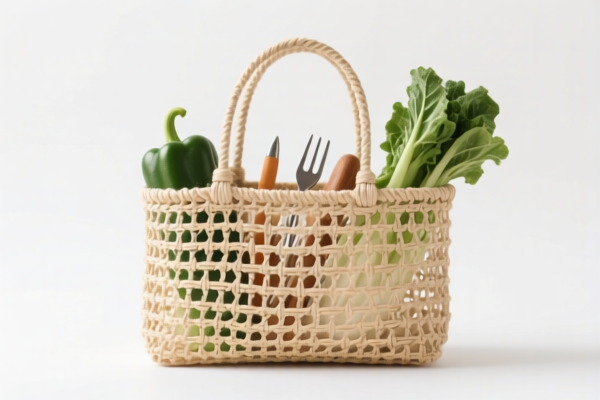
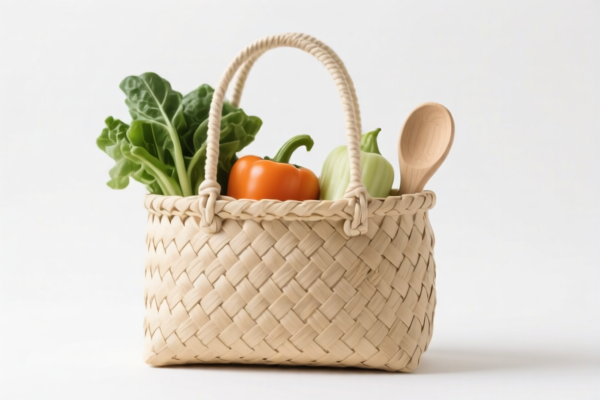
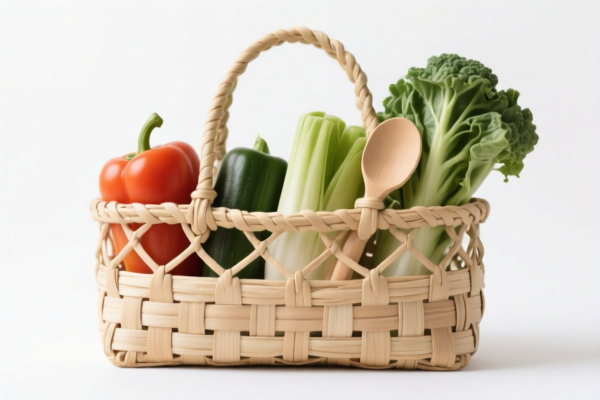
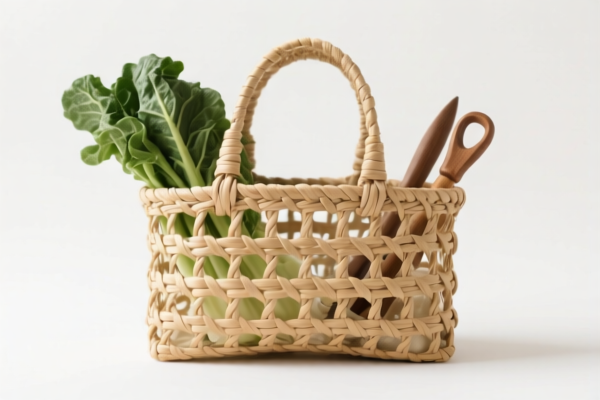
AI Analysis
🧺 Plant Fiber Woven Tool Bag (植物纤维编织工具包/收纳袋)
🌐 HS Code Reference & Clearance Guide | 2026 Latest Tariff Analysis | Professional US Entry Strategy
📌 I. Product Definition & Classification: What Exactly Is a "Plant Fiber Woven Tool Bag"?
A "Plant Fiber Woven Tool Bag" is an industrial or household accessory made from natural vegetative fibers (such as bamboo, rattan, water hyacinth, or straw) woven into a container. In international trade, its classification hinges on two critical factors: 1. Material Nature: Is it strictly a textile/vegetable fiber product, or is it processed like paper/cardboard? 2. Function/Shape: Is it a flexible bag for carrying tools (Chapter 42), or is it a rigid/semi-rigid container resembling a file folder or sheet product (Chapter 48)?
⚠️ Key Distinction Point:
- If the item is a soft-sided, flexible bag designed to hold tools, cosmetics, or personal items, it typically falls under Chapter 42 (Articles of Leather; Saddle Harness) or Chapter 46 (Woven Vegetables).
- If the item is a structured, flat, or sheet-like container resembling a file holder or document bag, it may fall under Chapter 48 (Paper and Paperboard).
- Note: The provided data suggests a conflict between "Bag" (Chapter 42/46) and "File Bag" (Chapter 48) interpretations.
📦 II. HS Code Classification Details (2026 Latest Tariff Authoritative Comparison)
Based on the provided data, here are the potential HS Codes and their logical justifications.
| HS Code | Product Description | Applicable Scenario | Classification Logic |
|---|---|---|---|
| 4602.19.29.40 | Woven plant fiber bags (Other) | General woven bags made of plant fibers, not specifically classified elsewhere. | ✅ Match: "Plant fiber," "Woven," "Bag." Fits "Other" category in Ch 46. |
| 4602.19.29.20 | Woven plant fiber bags (Handbags/Flats) | Specifically identified as handbags or flat components made of plant fiber. | ✅ Match: "Plant fiber," "Handbag/Flat item." Specific sub-heading for flat/handbag shapes. |
| 4823.90.80.00 | Plant fiber file bags (Other paper/fiber products) | Bags that function as file holders or document organizers, treated as paper/board products. | ✅ Match: "File bag," "Paper/fiber制品特征." Classifies as a paper-based accessory. |
| 4823.90.20.00 | Plant fiber file bags (Specific paper/viscose type) | Bags made from paper pulp or cellulose-based fiber, shaped as woven file bags. | ✅ Match: "Paper pulp/Cellulose," "Woven file bag." No material conflict with Ch 48. |
| 4202.12.40.00 | Vegetable fiber bags (Handbag shape) | Bags inferred as vegetable fiber but classified under Ch 42 (Leather/Textile equivalent). | ⚠️ Inferential: "File bag shape" but material inferred as "Vegetable fiber" under Ch 42. |
🔍 Crucial Insight:
- The biggest risk is between Chapter 46/42 (Textile/Handbag) vs. Chapter 48 (Paper/Product).
- If the bag is used for tools, it is often viewed as a "sack" or "bag." If it is stiff and holds papers, it shifts to 4823.
- Misclassification can lead to significant tariff differences (e.g., 35% vs. 41.3%).
💰 III. 2026 Latest Tariff Rate Breakdown (Including Surtaxes & Policy Add-ons)
✅ Applicable Country: United States (US)
✅ Origin: China (CN)
✅ Effective Date: Post-November 2025 (Including subsequent imports)
🎯 1. 4602.19.29.40 & 4602.19.29.20 —— Woven Plant Fiber Bags (Chapter 46)
| Item | Content |
|---|---|
| Base Duty Rate | 5.3% (Ad Valorem) |
| Section 301 Surcharge | +25.0% (USITC Footnote) |
| IEEPA Add-on Tariff | +10.0% (Against China/HK products, effective Nov 10, 2025) |
| Total Effective Rate | 40.3% |
| Tax Calculation | CIF Value × 40.3% |
| De Minimis Exemption | ❌ NOT Eligible (Section 301 and IEEPA surcharges apply even to de minimis shipments) |
| Legal Path | IEEPA:9903.01.25 → USITC:4602.19.29 → SECTION301:Footnote |
📌 Explanation:
- 5.3% is the standard MFN duty for woven vegetable plaiting products.
- 25% is the standard Section 301 tariff on most Chinese goods.
- 10% is the new IEEPA tariff on Chinese-origin goods.
- Total: 40.3%. This is a high-cost entry point.
🎯 2. 4823.90.80.00 & 4823.90.20.00 —— Plant Fiber File Bags (Chapter 48)
| Item | Content |
|---|---|
| Base Duty Rate | 0.0% (Ad Valorem) |
| Section 301 Surcharge | +25.0% (USITC Footnote) |
| IEEPA Add-on Tariff | +10.0% (Against China/HK products, effective Nov 10, 2025) |
| Total Effective Rate | 35.0% |
| Tax Calculation | CIF Value × 35.0% |
| De Minimis Exemption | ❌ NOT Eligible |
| Legal Path | IEEPA:9903.01.25 → USITC:4823.90.80 → SECTION301:Footnote |
📌 Explanation:
- 0% base duty because many paper/processed fiber products enter duty-free.
- However, the 35% total (25% + 10%) still applies.
- Savings: 5.3% lower than the Chapter 46 classification. This is a critical optimization point.
🎯 3. 4202.12.40.00 —— Vegetable Fiber Bags (Chapter 42)
| Item | Content |
|---|---|
| Base Duty Rate | 6.3% (Ad Valorem) |
| Section 301 Surcharge | +25.0% (USITC Footnote) |
| IEEPA Add-on Tariff | +10.0% (Against China/HK products, effective Nov 10, 2025) |
| Total Effective Rate | 41.3% |
| Tax Calculation | CIF Value × 41.3% |
| De Minimis Exemption | ❌ NOT Eligible |
| Legal Path | IEEPA:9903.01.25 → USITC:4202.12.40 → SECTION301:Footnote |
📌 Explanation:
- 6.3% base duty is higher than both Chapter 46 and Chapter 48.
- Total: 41.3%. This is the most expensive classification in the dataset.
- Only use if the product is clearly a "handbag" or "luggage" item under Chapter 42 and cannot be argued as a simple woven bag (Ch 46) or paper product (Ch 48).
🛠️ IV. Clearance Operational Advice (Practical Pitfall Avoidance)
✅ 1. Documentation Checklist (Mandatory)
| Document | Required | Purpose |
|---|---|---|
| ✅ Product Photos | ✔️ | Clearly show material (plant fiber), construction (woven), and usage (tool storage). |
| ✅ Material Composition Statement | ✔️ | Specify exact plant fibers (e.g., Bamboo, Rattan, Straw). Avoid vague terms like "organic material." |
| ✅ Function Description | ✔️ | Is it for tools, cosmetics, or documents? This determines Chapter 42 vs 48. |
| ✅ Commercial Invoice | ✔️ | Must match HS Code description exactly. |
| ✅ Packing List | ✔️ | Confirm contents match the bag. |
✅ 2. Classification Strategy (Key Mantra)
🔥 "If it holds paper → Ch 48 (35%); If it's a soft bag → Ch 46 (40.3%); If it's a luxury handbag → Ch 42 (41.3%)."
| Scenario | Recommended HS Code | Estimated Total Rate | Risk Level |
|---|---|---|---|
| Stiff, flat, file-like bag | 4823.90.80.00 / 4823.90.20.00 |
35.0% | 🟢 Low (if shape is rigid) |
| Soft, flexible tool bag | 4602.19.29.40 / 4602.19.29.20 |
40.3% | 🟡 Medium (depends on "bag" definition) |
| Structured handbag/luggage | 4202.12.40.00 |
41.3% | 🔴 High (highest cost) |
📌 Strategic Advice:
- If your "Tool Bag" can be described as a file holder, document organizer, or flat sheet container, argue for Chapter 48 to save 5.3% on the base duty.
- If it is clearly a handbag or luggage, you may be stuck with Chapter 42 (41.3%).
- Avoid Chapter 42 if possible unless the product is structurally complex (e.g., has zippers, lining, handles like a suitcase), as it has the highest base duty.
✅ 3. Special Circumstances Handling
| Situation | Handling Advice |
|---|---|
| OEM Custom Tool Bags | Provide design specs. If it looks like a "file," argue for Ch 48. |
| Mixed Materials (e.g., Fabric + Fiber) | If fabric > 50%, it may shift to Chapter 62/63 (Textiles), but data doesn't support this. Stick to plant fiber. |
| De Minimis (Section 321) | ❌ Do NOT attempt. Section 301 and IEEPA tariffs apply to de minimis shipments from China. |
| Labeling | Ensure labels say "Plant Fiber," "Bamboo," or "Woven Vegetable" not just "Natural Material." |
🌍 V. Global Market Comparison (2026 Update)
| Market | Recommended HS Code | Base Duty | Total Duty (China) | Notes |
|---|---|---|---|---|
| 🇺🇸 USA | 4823.90.80.00 |
0% | 35.0% | Best option if "file-like" |
| 🇺🇸 USA | 4602.19.29.40 |
5.3% | 40.3% | Standard woven bag |
| 🇪🇺 EU | Similar Codes | ~0-6% | Low/Zero | No Section 301/IEEPA |
| 🇨🇳 China | Similar Codes | ~5-10% | Low | Import duty applies |
📌 Conclusion:
- USA is the only market with these high surcharges.
- Chapter 48 (File Bags) is the cheapest route for plant fiber woven items entering the US, saving 5.3% vs Chapter 46.
📌 VI. Common Errors & Pitfall Guide
❌ Error 1: Classifying a soft tool bag as a file bag (Ch 48)
👉 Result: Customs may reject, demand reclassification to Ch 46 (40.3%) + penalties.
👉 Fix: Ensure the product has a rigid or semi-rigid structure if using Ch 48.
❌ Error 2: Classifying a handbag as a tool bag (Ch 46)
👉 Result: If it's clearly a fashion handbag, it might be forced into Ch 42 (41.3%).
👉 Fix: If it's a handbag, accept the 41.3% or try to argue for Ch 46 if it's purely utilitarian.
❌ Error 3: Ignoring IEEPA 10% Surtax
👉 Result: Underpaying duties by 10%.
👉 Fix: Always include 10% IEEPA in cost calculations for China-origin goods.
✅ Correct Declaration Example:
"Woven Bamboo Fiber File Holder, Flat Shape, No Electronics, Origin: China, HS 4823.90.80.00"
🎯 VII. Conclusion: Professional Declaration, Cost Optimization!
🎯 Remember the Mantra:
🔹 "Flat & Stiff → Ch 48 (35%); Soft Bag → Ch 46 (40.3%); Handbag → Ch 42 (41.3%)."
🔹 "IEEPA 10% is mandatory; Section 301 25% is mandatory; Base Duty varies!"
📌 Tip:
If your plant fiber bag is packaged with other items (e.g., tools), ensure the bag itself is the primary item for classification. If it's a gift set, declare each item separately if possible to optimize duty.
📣 Immediate Action:
📞 Consult a customs broker to verify the physical structure of your bag.
🚀 Choose Chapter 48 if possible to save 5.3% on base duty.
💼 Your bottom line depends on this 5.3% difference!
✨ Professional clearance starts with precise classification!
💼 Every penny counts in 2026 tariffs!
Customer Reviews
About HS Code Classification
The Harmonized System (HS) is an internationally standardized nomenclature developed by the World Customs Organization (WCO) to classify traded products. Over 200 countries use the HS system as the basis for customs tariffs, trade statistics, and import/export regulations.
Each HS code follows a hierarchical structure:
- Chapter (2 digits) — Broad category of goods (e.g., Chapter 84: Machinery and Mechanical Appliances)
- Heading (4 digits) — More specific grouping within the chapter
- Subheading (6 digits) — Internationally standardized breakdown, used by all WCO member countries
- National subdivisions (8-10 digits) — Country-specific extensions for further classification, such as US HTSUS 10-digit codes
Correct HS code classification is essential for smooth customs clearance, accurate duty payment, and compliance with trade regulations. Misclassification can lead to customs delays, overpayment of duties, or penalties.
When importing from CN to US, the applicable tariff rates may include:
- Most-Favored-Nation (MFN) rate — The standard duty rate applied to WTO members
- General rate — Applied to countries without trade agreements
- Trade remedy duties — Additional tariffs such as Section 301 (anti-dumping), Section 232 (national security), or countervailing duties
The information provided on this page is for reference purposes only. For official classification, please consult with your local customs authority or a licensed customs broker.