Plastic Car Toy
CN → US| HS编码 | 关税税率 | 原产国 | 目的国 | 文档 |
|---|---|---|---|---|
| 9503000073 | 10.0% | CN | US | 官方文档 |
| 3926400090 | 15.3% | CN | US | 官方文档 |
| 3926909989 | 22.8% | CN | US | 官方文档 |
| 9503000071 | 10.0% | CN | US | 官方文档 |
| 9503000090 | 10.0% | CN | US | 官方文档 |
商品图片
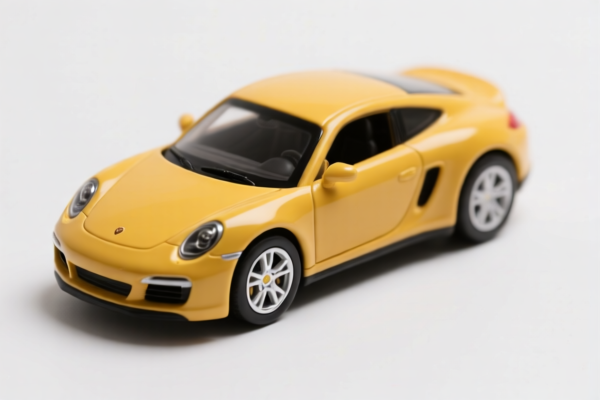
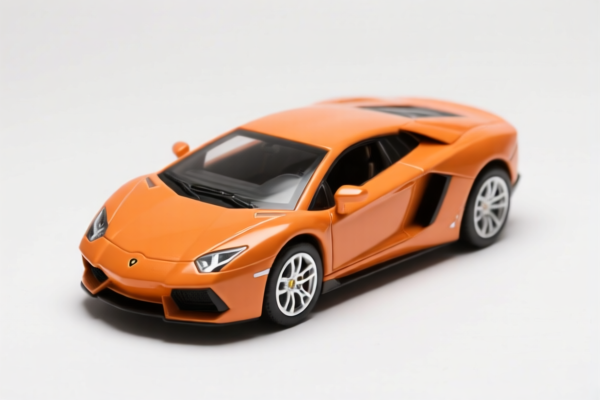
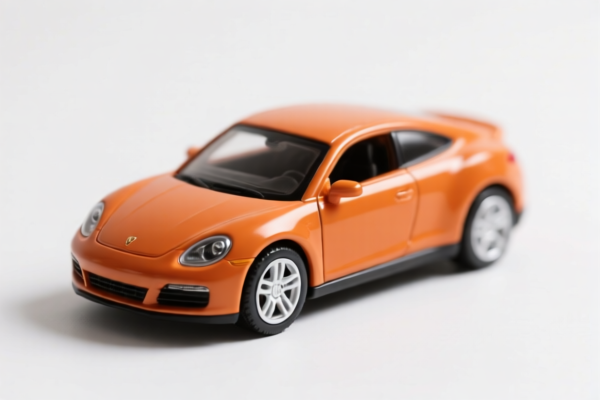
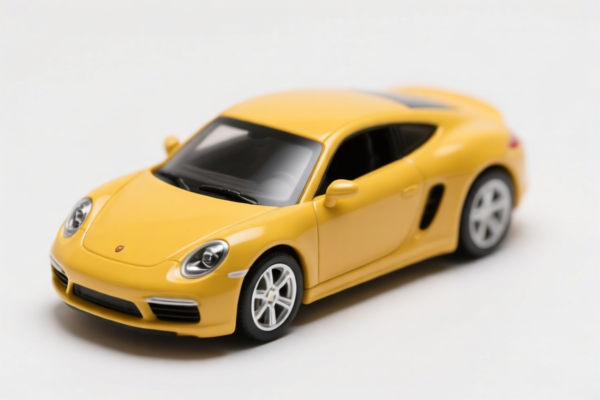
AI分析
🚗 Plastic Car Toy: HS Code Classification & US Customs Clearance Guide (2026)
🌐 HS Code Reference & Customs Strategy | Latest Tariff Analysis | Professional Clearance Protocol
📌 I. Product Definition: What Exactly is a "Plastic Car Toy"?
In international trade, a "Plastic Car Toy" is not a single legal entity. Its classification depends entirely on its form, function, and intended use. Is it a simple die-cast model for display? A generic plaything for children? Or a component part?
Key Distinction Logic: * Model/Toy Category (Chapter 95): If it is designed primarily as a toy for children (ages 3-12) or as a collectible model, it falls under HS 9503. * Plastic Article Category (Chapter 39): If it is classified merely as a plastic decorative item, a general plastic article, or a component without specific toy features, it falls under HS 3926.
⚠️ Critical Warning:
Misclassification here leads to massive tariff discrepancies (from 10% to 22.8%) and potential customs holds.
📦 II. HS Code Classification Matrix (Based on Provided Data)
| HS Code | Product Description & Summary | Material/Form | Primary Classification Logic |
|---|---|---|---|
9503.00.00.73 |
Plastic Toy Train or Car | Plastic | Model/Toy for ages 3-12. Lowest Risk/Tariff. |
9503.00.00.71 |
Plastic Toy Car (Model) | Plastic | Model-type toy. Matches common toy material standards. Lowest Risk/Tariff. |
9503.00.00.90 |
Toy Car Parts/Accessories | Plastic | Accessories for toys. Classified under "Other" accessories. Lowest Risk/Tariff. |
3926.40.00.90 |
Plastic Toy Car (Decorative) | Plastic | Decorative/Entertainment item. Not strictly "toy" function. Medium Risk. |
3926.90.99.89 |
Plastic Toy Car (General) | Plastic | General plastic article. "Catch-all" category for non-specified plastics. Highest Risk. |
🔍 Key Insight:
Chapter 95 (Toys) offers the lowest base tariff (0%). * Chapter 39 (Plastics) incurs a 5.3% base tariff plus potential additional duties. * The difference in total tax burden can be up to 12.8%* depending on the specific HS code chosen.
💰 III. 2026 US Tariff Rate Breakdown (Detailed Analysis)
✅ Destination: United States (US)
✅ Origin: China (CN)
✅ Applicable Laws: Section 301 & IEEPA (122 Clauses)
🎯 1. The "Toy" Category (HS 9503 Series)
Codes: 9503.00.00.73, 9503.00.00.71, 9503.00.00.90
| Item | Detail |
|---|---|
| Base Tariff | 0.0% (Ad Valorem) |
| Section 301 / 122 Clause Tariff | +10% |
| Additional Section 301 Tariff | 0.0% |
| Total Effective Tax Rate | 10.0% |
| Calculation Basis | CIF Value × 10% |
| Legal Reference | Base HS + 122 Clause (10%) |
📌 Explanation:
These codes are classified as Toys. Therefore, they benefit from a 0% base duty. However, due to geopolitical trade policies (IEEPA/122 Clauses), a flat 10% surcharge is applied. This is the most cost-effective classification for plastic car toys.
🎯 2. The "Plastic Article" Category (HS 3926 Series)
Code A: 3926.40.00.90
Code B: 3926.90.99.89
A. 3926.40.00.90 (Decorative/Entertainment Plastic Items)
| Item | Detail |
|---|---|
| Base Tariff | 5.3% |
| Section 301 / 122 Clause Tariff | +10% |
| Additional Section 301 Tariff | 0.0% |
| Total Effective Tax Rate | 15.3% |
| Calculation Basis | CIF Value × 15.3% |
📌 Explanation:
If the item is deemed a "Plastic Article" rather than a "Toy," the base duty rises to 5.3%. Adding the 10% surcharge results in a 15.3% total rate.
B. 3926.90.99.89 (General Plastic Articles - "Catch-all")
| Item | Detail |
|---|---|
| Base Tariff | 5.3% |
| Section 301 / 122 Clause Tariff | +10% |
| Additional Section 301 Tariff | +7.5% |
| Total Effective Tax Rate | 22.8% |
| Calculation Basis | CIF Value × 22.8% |
📌 Explanation:
This is the highest risk category. It is used for plastic items that don't fit specific sub-categories. It incurs the 5.3% base, 10% IEEPA surcharge, AND a 7.5% additional Section 301 tariff. Total: 22.8%.
🛠️ IV. Customs Clearance Practical Advice
✅ 1. Documentation Checklist (Critical for Success)
| Document | Requirement | Purpose |
|---|---|---|
| Commercial Invoice | Must clearly state "Plastic Toy Car" | Establishes primary description as a Toy (Chapter 95) |
| Product Photos | Clear images of toy, packaging, age recommendations | Proves it is designed for children/play |
| Age Recommendation Label | "For ages 3-12" or similar | Strong evidence for Chapter 95 classification |
| Material Specification | "100% Plastic" | Confirms material composition |
| Function Description | "Rolling wheels, steering, play function" | Distinguishes from "Decorative" or "Display Model" only |
✅ 2. Classification Strategy: How to Get 10% Instead of 22.8%?
Strategy A: Emphasize "Toy" Function * Description: Use terms like "Toy," "Plaything," "For Children," "Interactive." * Evidence: Include packaging showing age grades (e.g., "Ages 3+"). * Result: Likely qualifies for HS 9503.00.00.71/73/90 → 10% Tax.
Strategy B: Avoid "Decorative" or "Generic" Language * Do NOT use: "Decorative plastic model," "Home decor," "Display piece." * Why? These phrases push the item toward HS 3926 categories, triggering higher base tariffs and potentially the 7.5% additional duty.
Strategy C: Parts vs. Whole
* If shipping loose parts (wheels, chassis), declare as "Toy Parts" under 9503.00.00.90 → 10% Tax.
* Do not declare parts as "Plastic Components" under 3926.90.99.89 → 22.8% Tax.
🌍 V. Market Comparison (US vs. Global)
| Market | Recommended HS Code | Total Tax Rate (Approx.) | Key Requirement |
|---|---|---|---|
| 🇺🇸 USA | 9503.00.00.71/73/90 |
10.0% | Must prove "Toy" status. Avoid "Decorative." |
| 🇺🇸 USA (Wrong Class) | 3926.90.99.89 |
22.8% | High penalty for misclassification. |
| 🇨🇳 China (Export) | 9503.00.00.71 |
0% - 5% | Standard export duty. |
| 🇪🇺 EU | 9503.00 |
4.9% | CE Marking required. |
📌 Note: The US is uniquely aggressive with Section 301/IEEPA tariffs on Chinese goods. Correct classification is your only leverage to minimize costs.
📌 VI. Common Pitfalls & How to Avoid Them
❌ Pitfall 1: Calling it a "Model Car" without "Toy" Context
👉 Risk: Customs may classify it as a plastic decorative item (3926.40.00.90 → 15.3%).
✅ Fix: Explicitly state "Toy Model for Children" or "Play Vehicle."
❌ Pitfall 2: Using "Plastic Automotive Part" for Toy Components
👉 Risk: Classified as general plastic article (3926.90.99.89 → 22.8%).
✅ Fix: Use "Toy Vehicle Parts" or "Accessories for Toys."
❌ Pitfall 3: Inconsistent Packaging Information
👉 Risk: Invoice says "Toy," but packaging says "Collectible Display Model."
✅ Fix: Ensure Invoice, Packing List, and Packaging all align on "Toy/Play" function.
🎯 VII. Conclusion: Optimize Your Clearance
Golden Rule for Plastic Car Toys:
🏆 "Toy Status = 10% Tax"
🚫 "Plastic Article = 15.3% - 22.8% Tax"
Action Plan: 1. Label all units as "Toys for Ages 3-12." 2. Invoice as "Plastic Toy Car" or "Toy Vehicle." 3. Declare under HS 9503.00.00.71 (Model) or 9503.00.00.73 (Train/Car) to secure the 10% rate. 4. Avoid HS 3926 codes unless the item is strictly non-play (e.g., static display ornament).
📣 Immediate Action:
📞 Consult your broker to confirm if your specific product design qualifies for Chapter 95.
📝 Review your invoice description today to ensure it matches "Toy" and not "Plastic Part."
🚀 Save up to 12.8% in taxes by getting your HS Code right!
✨ Precision in Classification Saves Profit.
💼 Don't let customs duties eat your margin.
用户评价
关于 HS 编码归类
协调制度(HS)是由世界海关组织(WCO)制定的国际贸易商品分类标准。全球 200 多个国家采用 HS 系统作为海关关税、贸易统计和进出口监管的基础。
每个 HS 编码遵循以下层级结构:
- 章(2 位)——商品大类(例如:第 84 章:机器和机械设备)
- 品目(4 位)——章内的更具体分类
- 子目(6 位)——国际通用细分,所有 WCO 成员国统一使用
- 本国细分(8-10 位)——各国自行扩展的细分编码,如美国 HTSUS 10 位编码
正确的 HS 编码归类对于顺利通关、准确缴纳关税和遵守贸易法规至关重要。错误归类可能导致海关延误、多缴关税或罚款。
从CN进口到US时,适用的关税税率可能包括:
- 最惠国(MFN)税率——适用于 WTO 成员国的标准关税税率
- 普通税率——适用于无贸易协定国家
- 贸易救济关税——附加关税,如 301 条款(反倾销)、232 条款(国家安全)或反补贴税
本页内容仅供参考。如需正式归类,请咨询当地海关或持牌报关代理。