Plastic Car Toy
CN → US| HS Code | Tariff Rate | Origin | Destination | Doc |
|---|---|---|---|---|
| 9503000073 | 10.0% | CN | US | Official Doc |
| 3926400090 | 15.3% | CN | US | Official Doc |
| 3926909989 | 22.8% | CN | US | Official Doc |
| 9503000071 | 10.0% | CN | US | Official Doc |
| 9503000090 | 10.0% | CN | US | Official Doc |
Product Images
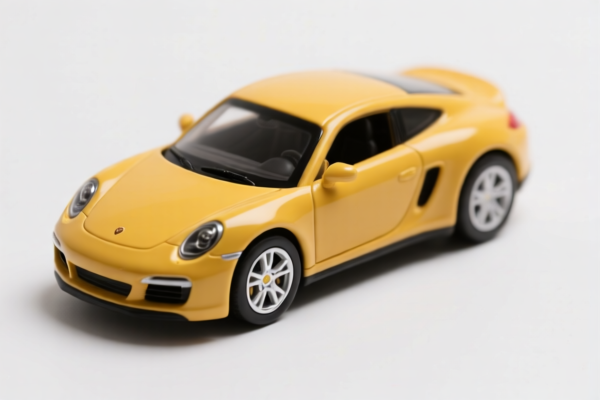
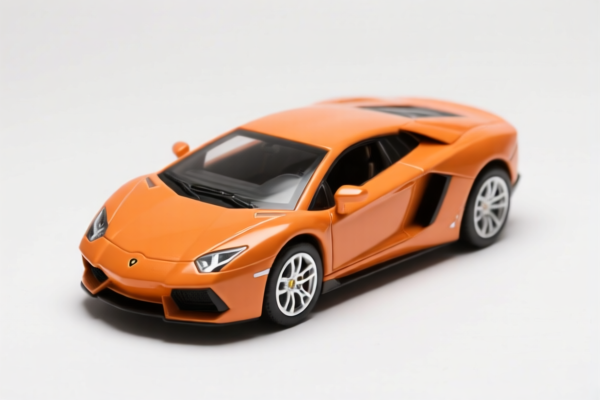
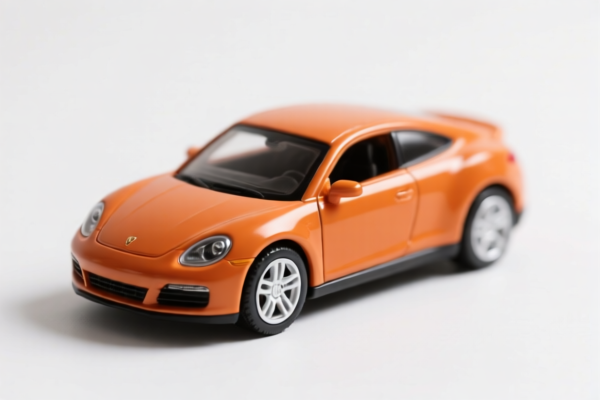
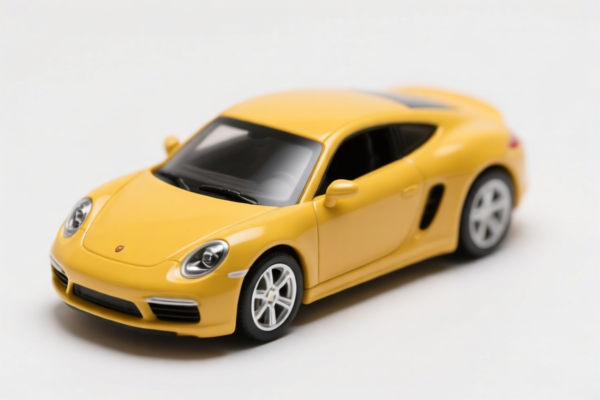
AI Analysis
🚗 Plastic Car Toy: HS Code Classification & US Customs Clearance Guide (2026)
🌐 HS Code Reference & Customs Strategy | Latest Tariff Analysis | Professional Clearance Protocol
📌 I. Product Definition: What Exactly is a "Plastic Car Toy"?
In international trade, a "Plastic Car Toy" is not a single legal entity. Its classification depends entirely on its form, function, and intended use. Is it a simple die-cast model for display? A generic plaything for children? Or a component part?
Key Distinction Logic: * Model/Toy Category (Chapter 95): If it is designed primarily as a toy for children (ages 3-12) or as a collectible model, it falls under HS 9503. * Plastic Article Category (Chapter 39): If it is classified merely as a plastic decorative item, a general plastic article, or a component without specific toy features, it falls under HS 3926.
⚠️ Critical Warning:
Misclassification here leads to massive tariff discrepancies (from 10% to 22.8%) and potential customs holds.
📦 II. HS Code Classification Matrix (Based on Provided Data)
| HS Code | Product Description & Summary | Material/Form | Primary Classification Logic |
|---|---|---|---|
9503.00.00.73 |
Plastic Toy Train or Car | Plastic | Model/Toy for ages 3-12. Lowest Risk/Tariff. |
9503.00.00.71 |
Plastic Toy Car (Model) | Plastic | Model-type toy. Matches common toy material standards. Lowest Risk/Tariff. |
9503.00.00.90 |
Toy Car Parts/Accessories | Plastic | Accessories for toys. Classified under "Other" accessories. Lowest Risk/Tariff. |
3926.40.00.90 |
Plastic Toy Car (Decorative) | Plastic | Decorative/Entertainment item. Not strictly "toy" function. Medium Risk. |
3926.90.99.89 |
Plastic Toy Car (General) | Plastic | General plastic article. "Catch-all" category for non-specified plastics. Highest Risk. |
🔍 Key Insight:
Chapter 95 (Toys) offers the lowest base tariff (0%). * Chapter 39 (Plastics) incurs a 5.3% base tariff plus potential additional duties. * The difference in total tax burden can be up to 12.8%* depending on the specific HS code chosen.
💰 III. 2026 US Tariff Rate Breakdown (Detailed Analysis)
✅ Destination: United States (US)
✅ Origin: China (CN)
✅ Applicable Laws: Section 301 & IEEPA (122 Clauses)
🎯 1. The "Toy" Category (HS 9503 Series)
Codes: 9503.00.00.73, 9503.00.00.71, 9503.00.00.90
| Item | Detail |
|---|---|
| Base Tariff | 0.0% (Ad Valorem) |
| Section 301 / 122 Clause Tariff | +10% |
| Additional Section 301 Tariff | 0.0% |
| Total Effective Tax Rate | 10.0% |
| Calculation Basis | CIF Value × 10% |
| Legal Reference | Base HS + 122 Clause (10%) |
📌 Explanation:
These codes are classified as Toys. Therefore, they benefit from a 0% base duty. However, due to geopolitical trade policies (IEEPA/122 Clauses), a flat 10% surcharge is applied. This is the most cost-effective classification for plastic car toys.
🎯 2. The "Plastic Article" Category (HS 3926 Series)
Code A: 3926.40.00.90
Code B: 3926.90.99.89
A. 3926.40.00.90 (Decorative/Entertainment Plastic Items)
| Item | Detail |
|---|---|
| Base Tariff | 5.3% |
| Section 301 / 122 Clause Tariff | +10% |
| Additional Section 301 Tariff | 0.0% |
| Total Effective Tax Rate | 15.3% |
| Calculation Basis | CIF Value × 15.3% |
📌 Explanation:
If the item is deemed a "Plastic Article" rather than a "Toy," the base duty rises to 5.3%. Adding the 10% surcharge results in a 15.3% total rate.
B. 3926.90.99.89 (General Plastic Articles - "Catch-all")
| Item | Detail |
|---|---|
| Base Tariff | 5.3% |
| Section 301 / 122 Clause Tariff | +10% |
| Additional Section 301 Tariff | +7.5% |
| Total Effective Tax Rate | 22.8% |
| Calculation Basis | CIF Value × 22.8% |
📌 Explanation:
This is the highest risk category. It is used for plastic items that don't fit specific sub-categories. It incurs the 5.3% base, 10% IEEPA surcharge, AND a 7.5% additional Section 301 tariff. Total: 22.8%.
🛠️ IV. Customs Clearance Practical Advice
✅ 1. Documentation Checklist (Critical for Success)
| Document | Requirement | Purpose |
|---|---|---|
| Commercial Invoice | Must clearly state "Plastic Toy Car" | Establishes primary description as a Toy (Chapter 95) |
| Product Photos | Clear images of toy, packaging, age recommendations | Proves it is designed for children/play |
| Age Recommendation Label | "For ages 3-12" or similar | Strong evidence for Chapter 95 classification |
| Material Specification | "100% Plastic" | Confirms material composition |
| Function Description | "Rolling wheels, steering, play function" | Distinguishes from "Decorative" or "Display Model" only |
✅ 2. Classification Strategy: How to Get 10% Instead of 22.8%?
Strategy A: Emphasize "Toy" Function * Description: Use terms like "Toy," "Plaything," "For Children," "Interactive." * Evidence: Include packaging showing age grades (e.g., "Ages 3+"). * Result: Likely qualifies for HS 9503.00.00.71/73/90 → 10% Tax.
Strategy B: Avoid "Decorative" or "Generic" Language * Do NOT use: "Decorative plastic model," "Home decor," "Display piece." * Why? These phrases push the item toward HS 3926 categories, triggering higher base tariffs and potentially the 7.5% additional duty.
Strategy C: Parts vs. Whole
* If shipping loose parts (wheels, chassis), declare as "Toy Parts" under 9503.00.00.90 → 10% Tax.
* Do not declare parts as "Plastic Components" under 3926.90.99.89 → 22.8% Tax.
🌍 V. Market Comparison (US vs. Global)
| Market | Recommended HS Code | Total Tax Rate (Approx.) | Key Requirement |
|---|---|---|---|
| 🇺🇸 USA | 9503.00.00.71/73/90 |
10.0% | Must prove "Toy" status. Avoid "Decorative." |
| 🇺🇸 USA (Wrong Class) | 3926.90.99.89 |
22.8% | High penalty for misclassification. |
| 🇨🇳 China (Export) | 9503.00.00.71 |
0% - 5% | Standard export duty. |
| 🇪🇺 EU | 9503.00 |
4.9% | CE Marking required. |
📌 Note: The US is uniquely aggressive with Section 301/IEEPA tariffs on Chinese goods. Correct classification is your only leverage to minimize costs.
📌 VI. Common Pitfalls & How to Avoid Them
❌ Pitfall 1: Calling it a "Model Car" without "Toy" Context
👉 Risk: Customs may classify it as a plastic decorative item (3926.40.00.90 → 15.3%).
✅ Fix: Explicitly state "Toy Model for Children" or "Play Vehicle."
❌ Pitfall 2: Using "Plastic Automotive Part" for Toy Components
👉 Risk: Classified as general plastic article (3926.90.99.89 → 22.8%).
✅ Fix: Use "Toy Vehicle Parts" or "Accessories for Toys."
❌ Pitfall 3: Inconsistent Packaging Information
👉 Risk: Invoice says "Toy," but packaging says "Collectible Display Model."
✅ Fix: Ensure Invoice, Packing List, and Packaging all align on "Toy/Play" function.
🎯 VII. Conclusion: Optimize Your Clearance
Golden Rule for Plastic Car Toys:
🏆 "Toy Status = 10% Tax"
🚫 "Plastic Article = 15.3% - 22.8% Tax"
Action Plan: 1. Label all units as "Toys for Ages 3-12." 2. Invoice as "Plastic Toy Car" or "Toy Vehicle." 3. Declare under HS 9503.00.00.71 (Model) or 9503.00.00.73 (Train/Car) to secure the 10% rate. 4. Avoid HS 3926 codes unless the item is strictly non-play (e.g., static display ornament).
📣 Immediate Action:
📞 Consult your broker to confirm if your specific product design qualifies for Chapter 95.
📝 Review your invoice description today to ensure it matches "Toy" and not "Plastic Part."
🚀 Save up to 12.8% in taxes by getting your HS Code right!
✨ Precision in Classification Saves Profit.
💼 Don't let customs duties eat your margin.
Customer Reviews
About HS Code Classification
The Harmonized System (HS) is an internationally standardized nomenclature developed by the World Customs Organization (WCO) to classify traded products. Over 200 countries use the HS system as the basis for customs tariffs, trade statistics, and import/export regulations.
Each HS code follows a hierarchical structure:
- Chapter (2 digits) — Broad category of goods (e.g., Chapter 84: Machinery and Mechanical Appliances)
- Heading (4 digits) — More specific grouping within the chapter
- Subheading (6 digits) — Internationally standardized breakdown, used by all WCO member countries
- National subdivisions (8-10 digits) — Country-specific extensions for further classification, such as US HTSUS 10-digit codes
Correct HS code classification is essential for smooth customs clearance, accurate duty payment, and compliance with trade regulations. Misclassification can lead to customs delays, overpayment of duties, or penalties.
When importing from CN to US, the applicable tariff rates may include:
- Most-Favored-Nation (MFN) rate — The standard duty rate applied to WTO members
- General rate — Applied to countries without trade agreements
- Trade remedy duties — Additional tariffs such as Section 301 (anti-dumping), Section 232 (national security), or countervailing duties
The information provided on this page is for reference purposes only. For official classification, please consult with your local customs authority or a licensed customs broker.