Plastic Injection Molding Machine
CN → US| HS编码 | 关税税率 | 原产国 | 目的国 | 文档 |
|---|---|---|---|---|
| 8479899599 | 87.5% | CN | US | 官方文档 |
| 8477109030 | 38.1% | CN | US | 官方文档 |
| 8479896500 | 20.3% | CN | US | 官方文档 |
商品图片
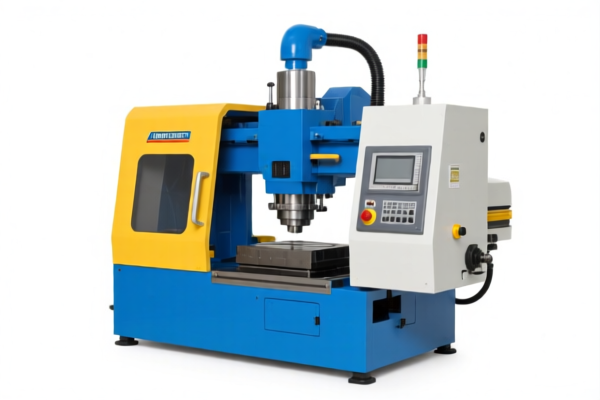
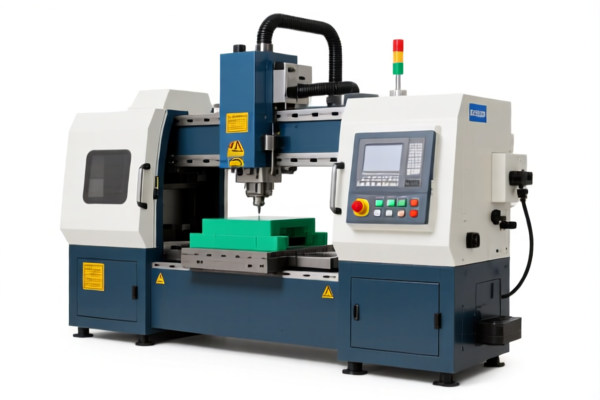
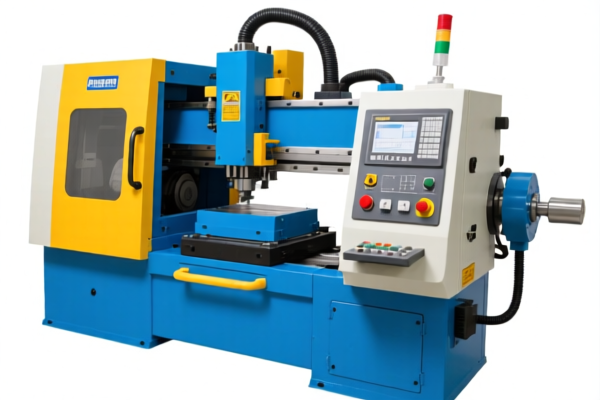

AI分析
🏭 Plastic Injection Molding Machines: HS Code Classification & US Customs Clearance Guide (2026)
🌐 HS Code Reference & Customs Strategy | 2026 Tariff Full Analysis | Professional Clearance Protocols
📌 I. Product Definition & Classification: What Exactly Is an "Injection Molding Machine"?
A Plastic Injection Molding Machine is a specialized industrial equipment used to manufacture plastic products by injecting molten plastic into a mold. In international trade, the classification depends heavily on whether the machine is viewed as a general-purpose mechanical device or a specific chemical processing machine.
Two Primary Classification Pathways: 1. Specific Purpose (Chemical Processing): Classified under Chapter 84, Heading 8477, as machinery for working rubber or plastics. 2. General Purpose (Independent Function): Classified under Chapter 84, Heading 8479, as other machines with independent functions, often including self-contained electric motors.
⚠️ Critical Distinction Point:
- If the machine is specifically designed only for plastic processing and fits the detailed description of 8477, it is the primary candidate.
- If it is a complex electromechanical unit with independent features not fully captured by 8477, customs may route it to 8479.
- Misclassification Risk: Declaring a complex molding machine as a simple "plastic part" or generic "machine" leads to severe penalties.
📦 II. HS Code Classification Details (2026 Latest Tariff Authority Comparison)
Based on the provided data, three specific HS Codes are relevant. Here is the breakdown:
| HS Code | Product Description | Logic & Classification Reasoning | Total Tax Rate |
|---|---|---|---|
8479.89.95.99 |
Other machines and mechanical appliances (General Purpose) | Logic: Injection molding machines are complex, independent mechanical devices. They do not have material conflicts. Classified as "Other machines with independent functions." | 87.5% |
8477.10.90.30 |
Machines for working rubber or plastics (Specific Purpose) | Logic: Matches the specific use (injection molding) and material (thermoplastics). Classified as a catch-all for plastic processing machinery under "Other." | 38.1% |
8479.89.65.00 |
Other electromechanical appliances with self-contained electric motors | Logic: Recognizes the machine as a complex electromechanical unit (containing motors, hydraulics, controls) fitting the "self-contained electric motor" feature in 8479. | 20.3% |
🔍 Key Insight:
- The same product can result in drastically different tax liabilities (20.3% vs. 87.5%) depending on the classification logic applied by customs brokers.
-8479.89.65.00offers the lowest duty burden, while8479.89.95.99carries the highest risk/cost.
-8477.10.90.30is the "standard" industrial classification but faces a middle-ground tax rate.
💰 III. 2026 Latest Tariff Rate Breakdown (Including Surtaxes & Policy Surcharges)
✅ Applicable Country: United States (US)
✅ Country of Origin: China (CN)
✅ Effective Time: 2025/2026 Period (Current Trade Environment)
🎯 1. 8479.89.95.99 —— Other Machines (Highest Risk)
| Item | Details |
|---|---|
| Base Duty Rate | 2.5% |
| Section 301 Surtax | +25.0% (Trade War Tariff) |
| Section 122 Tariff | +10% (Specific policy surcharge) |
| Steel/Aluminum/Copper Tariff | +50% (If components are subject to raw material surcharges) |
| Total Effective Rate | 87.5% |
| Tax Calculation | CIF Value × 87.5% |
| De Minimis Exemption | ❌ Not Eligible |
| Legal Basis Path | USITC:8479.89.95.99 → SEC301:25% → SEC122:10% → RAWMAT:50% |
📌 Explanation:
- This classification attracts the maximum possible surcharge because it triggers the Steel/Aluminum/Copper component tax (50%) on top of Section 301 (25%) and Section 122 (10%).
- Warning: This is the most expensive route. Use only if legally required by specific machine features not covered elsewhere.
🎯 2. 8477.10.90.30 —— Plastic Processing Machinery (Standard Industrial)
| Item | Details |
|---|---|
| Base Duty Rate | 3.1% |
| Section 301 Surtax | +25.0% (Trade War Tariff) |
| Section 122 Tariff | +10% (Specific policy surcharge) |
| Total Effective Rate | 38.1% |
| Tax Calculation | CIF Value × 38.1% |
| De Minimis Exemption | ❌ Not Eligible |
| Legal Basis Path | USITC:8477.10.90.30 → SEC301:25% → SEC122:10% |
📌 Note:
- This is a middle-ground option. It avoids the heavy Steel/Aluminum/Copper surcharge (50%) but still carries the full Section 301 and Section 122 tariffs.
- Suitable for machines clearly defined as "working plastics" without complex independent electromechanical claims.
🎯 3. 8479.89.65.00 —— Electromechanical Appliances (Lowest Cost Strategy)
| Item | Details |
|---|---|
| Base Duty Rate | 2.8% |
| Section 301 Surtax | +7.5% (Reduced Section 301 rate for this subheading) |
| Section 122 Tariff | +10% (Specific policy surcharge) |
| Total Effective Rate | 20.3% |
| Tax Calculation | CIF Value × 20.3% |
| De Minimis Exemption | ❌ Not Eligible |
| Legal Basis Path | USITC:8479.89.65.00 → SEC301:7.5% → SEC122:10% |
📌 Critical Advantage:
- Why is it lower? This specific subheading (8479.89.65.00) often benefits from a reduced Section 301 rate (7.5%) compared to the standard 25%.
- It also avoids the 50% raw material surcharge.
- Strategy: If the machine can be legitimately described as an "electromechanical appliance with self-contained motor," this code saves 67.2% in taxes compared to8479.89.95.99.
🛠️ IV. Customs Clearance Practical Advice (Real-World Pitfall Avoidance)
✅ 1. Required Documentation Checklist (Non-Negotiable)
| Document | Mandatory? | Purpose |
|---|---|---|
| ✅ Product Specification Sheet | ✔️ | Must detail: Injection pressure, clamp force, motor power, control system type. |
| ✅ Electrical Schematic | ✔️ | Crucial for proving it fits 8479.89.65.00 (self-contained motor features). |
| ✅ High-Res Photos (Nameplate) | ✔️ | Clear view of model number, voltage, Hz, and brand. |
| ✅ Commercial Invoice | ✔️ | Must accurately describe the machine as "Injection Molding Machine, Electromechanical" (not just "Plastic Machine"). |
| ✅ Certificate of Origin (CO) | ✔️ | Essential for claiming any potential origin-based exemptions (though limited for China). |
| ✅ Packing List | ✔️ | Itemize parts to avoid being taxed as raw materials or components. |
✅ 2. Declaration Strategy (Key Mnemonic)
🔥 "Define Function, Prove Motor, Avoid Steel, Save Money!"
| Scenario | Correct Declaration | Incorrect Action | Consequence |
|---|---|---|---|
| Complex Machine with Motor | 8479.89.65.00 (20.3%) |
Declare as 8479.89.95.99 (87.5%) |
Overpay $67,200 per $100k CIF! |
| Pure Plastic Processor | 8477.10.90.30 (38.1%) |
Declare as 8479.89.65.00 |
Audited & Reassigned (Penalties) |
| Machine with Steel Hopper | Ensure "Steel" is part of the machine, not raw material | Declare Hopper separately as "Steel Parts" | Subject to 50% Steel Tariff |
| Used Machine | Mark as "Used" on Invoice | Declare as "New" | Fraud Detection / Seizure |
✅ 3. Special Handling for Section 122 & 301
| Issue | Action Item |
|---|---|
| Section 122 Tariff (10%) | This applies to most machinery from China. Ensure your broker has accounted for this in all three codes. |
| Section 301 Variance | Verify the exact 301 exclusion list for 8479.89.65.00. If excluded, your rate drops to ~12.8% (2.8% base + 10% Sec 122). Check Exclusion List USTR-2024-0001! |
| Steel/Aluminum Components | If using 8479.89.95.99, ensure no separate line items for steel tanks/hoppers are declared, or they trigger the 50% tax. |
🌍 V. Global Market Comparison (2026)
| Region | Recommended HS Code | Est. Duty (China Origin) | Key Certification |
|---|---|---|---|
| 🇺🇸 USA | 8479.89.65.00 |
20.3% (Lowest) | NEMA, UL/ETL |
| 🇨🇳 China | 8477.10.90.30 |
5% - 8% | CCC |
| 🇪🇺 EU | 8477.10.90 |
0% - 2.5% | CE, Machinery Directive |
| 🇯🇵 Japan | 8477.10.90 |
0% - 3% | PSE, JIS |
📌 Conclusion:
- The US is the most expensive market due to Section 301 and Section 122.
- Europe and Japan are significantly cheaper. Consider transshipment (if legal and compliant) or final assembly in third countries to mitigate US tariffs.
📌 VI. Common Errors & Pitfalls (Blood Lessons)
❌ Error 1: Declaring the machine as "Plastic Parts" or "Molds"
👉 Result: HS Code 3926 or 8480. Severe Penalty for misclassification. Molds and Machines are different.
❌ Error 2: Ignoring the "Self-Contained Motor" feature
👉 Result: Missing out on 8479.89.65.00 (20.3%). If you declare it as generic machinery (8479.89.95.99), you pay 87.5%.
👉 Fix: Highlight motor power and control electronics in your spec sheet.
❌ Error 3: Not checking Section 301 Exclusions
👉 Result: Paying 7.5% or 25% when an exclusion might apply.
👉 Fix: Always check the USTR Exclusion List for 8479.89.65.00.
✅ Correct Description Template:
"Electric Plastic Injection Molding Machine, Model XYZ, 200 Ton Clamping Force, Self-Contained Hydraulic and Electrical System, for Industrial Thermoplastic Processing."
🎯 VII. Conclusion: Professional Classification Saves Millions!
🎯 Remember the Mnemonic:
🔹 "Motor First, 8479.65 is King, 8479.95 is Sting, 8477 is Middle, Check 301 for Everything!"
🔹 "One small change in HS Code, huge difference in Cost."
📌 Pro Tip:
If your machine contains US-assembled motors or non-Chinese critical components, consult a trade attorney to see if Substantial Transformation rules can shift the Country of Origin, potentially reducing Section 301 liability.
📣 Immediate Action:
📞 Engage a Licensed Customs Broker
📄 Provide Electrical Schematics
🔍 Request a Binding Ruling (Advance Ruling) from CBP for8479.89.65.00🚀 Optimize Your Supply Chain. Maximize Profit. Minimize Tax Risk.
✨ Professional Clearance Starts with Accurate Classification!
💼 Every percentage point saved is pure profit.
用户评价
关于 HS 编码归类
协调制度(HS)是由世界海关组织(WCO)制定的国际贸易商品分类标准。全球 200 多个国家采用 HS 系统作为海关关税、贸易统计和进出口监管的基础。
每个 HS 编码遵循以下层级结构:
- 章(2 位)——商品大类(例如:第 84 章:机器和机械设备)
- 品目(4 位)——章内的更具体分类
- 子目(6 位)——国际通用细分,所有 WCO 成员国统一使用
- 本国细分(8-10 位)——各国自行扩展的细分编码,如美国 HTSUS 10 位编码
正确的 HS 编码归类对于顺利通关、准确缴纳关税和遵守贸易法规至关重要。错误归类可能导致海关延误、多缴关税或罚款。
从CN进口到US时,适用的关税税率可能包括:
- 最惠国(MFN)税率——适用于 WTO 成员国的标准关税税率
- 普通税率——适用于无贸易协定国家
- 贸易救济关税——附加关税,如 301 条款(反倾销)、232 条款(国家安全)或反补贴税
本页内容仅供参考。如需正式归类,请咨询当地海关或持牌报关代理。