Plastic Injection Molding Machine
CN → US| HS Code | Tariff Rate | Origin | Destination | Doc |
|---|---|---|---|---|
| 8479899599 | 87.5% | CN | US | Official Doc |
| 8477109030 | 38.1% | CN | US | Official Doc |
| 8479896500 | 20.3% | CN | US | Official Doc |
Product Images
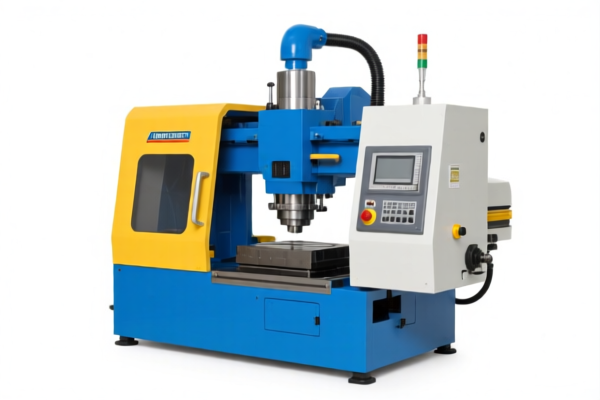
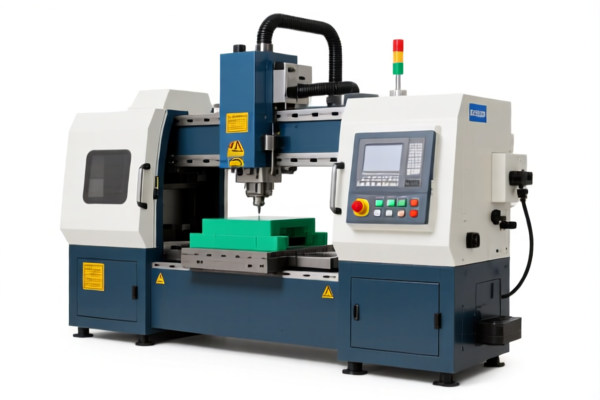
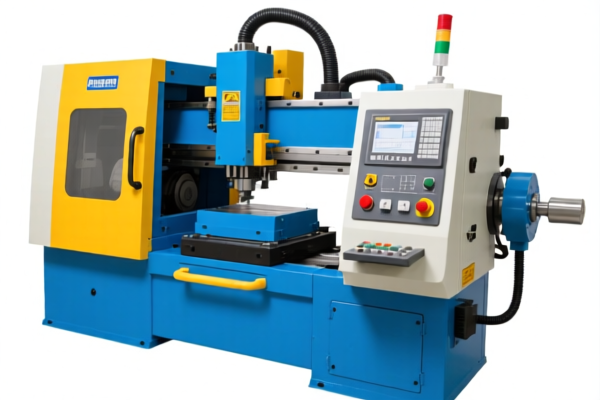

AI Analysis
🏭 Plastic Injection Molding Machines: HS Code Classification & US Customs Clearance Guide (2026)
🌐 HS Code Reference & Customs Strategy | 2026 Tariff Full Analysis | Professional Clearance Protocols
📌 I. Product Definition & Classification: What Exactly Is an "Injection Molding Machine"?
A Plastic Injection Molding Machine is a specialized industrial equipment used to manufacture plastic products by injecting molten plastic into a mold. In international trade, the classification depends heavily on whether the machine is viewed as a general-purpose mechanical device or a specific chemical processing machine.
Two Primary Classification Pathways: 1. Specific Purpose (Chemical Processing): Classified under Chapter 84, Heading 8477, as machinery for working rubber or plastics. 2. General Purpose (Independent Function): Classified under Chapter 84, Heading 8479, as other machines with independent functions, often including self-contained electric motors.
⚠️ Critical Distinction Point:
- If the machine is specifically designed only for plastic processing and fits the detailed description of 8477, it is the primary candidate.
- If it is a complex electromechanical unit with independent features not fully captured by 8477, customs may route it to 8479.
- Misclassification Risk: Declaring a complex molding machine as a simple "plastic part" or generic "machine" leads to severe penalties.
📦 II. HS Code Classification Details (2026 Latest Tariff Authority Comparison)
Based on the provided data, three specific HS Codes are relevant. Here is the breakdown:
| HS Code | Product Description | Logic & Classification Reasoning | Total Tax Rate |
|---|---|---|---|
8479.89.95.99 |
Other machines and mechanical appliances (General Purpose) | Logic: Injection molding machines are complex, independent mechanical devices. They do not have material conflicts. Classified as "Other machines with independent functions." | 87.5% |
8477.10.90.30 |
Machines for working rubber or plastics (Specific Purpose) | Logic: Matches the specific use (injection molding) and material (thermoplastics). Classified as a catch-all for plastic processing machinery under "Other." | 38.1% |
8479.89.65.00 |
Other electromechanical appliances with self-contained electric motors | Logic: Recognizes the machine as a complex electromechanical unit (containing motors, hydraulics, controls) fitting the "self-contained electric motor" feature in 8479. | 20.3% |
🔍 Key Insight:
- The same product can result in drastically different tax liabilities (20.3% vs. 87.5%) depending on the classification logic applied by customs brokers.
-8479.89.65.00offers the lowest duty burden, while8479.89.95.99carries the highest risk/cost.
-8477.10.90.30is the "standard" industrial classification but faces a middle-ground tax rate.
💰 III. 2026 Latest Tariff Rate Breakdown (Including Surtaxes & Policy Surcharges)
✅ Applicable Country: United States (US)
✅ Country of Origin: China (CN)
✅ Effective Time: 2025/2026 Period (Current Trade Environment)
🎯 1. 8479.89.95.99 —— Other Machines (Highest Risk)
| Item | Details |
|---|---|
| Base Duty Rate | 2.5% |
| Section 301 Surtax | +25.0% (Trade War Tariff) |
| Section 122 Tariff | +10% (Specific policy surcharge) |
| Steel/Aluminum/Copper Tariff | +50% (If components are subject to raw material surcharges) |
| Total Effective Rate | 87.5% |
| Tax Calculation | CIF Value × 87.5% |
| De Minimis Exemption | ❌ Not Eligible |
| Legal Basis Path | USITC:8479.89.95.99 → SEC301:25% → SEC122:10% → RAWMAT:50% |
📌 Explanation:
- This classification attracts the maximum possible surcharge because it triggers the Steel/Aluminum/Copper component tax (50%) on top of Section 301 (25%) and Section 122 (10%).
- Warning: This is the most expensive route. Use only if legally required by specific machine features not covered elsewhere.
🎯 2. 8477.10.90.30 —— Plastic Processing Machinery (Standard Industrial)
| Item | Details |
|---|---|
| Base Duty Rate | 3.1% |
| Section 301 Surtax | +25.0% (Trade War Tariff) |
| Section 122 Tariff | +10% (Specific policy surcharge) |
| Total Effective Rate | 38.1% |
| Tax Calculation | CIF Value × 38.1% |
| De Minimis Exemption | ❌ Not Eligible |
| Legal Basis Path | USITC:8477.10.90.30 → SEC301:25% → SEC122:10% |
📌 Note:
- This is a middle-ground option. It avoids the heavy Steel/Aluminum/Copper surcharge (50%) but still carries the full Section 301 and Section 122 tariffs.
- Suitable for machines clearly defined as "working plastics" without complex independent electromechanical claims.
🎯 3. 8479.89.65.00 —— Electromechanical Appliances (Lowest Cost Strategy)
| Item | Details |
|---|---|
| Base Duty Rate | 2.8% |
| Section 301 Surtax | +7.5% (Reduced Section 301 rate for this subheading) |
| Section 122 Tariff | +10% (Specific policy surcharge) |
| Total Effective Rate | 20.3% |
| Tax Calculation | CIF Value × 20.3% |
| De Minimis Exemption | ❌ Not Eligible |
| Legal Basis Path | USITC:8479.89.65.00 → SEC301:7.5% → SEC122:10% |
📌 Critical Advantage:
- Why is it lower? This specific subheading (8479.89.65.00) often benefits from a reduced Section 301 rate (7.5%) compared to the standard 25%.
- It also avoids the 50% raw material surcharge.
- Strategy: If the machine can be legitimately described as an "electromechanical appliance with self-contained motor," this code saves 67.2% in taxes compared to8479.89.95.99.
🛠️ IV. Customs Clearance Practical Advice (Real-World Pitfall Avoidance)
✅ 1. Required Documentation Checklist (Non-Negotiable)
| Document | Mandatory? | Purpose |
|---|---|---|
| ✅ Product Specification Sheet | ✔️ | Must detail: Injection pressure, clamp force, motor power, control system type. |
| ✅ Electrical Schematic | ✔️ | Crucial for proving it fits 8479.89.65.00 (self-contained motor features). |
| ✅ High-Res Photos (Nameplate) | ✔️ | Clear view of model number, voltage, Hz, and brand. |
| ✅ Commercial Invoice | ✔️ | Must accurately describe the machine as "Injection Molding Machine, Electromechanical" (not just "Plastic Machine"). |
| ✅ Certificate of Origin (CO) | ✔️ | Essential for claiming any potential origin-based exemptions (though limited for China). |
| ✅ Packing List | ✔️ | Itemize parts to avoid being taxed as raw materials or components. |
✅ 2. Declaration Strategy (Key Mnemonic)
🔥 "Define Function, Prove Motor, Avoid Steel, Save Money!"
| Scenario | Correct Declaration | Incorrect Action | Consequence |
|---|---|---|---|
| Complex Machine with Motor | 8479.89.65.00 (20.3%) |
Declare as 8479.89.95.99 (87.5%) |
Overpay $67,200 per $100k CIF! |
| Pure Plastic Processor | 8477.10.90.30 (38.1%) |
Declare as 8479.89.65.00 |
Audited & Reassigned (Penalties) |
| Machine with Steel Hopper | Ensure "Steel" is part of the machine, not raw material | Declare Hopper separately as "Steel Parts" | Subject to 50% Steel Tariff |
| Used Machine | Mark as "Used" on Invoice | Declare as "New" | Fraud Detection / Seizure |
✅ 3. Special Handling for Section 122 & 301
| Issue | Action Item |
|---|---|
| Section 122 Tariff (10%) | This applies to most machinery from China. Ensure your broker has accounted for this in all three codes. |
| Section 301 Variance | Verify the exact 301 exclusion list for 8479.89.65.00. If excluded, your rate drops to ~12.8% (2.8% base + 10% Sec 122). Check Exclusion List USTR-2024-0001! |
| Steel/Aluminum Components | If using 8479.89.95.99, ensure no separate line items for steel tanks/hoppers are declared, or they trigger the 50% tax. |
🌍 V. Global Market Comparison (2026)
| Region | Recommended HS Code | Est. Duty (China Origin) | Key Certification |
|---|---|---|---|
| 🇺🇸 USA | 8479.89.65.00 |
20.3% (Lowest) | NEMA, UL/ETL |
| 🇨🇳 China | 8477.10.90.30 |
5% - 8% | CCC |
| 🇪🇺 EU | 8477.10.90 |
0% - 2.5% | CE, Machinery Directive |
| 🇯🇵 Japan | 8477.10.90 |
0% - 3% | PSE, JIS |
📌 Conclusion:
- The US is the most expensive market due to Section 301 and Section 122.
- Europe and Japan are significantly cheaper. Consider transshipment (if legal and compliant) or final assembly in third countries to mitigate US tariffs.
📌 VI. Common Errors & Pitfalls (Blood Lessons)
❌ Error 1: Declaring the machine as "Plastic Parts" or "Molds"
👉 Result: HS Code 3926 or 8480. Severe Penalty for misclassification. Molds and Machines are different.
❌ Error 2: Ignoring the "Self-Contained Motor" feature
👉 Result: Missing out on 8479.89.65.00 (20.3%). If you declare it as generic machinery (8479.89.95.99), you pay 87.5%.
👉 Fix: Highlight motor power and control electronics in your spec sheet.
❌ Error 3: Not checking Section 301 Exclusions
👉 Result: Paying 7.5% or 25% when an exclusion might apply.
👉 Fix: Always check the USTR Exclusion List for 8479.89.65.00.
✅ Correct Description Template:
"Electric Plastic Injection Molding Machine, Model XYZ, 200 Ton Clamping Force, Self-Contained Hydraulic and Electrical System, for Industrial Thermoplastic Processing."
🎯 VII. Conclusion: Professional Classification Saves Millions!
🎯 Remember the Mnemonic:
🔹 "Motor First, 8479.65 is King, 8479.95 is Sting, 8477 is Middle, Check 301 for Everything!"
🔹 "One small change in HS Code, huge difference in Cost."
📌 Pro Tip:
If your machine contains US-assembled motors or non-Chinese critical components, consult a trade attorney to see if Substantial Transformation rules can shift the Country of Origin, potentially reducing Section 301 liability.
📣 Immediate Action:
📞 Engage a Licensed Customs Broker
📄 Provide Electrical Schematics
🔍 Request a Binding Ruling (Advance Ruling) from CBP for8479.89.65.00🚀 Optimize Your Supply Chain. Maximize Profit. Minimize Tax Risk.
✨ Professional Clearance Starts with Accurate Classification!
💼 Every percentage point saved is pure profit.
Customer Reviews
About HS Code Classification
The Harmonized System (HS) is an internationally standardized nomenclature developed by the World Customs Organization (WCO) to classify traded products. Over 200 countries use the HS system as the basis for customs tariffs, trade statistics, and import/export regulations.
Each HS code follows a hierarchical structure:
- Chapter (2 digits) — Broad category of goods (e.g., Chapter 84: Machinery and Mechanical Appliances)
- Heading (4 digits) — More specific grouping within the chapter
- Subheading (6 digits) — Internationally standardized breakdown, used by all WCO member countries
- National subdivisions (8-10 digits) — Country-specific extensions for further classification, such as US HTSUS 10-digit codes
Correct HS code classification is essential for smooth customs clearance, accurate duty payment, and compliance with trade regulations. Misclassification can lead to customs delays, overpayment of duties, or penalties.
When importing from CN to US, the applicable tariff rates may include:
- Most-Favored-Nation (MFN) rate — The standard duty rate applied to WTO members
- General rate — Applied to countries without trade agreements
- Trade remedy duties — Additional tariffs such as Section 301 (anti-dumping), Section 232 (national security), or countervailing duties
The information provided on this page is for reference purposes only. For official classification, please consult with your local customs authority or a licensed customs broker.