Plastic Kitchen Storage Tray
CN → US| HS编码 | 关税税率 | 原产国 | 目的国 | 文档 |
|---|---|---|---|---|
| 3920991000 | 41.0% | CN | US | 官方文档 |
| 3921190090 | 41.5% | CN | US | 官方文档 |
| 3921905050 | 39.8% | CN | US | 官方文档 |
| 3926909989 | 22.8% | CN | US | 官方文档 |
| 3920995000 | 40.8% | CN | US | 官方文档 |
商品图片
AI分析
🥣 Plastic Kitchen Storage Tray
🌐 HS Code Reference & Customs Clearance Guide | 2026 Latest Tariff Analysis | Professional Clearance Strategy
📌 Part 1: Product Definition & Classification: Do You Really Know What a "Plastic Storage Tray" Is?
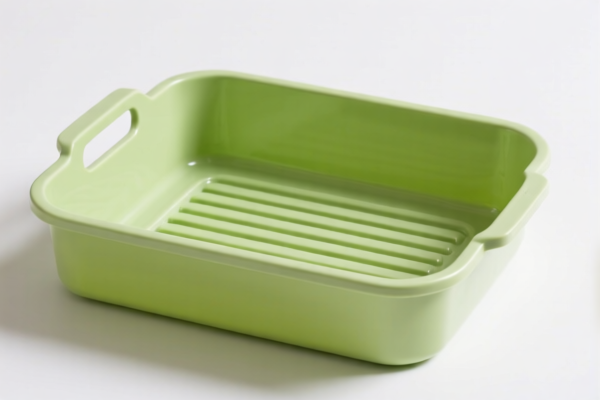
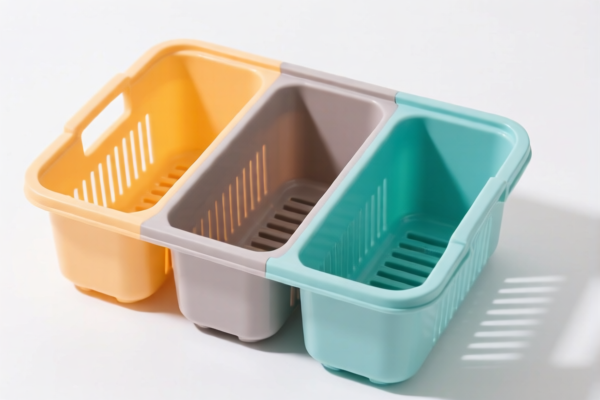
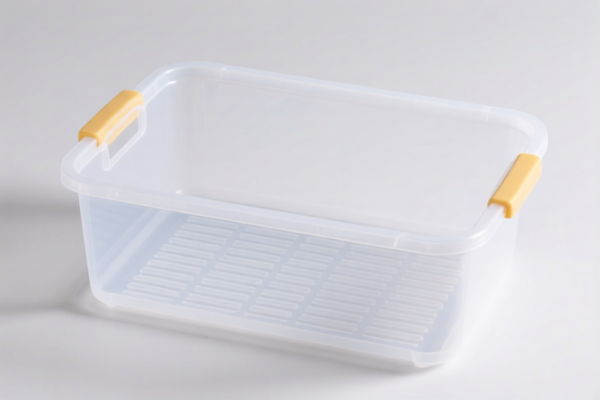
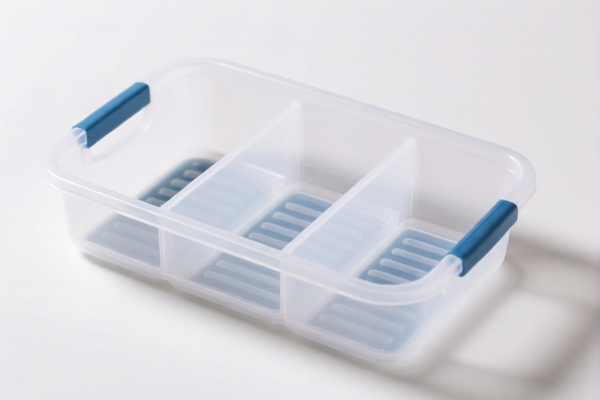
A plastic kitchen storage tray is a versatile household item used for organizing food, utensils, or pantry items. In international trade, its classification depends heavily on its specific function and structural characteristics. While it appears to be a simple plastic sheet or board, customs authorities look deeper:
Type A: Purely Structural/Container (The "Tray" Concept)
If the item is shaped to hold things (with sides) but is not a rigid flat board, it is considered a manufactured plastic article. It falls under "Other articles of plastics" because it has a specific utility beyond just being a raw material sheet.
Type B: Flat Sheet/Rigid Board (The "Panel" Concept)
If the item is a flat, rigid sheet used for stacking or as a base, and lacks significant structural complexity (like deep walls), it may be classified as a Plastic Plate, Sheet, or Film.
⚠️ Key Distinction Point:
- If it is a finished container/tray with walls → Classify under 3926.90 (Other plastic articles).
- If it is a flat board/panel used for storage surfaces → Classify under 3920 or 3921 (Plates, sheets, film, foil, and strip).
📦 Part 2: HS Code Classification Details (2026 Latest Tariff Authoritative Comparison)
Based on the provided data, here are the 5 possible HS Codes and the reasoning for each:
| HS Code | Product Description | Reason for Classification | Tax Rate (Total) |
|---|---|---|---|
3926.90.99.89 |
Plastic Storage Tray (Finished Article) | Best Fit for "Tray". Classified as "Other plastic articles." It is a manufactured item (tray) without material conflict. This is the most accurate code for a functional kitchen tray. | 22.8% |
3920.99.10.00 |
Plastic Plate/Sheet (For Storage) | Classified as "Other plates, sheets, film, foil, and strip." Used if the item is primarily a flat rigid board used for organizing/stacking, rather than a deep container. | 41.0% |
3920.99.50.00 |
Plastic Plate/Sheet (Standard) | Classified as "Other plastic plates, sheets, etc." Similar to above, applies if the item is a flat board meeting specific thickness/weight criteria for "plastic plates." | 40.8% |
3921.19.00.90 |
Plastic Plate/Sheet (Other) | Classified under "Plates, sheets, film, foil, and strip." Applies if the material characteristics fit this broader "plastic sheet" category but don't fit the more specific 3920 headings. | 41.5% |
3921.90.50.50 |
Plastic Plate/Sheet (Specific) | Classified as "Plates, sheets, film, foil, and strip." Applies if the item meets the specific material definition for this subheading but is still considered a sheet/board form. | 39.8% |
🔍 Critical Insight:
- Why the price/tax difference?3926is for articles (manufactured goods), which generally has lower tariffs than3920/3921(raw materials like sheets/boards) when facing US Section 301 and IEEPA duties.
- Risk: Declaring a deep tray as a "plastic sheet" (3920/3921) might be rejected if customs inspectors see it as a finished article. However, if declared as a sheet, the tariff is ~40% vs. ~23% for the tray. This is a major risk factor.
💰 Part 3: 2026 Latest Tariff Rate Breakdown (Including Surcharges & Policy Add-ons)
✅ Applicable Country: United States (US)
✅ Origin: China (CN)
✅ Effective Date: November 10, 2025 onwards (including subsequent imports)
🎯 1. 3926.90.99.89 —— Plastic Kitchen Storage Tray (Finished Article)
🌟 Recommended Classification for Functional Trays
| Item | Content |
|---|---|
| Base Tariff | 5.3% (ad valorem) |
| Section 301 Surcharge | +7.5% (Note: Data shows 7.5%, likely specific to this subcategory or a reduced rate from previous 25% rounds for certain plastics) |
| IEEPA Surcharge (Section 122) | +10% (Targeting China/HK products) |
| Total Effective Rate | 22.8% |
| Tax Calculation | CIF Value × 22.8% |
| De Minimis Exemption | ❌ Not Eligible (deny_de_minimis) |
| Legal Basis Path | IEEPA:9903.01.25 → USITC:3926.90.99.89 → FOOTNOTE:3926 |
📌 Explanation:
- This is the lowest tax rate among the options.
- It applies because the item is a finished good (a tray), not a raw plastic sheet.
- The Section 301 rate here is 7.5%, significantly lower than the 25% seen in the sheet categories.
🎯 2. 3920.99.10.00 —— Plastic Plate/Sheet (For Storage)
⚠️ High Risk / High Cost Classification
| Item | Content |
|---|---|
| Base Tariff | 6.0% |
| Section 301 Surcharge | +25.0% (Standard 301 Rate) |
| IEEPA Surcharge (Section 122) | +10% |
| Total Effective Rate | 41.0% |
| Tax Calculation | CIF Value × 41.0% |
| De Minimis Exemption | ❌ Not Eligible |
| Legal Basis Path | IEEPA:9903.01.25 → USITC:3920.99.10.00 → FOOTNOTE:3920 |
📌 Explanation:
- If you classify a tray as a "plastic plate," you pay ~18% more tax.
- This applies if the item is considered a flat board.
🎯 3. 3920.99.50.00 —— Plastic Plate/Sheet (Standard)
| Item | Content |
|---|---|
| Base Tariff | 5.8% |
| Section 301 Surcharge | +25.0% |
| IEEPA Surcharge (Section 122) | +10% |
| Total Effective Rate | 40.8% |
| Tax Calculation | CIF Value × 40.8% |
| De Minimis Exemption | ❌ Not Eligible |
🎯 4. 3921.19.00.90 —— Plastic Plate/Sheet (Other)
| Item | Content |
|---|---|
| Base Tariff | 6.5% |
| Section 301 Surcharge | +25.0% |
| IEEPA Surcharge (Section 122) | +10% |
| Total Effective Rate | 41.5% |
| Tax Calculation | CIF Value × 41.5% |
| De Minimis Exemption | ❌ Not Eligible |
🎯 5. 3921.90.50.50 —— Plastic Plate/Sheet (Specific)
| Item | Content |
|---|---|
| Base Tariff | 4.8% |
| Section 301 Surcharge | +25.0% |
| IEEPA Surcharge (Section 122) | +10% |
| Total Effective Rate | 39.8% |
| Tax Calculation | CIF Value × 39.8% |
| De Minimis Exemption | ❌ Not Eligible |
📌 Comparison Summary:
- Category 3926 (Tray): 22.8% (Lowest)
- Category 3920/3921 (Sheet/Board): 39.8% - 41.5% (High)
- Strategy: Always argue for 3926 if the product is a distinct tray or container, not just a flat sheet.
🛠️ Part 4: Customs Clearance Practical Advice (Avoiding Pitfalls)
✅ 1. Required Documentation Checklist (No Compromise)
| Document | Must Provide | Description |
|---|---|---|
| ✅ Product Specification Sheet | ✔️ | Dimensions, volume, material type (e.g., PP, PE), color. |
| ✅ Product Photos | ✔️ | Crucial: Show the tray from multiple angles, especially the depth/walls to prove it’s a container, not a flat sheet. |
| ✅ Commercial Invoice | ✔️ | Clearly state: "Plastic Kitchen Storage Tray, Finished Good." Avoid vague terms like "Plastic Sheet." |
| ✅ Packing List | ✔️ | Weight and package details. |
| ✅ Origin Certificate | ✔️ | If applicable, to verify CN origin (subject to tariffs). |
| ✅ Third-Party Test Report | ✔️ | FDA compliance (for food contact) or LFGB (if EU origin, but for US clearance, FDA is key). |
✅ 2. Declaration Tips (Key Mantra)
🔥 "Don't Call it a Sheet, Call it a Tray! Shape Matters, Tax Drastic!"
| Scenario | Correct Declaration | Wrong Practice | Consequence |
|---|---|---|---|
| Deep Storage Bin/Tray | 3926.90.99.89 (Plastic Article) |
Declare as 3920 (Plastic Plate) |
Save ~18% Tax |
| Flat Rigid Board (No Walls) | 3920.99.10.00 (Plastic Plate) |
Declare as 3926 (Article) |
May be audited for misclassification |
| Tray + Lid Combo | Whole Article (3926) |
Split into tray + lid | Complicates clearance, no tax benefit |
| Food Contact Material | Add "Food Grade" to description | Omit material safety info | Risk of FDA hold/inspection |
✅ 3. Special Circumstances Handling
| Situation | Handling Advice |
|---|---|
| Transparent vs. Opaque | No impact on HS code, but ensure material is specified (e.g., Polypropylene). |
| Stackable Trays | Emphasize "Storage" and "Organization" in description to support 3926 classification. |
| Custom/Molded Shape | Strong evidence for 3926. Provide mold diagrams if asked. |
| Bundled with Other Goods | If packed with non-plastic items, ensure the tray is not considered a "free gift" or accessory. |
🌍 Part 5: Global Market Comparison (2026 Latest)
| Country/Region | Recommended HS Code | Tariff (China Origin) | Notes |
|---|---|---|---|
| 🇺🇸 USA | 3926.90.99.89 |
22.8% | Best rate. Avoid 3920 (41%+). |
| 🇨🇳 China | 3926.90.99.89 |
5% (Import) | Standard import duty. |
| 🇪🇺 EU | 3926.90.99.89 |
6.5% | Lower base tariff, no Section 301/IEEPA. |
| 🇬🇧 UK | 3926.90.99.89 |
6.5% | Post-Brexit tariff alignment with EU. |
| 🇯🇵 Japan | 3926.90.99.89 |
6.0% | Generally low tariffs for plastic articles. |
📌 Conclusion:
- USA is the most expensive market due to Section 301 and IEEPA surcharges.
- Correct classification (3926) is critical to save ~18% in duties.
- Other markets have standard low tariffs, but US requires precise classification.
📌 Part 6: Common Mistakes & Pitfalls (Lessons Learned)
❌ Mistake 1: Declaring a deep tray as a "Plastic Sheet" (3920)
👉 Result: You pay 41% instead of 22.8%. Overpay by 18%.
❌ Mistake 2: Not providing product photos showing the tray’s walls/depth
👉 Result: Customs assumes it’s a flat sheet → Misclassification → Delayed release + Back taxes.
❌ Mistake 3: Using vague terms like "Plastic Part" or "Plastic Item"
👉 Result: Customs may reject or assign a generic high-tariff code. Use "Plastic Storage Tray".
❌ Mistake 4: Ignoring Food Contact Compliance
👉 Result: FDA may hold the shipment if it’s for kitchen use. Ensure FDA CFR 21 compliance is documented.
✅ Correct Practice:
"Plastic Kitchen Storage Tray, Polypropylene (PP), Food Grade, Stackable, Color Blue, Model XYZ, Designed for Pantry Organization."
🎯 Part 7: Conclusion: Smart Classification, Lower Costs, Faster Clearance!
🎯 Remember the Mantra:
🔹 "Tray = 3926 (22.8%), Sheet = 3920 (41%). Shape Dictates Tax!"
🔹 "Show the Walls, Save the Dollars, Declare the Tray, Pass the Customs Rolls!"
📌 Pro Tip:
If your plastic trays are sourced from Vietnam, Thailand, or Malaysia, you may qualify for lower or zero tariffs under various trade agreements (e.g., USMCA for Mexico/Canada, or general MFN rates).
Always verify Origin and consider Advance Rulings if the product shape is ambiguous.
📣 Immediate Action:
📞 Contact a licensed customs broker + Provide Product Photos + Apply for HS Code Pre-Ruling
🚀 Let your kitchen trays Clear Customs Smoothly, Reduce Costs, and Boost Profits!
✨ Professional Clearance Starts with Accurate Classification!
💼 Every Percent Saved in Tariffs is Pure Profit!
用户评价
关于 HS 编码归类
协调制度(HS)是由世界海关组织(WCO)制定的国际贸易商品分类标准。全球 200 多个国家采用 HS 系统作为海关关税、贸易统计和进出口监管的基础。
每个 HS 编码遵循以下层级结构:
- 章(2 位)——商品大类(例如:第 84 章:机器和机械设备)
- 品目(4 位)——章内的更具体分类
- 子目(6 位)——国际通用细分,所有 WCO 成员国统一使用
- 本国细分(8-10 位)——各国自行扩展的细分编码,如美国 HTSUS 10 位编码
正确的 HS 编码归类对于顺利通关、准确缴纳关税和遵守贸易法规至关重要。错误归类可能导致海关延误、多缴关税或罚款。
从CN进口到US时,适用的关税税率可能包括:
- 最惠国(MFN)税率——适用于 WTO 成员国的标准关税税率
- 普通税率——适用于无贸易协定国家
- 贸易救济关税——附加关税,如 301 条款(反倾销)、232 条款(国家安全)或反补贴税
本页内容仅供参考。如需正式归类,请咨询当地海关或持牌报关代理。