Plastic Kitchen Storage Tray
CN → US| HS Code | Tariff Rate | Origin | Destination | Doc |
|---|---|---|---|---|
| 3920991000 | 41.0% | CN | US | Official Doc |
| 3921190090 | 41.5% | CN | US | Official Doc |
| 3921905050 | 39.8% | CN | US | Official Doc |
| 3926909989 | 22.8% | CN | US | Official Doc |
| 3920995000 | 40.8% | CN | US | Official Doc |
Product Images
AI Analysis
🥣 Plastic Kitchen Storage Tray
🌐 HS Code Reference & Customs Clearance Guide | 2026 Latest Tariff Analysis | Professional Clearance Strategy
📌 Part 1: Product Definition & Classification: Do You Really Know What a "Plastic Storage Tray" Is?
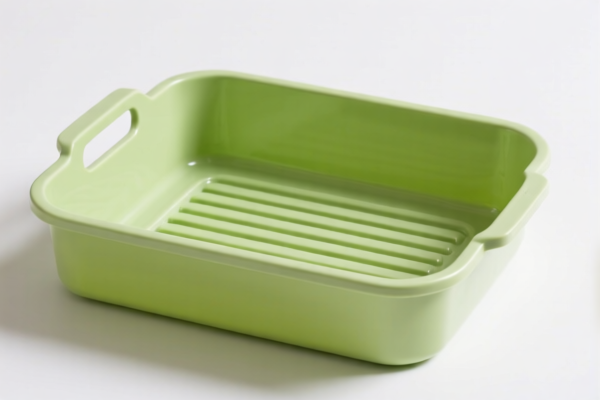
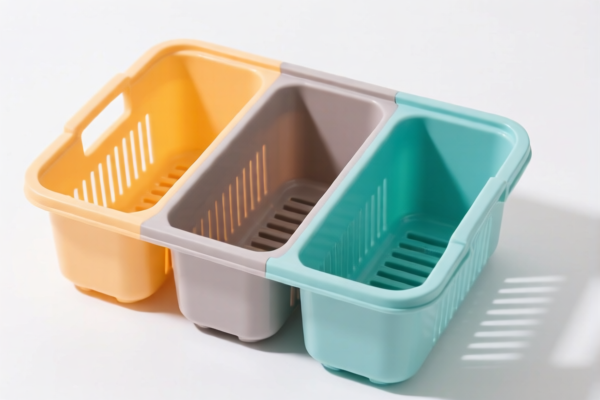
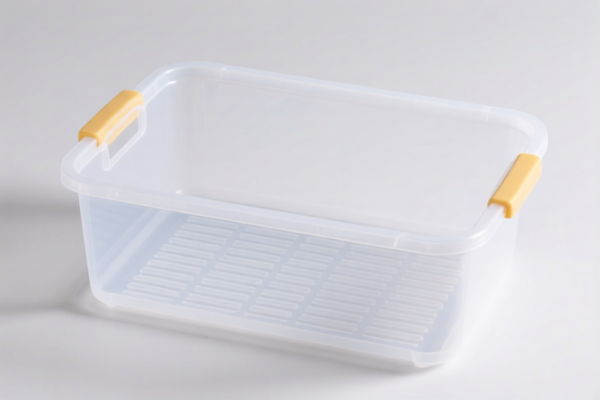
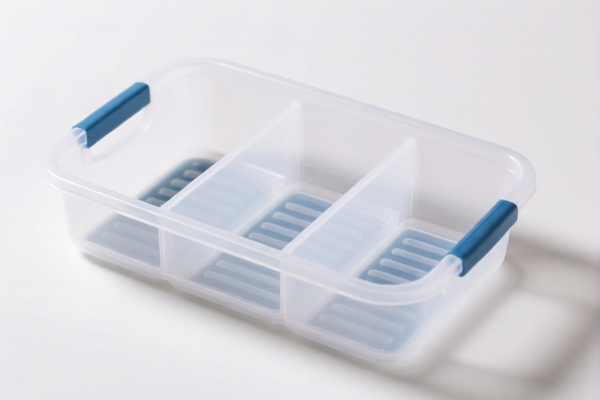
A plastic kitchen storage tray is a versatile household item used for organizing food, utensils, or pantry items. In international trade, its classification depends heavily on its specific function and structural characteristics. While it appears to be a simple plastic sheet or board, customs authorities look deeper:
Type A: Purely Structural/Container (The "Tray" Concept)
If the item is shaped to hold things (with sides) but is not a rigid flat board, it is considered a manufactured plastic article. It falls under "Other articles of plastics" because it has a specific utility beyond just being a raw material sheet.
Type B: Flat Sheet/Rigid Board (The "Panel" Concept)
If the item is a flat, rigid sheet used for stacking or as a base, and lacks significant structural complexity (like deep walls), it may be classified as a Plastic Plate, Sheet, or Film.
⚠️ Key Distinction Point:
- If it is a finished container/tray with walls → Classify under 3926.90 (Other plastic articles).
- If it is a flat board/panel used for storage surfaces → Classify under 3920 or 3921 (Plates, sheets, film, foil, and strip).
📦 Part 2: HS Code Classification Details (2026 Latest Tariff Authoritative Comparison)
Based on the provided data, here are the 5 possible HS Codes and the reasoning for each:
| HS Code | Product Description | Reason for Classification | Tax Rate (Total) |
|---|---|---|---|
3926.90.99.89 |
Plastic Storage Tray (Finished Article) | Best Fit for "Tray". Classified as "Other plastic articles." It is a manufactured item (tray) without material conflict. This is the most accurate code for a functional kitchen tray. | 22.8% |
3920.99.10.00 |
Plastic Plate/Sheet (For Storage) | Classified as "Other plates, sheets, film, foil, and strip." Used if the item is primarily a flat rigid board used for organizing/stacking, rather than a deep container. | 41.0% |
3920.99.50.00 |
Plastic Plate/Sheet (Standard) | Classified as "Other plastic plates, sheets, etc." Similar to above, applies if the item is a flat board meeting specific thickness/weight criteria for "plastic plates." | 40.8% |
3921.19.00.90 |
Plastic Plate/Sheet (Other) | Classified under "Plates, sheets, film, foil, and strip." Applies if the material characteristics fit this broader "plastic sheet" category but don't fit the more specific 3920 headings. | 41.5% |
3921.90.50.50 |
Plastic Plate/Sheet (Specific) | Classified as "Plates, sheets, film, foil, and strip." Applies if the item meets the specific material definition for this subheading but is still considered a sheet/board form. | 39.8% |
🔍 Critical Insight:
- Why the price/tax difference?3926is for articles (manufactured goods), which generally has lower tariffs than3920/3921(raw materials like sheets/boards) when facing US Section 301 and IEEPA duties.
- Risk: Declaring a deep tray as a "plastic sheet" (3920/3921) might be rejected if customs inspectors see it as a finished article. However, if declared as a sheet, the tariff is ~40% vs. ~23% for the tray. This is a major risk factor.
💰 Part 3: 2026 Latest Tariff Rate Breakdown (Including Surcharges & Policy Add-ons)
✅ Applicable Country: United States (US)
✅ Origin: China (CN)
✅ Effective Date: November 10, 2025 onwards (including subsequent imports)
🎯 1. 3926.90.99.89 —— Plastic Kitchen Storage Tray (Finished Article)
🌟 Recommended Classification for Functional Trays
| Item | Content |
|---|---|
| Base Tariff | 5.3% (ad valorem) |
| Section 301 Surcharge | +7.5% (Note: Data shows 7.5%, likely specific to this subcategory or a reduced rate from previous 25% rounds for certain plastics) |
| IEEPA Surcharge (Section 122) | +10% (Targeting China/HK products) |
| Total Effective Rate | 22.8% |
| Tax Calculation | CIF Value × 22.8% |
| De Minimis Exemption | ❌ Not Eligible (deny_de_minimis) |
| Legal Basis Path | IEEPA:9903.01.25 → USITC:3926.90.99.89 → FOOTNOTE:3926 |
📌 Explanation:
- This is the lowest tax rate among the options.
- It applies because the item is a finished good (a tray), not a raw plastic sheet.
- The Section 301 rate here is 7.5%, significantly lower than the 25% seen in the sheet categories.
🎯 2. 3920.99.10.00 —— Plastic Plate/Sheet (For Storage)
⚠️ High Risk / High Cost Classification
| Item | Content |
|---|---|
| Base Tariff | 6.0% |
| Section 301 Surcharge | +25.0% (Standard 301 Rate) |
| IEEPA Surcharge (Section 122) | +10% |
| Total Effective Rate | 41.0% |
| Tax Calculation | CIF Value × 41.0% |
| De Minimis Exemption | ❌ Not Eligible |
| Legal Basis Path | IEEPA:9903.01.25 → USITC:3920.99.10.00 → FOOTNOTE:3920 |
📌 Explanation:
- If you classify a tray as a "plastic plate," you pay ~18% more tax.
- This applies if the item is considered a flat board.
🎯 3. 3920.99.50.00 —— Plastic Plate/Sheet (Standard)
| Item | Content |
|---|---|
| Base Tariff | 5.8% |
| Section 301 Surcharge | +25.0% |
| IEEPA Surcharge (Section 122) | +10% |
| Total Effective Rate | 40.8% |
| Tax Calculation | CIF Value × 40.8% |
| De Minimis Exemption | ❌ Not Eligible |
🎯 4. 3921.19.00.90 —— Plastic Plate/Sheet (Other)
| Item | Content |
|---|---|
| Base Tariff | 6.5% |
| Section 301 Surcharge | +25.0% |
| IEEPA Surcharge (Section 122) | +10% |
| Total Effective Rate | 41.5% |
| Tax Calculation | CIF Value × 41.5% |
| De Minimis Exemption | ❌ Not Eligible |
🎯 5. 3921.90.50.50 —— Plastic Plate/Sheet (Specific)
| Item | Content |
|---|---|
| Base Tariff | 4.8% |
| Section 301 Surcharge | +25.0% |
| IEEPA Surcharge (Section 122) | +10% |
| Total Effective Rate | 39.8% |
| Tax Calculation | CIF Value × 39.8% |
| De Minimis Exemption | ❌ Not Eligible |
📌 Comparison Summary:
- Category 3926 (Tray): 22.8% (Lowest)
- Category 3920/3921 (Sheet/Board): 39.8% - 41.5% (High)
- Strategy: Always argue for 3926 if the product is a distinct tray or container, not just a flat sheet.
🛠️ Part 4: Customs Clearance Practical Advice (Avoiding Pitfalls)
✅ 1. Required Documentation Checklist (No Compromise)
| Document | Must Provide | Description |
|---|---|---|
| ✅ Product Specification Sheet | ✔️ | Dimensions, volume, material type (e.g., PP, PE), color. |
| ✅ Product Photos | ✔️ | Crucial: Show the tray from multiple angles, especially the depth/walls to prove it’s a container, not a flat sheet. |
| ✅ Commercial Invoice | ✔️ | Clearly state: "Plastic Kitchen Storage Tray, Finished Good." Avoid vague terms like "Plastic Sheet." |
| ✅ Packing List | ✔️ | Weight and package details. |
| ✅ Origin Certificate | ✔️ | If applicable, to verify CN origin (subject to tariffs). |
| ✅ Third-Party Test Report | ✔️ | FDA compliance (for food contact) or LFGB (if EU origin, but for US clearance, FDA is key). |
✅ 2. Declaration Tips (Key Mantra)
🔥 "Don't Call it a Sheet, Call it a Tray! Shape Matters, Tax Drastic!"
| Scenario | Correct Declaration | Wrong Practice | Consequence |
|---|---|---|---|
| Deep Storage Bin/Tray | 3926.90.99.89 (Plastic Article) |
Declare as 3920 (Plastic Plate) |
Save ~18% Tax |
| Flat Rigid Board (No Walls) | 3920.99.10.00 (Plastic Plate) |
Declare as 3926 (Article) |
May be audited for misclassification |
| Tray + Lid Combo | Whole Article (3926) |
Split into tray + lid | Complicates clearance, no tax benefit |
| Food Contact Material | Add "Food Grade" to description | Omit material safety info | Risk of FDA hold/inspection |
✅ 3. Special Circumstances Handling
| Situation | Handling Advice |
|---|---|
| Transparent vs. Opaque | No impact on HS code, but ensure material is specified (e.g., Polypropylene). |
| Stackable Trays | Emphasize "Storage" and "Organization" in description to support 3926 classification. |
| Custom/Molded Shape | Strong evidence for 3926. Provide mold diagrams if asked. |
| Bundled with Other Goods | If packed with non-plastic items, ensure the tray is not considered a "free gift" or accessory. |
🌍 Part 5: Global Market Comparison (2026 Latest)
| Country/Region | Recommended HS Code | Tariff (China Origin) | Notes |
|---|---|---|---|
| 🇺🇸 USA | 3926.90.99.89 |
22.8% | Best rate. Avoid 3920 (41%+). |
| 🇨🇳 China | 3926.90.99.89 |
5% (Import) | Standard import duty. |
| 🇪🇺 EU | 3926.90.99.89 |
6.5% | Lower base tariff, no Section 301/IEEPA. |
| 🇬🇧 UK | 3926.90.99.89 |
6.5% | Post-Brexit tariff alignment with EU. |
| 🇯🇵 Japan | 3926.90.99.89 |
6.0% | Generally low tariffs for plastic articles. |
📌 Conclusion:
- USA is the most expensive market due to Section 301 and IEEPA surcharges.
- Correct classification (3926) is critical to save ~18% in duties.
- Other markets have standard low tariffs, but US requires precise classification.
📌 Part 6: Common Mistakes & Pitfalls (Lessons Learned)
❌ Mistake 1: Declaring a deep tray as a "Plastic Sheet" (3920)
👉 Result: You pay 41% instead of 22.8%. Overpay by 18%.
❌ Mistake 2: Not providing product photos showing the tray’s walls/depth
👉 Result: Customs assumes it’s a flat sheet → Misclassification → Delayed release + Back taxes.
❌ Mistake 3: Using vague terms like "Plastic Part" or "Plastic Item"
👉 Result: Customs may reject or assign a generic high-tariff code. Use "Plastic Storage Tray".
❌ Mistake 4: Ignoring Food Contact Compliance
👉 Result: FDA may hold the shipment if it’s for kitchen use. Ensure FDA CFR 21 compliance is documented.
✅ Correct Practice:
"Plastic Kitchen Storage Tray, Polypropylene (PP), Food Grade, Stackable, Color Blue, Model XYZ, Designed for Pantry Organization."
🎯 Part 7: Conclusion: Smart Classification, Lower Costs, Faster Clearance!
🎯 Remember the Mantra:
🔹 "Tray = 3926 (22.8%), Sheet = 3920 (41%). Shape Dictates Tax!"
🔹 "Show the Walls, Save the Dollars, Declare the Tray, Pass the Customs Rolls!"
📌 Pro Tip:
If your plastic trays are sourced from Vietnam, Thailand, or Malaysia, you may qualify for lower or zero tariffs under various trade agreements (e.g., USMCA for Mexico/Canada, or general MFN rates).
Always verify Origin and consider Advance Rulings if the product shape is ambiguous.
📣 Immediate Action:
📞 Contact a licensed customs broker + Provide Product Photos + Apply for HS Code Pre-Ruling
🚀 Let your kitchen trays Clear Customs Smoothly, Reduce Costs, and Boost Profits!
✨ Professional Clearance Starts with Accurate Classification!
💼 Every Percent Saved in Tariffs is Pure Profit!
Customer Reviews
About HS Code Classification
The Harmonized System (HS) is an internationally standardized nomenclature developed by the World Customs Organization (WCO) to classify traded products. Over 200 countries use the HS system as the basis for customs tariffs, trade statistics, and import/export regulations.
Each HS code follows a hierarchical structure:
- Chapter (2 digits) — Broad category of goods (e.g., Chapter 84: Machinery and Mechanical Appliances)
- Heading (4 digits) — More specific grouping within the chapter
- Subheading (6 digits) — Internationally standardized breakdown, used by all WCO member countries
- National subdivisions (8-10 digits) — Country-specific extensions for further classification, such as US HTSUS 10-digit codes
Correct HS code classification is essential for smooth customs clearance, accurate duty payment, and compliance with trade regulations. Misclassification can lead to customs delays, overpayment of duties, or penalties.
When importing from CN to US, the applicable tariff rates may include:
- Most-Favored-Nation (MFN) rate — The standard duty rate applied to WTO members
- General rate — Applied to countries without trade agreements
- Trade remedy duties — Additional tariffs such as Section 301 (anti-dumping), Section 232 (national security), or countervailing duties
The information provided on this page is for reference purposes only. For official classification, please consult with your local customs authority or a licensed customs broker.